
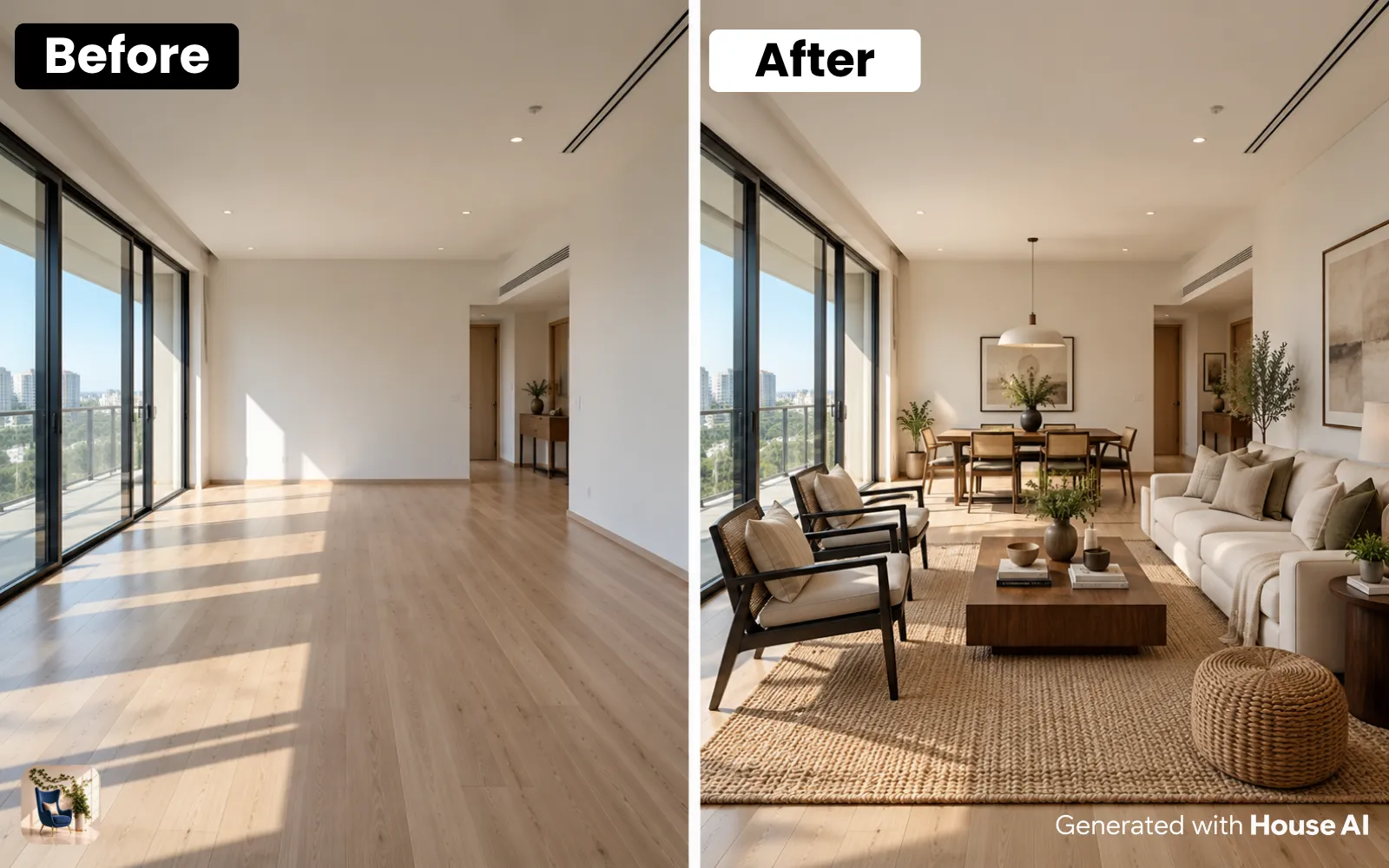
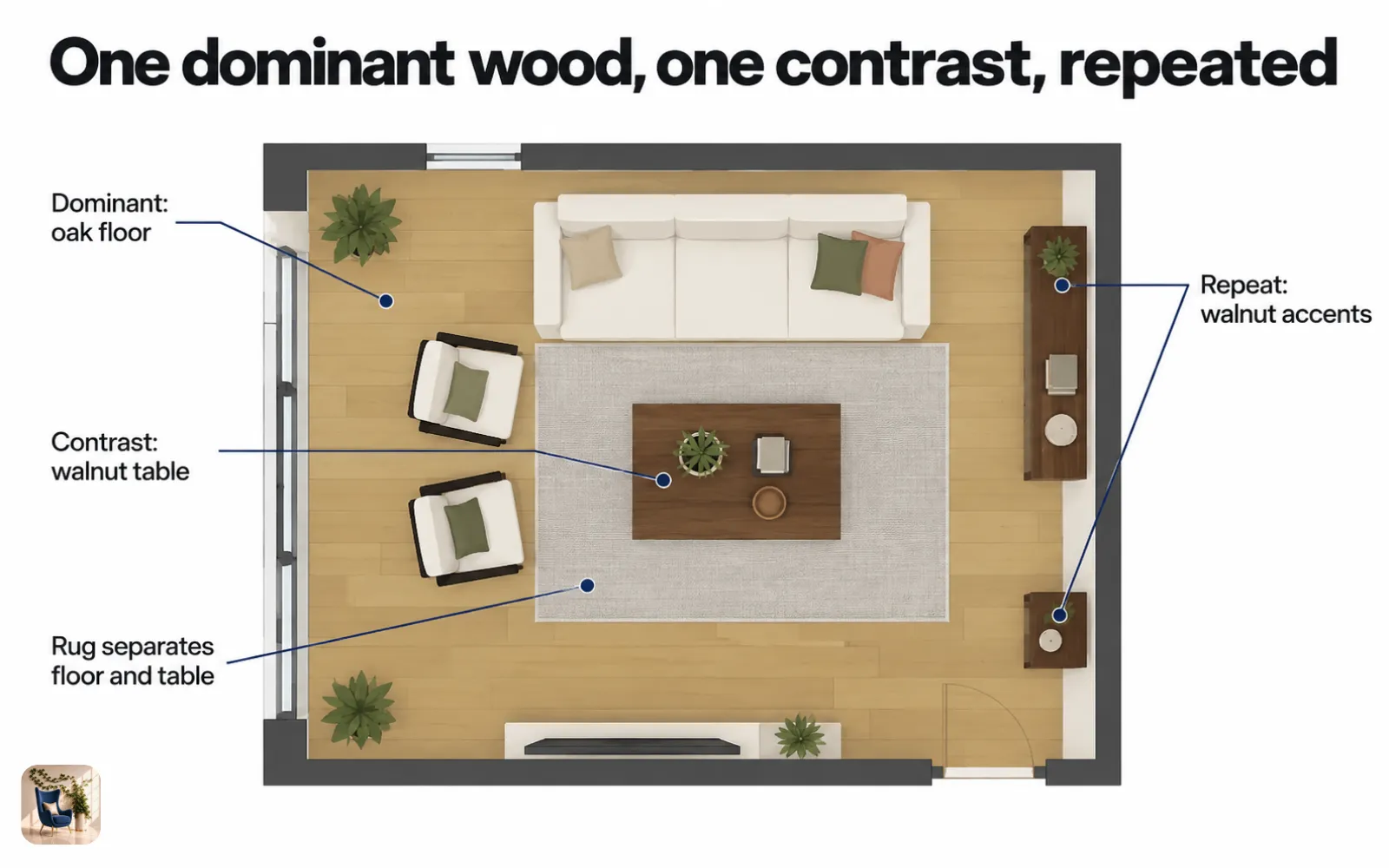
To mix wood tones, pick one dominant wood, usually the floor or the biggest piece, then add one or two others that clearly contrast with it. Keep their undertones related, warm with warm or cool with cool, and repeat each wood at least twice across the room. A rug between a wood floor and wood furniture keeps them from blurring together.
Matching every piece of wood makes a room look flat, like a furniture set bought in one trip. Mixed woods look collected, as long as the mix looks deliberate.
Read the undertone first
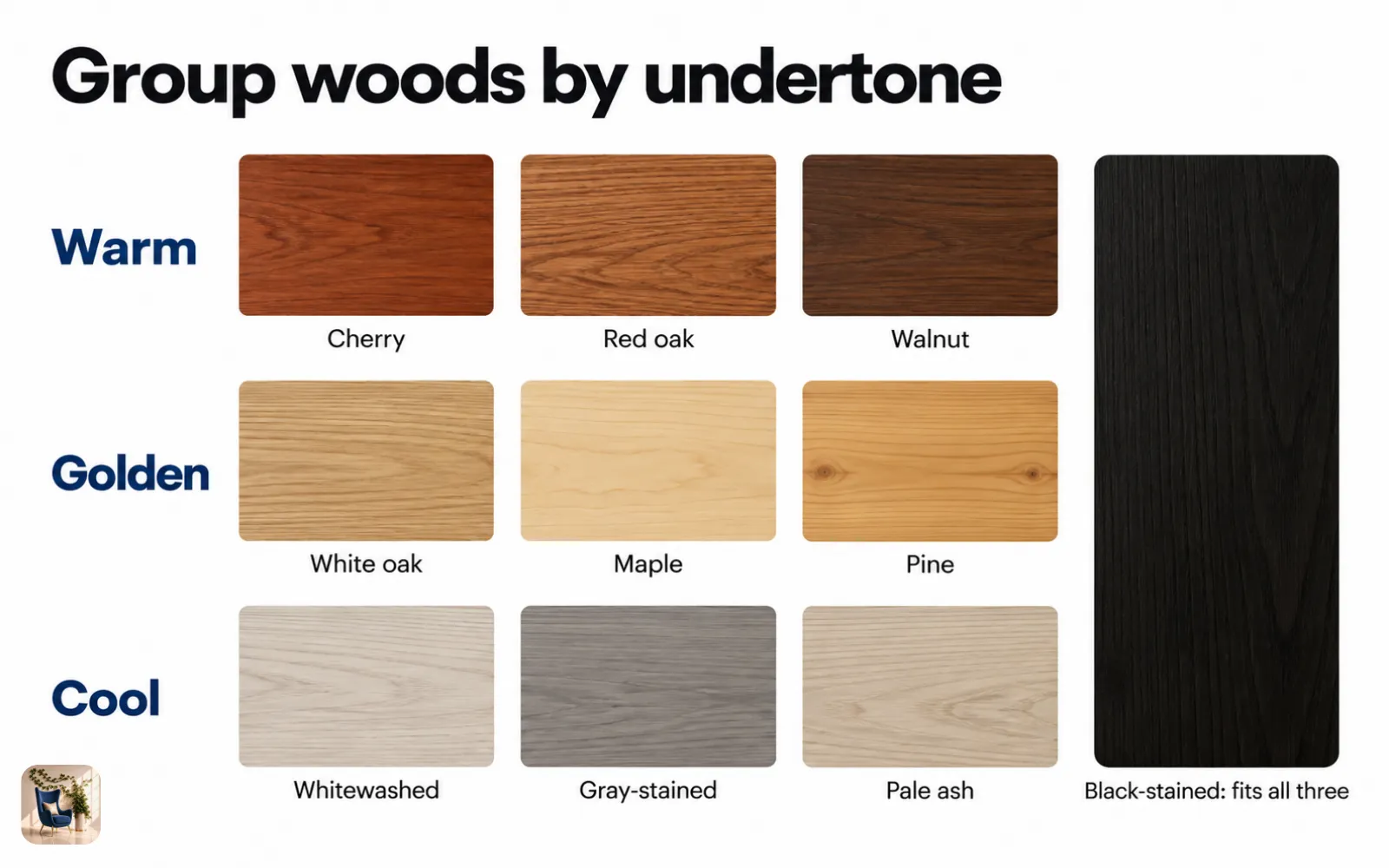
Every wood has an undertone, and it matters more than how light or dark the wood is. Hold two pieces side by side in daylight and look past the surface color. Red and orange woods read warm. Yellow woods read golden. Gray, whitewashed, and black finishes read cool or neutral. Two woods with related undertones will sit together even when one is much darker.
| Wood or finish | Undertone | Pairs easily with |
|---|---|---|
| White oak | Neutral to golden | Walnut, black-stained wood, rattan |
| Red oak | Warm, pinkish | Cherry, darker walnut, cream painted wood |
| Walnut | Warm brown | White oak, maple, black-stained wood |
| Cherry | Red to orange | Red oak, mahogany, deep green paint |
| Maple and birch | Pale yellow | Walnut, teak, black metal |
| Pine | Yellow to orange | Painted wood, darker walnut, iron |
| Whitewashed or gray-stained | Cool | Black-stained wood, pale ash, cool gray fabrics |
| Black-stained or ebonized | Neutral | Almost any wood, as a high-contrast accent |
How to mix wood tones step by step
Step 1: Name the dominant wood
Start with the wood you can't easily change, usually the floor, the cabinets, or the largest piece of furniture. Everything else responds to it.
Step 2: Add contrast, not a near match
A second wood a shade or two away from the first looks like a mistake. Go clearly lighter or clearly darker, such as walnut on a light oak floor.
Step 3: Repeat each wood at least twice
One walnut table alone looks stray. Echo it somewhere else in the room, like a picture frame or a lamp base, so the eye connects them.
Step 4: Separate floor and furniture
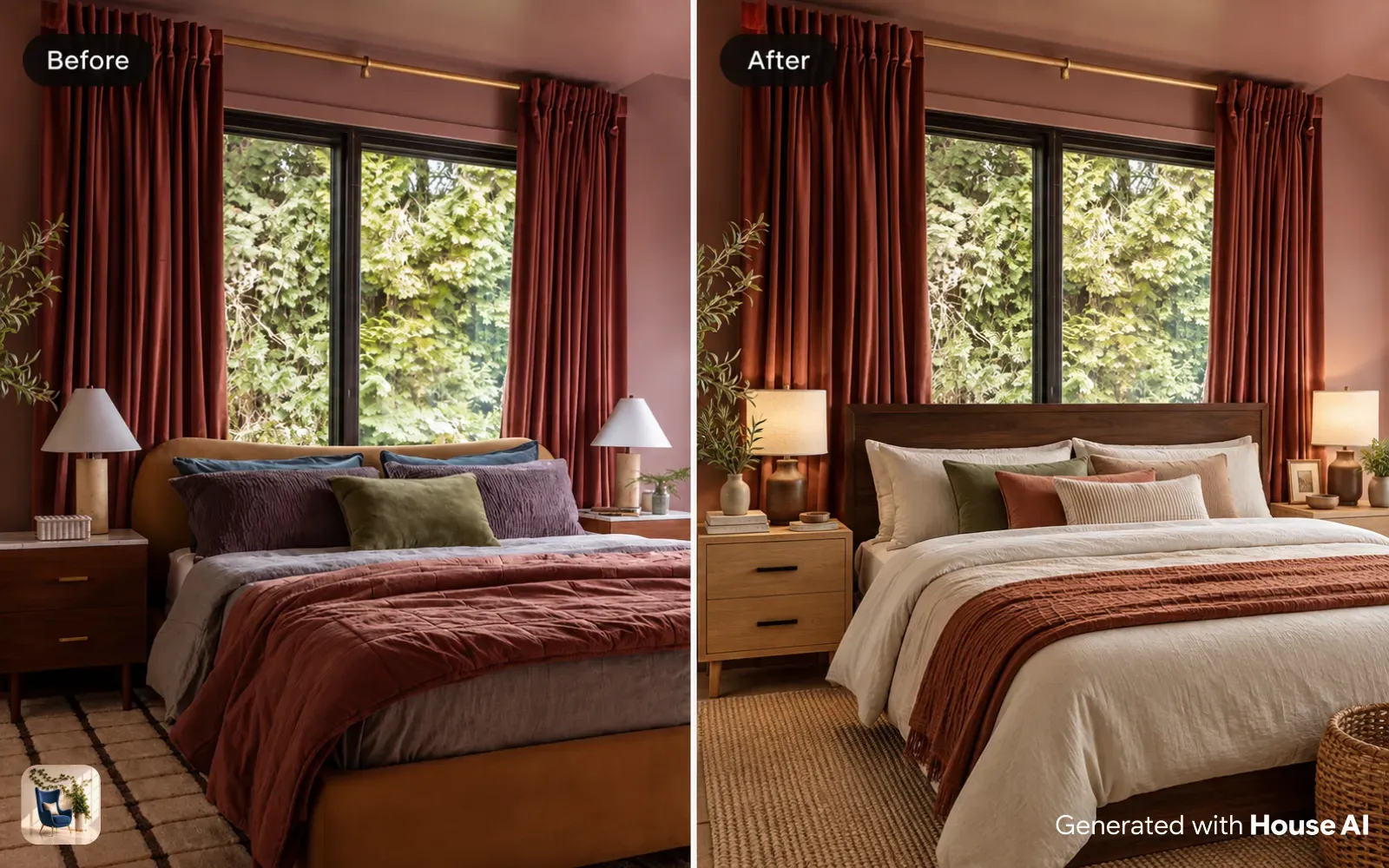
Put a rug under wood furniture that sits on a wood floor. Woven textures like rattan and cane count as wood and can bridge two tones.
Try the mix on your own room first
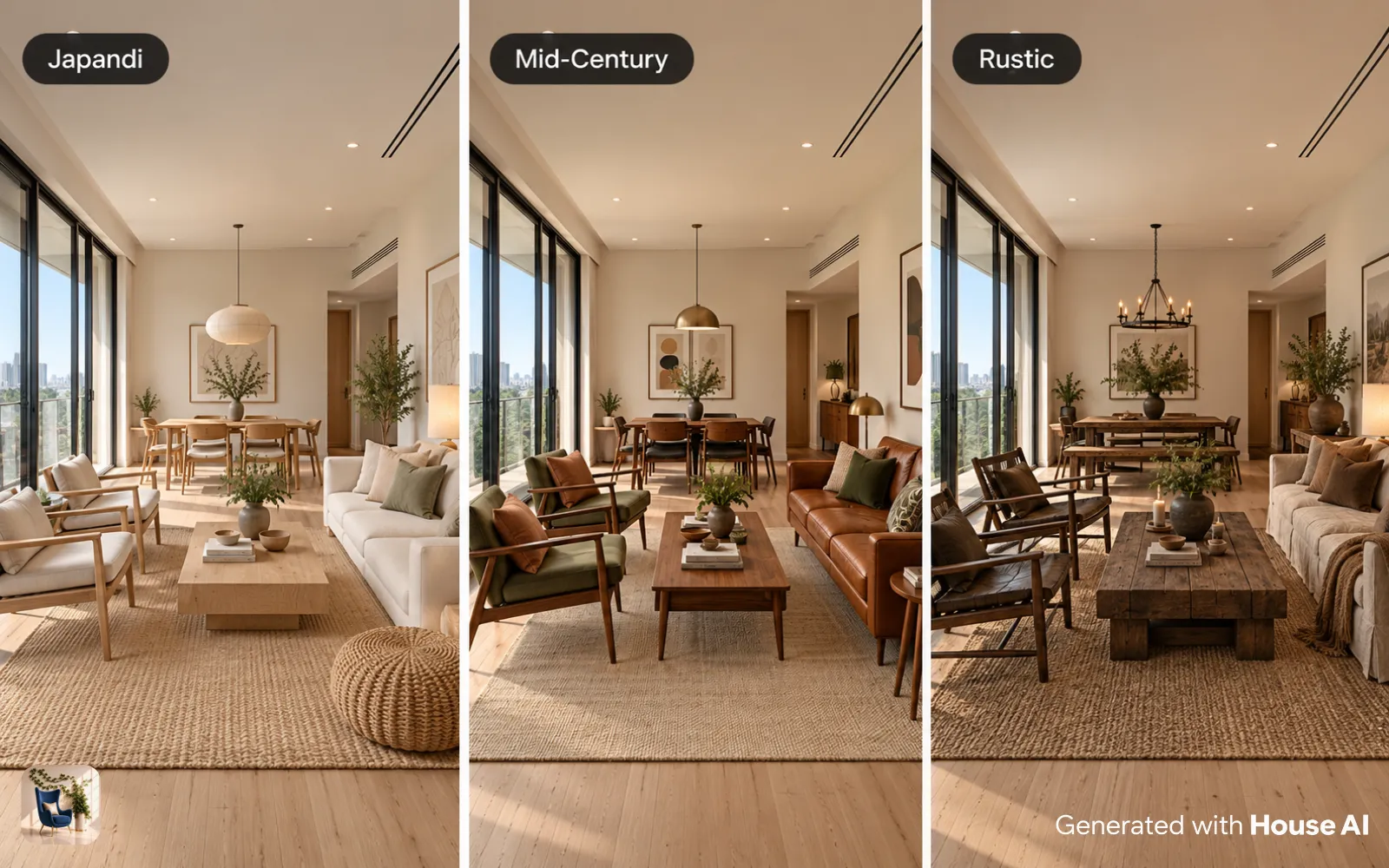
A wood tone that looks right online can look wrong next to your floor. Upload a photo of the room to House AI and try a few styles with different wood stories, such as Japandi for pale wood, Mid-Century for walnut, and Rustic for darker, rougher wood. Each design takes about 15 seconds on average. AI doesn't measure your room, and small details like grain and finish can drift, so hold a real wood sample against your floor before you buy.
Frequently asked questions
How many wood tones should be in one room?
Most rooms look settled with two or three. One can feel flat, and four or more tends to look busy unless one of them is black or painted.
Can you mix light and dark wood?
Yes. Light and dark woods usually mix better than two mid-tones, because the difference looks deliberate. Keep their undertones related.
Should wood furniture match the wood floor?
No. Furniture that nearly matches the floor tends to disappear into it. Pick a clearly lighter or darker wood, and use a rug to separate the two.
Does black wood count as a wood tone?
It counts, but it acts as a neutral. Black-stained or ebonized wood sits well next to almost any other wood, which makes it the easiest accent to add.