
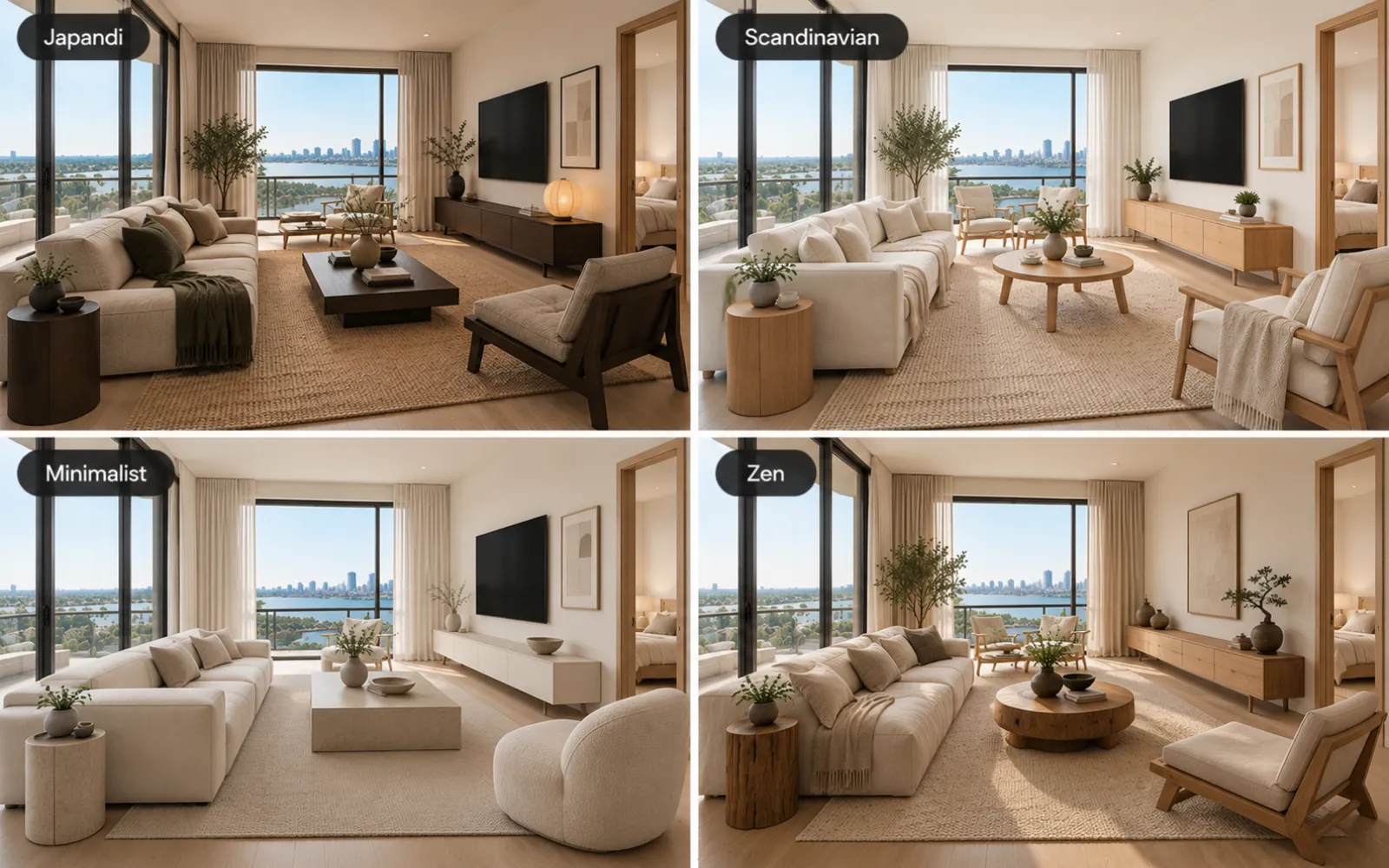
Japandi and Scandinavian both use natural wood, simple furniture, and few objects, but they feel different. Scandinavian rooms are bright, with white walls, blond wood, and cozy textiles. Japandi blends that with Japanese minimalism, so the furniture sits lower, the palette runs warmer and darker with charcoal and earth tones, and handmade, imperfect pieces are welcome.
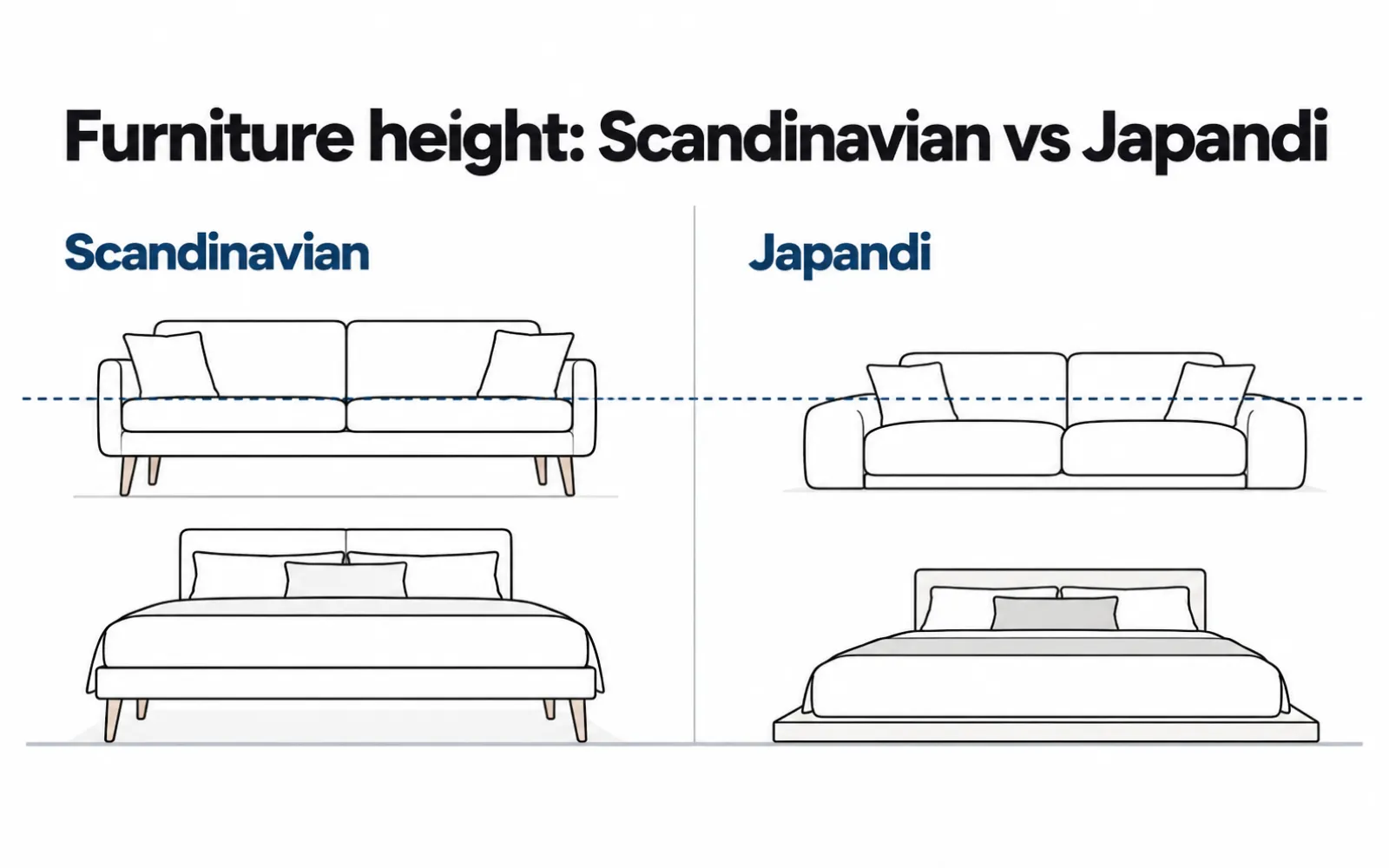
The two get mixed up because Japandi borrows half its name and much of its furniture from Scandinavian design. The fastest tells are the height of the furniture and how dark the accents go.
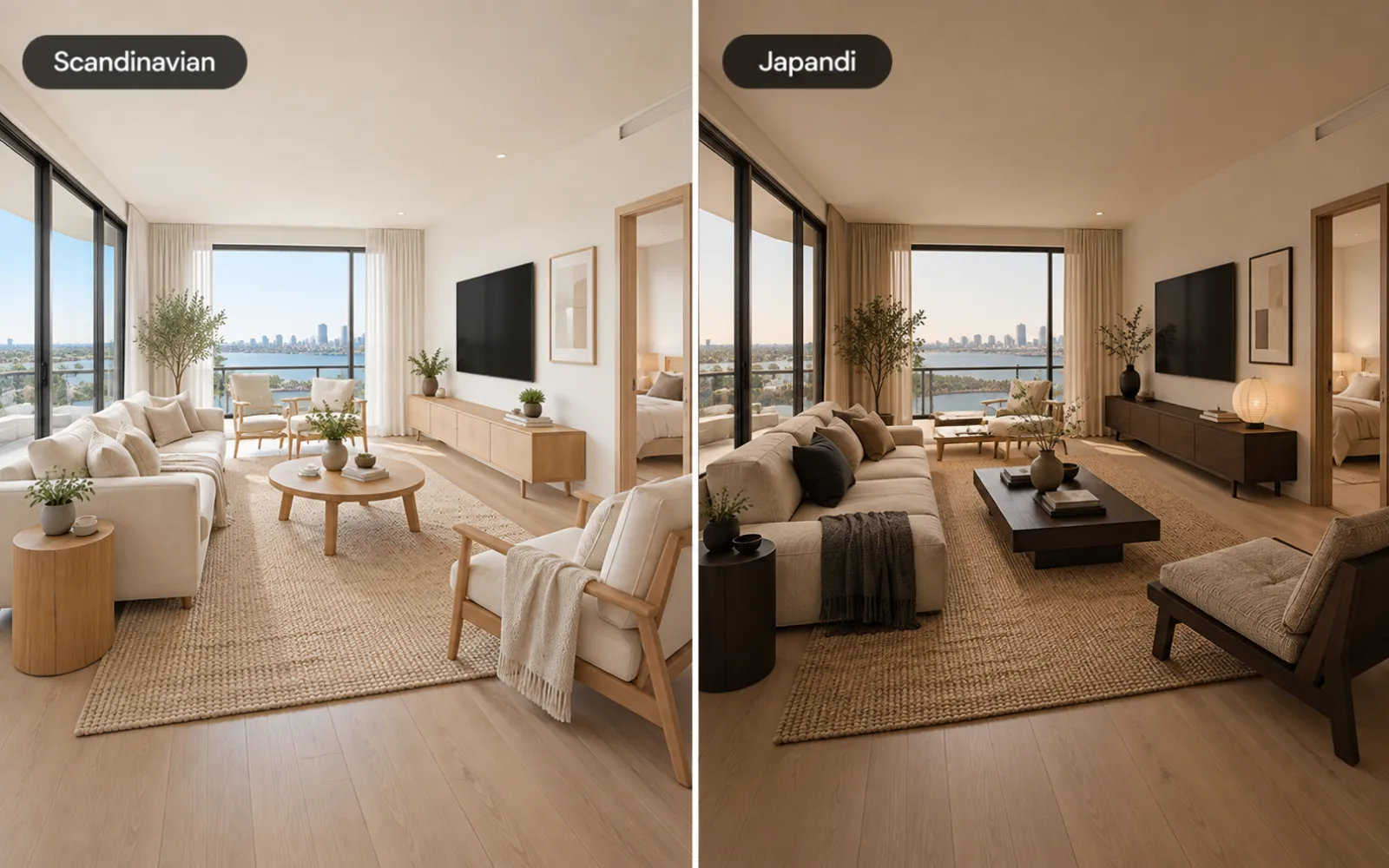
What Japandi and Scandinavian have in common
Both styles put function ahead of decoration and keep clutter low. Light wood, linen, wool, and matte ceramics show up in each. Neither leans on pattern. Both use texture instead, so a quiet room doesn't feel cold.
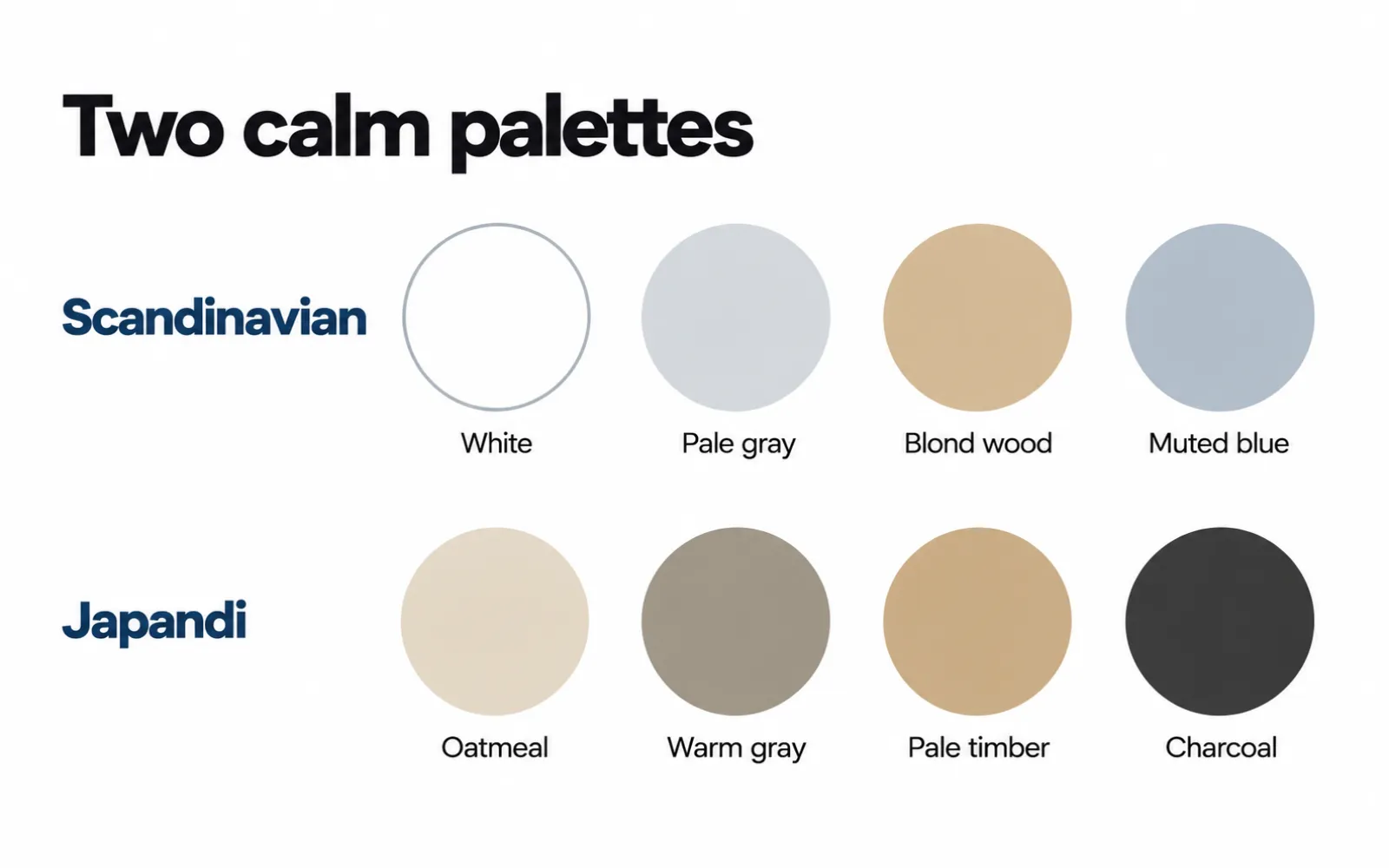
Where they differ
| Detail | Scandinavian | Japandi |
|---|---|---|
| Palette | White, pale gray, and muted pastels | Oatmeal, warm gray, and charcoal, with a few dark accents |
| Wood | Blond woods like light oak and birch | Pale oak and ash, often next to one dark wood or black piece |
| Furniture height | Standard height, often raised on slim legs | Low to the floor, like platform beds and low sofas |
| Textiles | Wool throws, knits, and sheepskin | Linen and cotton, fewer and flatter |
| Accents | Plants and soft pastel textiles | Matte black metal, paper lamps, and handmade ceramics |
| Idea behind it | Hygge, the Nordic idea of everyday coziness | Wabi-sabi, the Japanese idea of beauty in imperfect, handmade things |
If a room has white walls, blond wood on slim legs, and a sheepskin over the chair, it reads Scandinavian. If it has a low bed, a charcoal or clay accent, and one handmade bowl on an otherwise empty shelf, it reads Japandi.
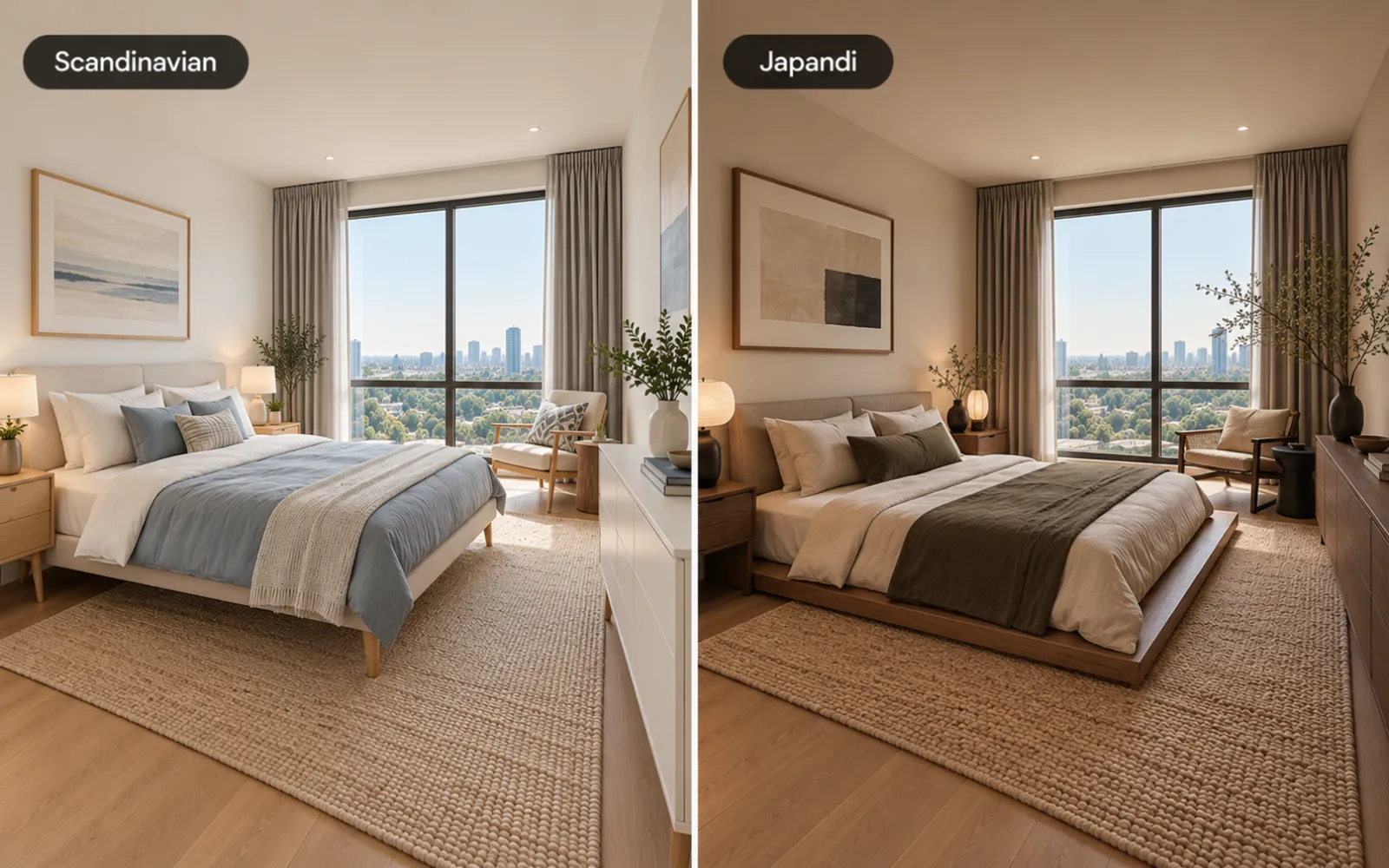
Try both on your own room
Step 1: Take one photo in daylight
Stand in a corner so two walls, a window, and the floor are in the frame.
Step 2: Run Japandi and Scandinavian in House AI
Upload the photo, set the room type, and pick Japandi, then Scandinavian, from the style grid. Each design takes about 15 seconds on average, and every user gets 3 free designs a day.
Step 3: Compare, then measure
Notice which one suits your light and the furniture you plan to keep. AI doesn't measure the room, and small details can drift, so check sizes before you buy a low sofa or a platform bed.
Frequently asked questions
Is Japandi the same as Scandinavian?
No. Japandi is a blend of Japanese and Scandinavian design. It keeps the Scandinavian focus on function and pale wood but adds lower furniture, earthier colors, and a taste for handmade pieces.
Which is warmer, Japandi or Scandinavian?
Japandi usually looks warmer because of its earth tones and darker accents. Scandinavian gets its coziness from wool and sheepskin but keeps the walls and floors light.
Can you mix Japandi and Scandinavian?
Yes, and plenty of rooms land in between. Start from a Scandinavian base, then lower the furniture and add one or two dark or clay-colored pieces.
Which style works better in a small, dark room?
Scandinavian, because white walls and pale floors bounce light around. Japandi can still work in a small room, since low furniture keeps the view across the room open.