
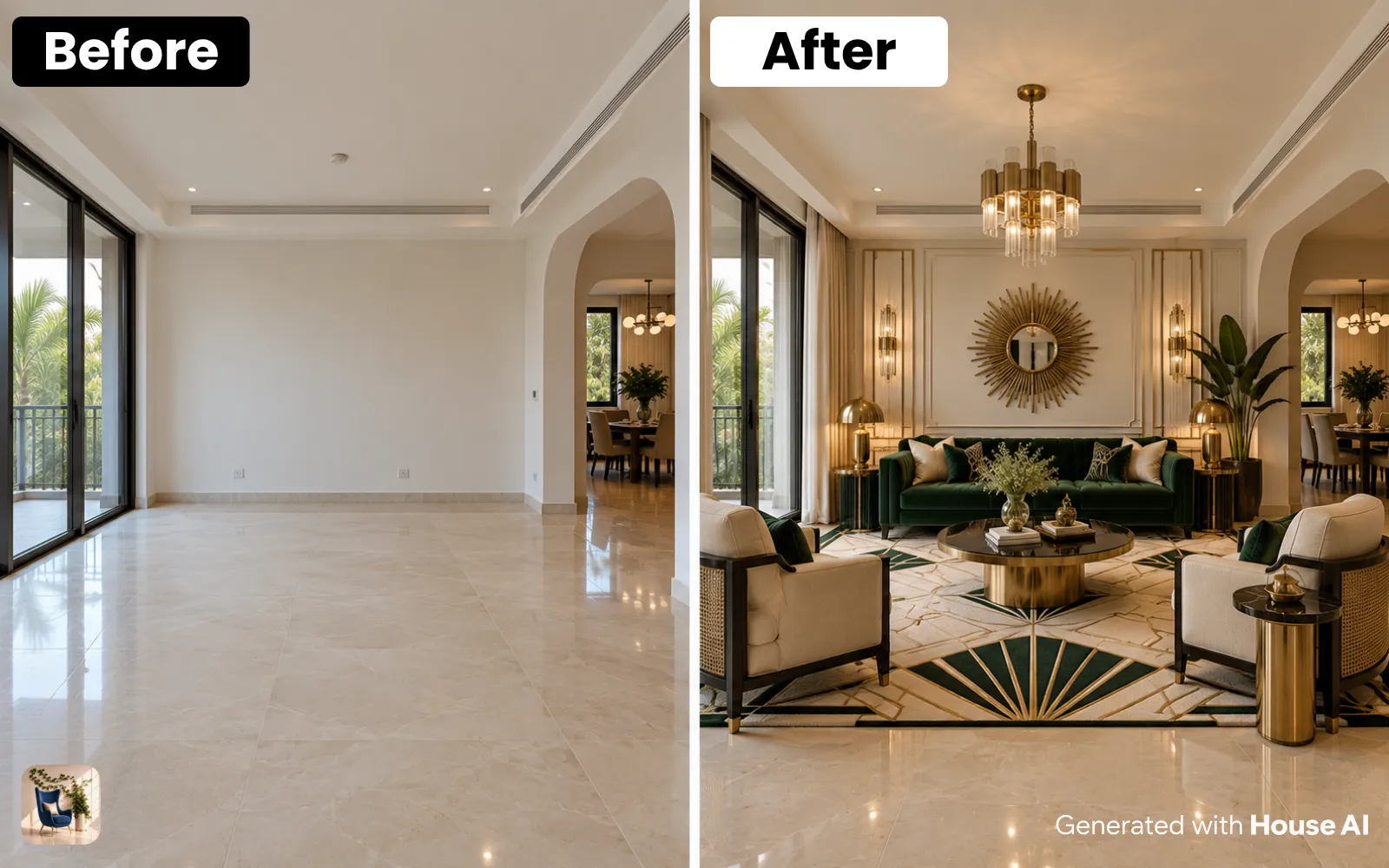
Art Deco interior design is a glamorous, geometric style from the 1920s and 1930s. It uses bold symmetry, fan and sunburst shapes, stepped forms, glossy lacquer, mirrors, brass or chrome, and rich colors like black, gold, and emerald. The name comes from a 1925 design exhibition in Paris, where the style was first shown.
An Art Deco room looks polished and a little theatrical. Every surface has a clean edge, and the decoration comes from pattern and shine rather than clutter.
How to spot an Art Deco room
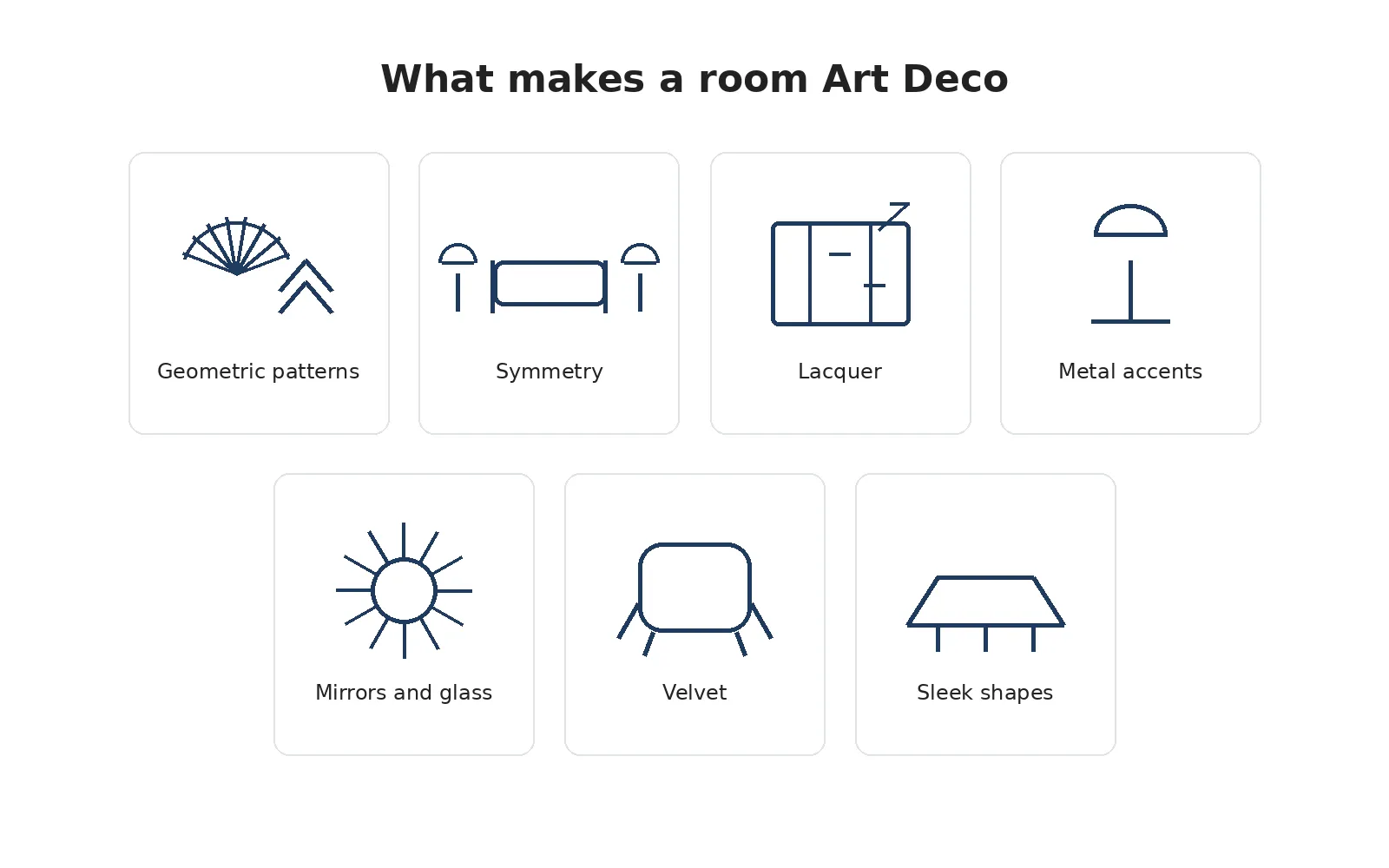
Most Art Deco rooms share these details. A room with four or five of them reads as Art Deco.
- Geometric patterns: chevrons, zigzags, stepped shapes, fans, and sunbursts
- Strong symmetry, such as matching lamps or chairs on each side of a sofa or bed
- Glossy surfaces: black lacquer, polished wood, and high-shine paint
- Metal accents in brass, gold, or chrome
- Mirrors and glass, from mirrored furniture to frosted glass lamps
- Velvet upholstery in deep colors like emerald, sapphire, or black
- Rounded, sleek furniture with clean edges
Where Art Deco came from
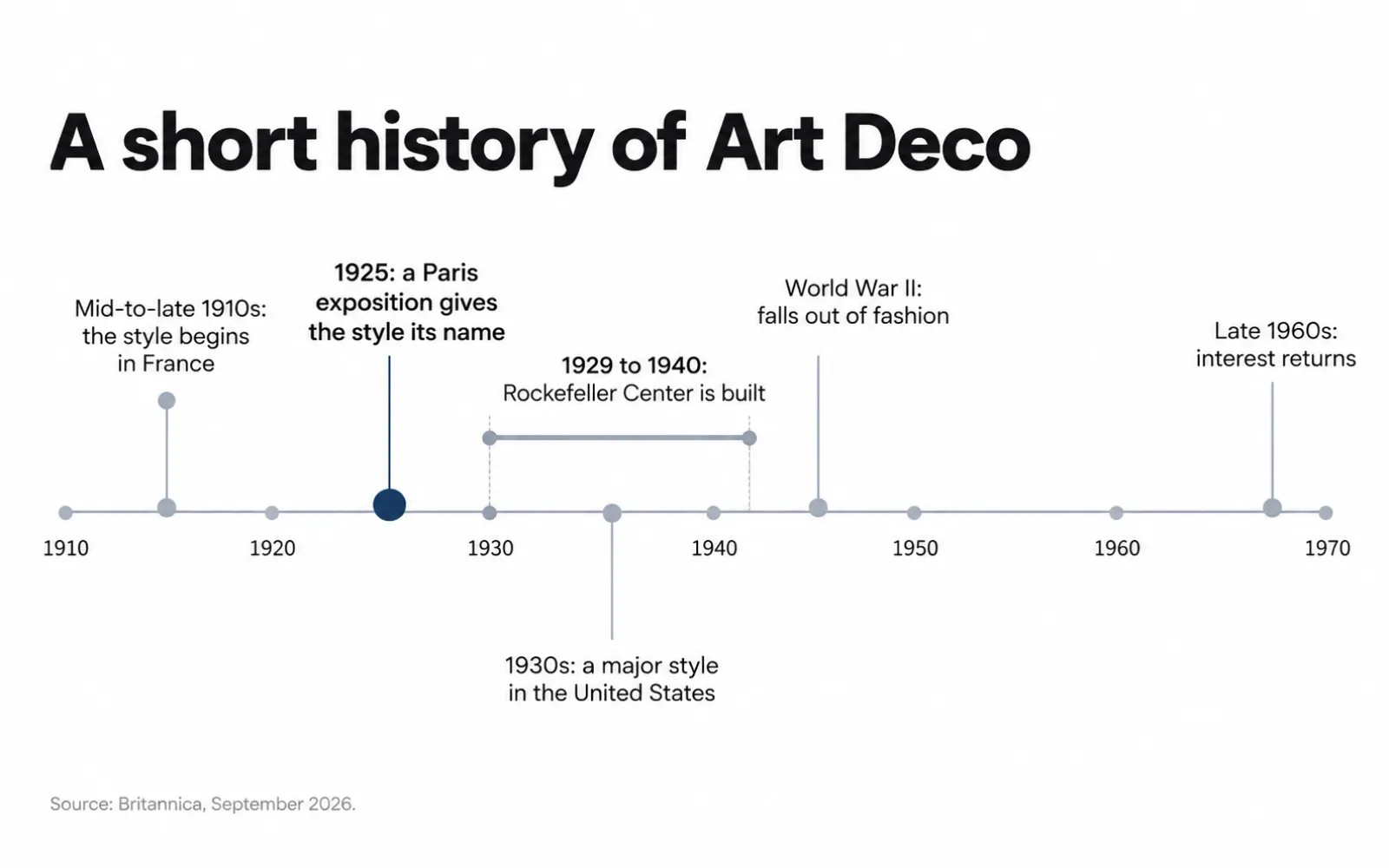
Art Deco was a design style of the 1920s and 1930s, according to Britannica. It began in France in the mid-to-late 1910s and matured at the Exposition Internationale des Arts Décoratifs et Industriels Modernes in Paris in 1925, which gave the style its name. It then became a major style in the United States during the 1930s. Rockefeller Center in New York, built between 1929 and 1940, the Chrysler Building, and the Empire State Building are its most monumental examples.
The style admired machines. Its designers mixed new manufactured materials, like Bakelite plastic and vita-glass, with natural ones like silver, obsidian, and rock crystal. Art Deco fell out of fashion during World War II, and interest came back beginning in the late 1960s.
Art Deco vs mid-century modern vs minimalist
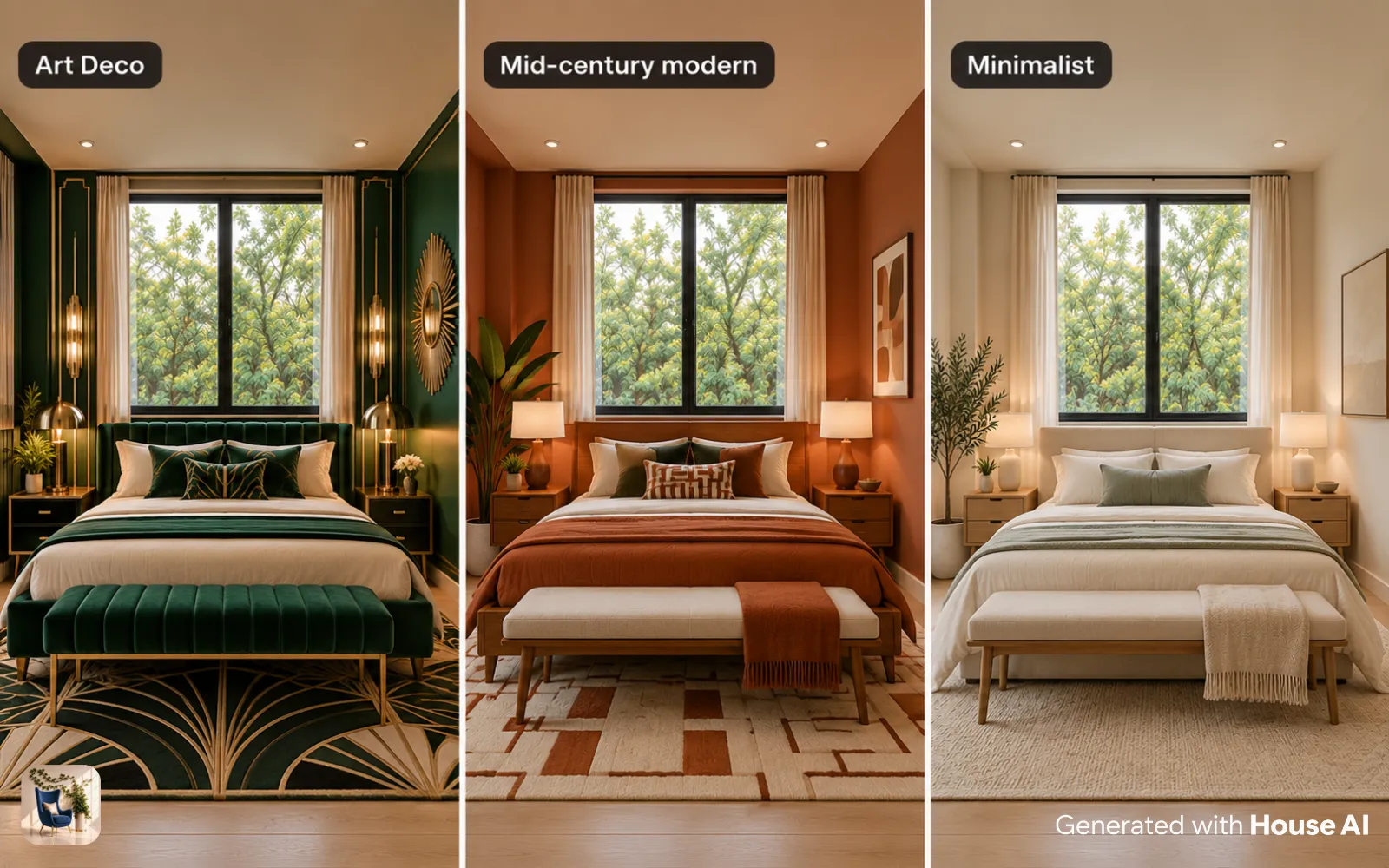
All three use clean lines, so they get mixed up. Art Deco adds shine, pattern, and drama, with lacquer, brass, and velvet. Mid-century modern is warmer and more relaxed, with walnut, tapered legs, and simple shapes from the middle of the 20th century. Minimalist strips a room down to very few objects and bare surfaces.
How to try Art Deco in your own room
Step 1: Pick one geometric pattern
Start with a single bold pattern, like a fan-print wallpaper, a chevron rug, or a sunburst mirror. Let it set the colors for the rest of the room.
Step 2: Add shine and symmetry
Bring in one glossy or metallic piece, such as a brass lamp or a lacquered side table, and place matching pieces on each side of the sofa or bed.
Step 3: See it on a photo of your room first
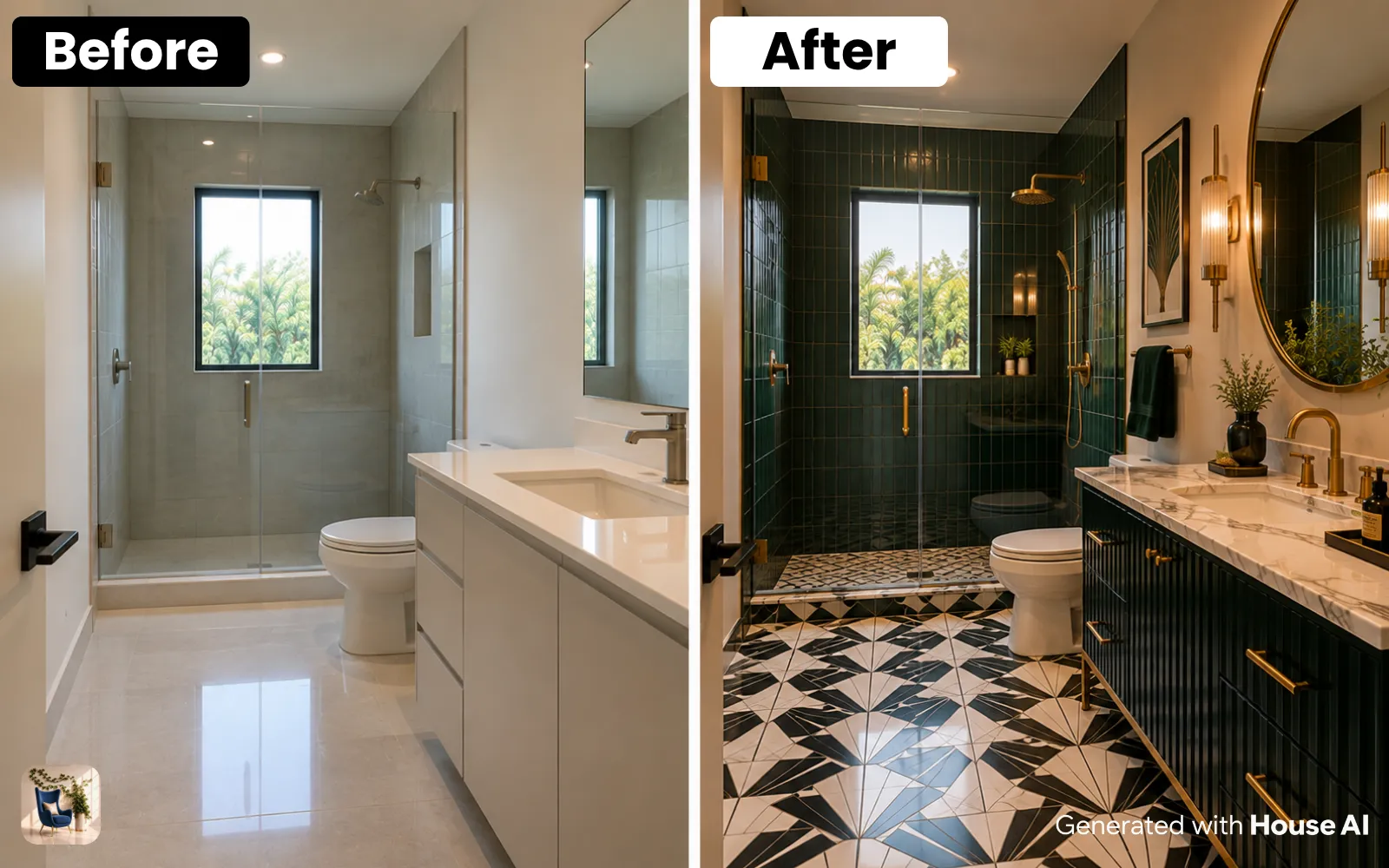
In House AI, upload a photo of the room, set the room type, and describe the Art Deco look you want in your own words. Each design takes about 15 seconds on average, and every user gets 3 free designs a day. AI doesn't measure the room, and small details can drift, so treat the picture as a guide to the mood and measure before you buy.
Frequently asked questions
What are the main features of Art Deco interior design?
Geometric patterns, strong symmetry, glossy lacquer, brass or chrome accents, mirrors, and velvet in deep colors like emerald and black.
Where did the name Art Deco come from?
From the Exposition Internationale des Arts Décoratifs et Industriels Modernes, held in Paris in 1925, where the style was first shown.
What colors are used in Art Deco?
Black, gold, and cream are the classic base, with jewel tones like emerald green and sapphire blue as accents.
Can Art Deco work in a small room?
Yes. Use one bold pattern instead of several, add a large mirror to bounce light, and keep the furniture to a few pieces with clean edges.
Keep reading
- How Do I Find My Interior Design Style?
- What Is Quiet Luxury Interior Design?
- Interior Design Trends 2026
- Mid-Century Modern Style
- Vintage Style
Sources: Britannica, "Art Deco," last modified August 24, 2026, checked September 28, 2026. House AI figures come from the House AI app.