
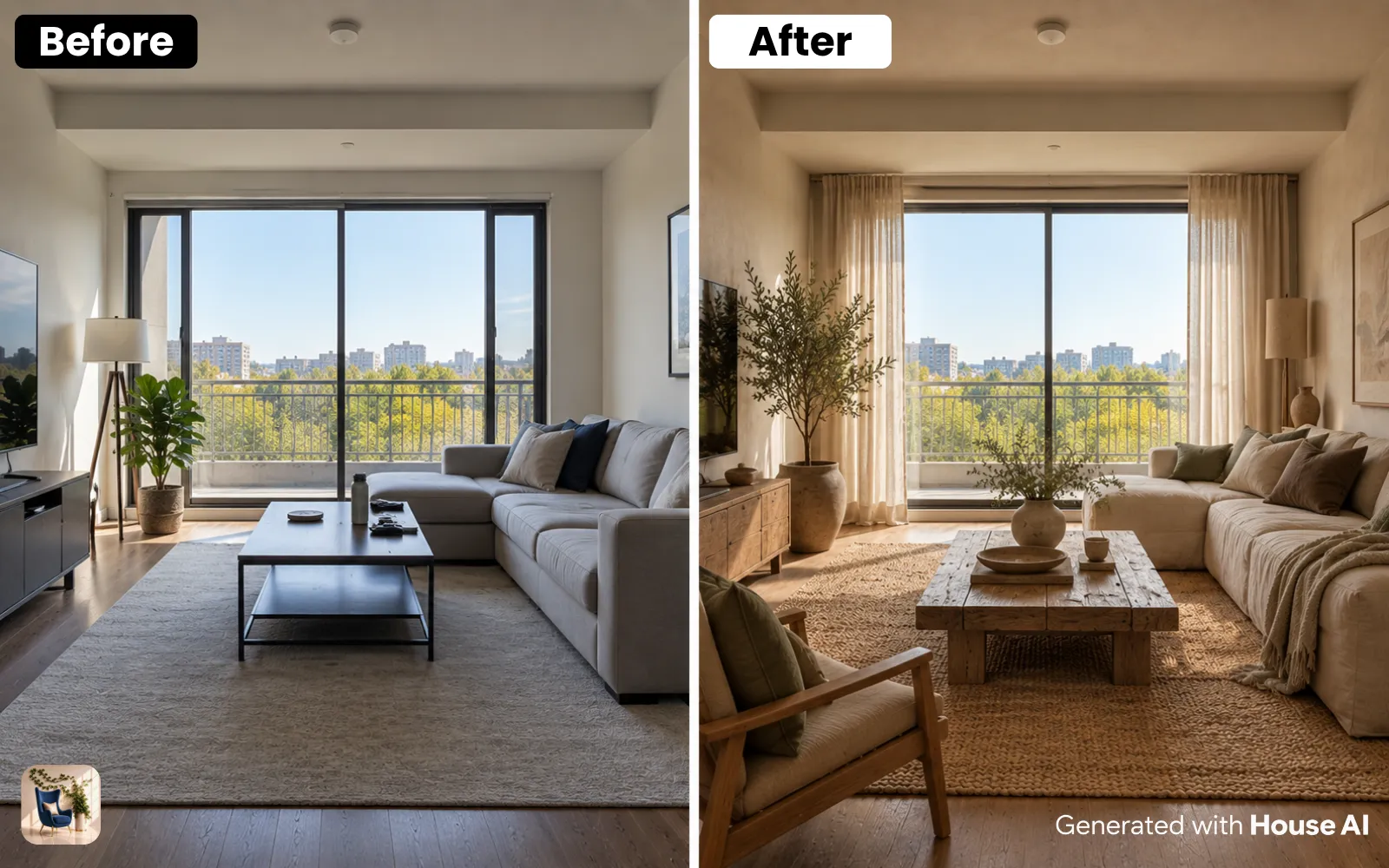
Wabi-sabi interior design is a Japanese-rooted approach that finds beauty in things that are imperfect, worn, and natural. A wabi-sabi room uses raw wood, clay, stone, linen, and plaster in muted earth colors, with handmade pieces, visible wear, and very few objects. It chooses calm and age over polish and newness.
The term comes from Japanese philosophy, so it describes a way of choosing things more than a list of things to buy. It suits a room that already has some age in it.
Where wabi-sabi comes from
Wabi-sabi grew out of the Japanese tea ceremony. The Zen priest Murata Jukō (1423 to 1502) replaced ornate Chinese tea wares with simple wood and clay ones. About a century later, the tea master Sen no Rikyū (1522 to 1591) designed plain, humble teahouses that pushed the idea further. Britannica describes wabi-sabi as a Japanese philosophy that finds beauty in imperfection and impermanence.
In 1994, the designer Leonard Koren published Wabi-Sabi for Artists, Designers, Poets & Philosophers, a short book that compares the idea with Western ideas of beauty.
What a wabi-sabi room looks like
- Raw or lightly finished wood, with the grain and knots showing
- Handmade ceramics and stoneware that are a little uneven
- Limewash or plaster walls instead of flat paint
- Linen, cotton, and wool in natural colors
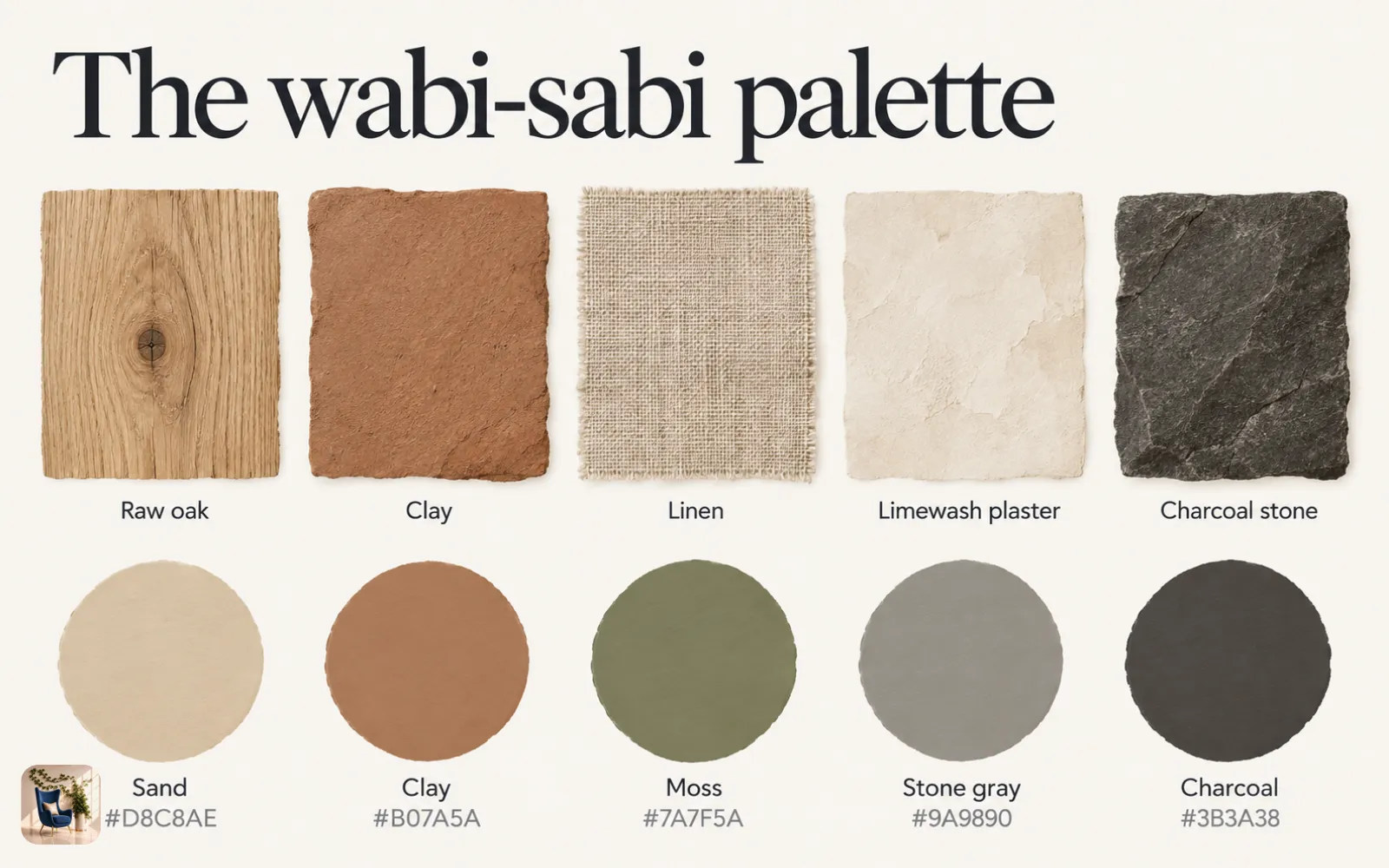
- Muted earth tones like sand, clay, moss, stone gray, and charcoal
- Low, simple furniture with soft edges
- Few objects, with empty space around each one
- Visible repairs, like kintsugi, the Japanese method of mending pottery with gold lacquer
Wabi-sabi vs Japandi vs minimalism
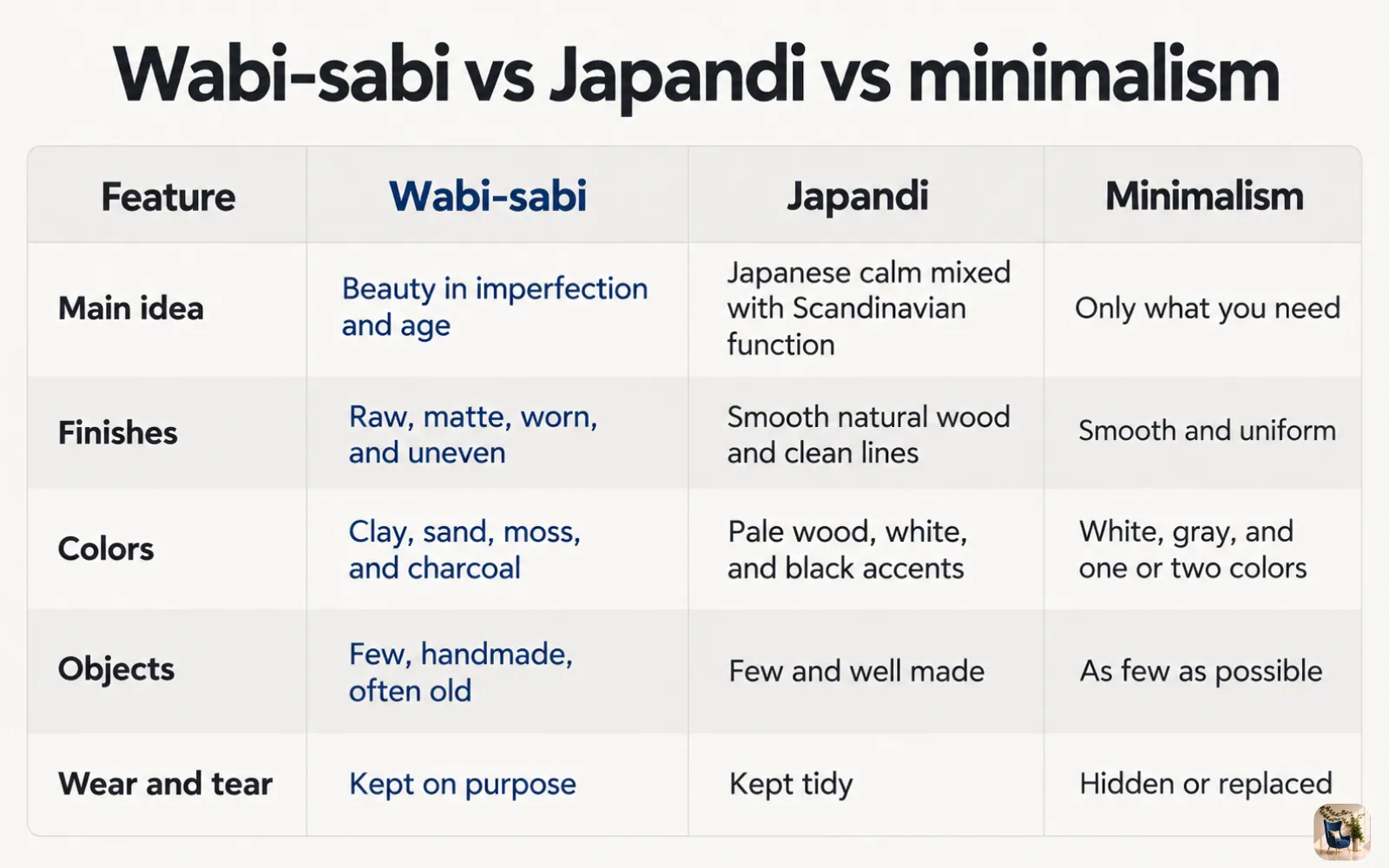
| Feature | Wabi-sabi | Japandi | Minimalism |
|---|---|---|---|
| Main idea | Beauty in imperfection and age | Japanese calm mixed with Scandinavian function | Only what you need |
| Finishes | Raw, matte, worn, and uneven | Smooth natural wood and clean lines | Smooth and uniform |
| Colors | Clay, sand, moss, and charcoal | Pale wood, white, and black accents | White, gray, and one or two colors |
| Objects | Few, handmade, often old | Few and well made | As few as possible |
| Wear and tear | Kept on purpose | Kept tidy | Hidden or replaced |
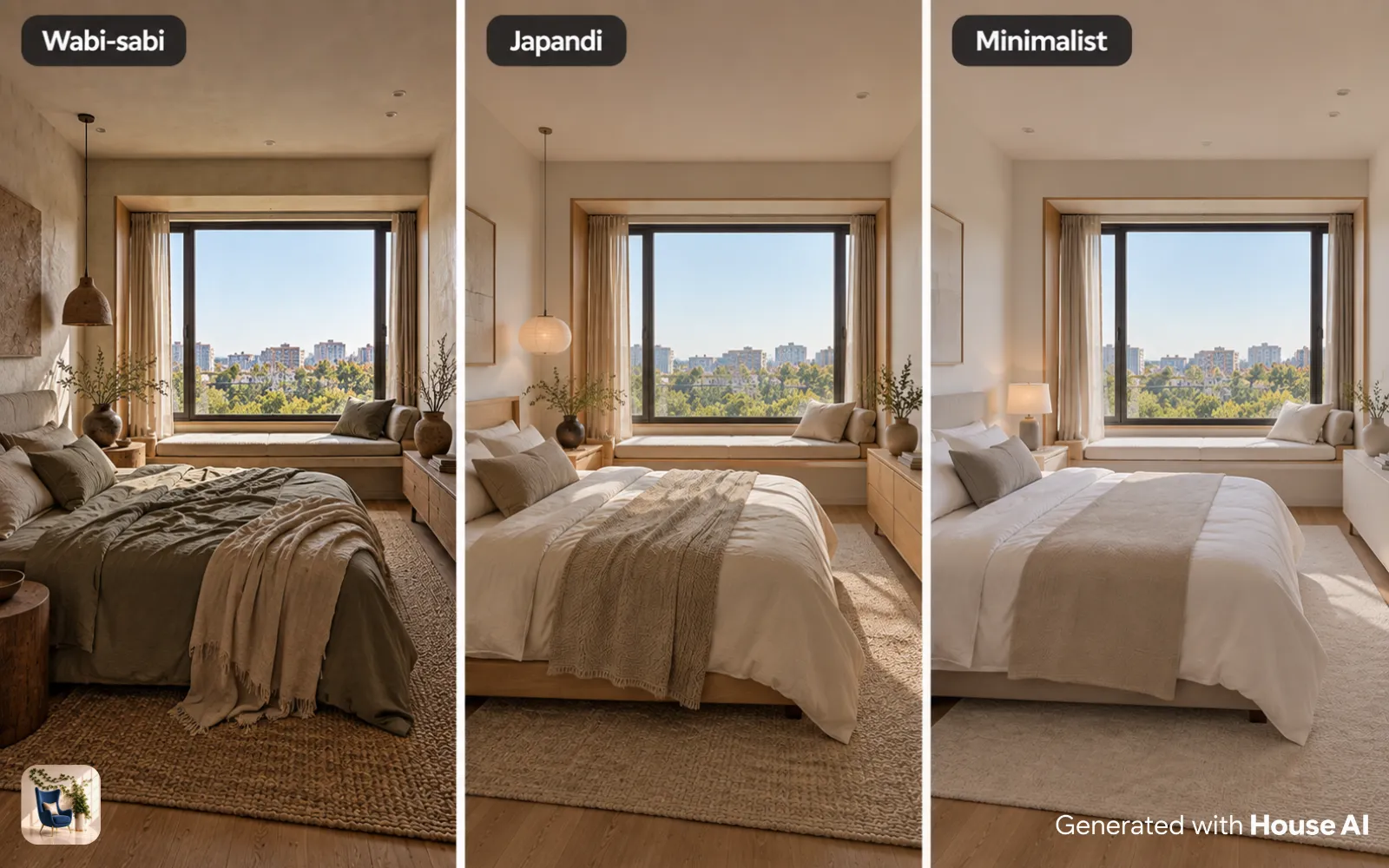
Japandi is the closest relative. It uses the same natural materials but keeps them clean and new-looking. If your room leans polished, Japandi is the easier start. If it has old floors, cracked plaster, or inherited furniture, wabi-sabi works with what is already there.
How to try wabi-sabi in your own room
Start by taking things away. Clear the surfaces, then bring back only the pieces that are handmade, old, or natural. Swap glossy or chrome accents for wood, clay, and linen.
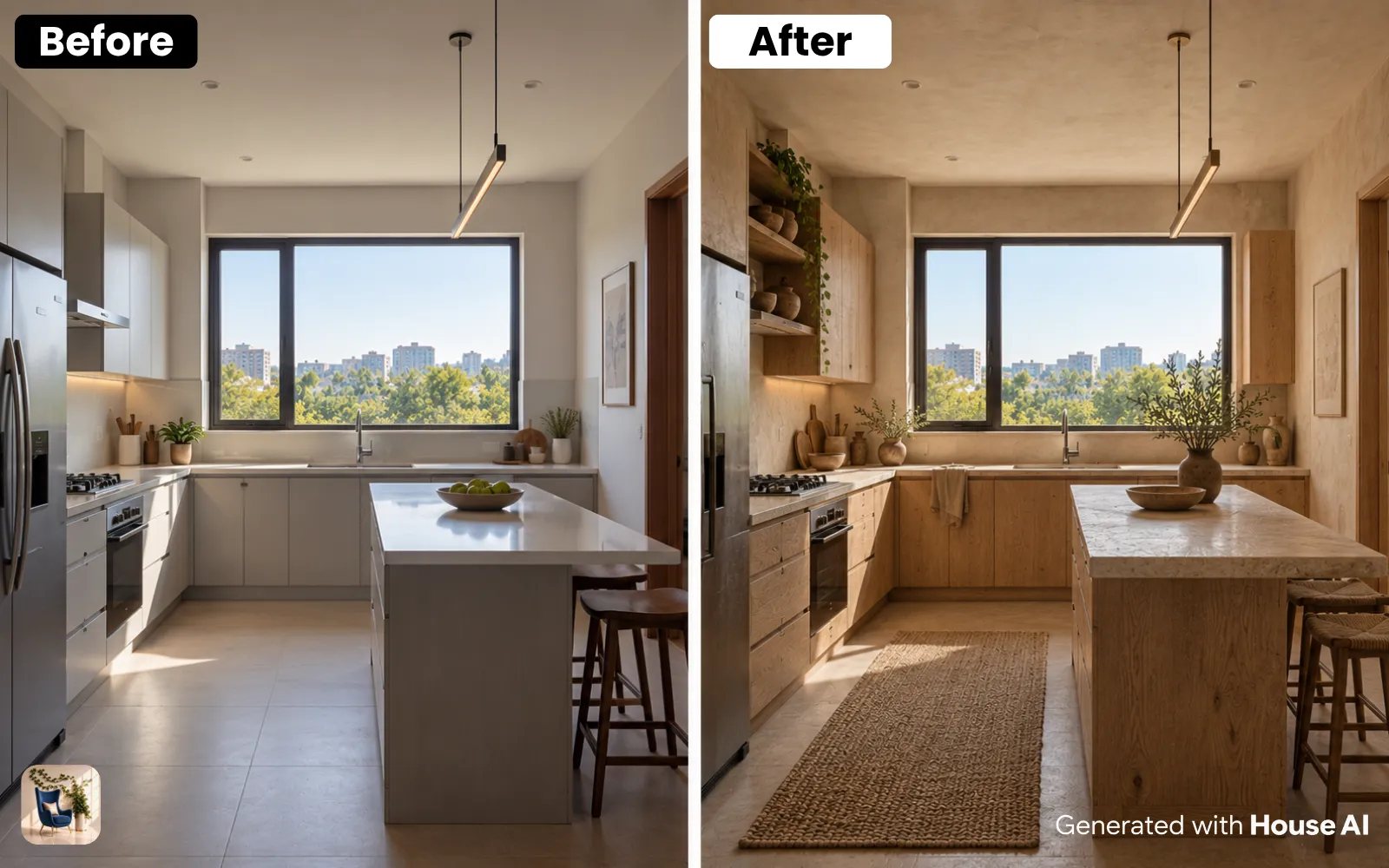
To preview a direction before you change anything, upload a photo of your room to House AI and try Japandi or Zen, two of its 300+ styles that share wabi-sabi's natural materials. The free tier gives 3 designs a day, and each takes about 15 seconds.
Know the limit. AI renders tend to look new and clean, while wabi-sabi depends on real texture and real age, so a redesign shows the palette and layout better than the patina. It also doesn't measure your room.
Frequently asked questions
What does wabi-sabi mean?
Britannica describes wabi-sabi as a Japanese philosophy that finds beauty in imperfection and impermanence. In a home, it means choosing natural, handmade, and aged things over perfect, new ones.
Is wabi-sabi the same as Japandi?
No. Japandi mixes Japanese and Scandinavian design and keeps surfaces clean and new. Wabi-sabi keeps wear, uneven handmade pieces, and signs of age on purpose.
What colors are used in wabi-sabi design?
Muted earth tones in matte finishes, such as sand, clay, moss green, stone gray, and charcoal.
Is wabi-sabi an expensive style?
It can be one of the cheaper looks to get, because it favors pieces you already own, secondhand finds, and repairs over new furniture.
Keep reading
- Japandi
- Zen
- Minimalist
- Rustic
- What Is Quiet Luxury Interior Design?
- How Do I Find My Interior Design Style?
Sources: Britannica, "wabi-sabi", updated July 22, 2026. Wikipedia, "Wabi-sabi", checked September 25, 2026. Livingetc, "What is Wabi-Sabi?", June 18, 2024. House AI figures come from the House AI app.