
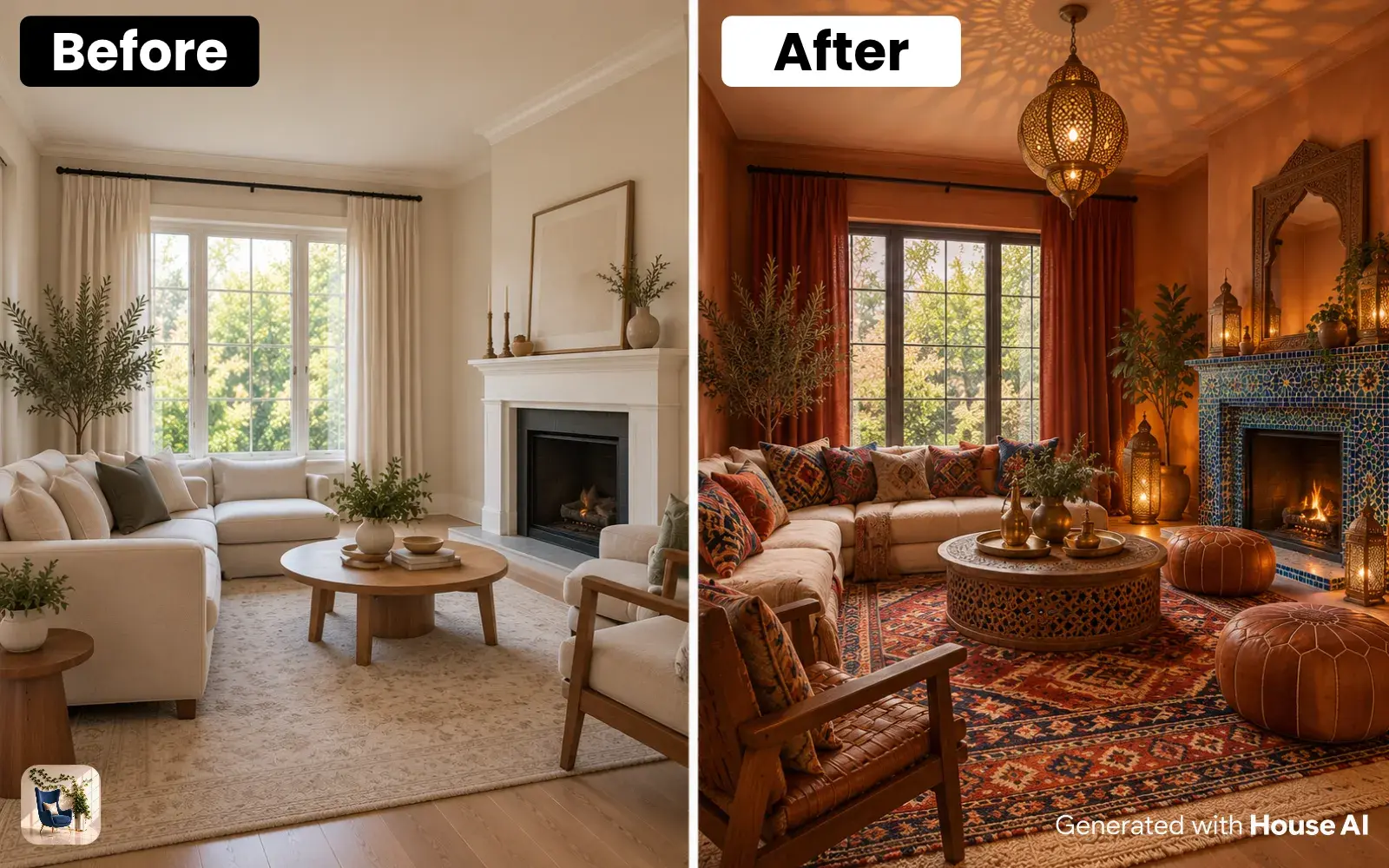
Moroccan interior design is a warm, richly patterned style rooted in North African craft. Its hallmarks are zellige tile, carved and keyhole arches, pierced brass lanterns, layered rugs and textiles, and deep colors like terracotta, saffron, and cobalt. It draws on Arab, Berber, and Mediterranean traditions. To use it in a Western room, pick two or three hallmarks instead of all of them.
A Moroccan room feels handmade and layered, with pattern on the walls, the floor, and the light itself. The skill is in knowing how much of it a room can hold.
The hallmarks of Moroccan design
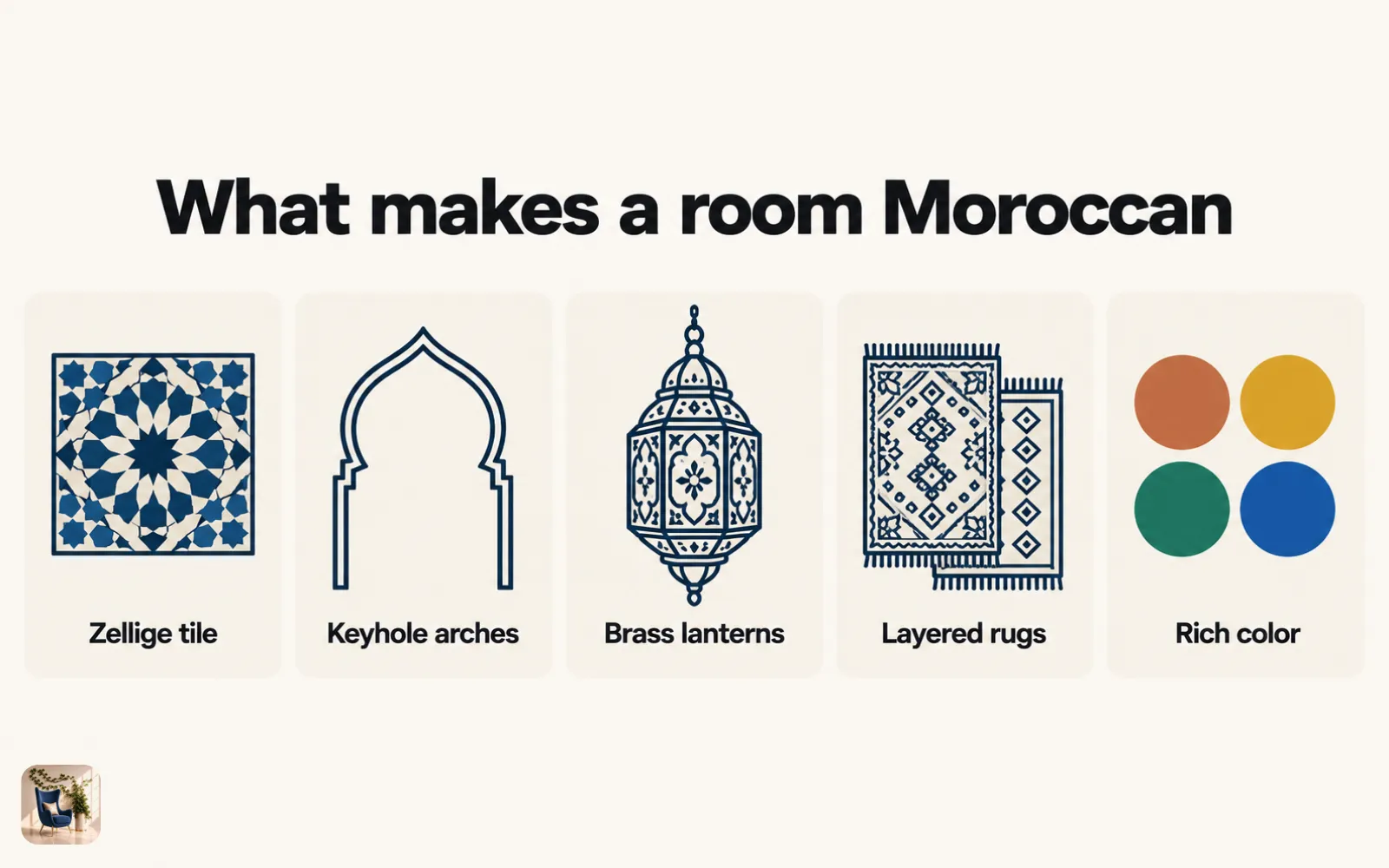
Five details make a room read as Moroccan. Zellige is hand-cut glazed tile set in geometric patterns, often on a wall, a fireplace, or a floor. Arches, especially the pointed keyhole shape, frame doorways, niches, and mirrors. Pierced brass or copper lanterns throw patterned shadows across the walls.
Textiles carry the rest: Berber and kilim rugs layered on the floor, low seating with embroidered cushions, and leather poufs. The colors run from earthy terracotta, sand, and warm white to jewel accents like saffron, emerald, and cobalt. Carved wood, often cedar, shows up in screens, doors, and ceilings.
Moroccan vs Mediterranean
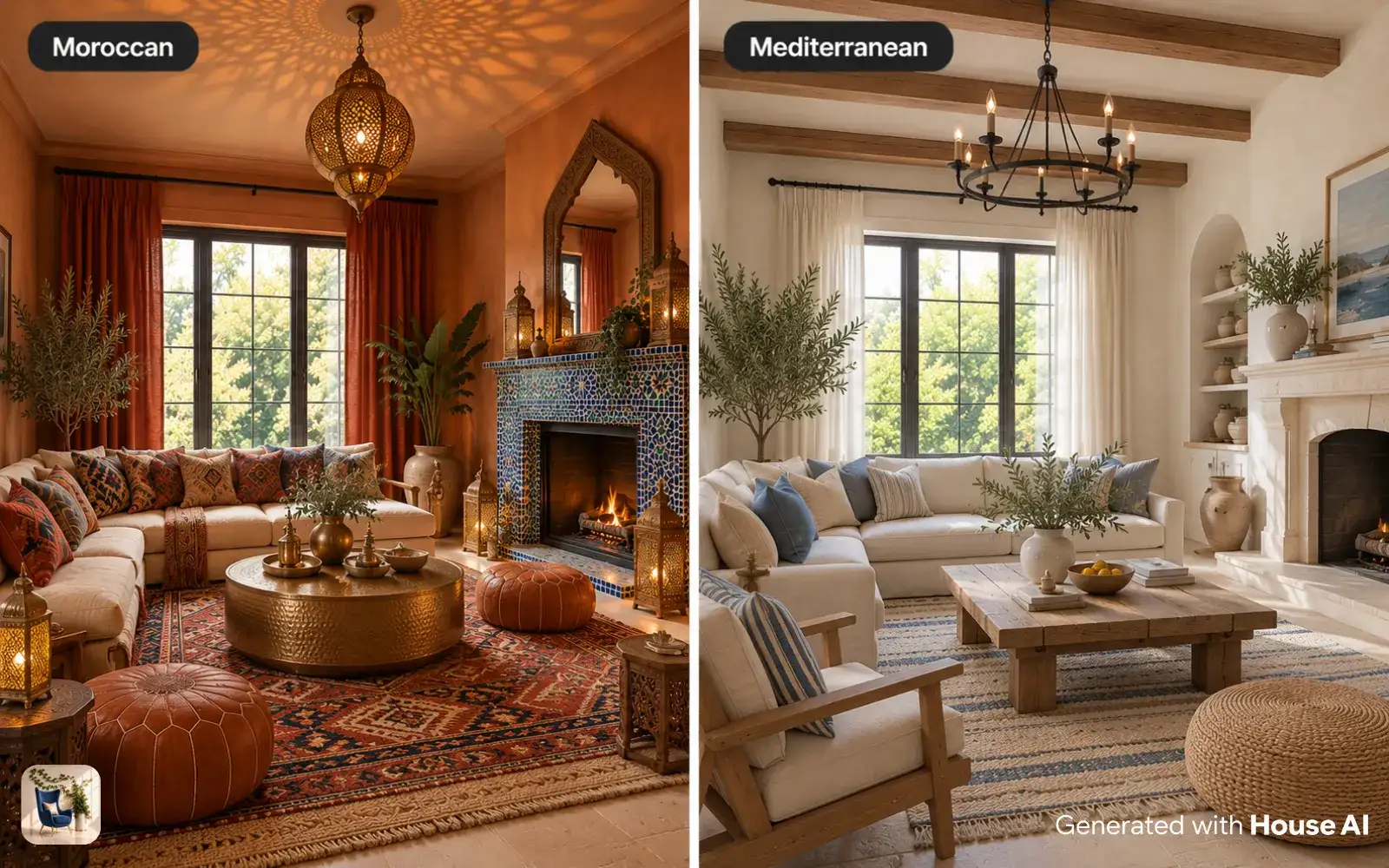
Both styles use arches, plaster, and terracotta, so they get mixed up. Mediterranean is lighter and sun-washed, with lime-washed walls, wrought iron, and olive wood. Moroccan is denser, with more pattern, brass instead of iron, and deeper color.
| Detail | Moroccan | Mediterranean |
|---|---|---|
| Walls | Tadelakt plaster, zellige tile, and carved panels | Lime-washed or whitewashed plaster |
| Metal | Pierced brass and copper lanterns | Black wrought iron |
| Color | Terracotta and sand with saffron, emerald, and cobalt | Warm sand, white, and terracotta with sea blue |
| Pattern | Dense geometric tile and layered patterned rugs | Lighter, with patterned tile used in smaller doses |
| Seating | Low banquettes, floor cushions, and poufs | Standard-height sofas and wood chairs |
How to bring Moroccan style into a Western room
Step 1: Pick two or three hallmarks
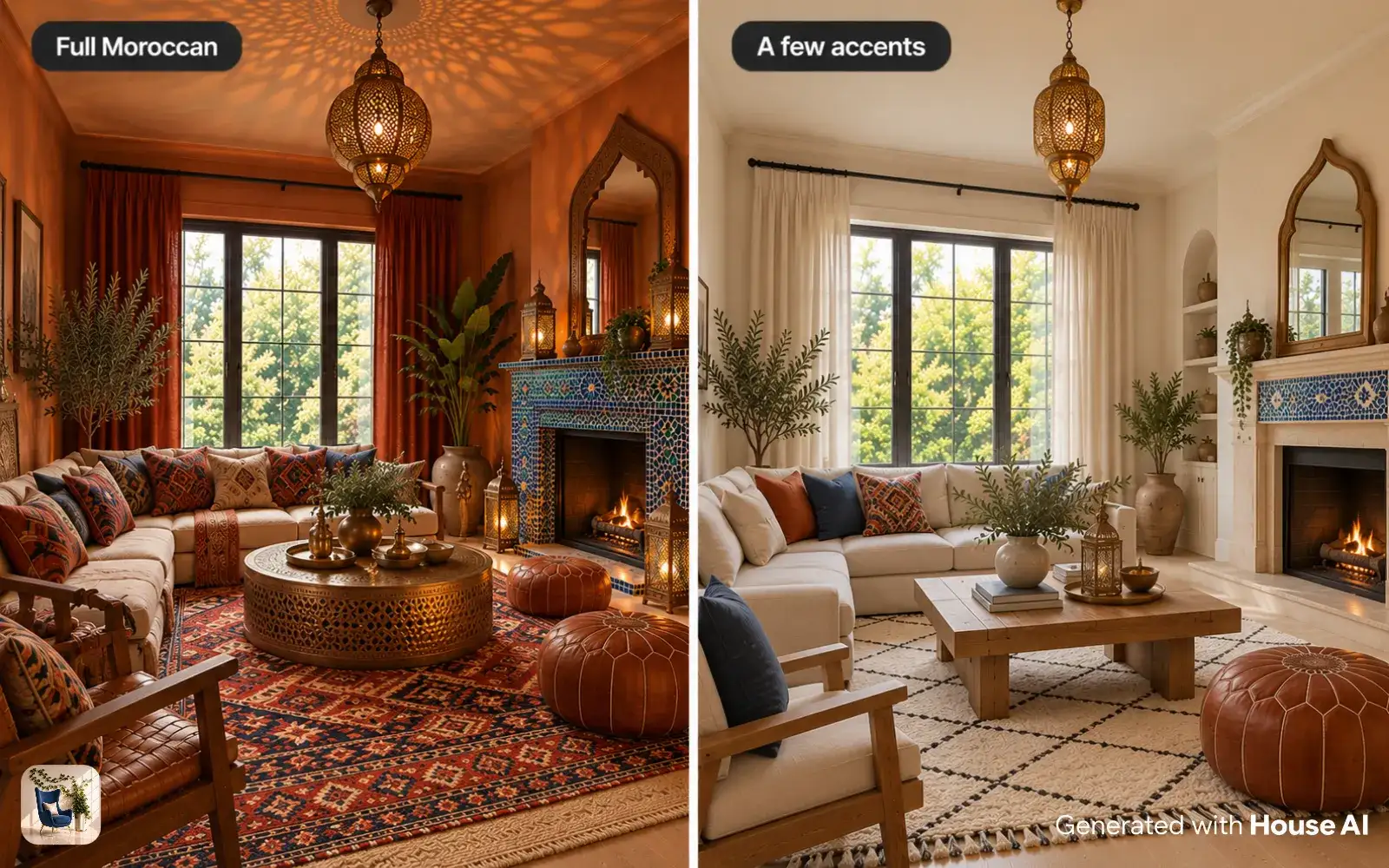
A room with every hallmark at once starts to look like a theme restaurant. Choose two or three, such as one brass lantern, a Berber rug, and an arched mirror, and keep the rest of the room simple.
Step 2: Keep the walls and big furniture calm
A cream or sand wall and a plain sofa give the pattern room to breathe. Let the tile and textiles bring the color.
Step 3: Use real craft where it counts
One handmade rug or tile panel does more than a dozen printed pillows. Spend on the piece people see first.
Step 4: Try it on a photo of your room
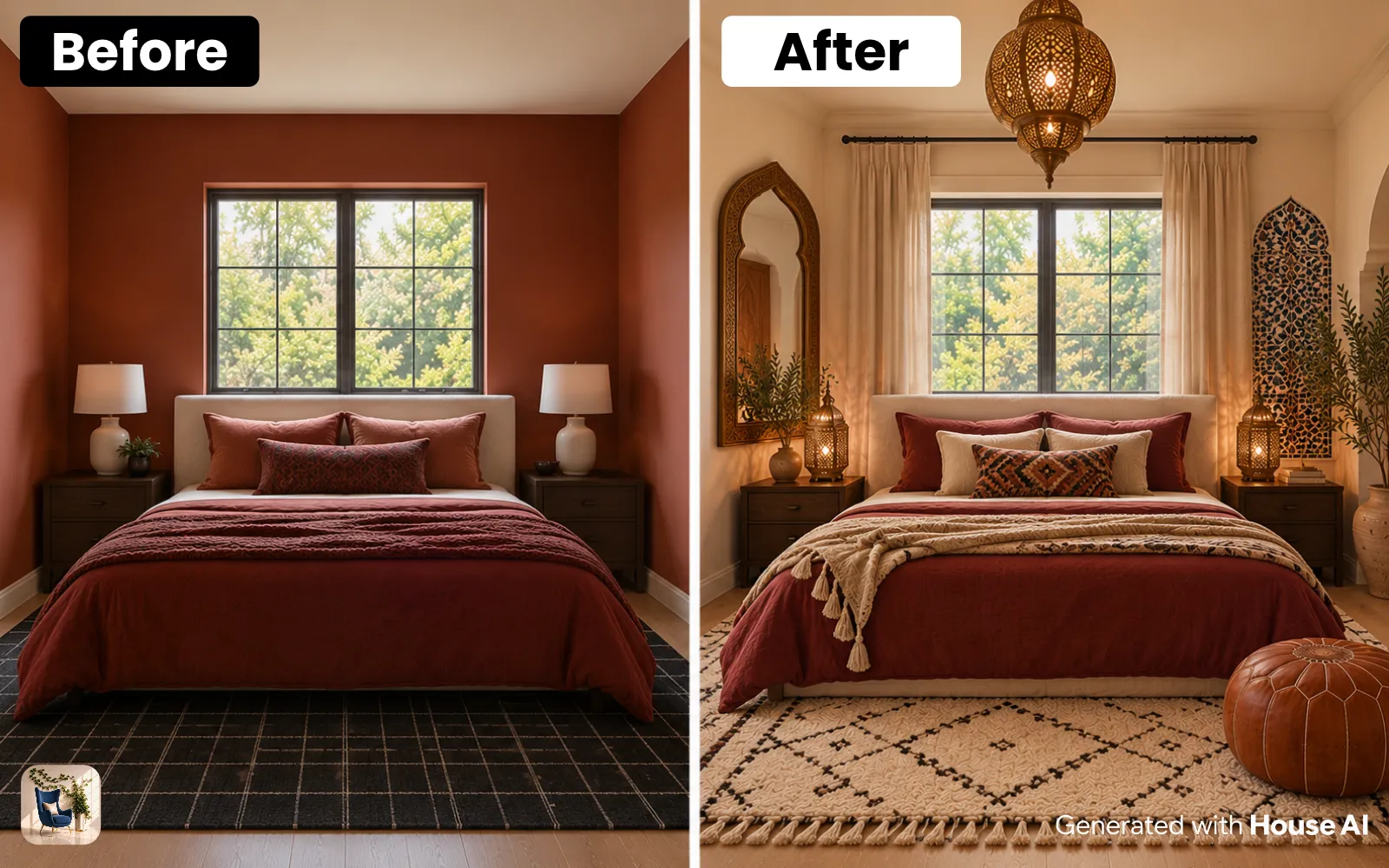
Upload a photo to House AI, set the room type, and describe the Moroccan look in your own words, from full Moroccan to a few accents. Each design takes about 15 seconds, and every user gets 3 free designs a day. AI doesn't measure your room, and small details like tile patterns can drift, so use the render to judge the mood before you buy.
Frequently asked questions
What colors are used in Moroccan interior design?
Earthy terracotta, sand, and warm white as the base, with jewel accents like saffron, emerald, and cobalt, plus brass and copper.
What is zellige tile?
Zellige is glazed tile cut by hand into small shapes and fitted together into geometric patterns. Each piece varies a little in color and surface, which is part of its look.
Is Moroccan the same as boho?
No. Boho mixes pieces from many places and eras, while Moroccan draws on the crafts of one region: zellige, carved arches, brass lanterns, and Berber rugs.
Keep reading
- Mediterranean Style
- Interior Design Styles Explained: 40 Looks With Real Room Examples
- What Is Boho Interior Design?
- What Is Maximalist Interior Design?
- How Do I Find My Interior Design Style?
Sources: Cle Tile, "Designing a Moroccan Style House: Interior Ideas and Inspiration," December 5, 2024, checked October 17, 2026. House AI figures come from the House AI app.