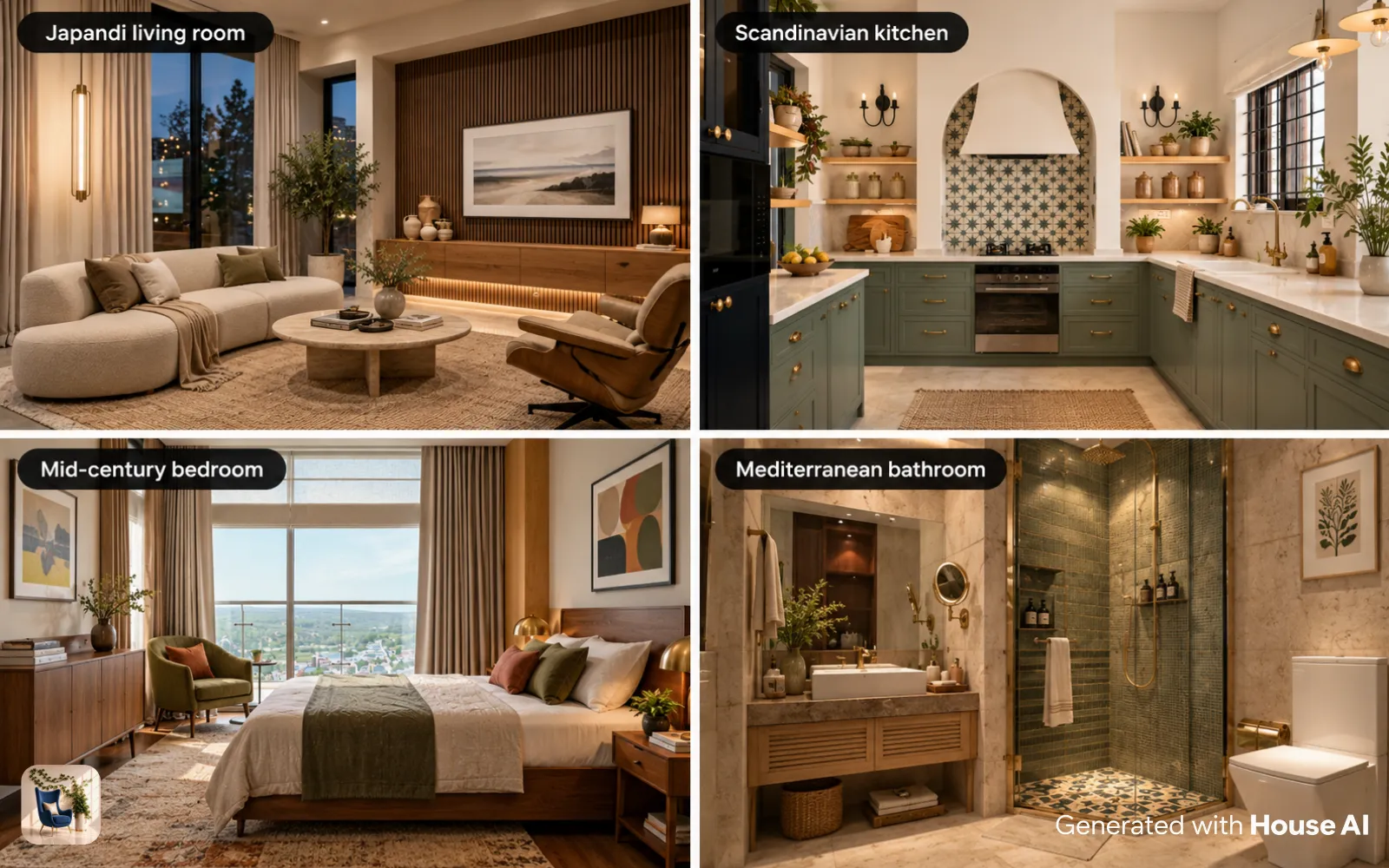
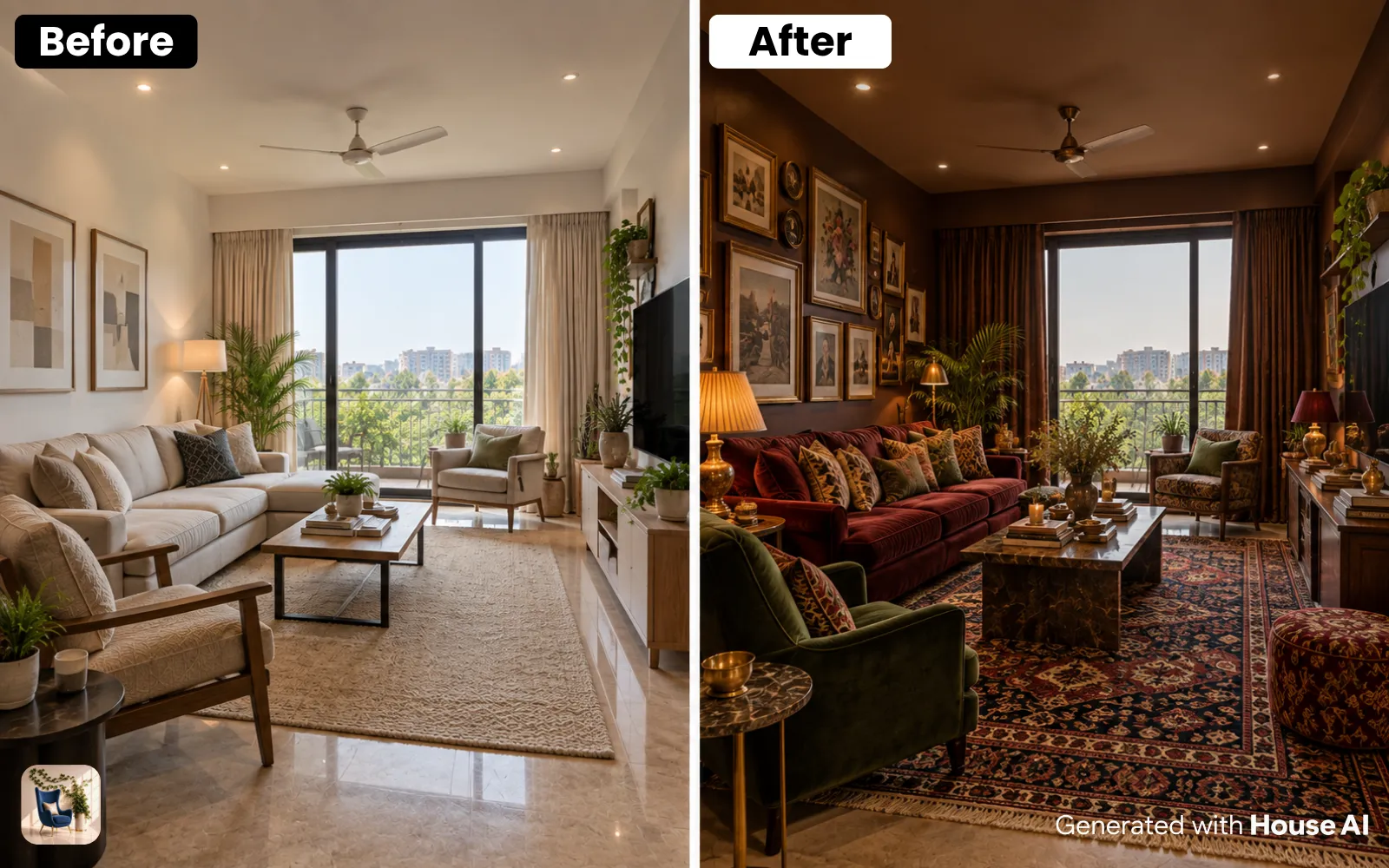
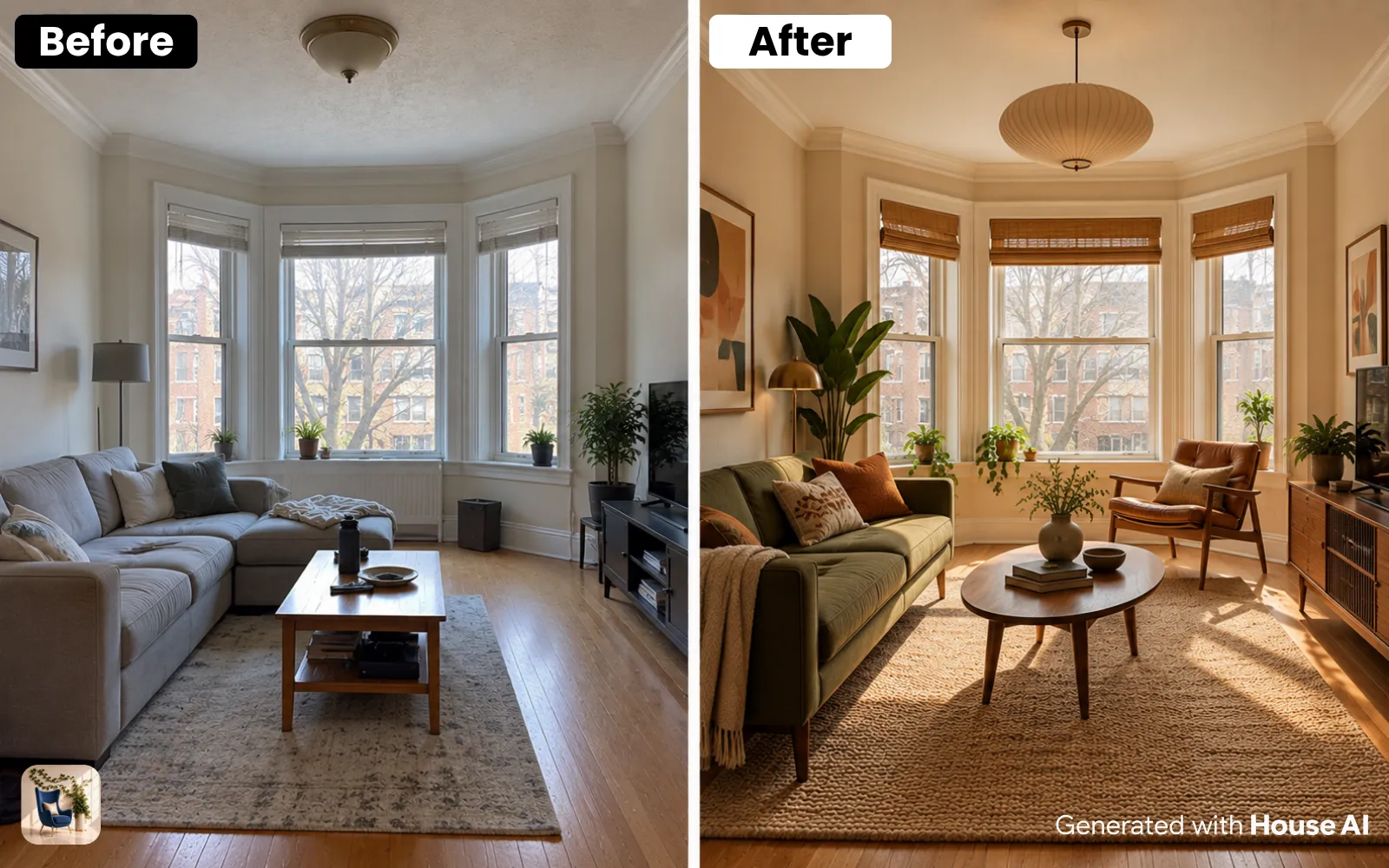
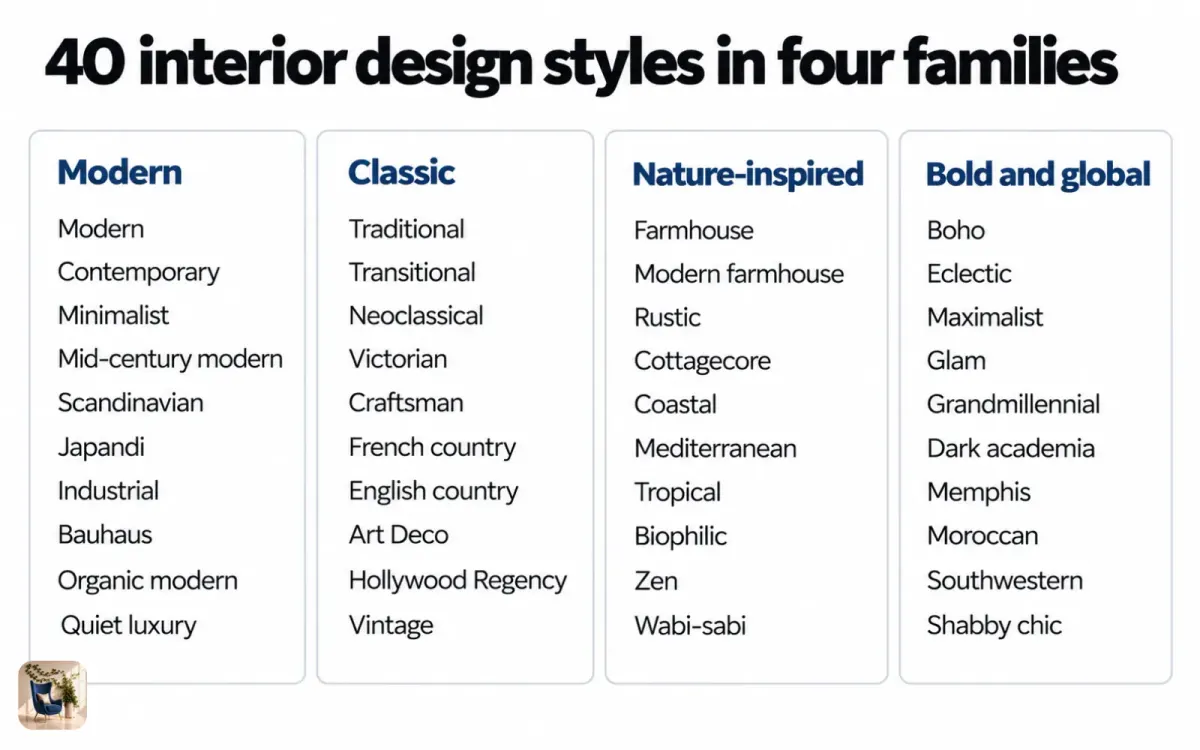
An interior design style is a named set of choices about color, materials, furniture shape, and how full a room is. The 40 styles in this guide fall into four families: modern, classic, nature-inspired, and bold. Each one below comes with the details that give it away. You can see any of them on a photo of your own room in House AI, which has 300+ styles.
Style names get thrown around loosely, and plenty of rooms online are labeled wrong. This guide sticks to what you can see: the wood, the colors, the shapes, and the amount of stuff in the room. Every render on this page started as a photo of a real room.
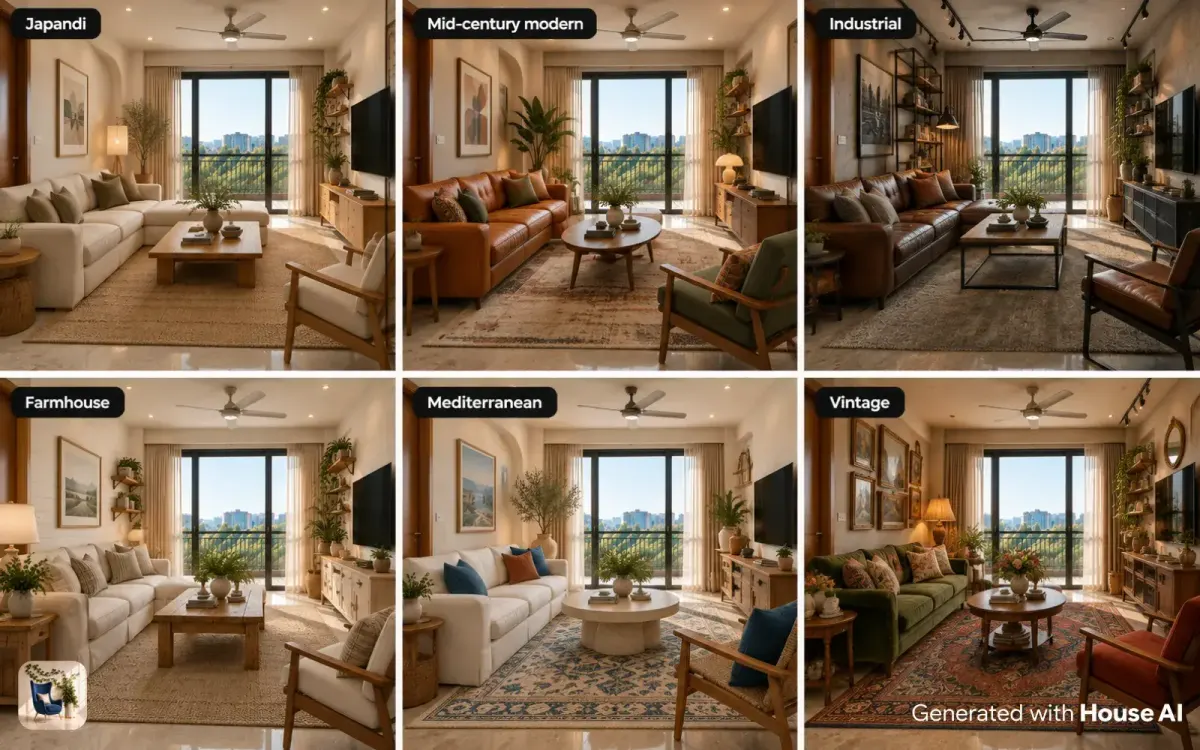
How to tell interior design styles apart
Five details identify almost any style. Look at the wood tone first, then the color palette, then the shape of the furniture. After that, check the pattern and how many objects are out on the surfaces.
Two rooms can share a palette and still be different styles. A Scandinavian room and a Japandi room are both pale and calm, but Japandi furniture sits lower and the colors run darker and earthier. Farmhouse and rustic both use wood, but farmhouse paints it white while rustic leaves it rough. Once you train your eye on those five details, the labels start to make sense.
All 40 styles at a glance
Use this table to put a name to a room you like. The family column groups styles that share a mood, which also tells you which ones mix well.
| Style | Family | How to spot it |
|---|---|---|
| Modern | Modern | Clean lines, neutral colors, and little decoration, with metal, glass, and smooth wood |
| Contemporary | Modern | Whatever design looks like right now, so it keeps changing; today that means soft curves and warm neutrals |
| Minimalist | Modern | Very few objects, bare surfaces, hidden storage, and one or two colors |
| Mid-century modern | Modern | Warm walnut, tapered legs, low profiles, and simple shapes from the middle of the 20th century |
| Scandinavian | Modern | Pale wood, white walls, soft textiles, and practical furniture |
| Japandi | Modern | Japanese and Scandinavian design blended, with low furniture, pale wood, and muted earth tones |
| Industrial | Modern | Exposed brick, black metal, concrete, and reclaimed wood, like a converted factory |
| Bauhaus | Modern | Primary colors, tubular steel, and geometric forms where the function sets the shape |
| Organic modern | Modern | Stone, linen, rounded furniture, and earthy colors on a clean modern base |
| Quiet luxury | Modern | A few very well-made pieces in cream, camel, and gray, with no visible logos |
| Traditional | Classic | Symmetry, dark polished wood, rolled arms, and patterned fabrics like damask |
| Transitional | Classic | Traditional shapes in plain fabrics and neutral colors, halfway to modern |
| Neoclassical | Classic | Columns, moldings, and pale colors borrowed from ancient Greek and Roman buildings |
| Victorian | Classic | Dark wood, heavy drapes, jewel colors, and ornate carved furniture |
| Craftsman | Classic | Built-in cabinets, solid oak, visible joinery, and handmade details |
| French country | Classic | Painted wood, toile fabric, soft blues and creams, and curved furniture legs |
| English country | Classic | Chintz, stacked patterns, worn antiques, and deep, overstuffed seating |
| Art Deco | Classic | Geometric patterns, brass, lacquer, velvet, and bold symmetry |
| Hollywood Regency | Classic | High-gloss finishes, mirrors, gold accents, and saturated colors like emerald |
| Vintage | Classic | Pieces from past decades mixed together, with their age left showing |
| Farmhouse | Nature-inspired | White shiplap, painted wood, open shelves, and a big farm table |
| Modern farmhouse | Nature-inspired | Farmhouse bones with black metal, cleaner lines, and fewer objects |
| Rustic | Nature-inspired | Rough-cut wood, stone, exposed beams, and heavy, simple furniture |
| Cottagecore | Nature-inspired | Florals, gingham, dried flowers, and handmade crafts with a countryside feel |
| Coastal | Nature-inspired | White and sand tones, blue accents, light linen, and weathered wood |
| Mediterranean | Nature-inspired | Plaster walls, terracotta, arches, and blue or ochre accents |
| Tropical | Nature-inspired | Big-leaf plants, rattan, bright greens, and airy fabrics |
| Biophilic | Nature-inspired | Living plants, daylight, natural materials, and views to the outdoors |
| Zen | Nature-inspired | Open space, low furniture, natural textures, and soft light |
| Wabi-sabi | Nature-inspired | Handmade and worn objects, raw plaster, and muted earth tones |
| Boho | Bold and global | Layered rugs, rattan, plants, and mixed global patterns in warm colors |
| Eclectic | Bold and global | Pieces from different eras and styles, tied together by a shared palette |
| Maximalist | Bold and global | More of everything: pattern, color, art, and objects, repeated so it reads as one room |
| Glam | Bold and global | Velvet, crystal, metallic finishes, and mirrored furniture |
| Grandmillennial | Bold and global | Wallpaper, skirted tables, needlepoint, and other grandparent classics used with a fresh eye |
| Dark academia | Bold and global | Dark wood, leather, packed bookshelves, and moody greens and browns |
| Memphis | Bold and global | Squiggles, clashing brights, and playful geometric furniture |
| Moroccan | Bold and global | Carved wood, patterned tile, brass lanterns, and floor cushions |
| Southwestern | Bold and global | Adobe colors, woven textiles, cactus, and turquoise accents |
| Shabby chic | Bold and global | Distressed white paint, faded florals, and soft pastels |
Modern styles: clean lines and fewer things
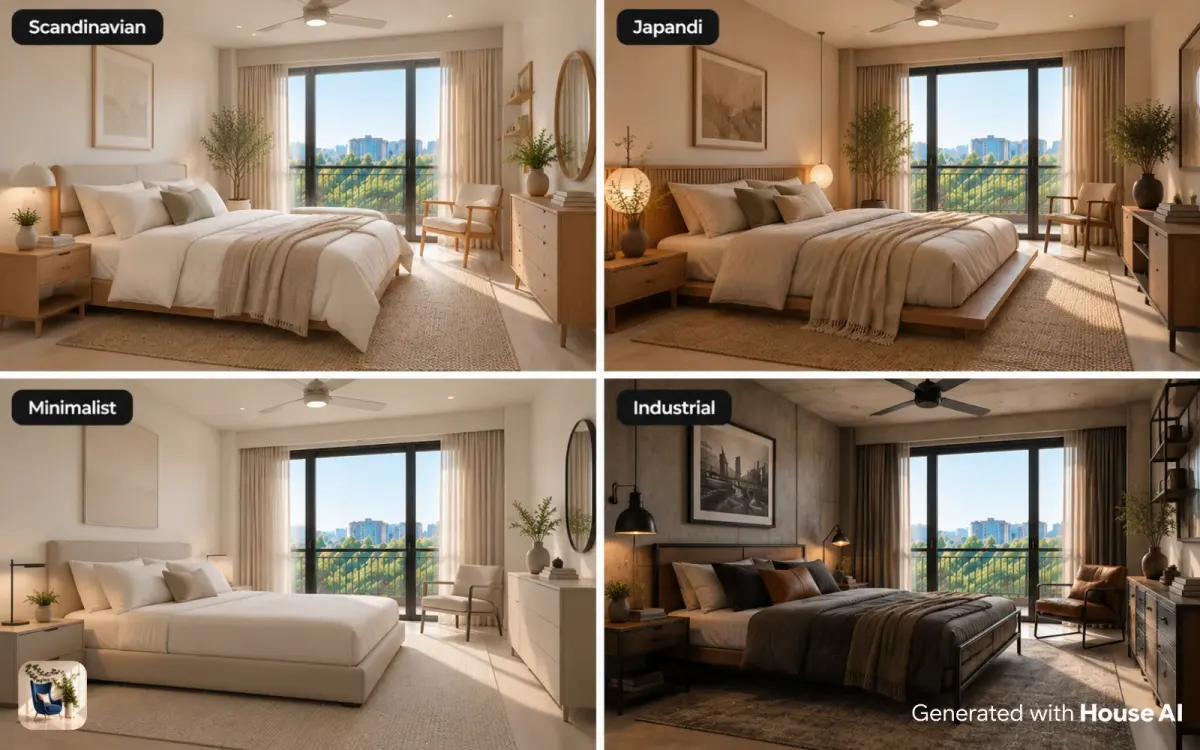
Modern styles share a dislike of decoration for its own sake. Shapes are simple, surfaces are clear, and each piece earns its spot. The differences come down to warmth. Minimalist and Bauhaus rooms can feel cool and strict, while Scandinavian, Japandi, and organic modern rooms add pale wood, linen, and rounded edges to soften the same idea.
Mid-century modern is the warmest of the group. It leans on walnut, teak, tapered legs, and a few bold accent colors like mustard or teal. Industrial sits at the other end, with raw brick and black steel. If you like order but find all-white rooms cold, start with Japandi or Scandinavian.
Classic styles: history, symmetry, and detail
Classic styles borrow from a specific period or place. Traditional rooms are built on symmetry: matching lamps, paired chairs, and a sofa centered on the fireplace. Victorian and English country pile on pattern and carved wood. French country keeps the curves but lightens everything with painted finishes and soft blues.
Transitional is the easy entry point. It keeps traditional shapes, like a rolled-arm sofa or a turned-leg table, and dresses them in plain fabric and neutral colors. Art Deco and Hollywood Regency go the other way, with brass, lacquer, and glossy color. Vintage pulls pieces from any past decade, and designers use a lot of them: 85% of the 468 design professionals 1stDibs surveyed for 2026 said they use vintage pieces.
Nature-inspired styles: wood, plants, and daylight
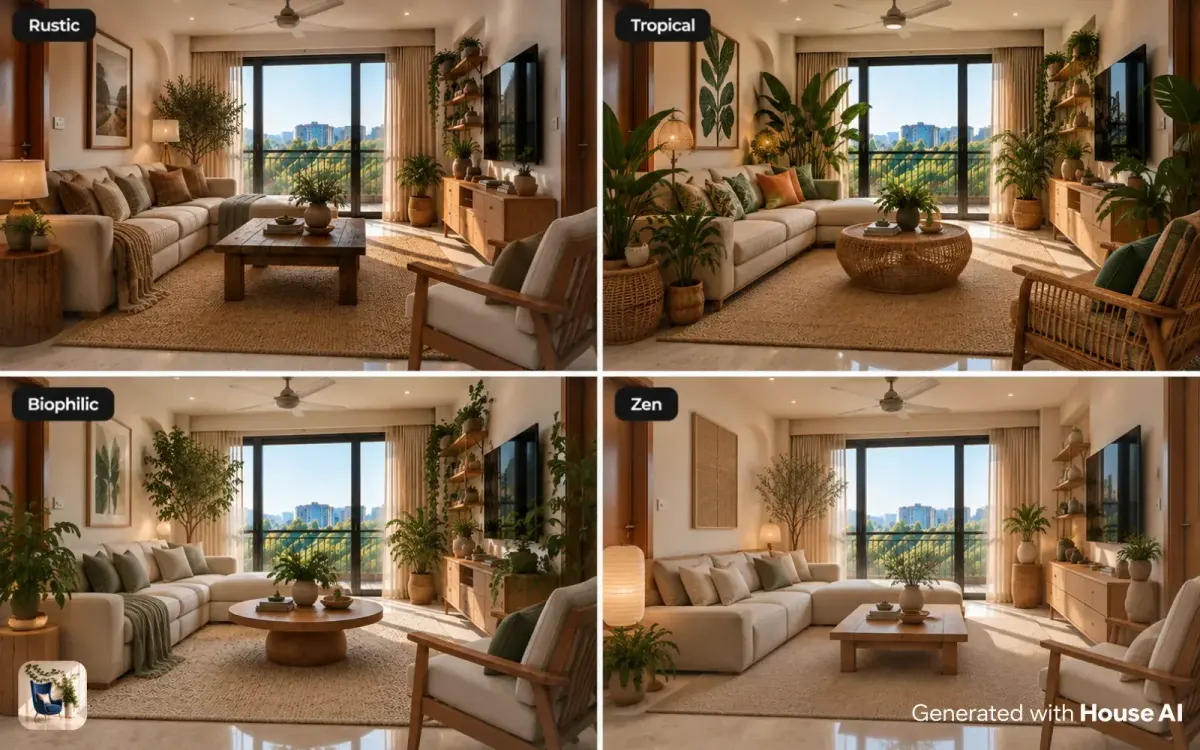
These styles start from materials you could find outdoors. Farmhouse and rustic both run on wood. The split is in the finish, painted and tidy in farmhouse, rough and heavy in rustic. Coastal and Mediterranean take their colors from the sea and sun-baked plaster.
Biophilic design goes furthest. It treats living plants, daylight, and views to the outdoors as part of the room. Zen and wabi-sabi are quieter. A Zen room is mostly open space and low furniture. Wabi-sabi adds handmade, worn, and imperfect objects, and treats that wear as beauty.
Bold and global styles: pattern, color, and collecting
Bold styles lead among designers right now. In a 1stDibs survey of 468 design professionals released November 17, 2025, 39% named maximalism for 2026 and 38% named eclecticism. Both mean more objects, more pattern, and more mixing.
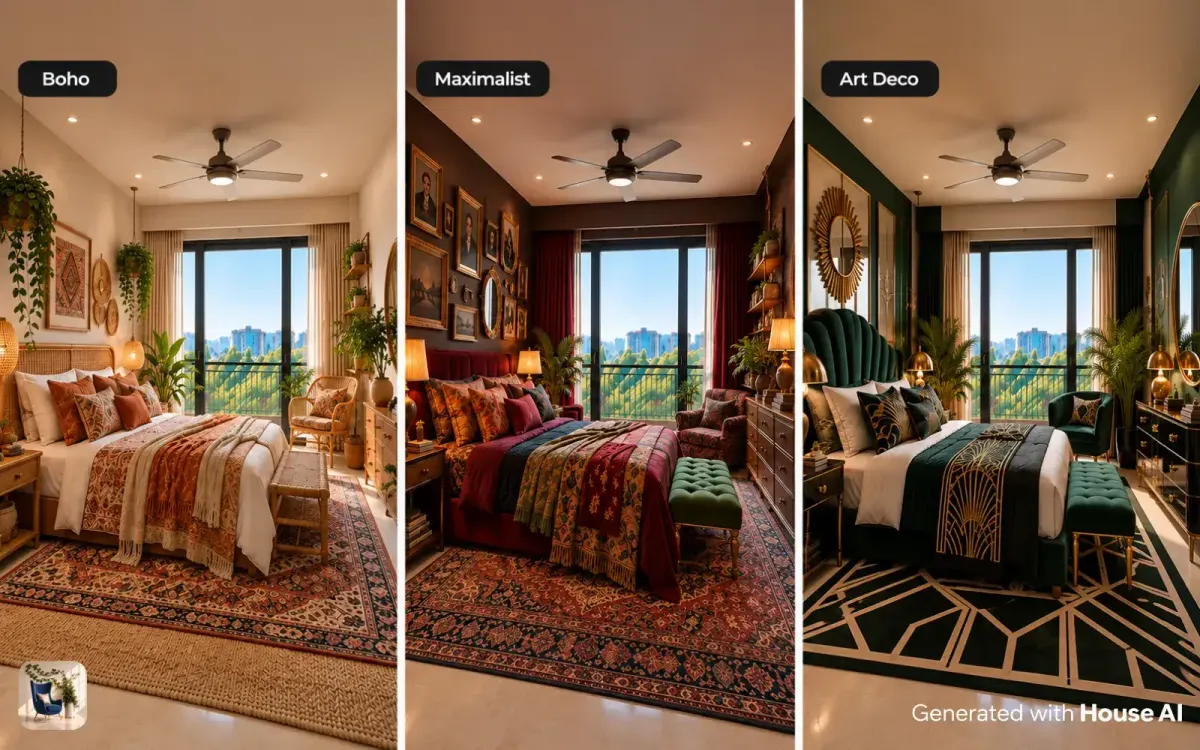
What holds a bold room together is repetition. A maximalist room repeats a few colors so the layers read as one room. An eclectic room mixes eras and styles but keeps a shared palette. Boho adds rattan, plants, and textiles from around the world, and Moroccan and Southwestern draw on the crafts of one region. If a bold room looks messy, it usually needs fewer colors, not fewer things.
Styles people mix up
| Pair | The difference |
|---|---|
| Farmhouse vs rustic | Farmhouse paints wood white and keeps it tidy; rustic leaves wood rough and dark |
| Minimalist vs Japandi | Minimalist can be any color and feel cool; Japandi uses warm wood, earth tones, and low furniture |
| Traditional vs transitional | Both use classic shapes; transitional strips out the pattern and ornament |
| Boho vs eclectic | Boho has a relaxed, global, plant-filled look; eclectic can mix any eras as long as the colors agree |
| Glam vs Hollywood Regency | Glam is about shine and sparkle; Hollywood Regency adds bold color and more formal furniture |
| Industrial vs modern farmhouse | Both use black metal; industrial pairs it with brick and concrete, modern farmhouse with white walls and wood |
How to test a style on your own room
A style that looks right in a magazine can look wrong under your ceiling height and your light. The only fair test is your room.
Step 1: Pick three candidates from the table
Choose the three styles that describe the rooms you keep saving. Try to pick one safe choice and one that stretches you a little.
Step 2: Take one photo of the room
Stand in a corner in daylight with the lights on, so two walls, a window, and the floor are in the frame. Clear loose clutter first so the layout is easy to read.
Step 3: Run each style in House AI
Upload the photo, set the room type, and pick a style. House AI has 300+ styles. If one of your candidates isn't in the grid, describe the look in your own words instead.
Step 4: Compare the results side by side
Each design takes about 15 seconds on average, and every user gets 3 free designs a day, which covers all three candidates on one photo. Put them next to each other and notice which one you keep looking at.
Step 5: Check what the picture can't show
Measure the wall before you buy a sofa, and order fabric and paint samples before you commit. Look at samples in daylight and again at night.
What AI can't tell you about a style
An AI redesign shows how a style looks in your room. It can't tell you whether you'll still love it in five years, or whether it suits how you live. It doesn't measure the space either, so a sofa that fits the picture may not fit the wall, and small details can drift between the render and real life. Use the render to choose a direction, then shop with a tape measure.
Design any room, shop or space with House AI in less 30 seconds! It's free!
Get Started TodayFrequently asked questions
How many interior design styles are there?
There is no official count, because new names appear every year. This guide covers 40 common ones, and House AI has 300+ styles to try on a photo of your room.
What is the most popular interior design style in 2026?
Among designers, maximalism. 39% of the 468 design professionals in the 1stDibs 2026 survey named it, with eclecticism close behind at 38%.
What is the difference between farmhouse and rustic?
Farmhouse paints wood white and keeps rooms tidy, with shiplap and open shelves. Rustic leaves wood rough and dark and adds stone and exposed beams.
Which interior design style is easiest to live with?
Transitional and Scandinavian are the most forgiving, since both use neutral colors and simple shapes. New pieces rarely clash with what you already own.
Can AI show my room in a different style?
Yes. Upload a photo of your room to House AI and pick a style. The walls, windows, and doors stay in place while the furniture, colors, and finishes change, in about 15 seconds.
Keep reading
- How Do I Find My Interior Design Style?
- Interior Design Trends 2026
- What Is Quiet Luxury Interior Design?
- Japandi Style
- Mid-Century Modern Style
Sources: 1stDibs, "2026 Interior Design Trends: 1stDibs Survey Identifies Maximalism, Chocolate Brown, and Vintage Antiques as Top Designer Choices," November 17, 2025, checked September 27, 2026. House AI figures come from the House AI app.