The best sunroom ideas start with how warm the room stays. A four-season sunroom can be furnished like a living room, while a three-season room needs furniture that handles cold, heat, and strong sun. Pick fade-resistant fabrics, add shades you can close, and choose one main use. House AI can show a sunroom photo in 300+ styles before you buy.
A sunroom gets more light than any other room in the house, and that light is both the reason you want one and the thing that wears it out. Fabrics fade, wood dries, and the room can swing from too hot at noon to too cold at night. The ideas below are about making the room comfortable and good-looking in every month, not only in May.
Three-season vs four-season: what changes inside the room
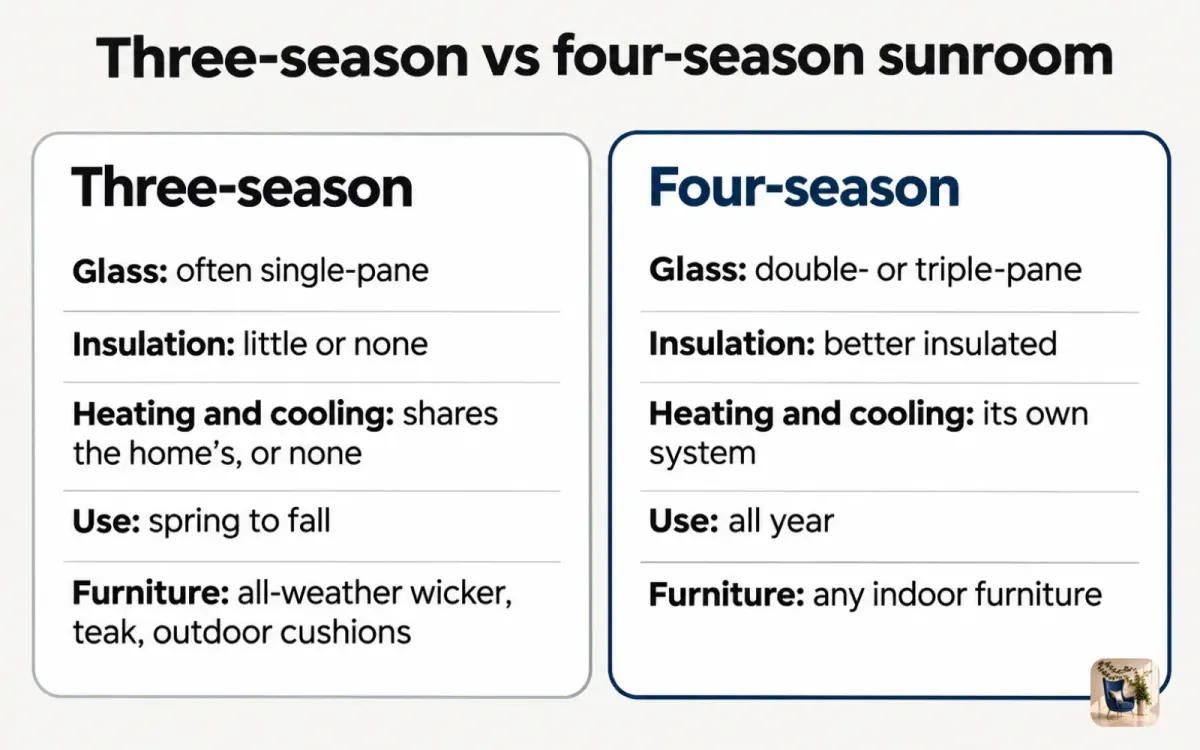
The difference that matters for decorating is temperature control. Angi, in a guide updated August 4, 2026, describes a three-season sunroom as built for spring, summer, and fall, with little or no insulation and often single-pane windows, relying on the home's heating and cooling. A four-season sunroom has better insulation, double- or triple-pane windows, and its own heating and cooling, so it works year-round.
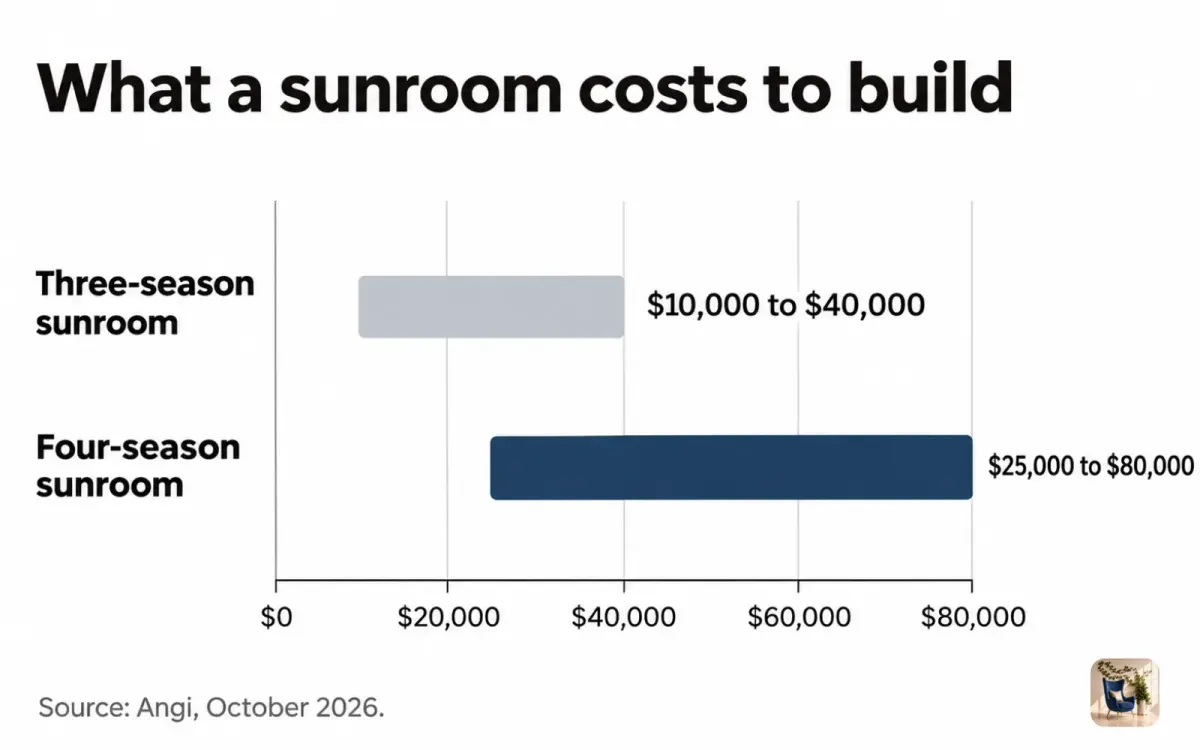
That one difference decides what you can put in the room. A four-season sunroom can hold an upholstered sofa, a wool rug, books, and a desk, the same as a den. A three-season room goes through the same swings as a porch, so solid wood can crack, foam cushions can stay damp, and electronics do not like the cold. Angi puts a three-season room at $10,000 to $40,000 and a four-season room at $25,000 to $80,000, which is why many people end up with the first kind and want it to feel like the second.
| Question | Three-season sunroom | Four-season sunroom |
|---|---|---|
| When you can use it | Spring, summer, and fall in most climates | All year |
| Windows | Often single-pane, sometimes with screens | Double- or triple-pane |
| Heating and cooling | Shares the home's system, or none | Has its own |
| Best seating | All-weather wicker, aluminum, teak, outdoor cushions | Any indoor sofa or chairs |
| Best rug | Polypropylene or other indoor-outdoor rug | Wool, jute, or any indoor rug |
| What to keep out | Electronics, books, antiques, solid wood that can crack | Very little, if the shades work |
| Winter plan | Move cushions inside, cover or store furniture | Close shades at night, add a throw |
Sunroom furniture that handles sun and temperature swings
Choose furniture that is built for light and heat first and for looks second. In a sunroom, the window wall acts like a giant lamp that is on all day, and anything dyed or oiled feels it.
Wicker and rattan are the classic sunroom pieces for a reason: they are light, they move easily when you rearrange for the seasons, and they look right next to glass. For a three-season room, pick all-weather resin wicker rather than natural rattan, since natural fiber can split when it dries out. Powder-coated aluminum and teak also handle swings in temperature. Upholstery should be outdoor fabric, such as solution-dyed acrylic, which holds its color longer in direct sun than most cotton and linen. In a four-season room you have more freedom, but the same rule helps: put the most precious fabric on the piece farthest from the glass.
Keep the furniture low. Sofas and chairs with low backs keep the view open, which is the point of the room. Tall bookcases and armoires belong on the one solid wall, if you have one.
Sunroom layout ideas, by how you use the room
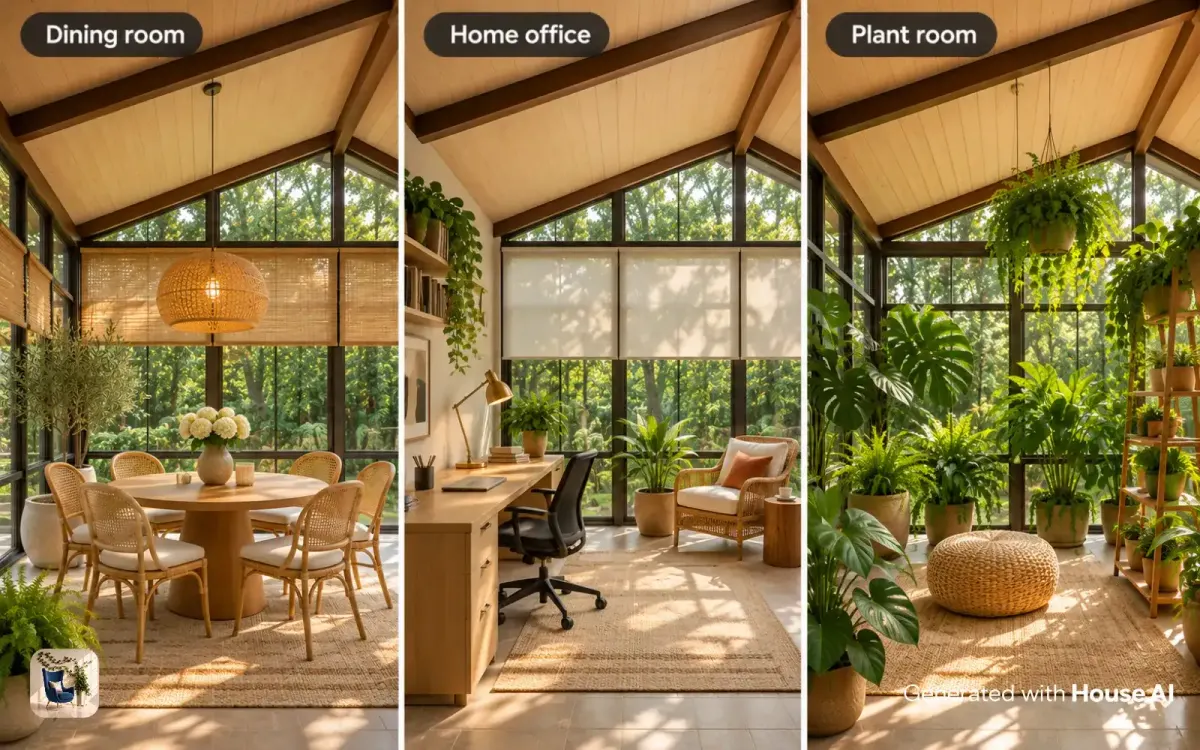
A sunroom works best with one main job. Trying to make it a dining room, an office, and a plant room at once usually leaves it feeling like a hallway with furniture in it. Use this table to match the layout to the job.
| Main use | Layout | Watch out for |
|---|---|---|
| Lounge | Sofa on the solid wall facing the view, two chairs angled in, a low table between | Glare on a TV; put screens on the solid wall only |
| Dining | Round table in the middle so every seat gets the view | Hot chairs at midday; add shades on the west side |
| Home office | Desk against a side wall, not facing the glass | Screen glare and heat on the computer |
| Reading nook | One deep chair, a side table, and a floor lamp in a corner | Fading on book spines and fabric |
| Plant room | Shelves and stands along the brightest wall, a small seat in the middle | Water on the floor; use trays and a rug that can get wet |
| Breakfast room | Small bistro table near the door to the kitchen | Morning sun in your eyes on east-facing glass |
Whatever the job, leave a clear path from the house door to the far side of the room. Sunrooms are often long and narrow, and furniture that blocks the walkway makes the room feel smaller than it is.
Window treatments that control glare without losing the view
Shades are what make a sunroom usable at noon and at night. Bare glass looks great in photos and feels like a greenhouse in July and a fridge in January.
Solar shades cut glare and some heat while you can still see out, which suits a room built around the view. Cellular shades trap air in their pockets and help hold warmth in at night, which matters most in a three-season room. Woven bamboo or grass shades add texture that fits a relaxed sunroom look. Whatever you pick, choose shades that mount inside each window frame or on the frame of the roof glass, so they stay out of the way when open. If your sunroom has a glass roof, start there: the roof lets in the most heat.
How to make a sunroom comfortable in winter
Warmth in a sunroom comes from layers you can add and take away. Even a four-season room loses heat through all that glass after dark, and a three-season room needs more help.
Start with the floor. Tile and concrete are cold underfoot, so lay a large rug: wool in a four-season room, a thick indoor-outdoor rug in a three-season one. Add throws and extra pillows to the seating in fall and swap them out in spring. Close the shades as soon as the sun goes down to hold the day's warmth. For light, use warm lamps rather than one bright overhead fixture, since a dark wall of glass reflects lamps back into the room and makes it feel cozy instead of exposed. In a three-season room, plan where cushions go for the cold months, such as a storage bench inside the house.
Plants that suit a sunroom
A sunroom is the easiest room in the house for plants, as long as you match the plant to the window. South- and west-facing glass gets the strongest sun, so put sun lovers like citrus, succulents, and bird of paradise there. East-facing and shaded spots suit ferns, pothos, and other plants that like bright light without hours of direct sun. Group pots on trays or a waterproof mat, and keep them off wood furniture. In a three-season room, plan to move tender plants inside before the first frost.
How to plan your sunroom on a photo first
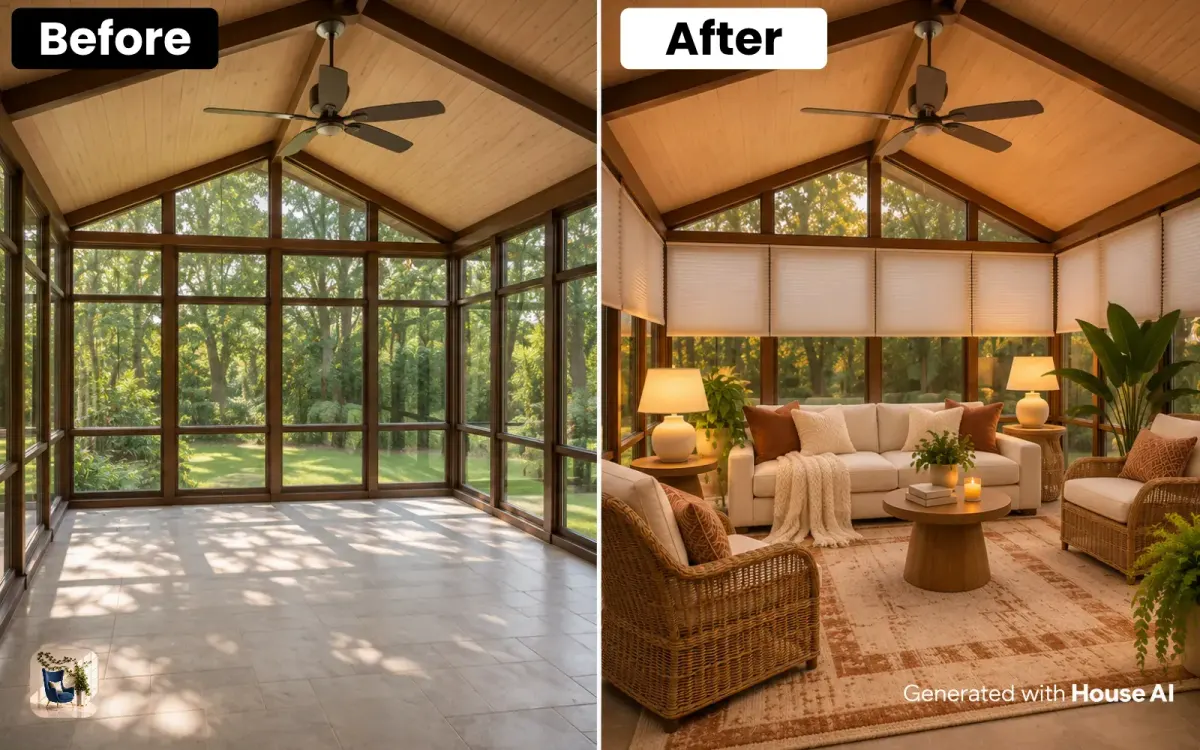
Seeing the room furnished before you buy saves you from the most common sunroom mistake: furniture that is too big or too dark for all that light.
Step 1: Photograph the sunroom
Stand in the doorway from the house in daylight, so the window walls, the floor, and the ceiling are in the frame. An empty room works, and so does one with the furniture you have now.
Step 2: Set the room type to living room in House AI
Upload the photo and set the room type to living room, which is the closest match for a sunroom. House AI has 15+ room types, including living room, bedroom, kitchen, and bathroom.
Step 3: Try styles or describe the room you want
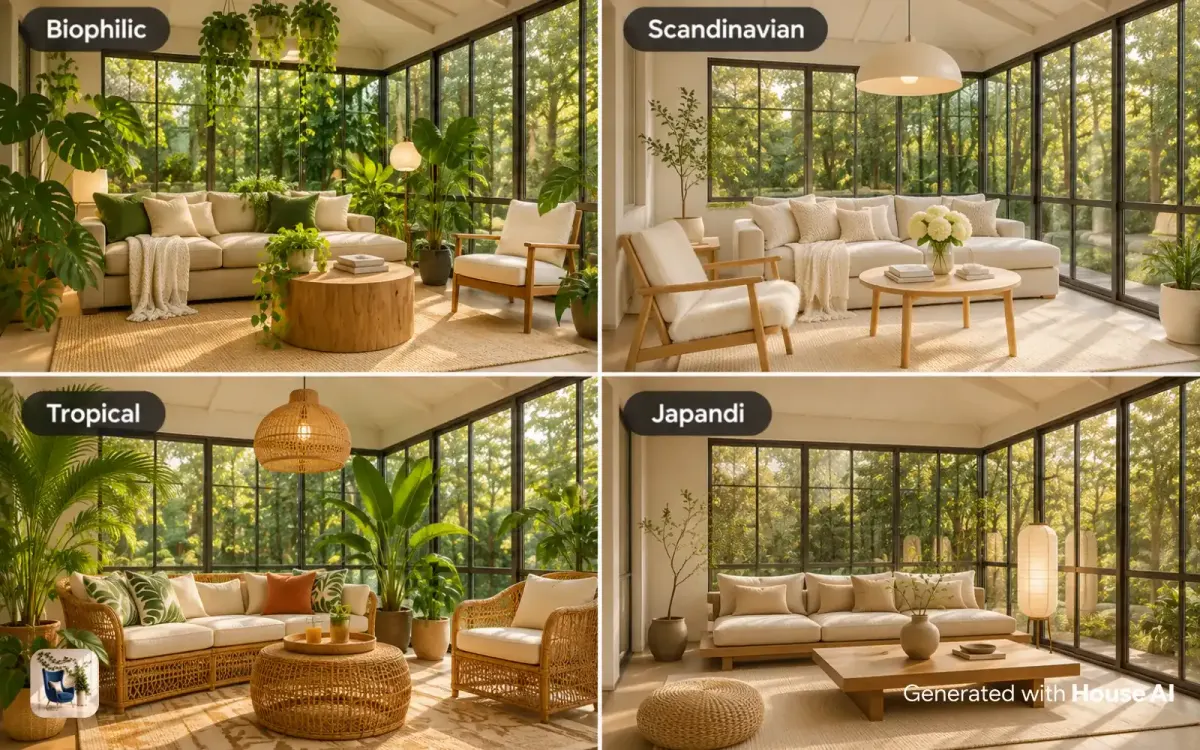
Pick a style from the grid, such as Biophilic, Tropical, Scandinavian, or Japandi, or describe the look in your own words, for example a dining table with rattan chairs and solar shades. Each design takes about 15 seconds on average, and every user gets 3 free designs a day.
Step 4: Compare one use against another
Run the same photo as a lounge, a dining room, and an office, then put the results side by side. The one you keep coming back to is usually the use you will actually live with.
Step 5: Measure and check fabrics before you order
Measure the walkway and the window sills, then ask for fabric samples and leave them in the sunniest spot for a week. A render shows the look. Only a sample shows what the sun does to a color.
What AI can't tell you about a sunroom
An AI render shows how a sunroom could look. It can't tell you how hot the room gets at 3pm in August or how cold it gets at night in January, and it doesn't measure the space, so a sofa that fits the picture may block the door in real life. Small details like shade sizes and the exact color of a fabric in full sun can drift between the render and the real room. Use the picture to choose a direction, then check the temperatures, the measurements, and the samples yourself.
Design any room, shop or space with House AI in about 15 seconds. 1 free design a day.
Get Started TodayFrequently asked questions
What is the difference between a three-season and a four-season sunroom?
A four-season sunroom has insulation, double- or triple-pane windows, and its own heating and cooling, so you can use it all year. A three-season room has little insulation and is built for spring through fall, according to Angi.
What furniture is best for a sunroom?
Light, low pieces that handle sun and temperature swings, such as all-weather wicker, teak, or aluminum with outdoor fabric cushions. In a four-season room, regular indoor furniture works if you add shades.
How do I keep sunroom furniture from fading?
Use solution-dyed outdoor fabrics, close solar shades during the strongest sun, and keep your most delicate pieces away from the glass. Rotate cushions now and then so they fade evenly.
Can I use a sunroom in winter?
A four-season sunroom, yes. A three-season room can work on mild winter days, but it lacks the insulation and heating to stay comfortable in real cold.
Can AI design a sunroom from a photo?
Yes. Upload a photo of the sunroom to House AI, set the room type to living room, and pick a style or describe the look. It does not measure the room, so check sizes before you buy.
Keep reading
- Window Treatment Ideas for Every Window Type
- How Do I Make a Room Feel Cozy?
- How to Choose the Perfect Lighting for Every Room
- Biophilic Style
- Tropical Style
Sources: Angi, "3-Season vs. 4-Season Sunroom: What's the Difference?", updated August 4, 2026, checked October 31, 2026. House AI figures come from the House AI app.