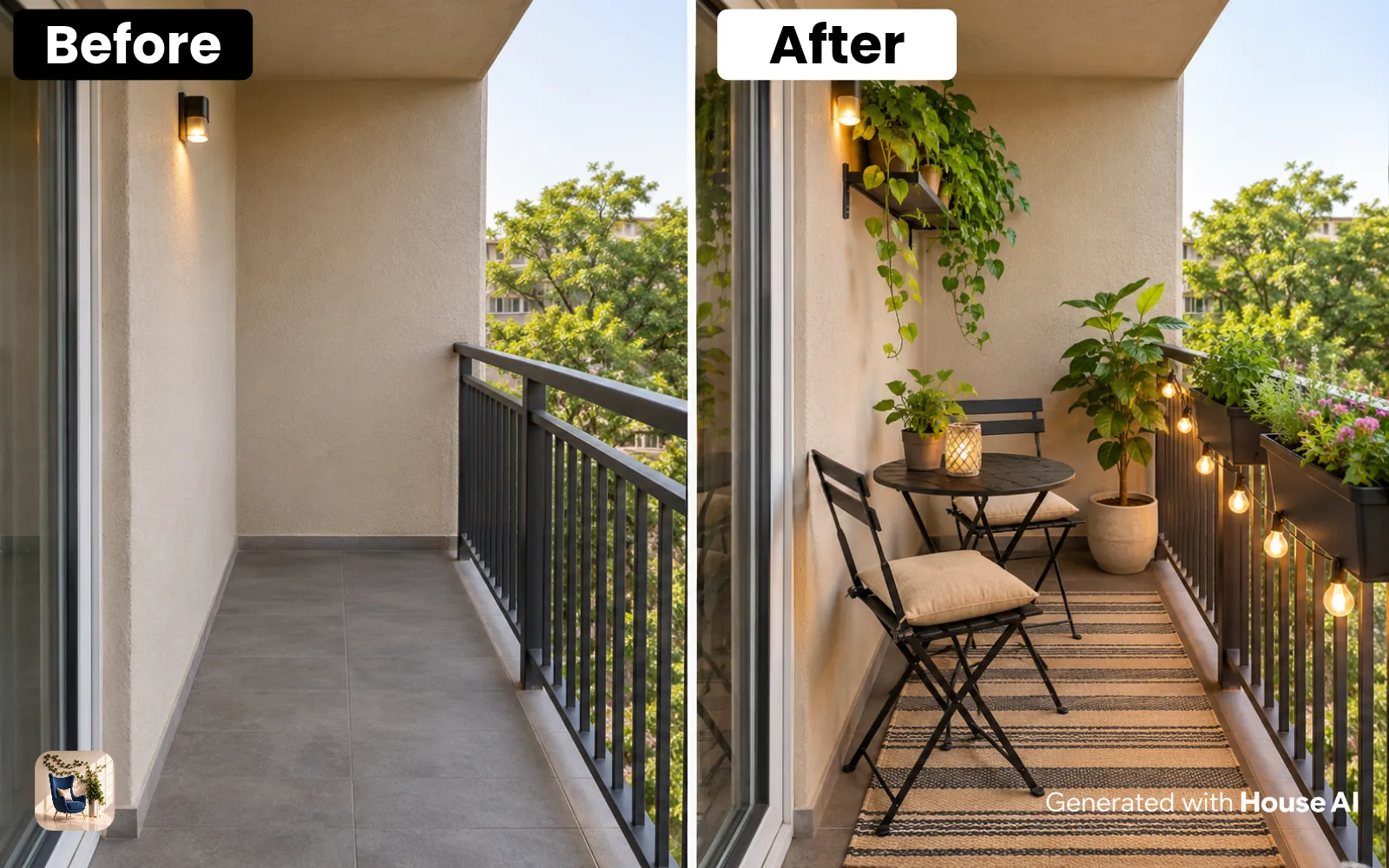
The best patio ideas give the space one clear job and match it to your budget. On a small budget, clean the surface and add an outdoor rug, string lights, and big planters. With more to spend, add a dining set, shade, or a fire pit area. New pavers come last. House AI can show any of these on a photo of your patio in about 15 seconds.
A patio gets used when it does one thing well, like morning coffee, dinner for six, or a fire on a cold night. This guide sorts ideas by what they take to pull off, then covers small patios, shade, fire pits, and styles. It sticks to ground-level patios, and every render on this page started as a photo of a real one.
Start with what you want the patio to do
Pick one main use before you buy anything. A dining patio needs a flat, level area big enough for a table with the chairs pulled out. A lounge patio needs deep seats and somewhere to set a drink. A fire pit patio needs a clear circle with seats facing the middle. Trying to fit all three onto a small slab is how patios end up cluttered and empty.
The features people want most line up with those three uses. In a 2018 survey of 808 ASLA members who design home outdoor spaces, 66.0% rated fire pits and fireplaces as popular for the year, 65.4% named lighting, and 64.0% named seating and dining areas. The survey is old, but the list still describes most good patios: a place to sit, a light to see by, and a reason to stay out after dark.
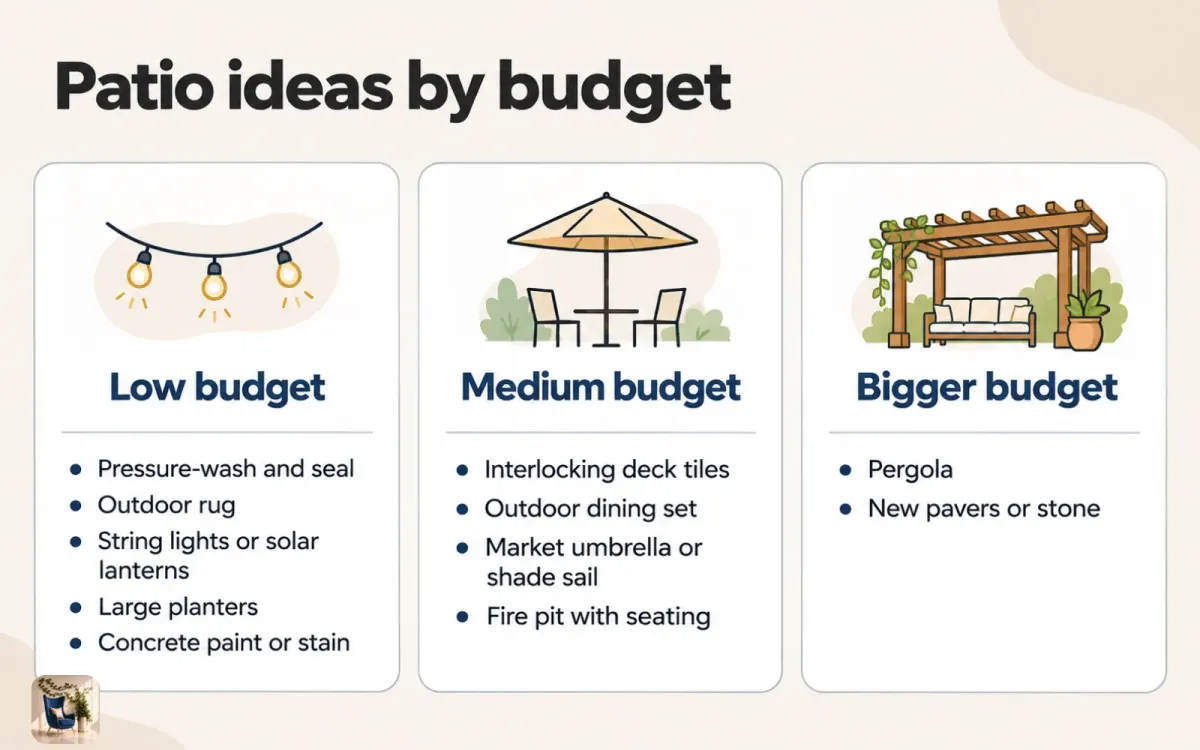
Patio ideas by budget
The cheapest ideas change how a patio looks and feels without touching the surface. Mid-range ideas add furniture and structure. The biggest spends change the ground itself. Do the low tier first even if you plan to spend more, because a few weeks with a rug and lights will show you how you really use the space.
| Idea | Budget level | What it changes | Best for |
|---|---|---|---|
| Pressure-wash and seal the surface | Low | Makes old concrete or pavers look clean and even again | Any patio that looks tired |
| Outdoor rug | Low | Marks out a seating zone and softens hard ground | Lounge and dining areas |
| String lights or solar lanterns | Low | Makes the patio usable after dark | Small patios and renters |
| Large planters | Low | Adds green edges and screens a bare wall or fence | Patios with no planting beds |
| Concrete paint or stain | Low to medium | Adds color or a painted tile pattern | Plain gray concrete slabs |
| Interlocking deck tiles | Medium | Covers cracked or stained concrete without demolition | Renters and small slabs |
| Outdoor dining set | Medium | Turns the patio into a second dining room | People who host |
| Market umbrella or shade sail | Medium | Cuts sun and glare in the hottest hours | South- and west-facing patios |
| Fire pit with seating | Medium to high | Gives the patio a center and a reason to stay out | Cool evenings and fall |
| Pergola | High | Adds a frame overhead for shade cloth, vines, or lights | Larger patios that feel exposed |
| New pavers or stone | High | Replaces the surface and can reshape the patio | Patios that are cracked, sinking, or too small |
Prices for the high tier swing a lot with size, region, and site work, so get quotes before you plan around a pergola or new pavers. Everything in the low tier can be done in a weekend without a contractor.
Low-budget patio ideas that make the biggest difference
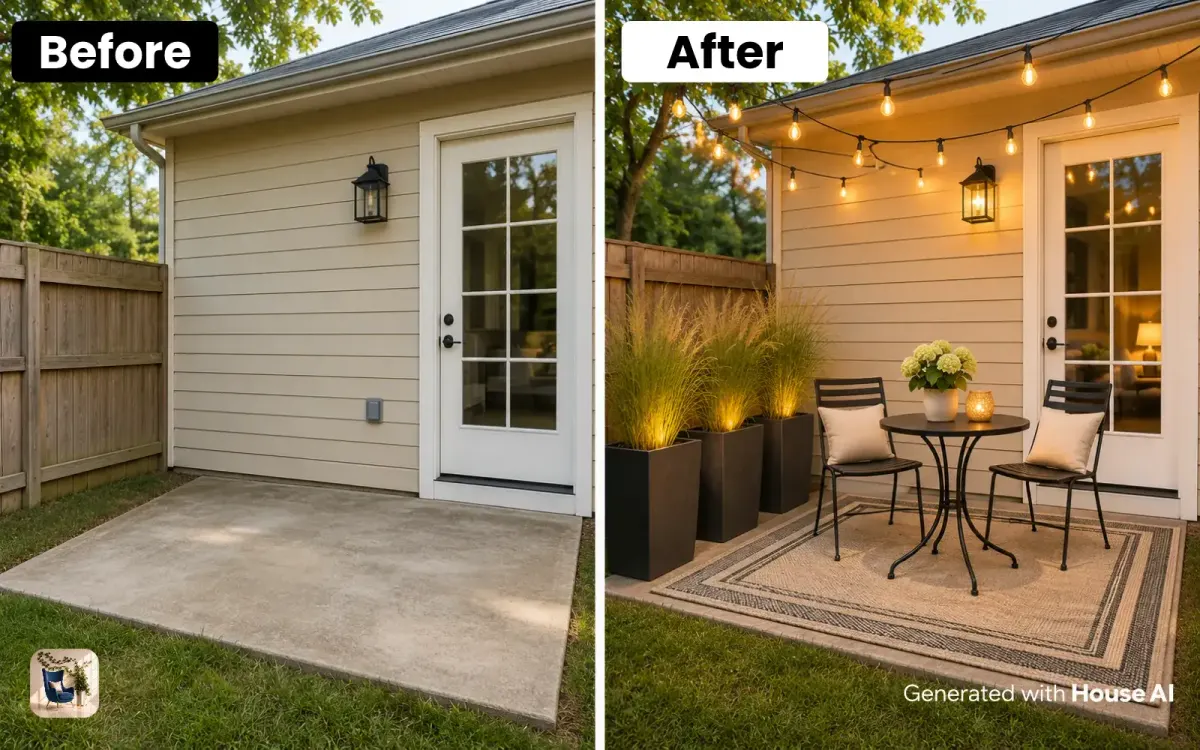
Cleaning is the cheapest upgrade there is. A pressure-washed slab looks years younger, and it tells you whether the surface needs replacing or just needed a scrub. Next, add an outdoor rug sized to the seating group, so the front legs of every chair sit on it. A rug does on a patio what it does indoors. It tells you where the room is.
Light comes next. String lights run in a zigzag overhead give a patio a ceiling, and that makes it feel like a room instead of a slab. Solar lanterns work where there is no outdoor outlet. Then add plants in big pots along the edges. Three large planters look calmer than ten small ones, and they dry out more slowly. If the patio faces a fence or a neighbor's wall, tall grasses or a climbing vine on a trellis in a planter can screen it without any digging.
Small patio ideas
On a small patio, every piece has to earn its spot. A two-seat bistro set or a narrow bench along the house wall leaves room to walk, while a full dining set can block the door. Folding chairs and nesting tables can be put away when you need the floor.
Go up for plants and storage. Wall planters, a ladder shelf, or rail planters on a low wall keep the floor clear. Hold the palette to one or two colors across cushions and pots, so the space reads as one piece. One outdoor rug that reaches close to the edges makes a small patio look bigger than two small rugs would.
Shade ideas for a sunny patio
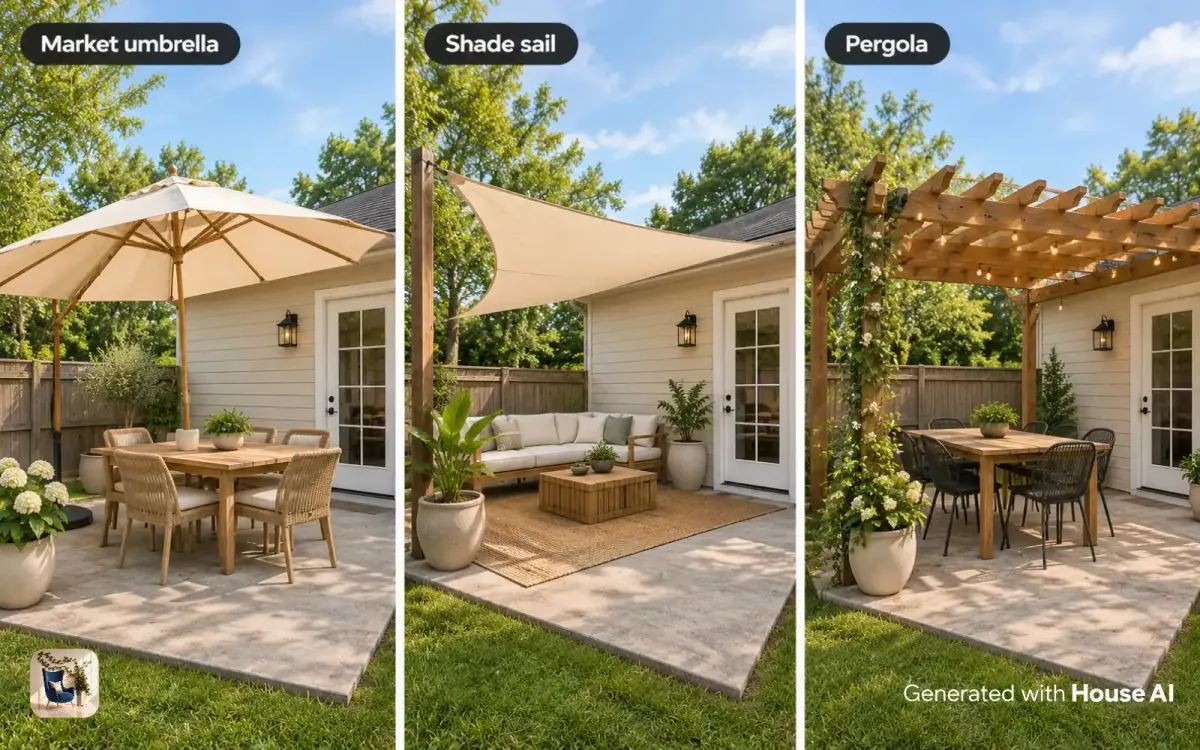
Shade decides whether a south- or west-facing patio gets used in summer. A market umbrella is the simplest fix, and it moves with the sun. Choose one with a tilting top and a heavy base. A shade sail covers more area with less hardware, but it needs strong anchor points, such as the house wall, sturdy posts, or mature trees, and it should be angled so rain runs off.
A pergola is the most permanent option. On its own it gives only partial shade, so most people add a fabric canopy, a slatted roof, or climbing vines. It also gives you somewhere to hang lights and outdoor curtains. Check your local permit rules and any HOA limits before you build one.
Fire pit patio ideas
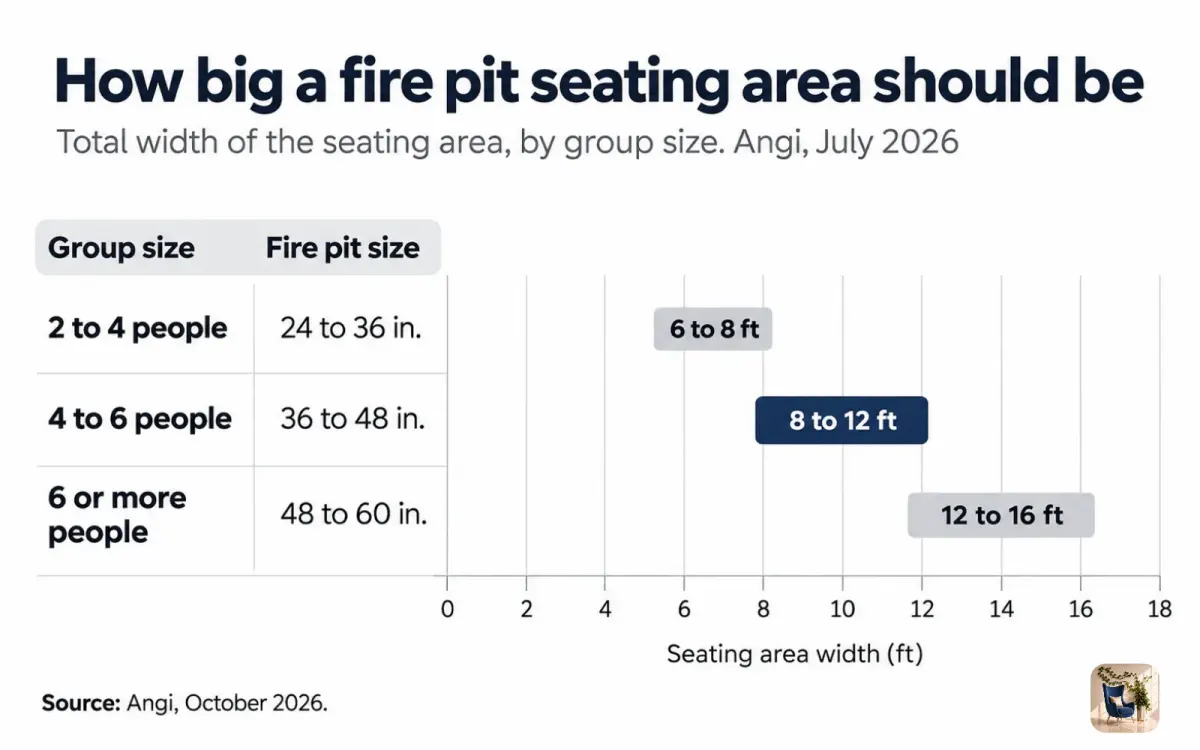
A fire pit gives a patio a center, and the size of the pit sets the size of the whole seating area. Angi's fire pit sizing guide, updated July 8, 2026, matches the pit to the number of people. For 2 to 4 people, it suggests a pit 24 to 36 inches across in a seating area 6 to 8 feet across. For 4 to 6 people, a 36- to 48-inch pit in an area 8 to 12 feet across. For 6 or more, a 48- to 60-inch pit in an area 12 to 16 feet across.
Measure your patio against those numbers before you buy. If the full circle doesn't fit, a smaller pit or a tabletop fire bowl keeps the idea without crowding the chairs. Local rules also set how far a fire has to sit from the house, fences, property lines, and anything overhead, so check them first, especially under a pergola or tree branches.
Patio styles to try
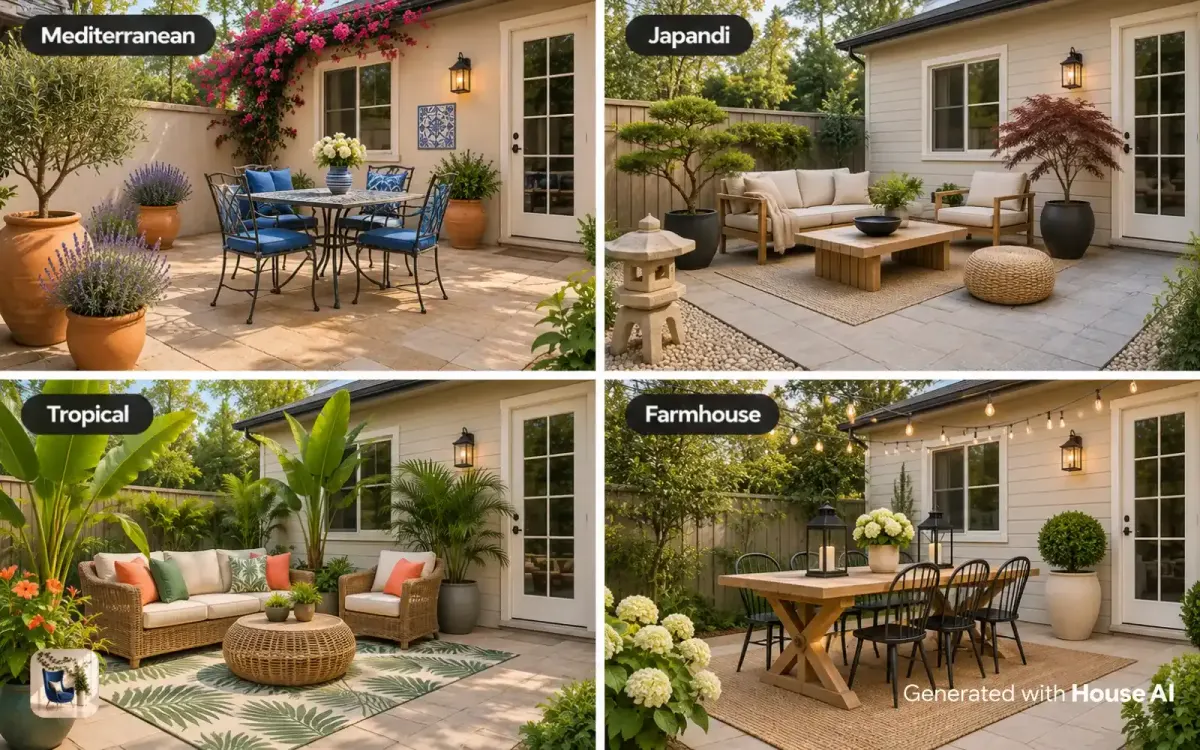
Style on a patio comes from materials and color more than furniture shape. A Mediterranean patio uses terracotta pots, warm stone, olive trees, and blue or white accents. A Japandi patio stays low and calm, with pale wood, gravel, and a few sculptural plants. A tropical patio leans on big-leaf plants, rattan, and bright cushions. A farmhouse patio has a long wood table, metal lanterns, and simple black or white chairs.
If you can't decide, keep the big things neutral, like the surface, the main furniture, and the planters, and put the style into cushions, rugs, and plants. Those are the cheapest pieces to change next season.
How to plan a patio makeover
Work through these steps before you buy anything big.
Step 1: Measure the patio and mark the walking path
Measure the length and width, and note where doors open and where people walk through. Keep that path clear so nobody has to squeeze past a chair to get to the yard.
Step 2: Watch the sun for one day
Look at the patio in the morning, at midday, and in the late afternoon, and note which corner gets shade and when. That decides where the seating goes and whether you need an umbrella, a sail, or a pergola.
Step 3: Choose one main use and a budget tier
Pick dining, lounging, or a fire pit as the main job, then pick a tier from the table above. Start with the low-cost ideas even if you plan to spend more later.
Step 4: Try the ideas on a photo in House AI
Take a photo of the patio from one corner in daylight, upload it to House AI, open Garden Design, and pick a style or describe the look in your own words. Each design takes about 15 seconds on average, and every user gets 3 free designs a day, which is enough to compare a few looks on the same photo.
Step 5: Check what the render can't tell you
AI doesn't measure your patio, so use a tape measure to confirm that the furniture and a fire pit circle fit. Small details like paver joints and plant types can drift, and the color of stone or cushions on screen is not the color you will see in daylight. The render also doesn't know your climate, so check that any plants suit your sun and your winters.
Step 6: Buy in the order you will use it
Fix the surface first, then add shade and seating, then lights, plants, and accessories. Shop with your measurements in hand.
Design any room, shop or space with House AI in about 15 seconds. 1 free design a day.
Get Started TodayFrequently asked questions
What is the cheapest way to make a patio look nice?
Clean the surface, then add an outdoor rug, string lights, and a few large planters. None of those needs tools or a contractor.
How can I make a small patio look bigger?
Use one large outdoor rug, keep to one or two colors, and choose a bistro set or a bench along a wall. Put plants on walls or rails instead of the floor.
How much space do you need for a fire pit area?
Angi suggests a seating area 6 to 8 feet across for 2 to 4 people, 8 to 12 feet for 4 to 6 people, and 12 to 16 feet for 6 or more.
What is the best shade for a patio?
A tilting market umbrella is the simplest and moves with the sun. A shade sail covers more area, and a pergola with a canopy or vines is the most permanent choice.
Can AI show patio ideas on my own patio?
Yes. Upload a photo to House AI's Garden Design and pick a style or describe the look, and it shows the result in about 15 seconds. It doesn't measure the space, so check sizes yourself.
Keep reading
- How Much Does It Cost to Build a Deck?
- How Much Does Landscaping Cost?
- Garden Design Trends for 2025
- Can AI Design My House Exterior From a Photo?
- Garden Design
Sources: Angi, fire pit dimensions guide, updated July 8, 2026. ASLA, 2018 residential design trends survey press release, April 4, 2018. Both checked October 31, 2026. House AI figures come from the House AI app.