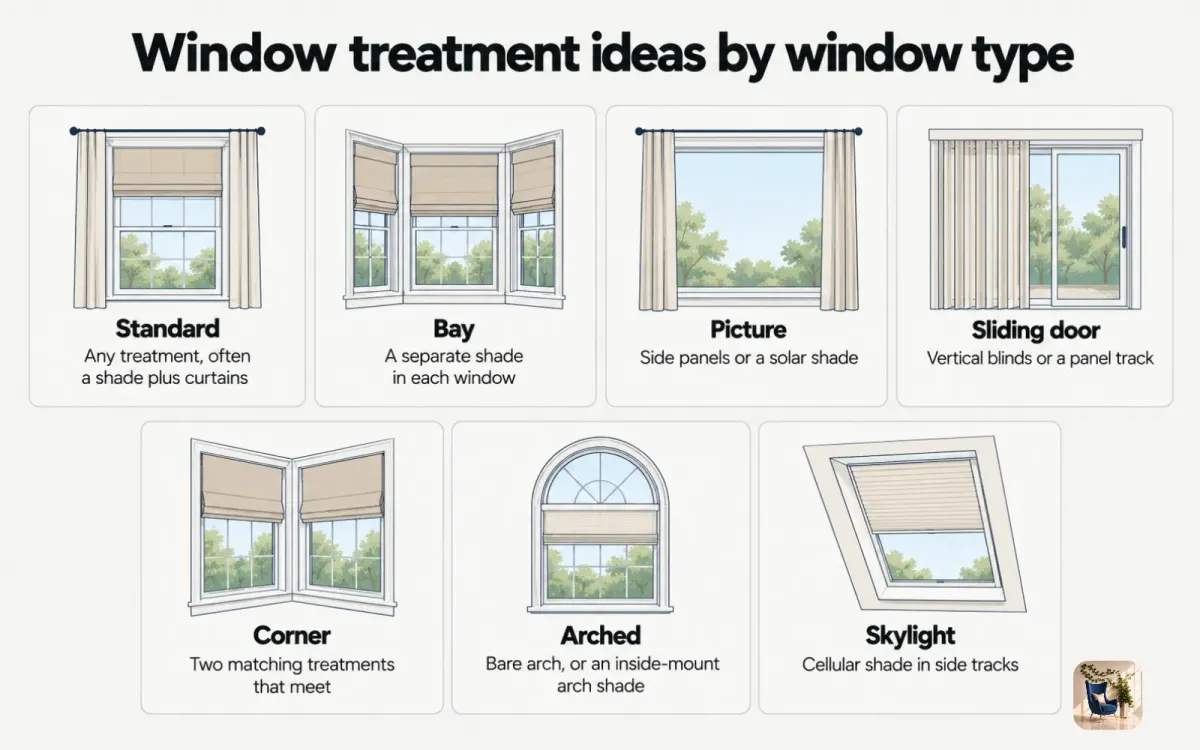
The best window treatment depends on the window. Standard windows take almost anything, bay windows look best with a shade in each pane, picture windows need a treatment that clears the glass, and sliding doors need one that opens sideways. Arches and skylights usually need custom shades. House AI can show a treatment on a photo of your room in about 15 seconds.
Most window treatment galleries are sorted by product, which only helps if you already know what you want. This guide starts with the window you have, then works out which treatment fits its shape, the way it opens, and what the room needs from it. Curtain length and rod height have their own guide, linked at the end.
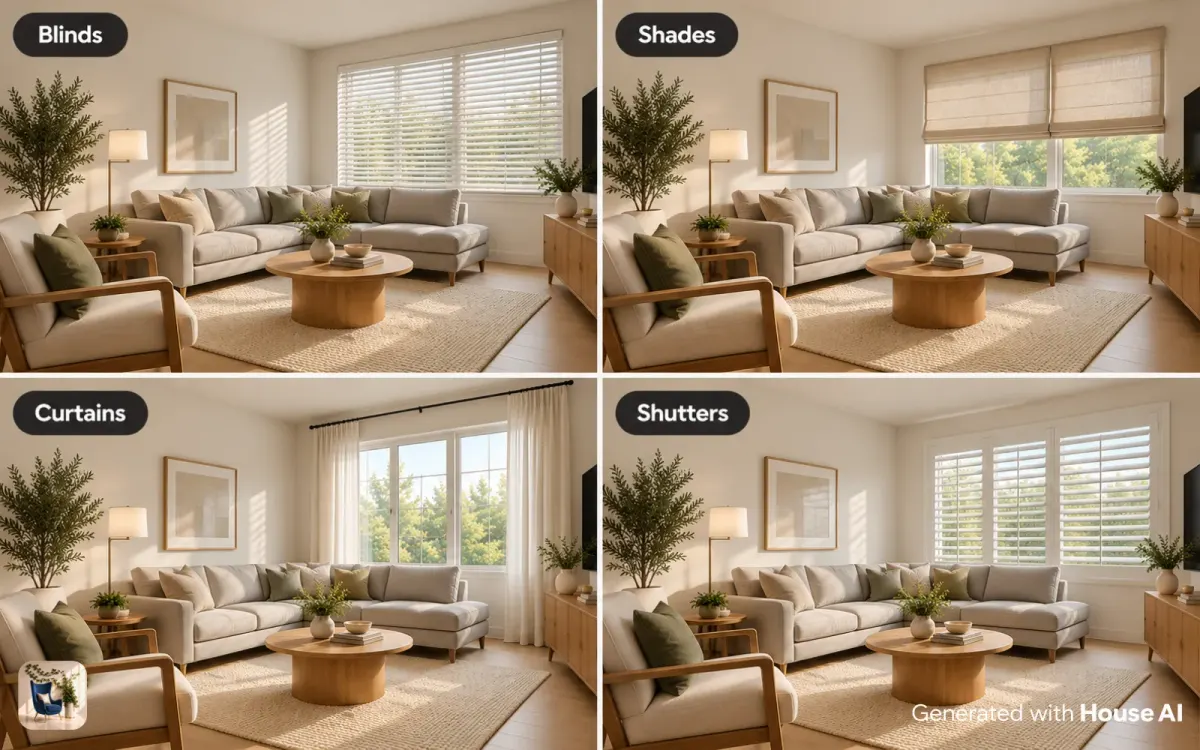
Blinds, shades, curtains, and shutters compared
The four main treatments differ in how they control light and how much glass they cover when open. Blinds tilt, shades roll or fold, curtains slide, and shutters swing on hinges. Pick the one that does the job your room needs, then check that it suits the window type in the sections below.
| Treatment | How it controls light | Privacy | Clears the glass when open? | Best for | Watch out for |
|---|---|---|---|---|---|
| Blinds | Slats tilt to angle light up, down, or away | Good when closed, with thin gaps between slats | Mostly, with the stack at the top | Kitchens, bathrooms, offices, and wide standard windows | Slats collect dust and need regular wiping |
| Shades | Fabric rolls, folds, or stacks to filter or block light | Good to full, depending on the fabric | Mostly, with the roll or folds at the top | Bedrooms, bay windows, arches, and skylights | Light roller fabrics can show shapes at night when lamps are on |
| Curtains and drapes | Panels slide open or closed on a rod | Full when closed and lined | Yes, if the rod runs past the frame | Living rooms, bedrooms, and tall or wide windows | Panels need stack space at each side and can block floor vents |
| Shutters | Hinged panels with louvers you tilt | Full when closed | Yes, the panels swing open | Standard and arched windows in traditional rooms | Panels swing into the room and need clearance |
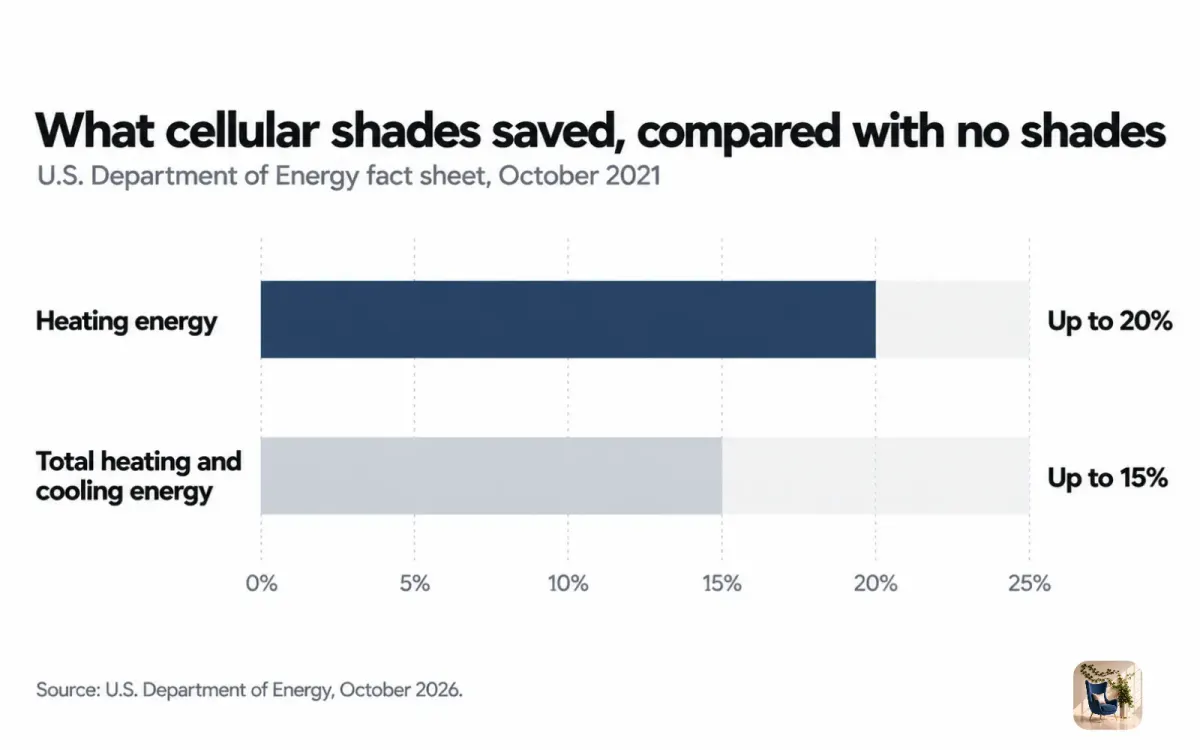
Window treatments also change how much heat a window loses. In a U.S. Department of Energy fact sheet from October 2021, cellular shades saved up to 20% on heating energy and up to 15% on total heating and cooling energy, compared with windows that had no shades. If a room runs cold, that makes a cellular shade the first layer to try.
Standard windows: start with what the room needs
A standard single-hung or double-hung window takes almost any treatment, so the room decides. In a bedroom, the job is darkness. In a living room, it is usually filtered daylight by day and privacy at night. In a kitchen or bathroom, it is a treatment that handles steam and splashes.
Mount inside the frame for a clean, built-in look. Mount outside the frame to make a small window look bigger and to block the light that leaks around the edges. Layering works well on standard windows: a shade inside the frame handles light and privacy, and curtain panels on the wall add softness and color. In damp rooms, faux wood blinds and vinyl or polyester shades hold up better than real wood or lined cotton.
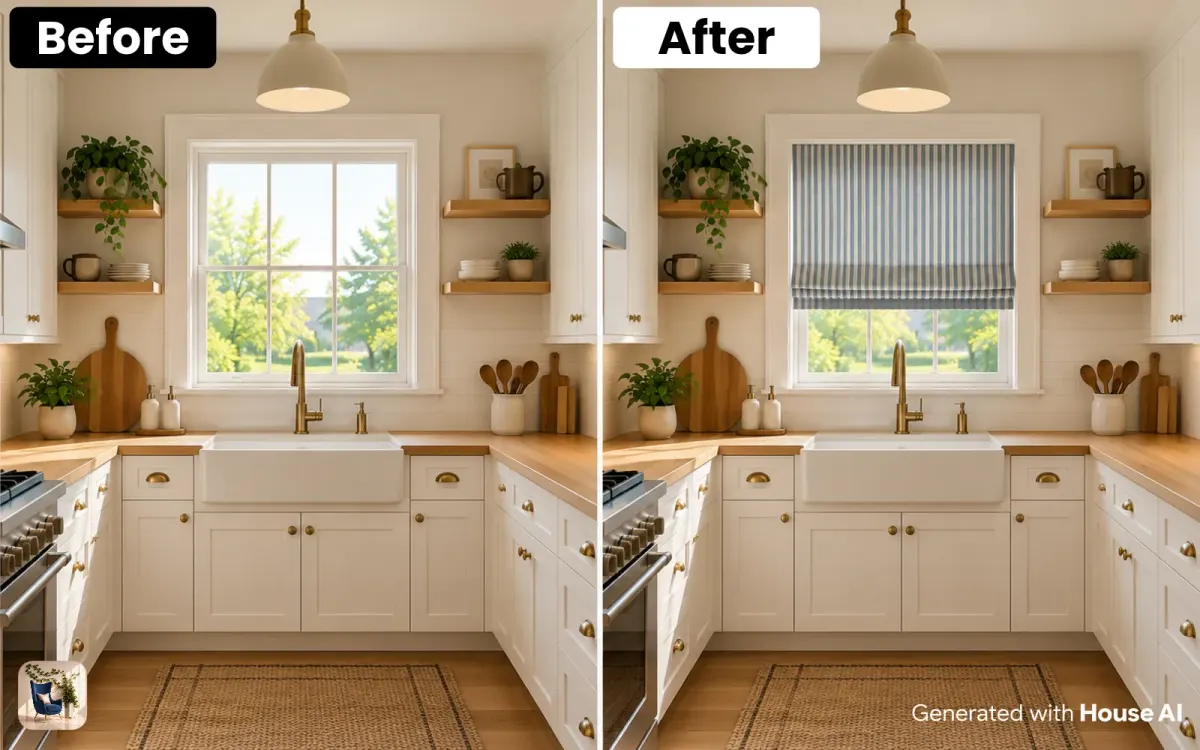
Over a kitchen sink, keep the treatment short and easy to reach. A Roman shade or a cafe curtain on the lower half of the window leaves the top open for daylight and keeps fabric away from the faucet.
Bay and bow windows: treat each pane on its own
A bay window is three or more windows set at angles, so the cleanest answer is a separate shade or blind inside each one. Each window then opens on its own, and the angles stay crisp. Top-down, bottom-up shades suit bays well, because you can lower the top for daylight while the bottom half stays covered for privacy.
For a softer look, hang curtains around the whole bay on a bendable bay rod or a rod with corner joints. You can also hang one pair outside the bay so it reads as a single wide window. If the bay holds a window seat, choose shades over long curtains, so the seat stays usable and the fabric doesn't bunch on the cushion.
Picture windows: frame the view instead of covering it
A picture window is a large fixed pane that exists for the view, so the treatment should get out of the way during the day. Stationary side panels that never close, or a solar shade that cuts glare but keeps the view, both work. Solar shades come in different openness levels, and a more open weave shows more of the outdoors.
If the window faces a street or a neighbor, add a sheer layer or a top-down shade for evening privacy. On a very wide picture window, one long shade can be heavy to lift. Split it into two or three shades that line up at the same height, or choose a motorized shade.
Sliding glass doors: choose a treatment that opens sideways
A sliding door needs a treatment that opens to the side, the same way the door does. Vertical blinds and sliding panel tracks are made for this, and both stack neatly away from the opening. Curtains on a rod that runs well past the frame are the softer choice, since the open panels can sit beside the glass instead of over it.
Skip horizontal blinds and inside-mounted shades on a sliding door. You would have to raise them every time someone walks through, and the bottom rail gets knocked by the handle. If you want a shade anyway, mount it above the frame and check that it clears the handle when it is down.
Corner windows: keep the corner clean
Where two windows meet at a corner, the meeting point is the hard part. Use two separate treatments that butt together without overlapping, such as two shades inside the frames or two blinds whose headrails meet in the corner. For curtains, use a corner rod connector, or two rods that stop short of the corner with one panel at each outer end.
Keep both sides the same treatment, fabric, and mounting height. A small mismatch is far more obvious on a corner than on two windows on separate walls.
Arched windows and skylights: usually a custom job
Arched windows are often left bare at the top, with a shade or shutters on the rectangle below. That keeps the curve visible and avoids a custom order. If you want the arch covered, The Home Depot's guide recommends an inside mount to keep the curve and names pleated and cellular arch shades as the most popular choice. It also notes that most arches are perfect arches, with a height of exactly half the width, which is the first thing to check when you measure.
Skylights sit out of reach, so the treatment has to work from below. The Home Depot names cellular shades as the most popular skylight covering and recommends remote control shades, with side channels that keep light from leaking around the edges. A shade that can't be opened easily ends up left in one position, so pay for the motor or the remote.
How to choose a window treatment for any window
Work through these steps one window at a time. A room with several window types can mix treatments, as long as the color and mounting height stay consistent.
Step 1: Name the window type and how it opens
Check whether the window is fixed, hung, sliding, or hinged, and whether anything swings into the room. A casement crank or a door handle rules out some treatments before style comes up at all.
Step 2: Decide what the treatment has to do
Pick the main job: blocking light, filtering it, privacy at night, keeping heat in, or softening the room. A bedroom usually needs blackout, while a living room usually needs filtered light and privacy after dark.
Step 3: Choose an inside or outside mount
Measure the depth of the window frame. If it is too shallow for the shade or blind you want, mount outside the frame instead, which also covers the light gaps at the sides.
Step 4: Try the look on a photo of the room
Upload a photo of the room to House AI, set the room type, and describe the treatment in your own words, such as linen Roman shades or white plantation shutters. Each design takes about 15 seconds on average, and every user gets 3 free designs a day, so you can compare a few treatments on the same window.
Step 5: Measure every window and order samples
Measure the width and height of each window in three places and keep the smallest number. Order fabric samples and hold them against the glass in daylight and again at night before you buy.
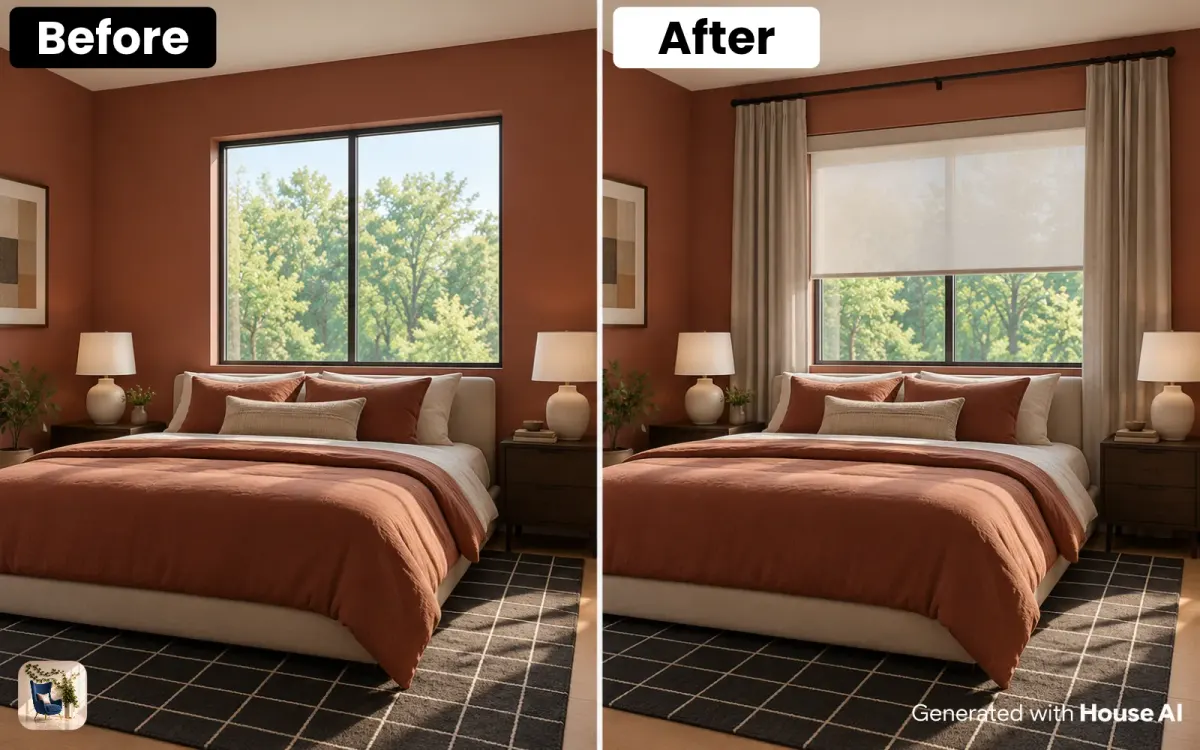
An AI render shows how a treatment looks in your room, but it doesn't measure the window or tell you whether a shade will fit inside the frame. Small details, like the slat width or the folds of a Roman shade, can drift from the real product, and the color on your screen is not the color of the fabric. Use the render to pick a direction, then measure and check samples.
Design any room, shop or space with House AI in about 15 seconds. 1 free design a day.
Get Started TodayFrequently asked questions
What is the best window treatment for a bay window?
A separate shade or blind inside each window of the bay, so each one opens on its own. Top-down, bottom-up shades add privacy without blocking the light at the top.
What window treatment works on a sliding glass door?
Vertical blinds, sliding panel tracks, or curtains on a rod that runs past the frame. All three open sideways, the same way the door does.
Should window treatments match throughout the house?
They don't have to match, but windows you can see together from one spot should share a color and mounting height. Mixing types by room is common, such as shades in bathrooms and curtains in living rooms.
Do window treatments save energy?
They can. A U.S. Department of Energy fact sheet from October 2021 found that cellular shades saved up to 20% on heating energy compared with no shades.
How do you cover an arched window?
Leave the arch bare and cover the rectangle below, or order a custom arch shade mounted inside the frame. Measure the width first, since most arches are half as tall as they are wide.
Can AI show window treatments on my own room?
Yes. Upload a photo to House AI and describe the treatment you want, and it shows the look in about 15 seconds. It doesn't measure your windows, so confirm sizes with a tape measure.
Keep reading
- How Long Should Curtains Be?
- Bedroom Design Ideas for 2026, Tested on Real Rooms
- Small Living Room Ideas: Layouts, Furniture, and Storage That Fit
- How to Choose the Perfect Lighting for Every Room
- Free AI Interior Design
Sources: U.S. Department of Energy, cellular shades fact sheet (DOE/EE-2519), October 2021. The Home Depot, "Specialty and Arched Window Treatments," updated October 6, 2023. Both checked October 17, 2026. House AI figures come from the House AI app.