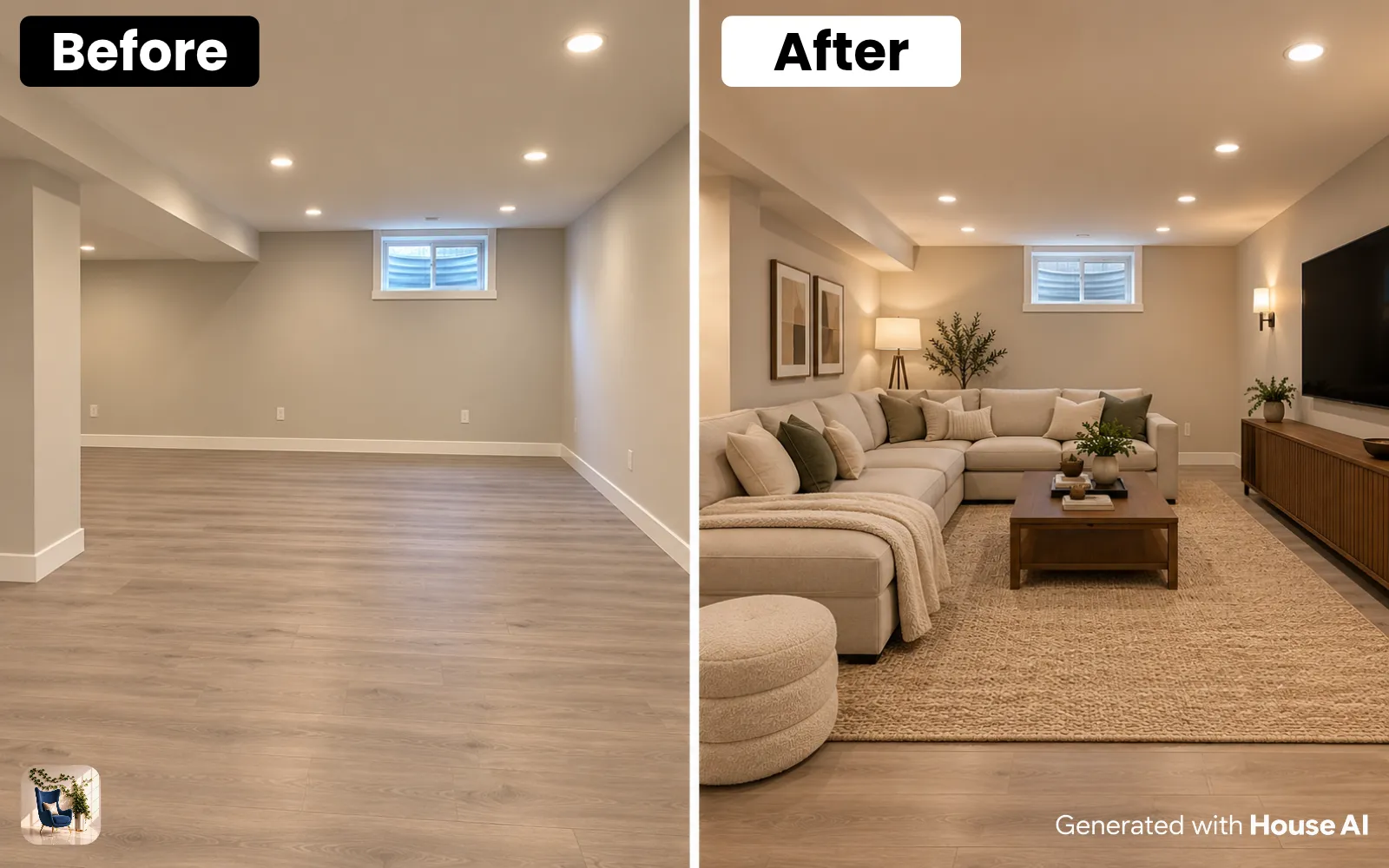
To start an interior design business, pick a legal structure (many solo designers choose a sole proprietorship or an LLC), register with your state, get an EIN, buy liability insurance, and check what your state allows unlicensed designers to do. Then choose a pricing model and find your first clients. House AI can turn a client's room photo into a concept render in about 15 seconds.
Plenty of good designers stall because the business side feels vague. It doesn't have to be. This guide covers the setup in the order you'll actually do it, then moves on to pricing, clients, and the tools that make a small studio look established from day one.
Choose a business structure first
Many solo designers start as a sole proprietorship or an LLC, and the difference is personal liability. The U.S. Small Business Administration says a sole proprietorship doesn't create a separate business entity, so you can be held personally liable for the debts and obligations of the business. An LLC protects you from personal liability in most instances, though you still pay self-employment tax.
Liability comes up more in design than people expect. You order furniture with client money, you hire installers, and you sign contracts with vendors. If an order goes wrong and a client sues, the structure decides whether your savings are on the line. Many designers start as sole proprietors to test demand and form an LLC once paying clients arrive. Talk to an accountant before you pick, since the tax side depends on your income and state.
| Structure | Personal liability | Setup |
|---|---|---|
| Sole proprietorship | You are personally liable for business debts, per the SBA | No separate entity to form; you may still need a local license and a trade name filing |
| LLC | Protects you from personal liability in most instances, per the SBA | Register with your state, usually through the Secretary of State, and name a registered agent |
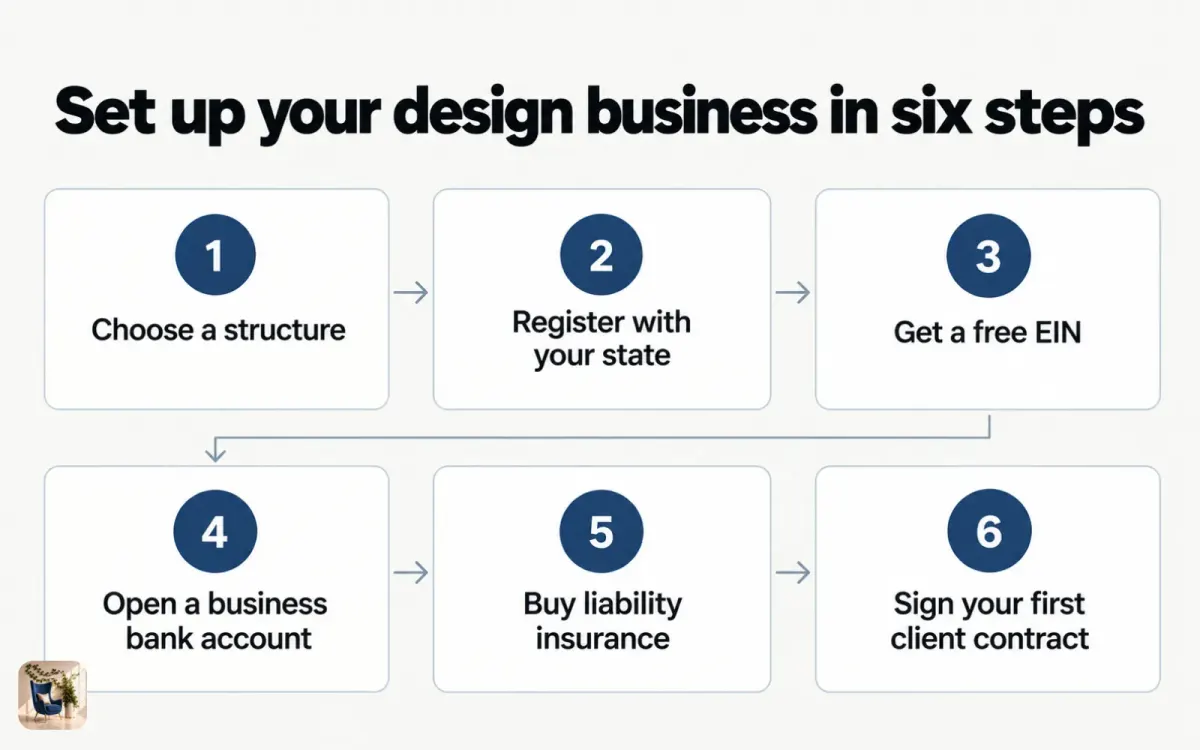
Register the business and set up the paperwork
Registration turns the business into its own legal entity, and the SBA estimates the total cost is usually under $300, though state fees vary. Most LLCs register with the Secretary of State and need a registered agent in that state. Some states also want an initial report filed within 30 to 90 days of registering, so read the confirmation email closely.
Next, apply for an Employer Identification Number. The SBA notes that applying through the IRS is free and that you should do it right after you register. Open a business bank account with it so client deposits never mix with your personal money. Then check your city and county for a general business license. If you plan to buy furniture and resell it to clients, ask your state's tax agency whether you need a seller's permit before your first order.
Insure the business before your first client
Get insured before you step into a client's home. Two policies cover most of the risk. General liability covers injuries and property damage, such as a lamp you knock off a client's console during an install. Professional liability, also called errors and omissions, covers claims that your advice or drawings cost a client money, like a sofa specified too deep for the doorway.
If you hire help, ask your agent about workers' compensation and a business owner's policy that bundles coverage. Some clients and commercial buildings will ask for a certificate of insurance before you work on site, so keep a PDF ready.
Check your state's rules at a high level
Your state decides what you can call yourself and what work you can take on. The Bureau of Labor Statistics describes three patterns. In some states, only licensed designers may do interior design work. In others, anyone can do the work but only licensed designers may use the title "interior designer." In the rest, licensed and unlicensed designers can both use the title and do the work.
In practice, an unlicensed designer can often run a decorating, styling, or e-design business almost anywhere, as long as the marketing uses the right words. Look up your state board before you print business cards. If you want the full licensing path, including the NCIDQ exam, our guide to becoming an interior designer covers it step by step.
Pick a pricing model that fits your projects
Many new designers charge hourly for small jobs and a flat fee for defined projects, then add other models as they grow. Angi's 2026 cost guide lists the four common models and what clients pay under each.
| Pricing model | What clients pay (Angi, 2026) | Best for |
|---|---|---|
| Hourly | $100 to $500 per hour | Consultations and small projects |
| Flat fee | $2,000 to $12,000 | Full-service work with a clear scope |
| Per square foot | $5 to $17 per square foot | Larger homes and new construction |
| Percentage of project | 10% to 30% of the total | High-end and large renovations |
Start with the model you can explain in one sentence on a discovery call. Hourly is the easiest to quote when you can't yet guess how long a job takes. Flat fees reward you for getting faster, but only if your contract lists exactly what's included and what counts as a change order. For current hourly rates and consultation fees, see our answer on what interior designers charge per hour.
Find your first clients
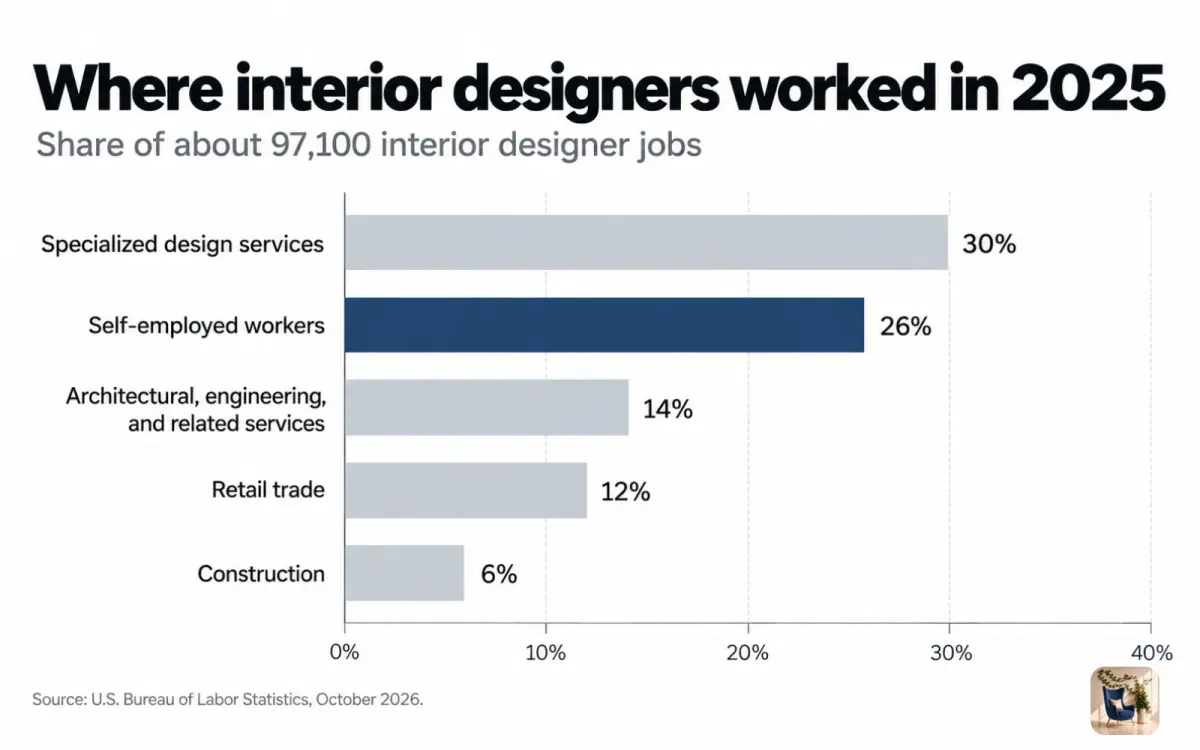
Your first clients usually come from people who already trust you, then from referrals and a portfolio people can see. You won't be the only one trying. The BLS counted about 97,100 interior designer jobs in 2025, and 26% of them belonged to self-employed designers, the second-largest group after specialized design firms at 30%.
Start close to home. Tell friends, past coworkers, and neighbors what you now offer, and ask for one introduction each. Contractors, painters, real estate agents, and furniture stores meet people who need a designer every week, so a short coffee with each can pay off for years. Post finished rooms and in-progress mood boards on Instagram and Pinterest, set up a Google Business Profile, and ask every happy client for a review on it. A small first project, like a single room styling at a fixed price, often turns into a whole-house job once the client sees how you work.
A portfolio matters more than a logo. If you don't have paid work yet, photograph your own home or a friend's room before and after, and build concept boards for spaces you'd like to design.
Use tools that make a small studio look established
A one-person studio needs four kinds of tools: a contract and invoicing system, a project tracker, a drafting or floor plan program, and a fast way to show clients ideas. The first three keep you organized. The fourth wins the job.
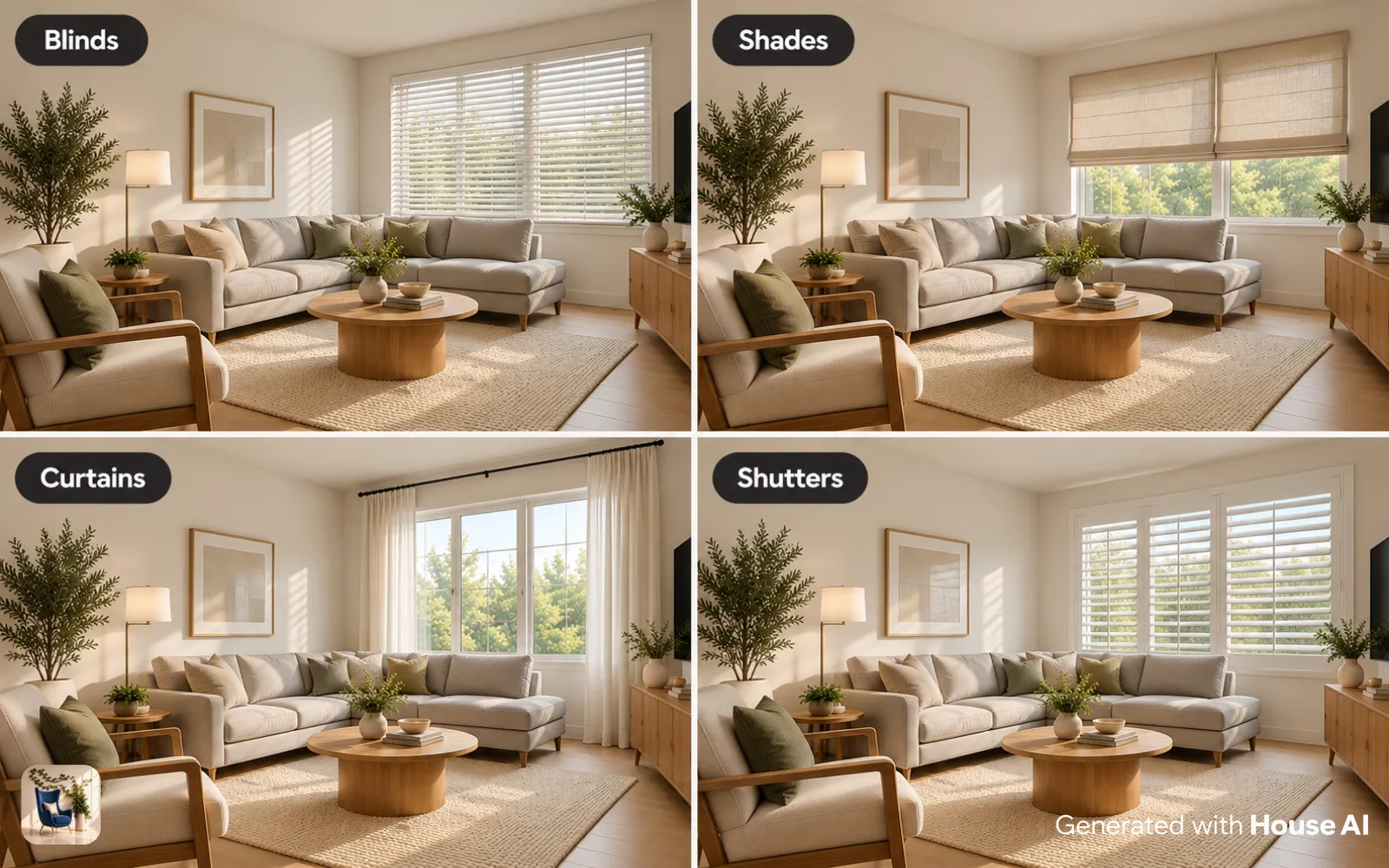
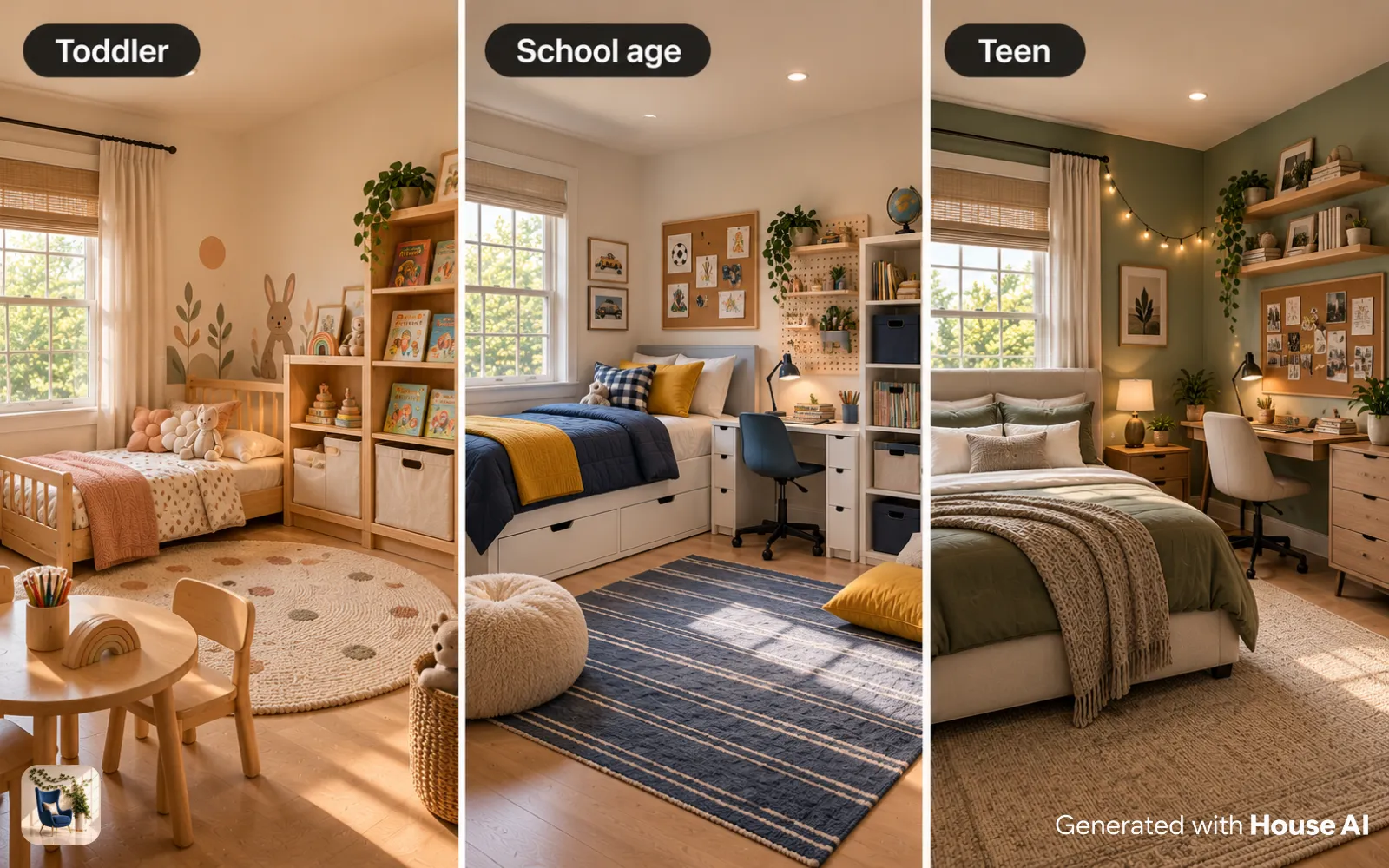
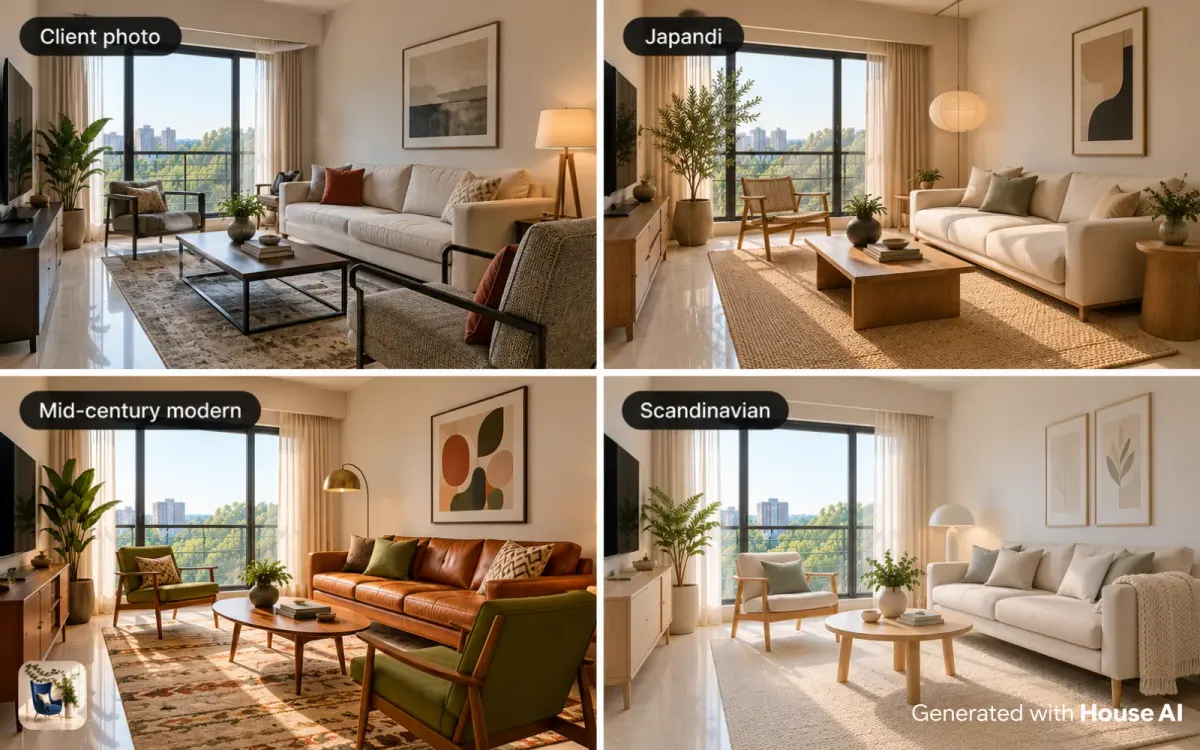
House AI handles that fourth job. Upload a photo of the client's room, set the room type, and pick from 300+ styles, or describe the look in your own words. Each design takes about 15 seconds on average and comes out at up to 2K resolution, so you can show a client three directions during a single consultation. House AI works on iOS, Android, and the web, and every user gets 3 free designs a day with no credit card. Free designs carry a watermark, which is fine for a quick mood check but worth knowing before you send one to a client.
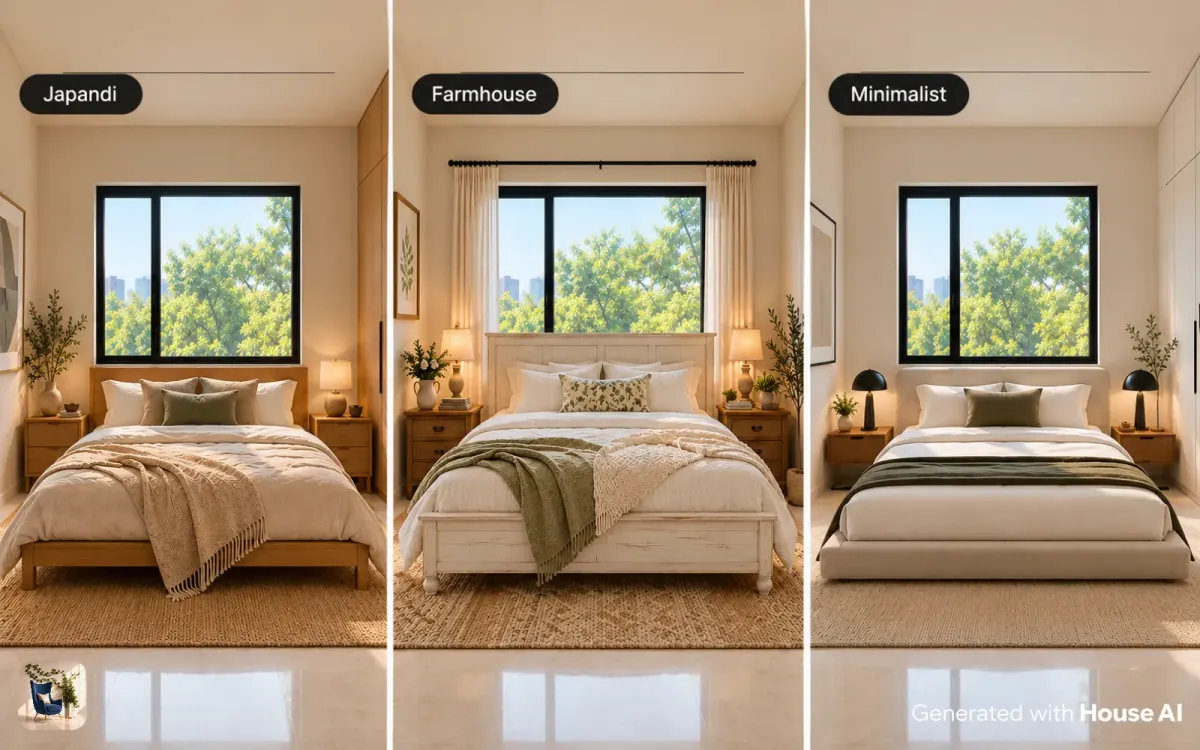
Be clear with clients about what a render is. AI doesn't measure the room, small details can drift, and the color on a screen won't match a paint chip. Treat each render as a direction to react to, then confirm it with a tape measure, real samples, and your own drawings before anyone orders a thing.
How to start your interior design business, step by step
Step 1: Decide what you'll sell
Pick a service you can deliver well right now, such as full-room design, e-design, or styling for home sellers. A clear offer makes every later choice easier, from your name to your pricing.
Step 2: Choose a structure and register
Decide between a sole proprietorship and an LLC, then register with your state if you form an LLC. Apply for a free EIN from the IRS right after you register.
Step 3: Open a bank account and get insured
Open a business bank account so deposits and purchases stay separate from your personal money. Then buy general liability and professional liability coverage before your first site visit.
Step 4: Confirm your state's rules
Check your state board to see whether unlicensed designers can do the work and use the title. Word your website and contracts to match.
Step 5: Set your pricing and write a contract
Choose hourly or flat-fee pricing to start, and write a contract that lists the scope, the number of revisions, payment dates, and how you handle furniture orders.
Step 6: Build a portfolio and pitch with concepts
Photograph your own projects, then use House AI to show prospects concept renders of their own rooms. Follow up within a day while the idea is still fresh in their mind.
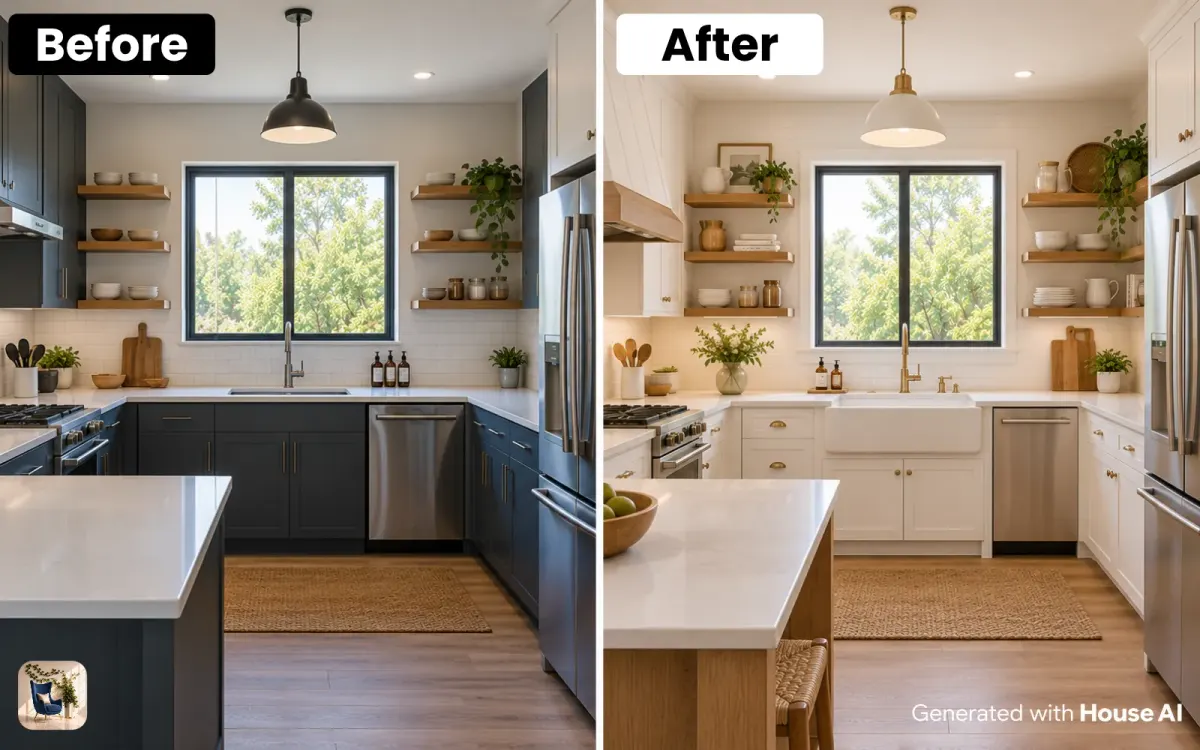
Design any room, shop or space with House AI in about 15 seconds. 1 free design a day.
Get Started TodayFrequently asked questions
Do I need a license to start an interior design business?
It depends on your state. The BLS says some states allow only licensed designers to do interior design work, others restrict only the title "interior designer," and others restrict neither.
Should an interior designer be an LLC or a sole proprietor?
An LLC protects you from personal liability in most instances, according to the SBA, while a sole proprietor is personally liable for business debts. Many designers start solo and form an LLC once they have steady clients.
How much does it cost to register an interior design business?
The SBA estimates registration costs are usually under $300, though fees vary by state. An EIN from the IRS is free.
How do interior designers charge clients?
The four common models are hourly, flat fee, per square foot, and a percentage of the project. Angi's 2026 guide lists $100 to $500 an hour and $2,000 to $12,000 for a flat fee.
Can I use AI renders to win interior design clients?
Yes. House AI turns a photo of a client's room into a concept render in about 15 seconds, so you can show several styles in one meeting. Treat renders as concepts, since AI doesn't measure the room.
Keep reading
- How to Become an Interior Designer in 2026
- How Much Does an Interior Designer Charge per Hour?
- How to Build an Interior Design Portfolio With No Clients
- Interior Design Salary Guide 2026
- House AI Pricing
Sources: U.S. Small Business Administration, "Choose a business structure," page last modified August 28, 2026. U.S. Bureau of Labor Statistics, Occupational Outlook Handbook, "Interior Designers," last modified August 27, 2026. Angi, "How Much Does an Interior Designer Cost?", updated August 31, 2026. All checked October 17, 2026. House AI figures come from the House AI app.