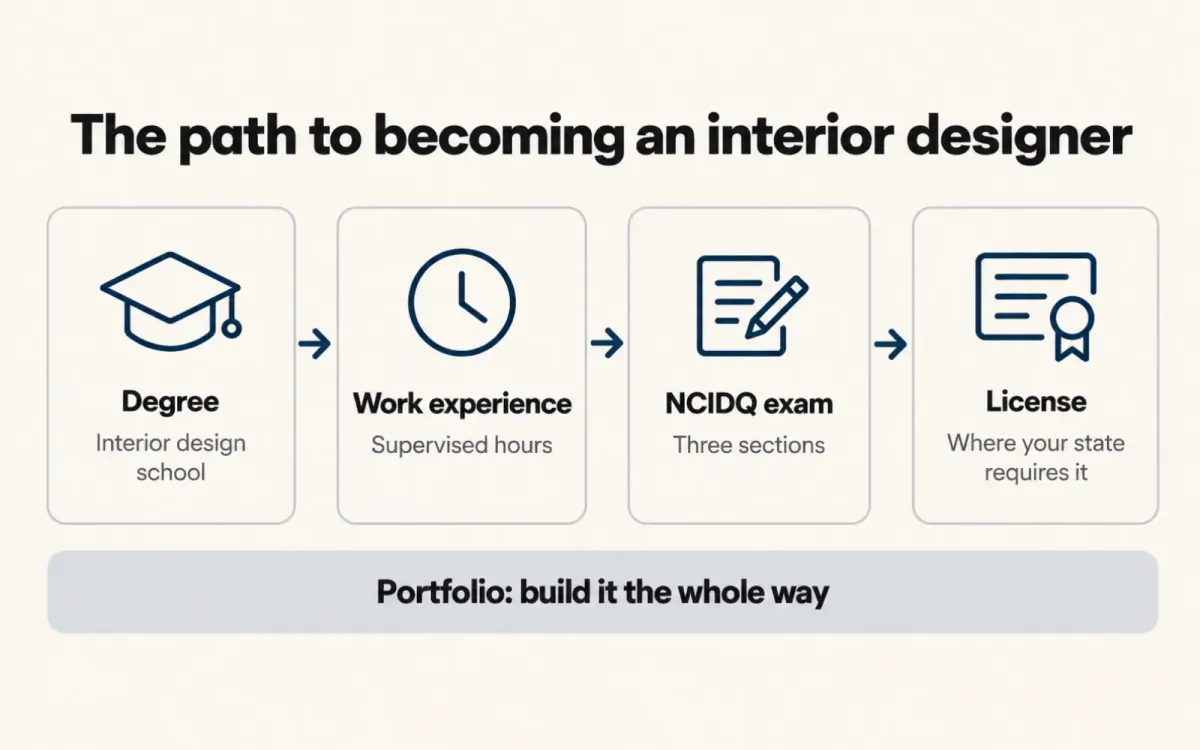
To become an interior designer, most people earn a bachelor's degree in interior design, log 3,520 hours of supervised work, and pass the three sections of the NCIDQ exam. Some states then require a license or registration for certain titles or work. You build a portfolio the whole way. On the most common path that takes about six years: four of school and two of full-time work.
The rules come from three places: your school, the Council for Interior Design Qualification (CIDQ), which runs the NCIDQ exam, and your state. Every figure below was checked against CIDQ, the Bureau of Labor Statistics, and state law in September 2026. This guide sticks to the path itself, from the first class to the license.
The path at a glance
Four things stand between you and the title: education, supervised experience, the NCIDQ exam, and, in regulated states, a license or registration. A portfolio runs alongside all of them. CIDQ sets the exam rules. Your state decides what passing the exam lets you call yourself or do.
| Stage | What you need | Who sets the rule |
|---|---|---|
| Education | A bachelor's or master's in interior design, or an associate degree, certificate, or diploma with at least 60 semester credit hours of interior design | Your school and CIDQ |
| Work experience | 3,520 to 7,040 hours of supervised work, depending on your degree | CIDQ |
| NCIDQ exam | Pass IDFX, IDPX, and IDIX within your eligibility period | CIDQ |
| License or registration | Some states regulate the work, some only the title, and some neither | Your state |
| Portfolio | Sketches, plans, construction drawings, and finished projects | Schools, employers, and clients |
Education: the degree you need
Most interior designers start with a bachelor's degree. The Bureau of Labor Statistics lists a bachelor's as the typical entry-level education and says your studies should include interior design, drawing, and computer-aided design (CAD). Programs exist at the associate, bachelor's, and master's levels, and some ask applicants for sketches or other proof of artistic ability.
For the NCIDQ exam, the design credits matter more than the name on the diploma. CIDQ accepts a bachelor's or master's from a program accredited by the Council for Interior Design Accreditation (CIDA). A non-accredited bachelor's or master's also works if it includes at least 60 semester or 90 quarter credit hours of interior design, and so does an associate degree, certificate, or diploma with the same 60 credits. Architecture degrees qualify too, but they need more work hours.
Work experience: how many hours count
With a bachelor's or master's in interior design, you need 3,520 hours of supervised interior design work, about two years full-time. Other paths need more, as the chart shows. Up to 1,760 hours earned before graduation can count toward the total, which is why internships matter.
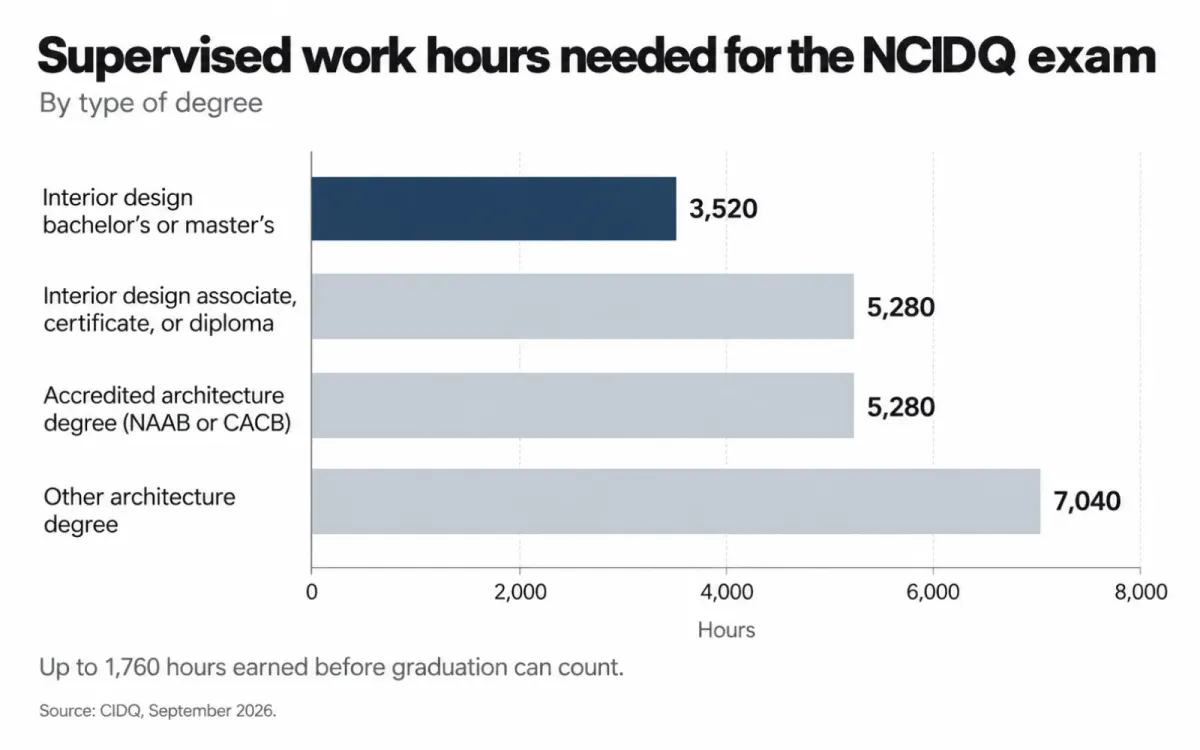
Who signs off matters. The hours must be verified by a direct supervisor or sponsor who is NCIDQ certified, a licensed or registered interior designer in the U.S. or Canada, or a licensed architect who provides interior design services. CIDQ also sets minimum hours by type of work, including 400 hours of construction documents, 300 of design development, and 200 each of programming, schematic design, contract administration, and professional practice. A job spent only choosing finishes won't get you there.
The NCIDQ exam: three sections
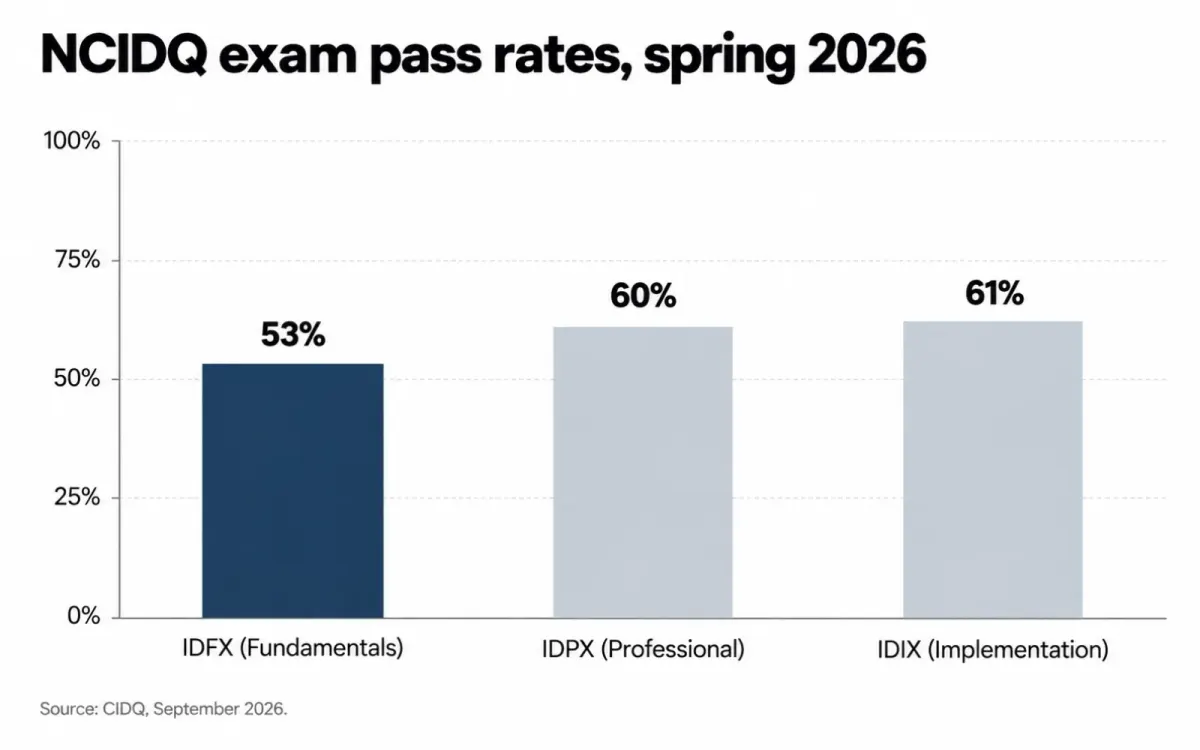
The NCIDQ exam has three sections: IDFX (Fundamentals), IDPX (Professional), and IDIX (Implementation), which replaced the older PRAC practicum. It is offered twice a year, in April and October, at Prometric test centers or by remote proctoring. Students in the final year of an interior design bachelor's or master's can take IDFX early. IDPX and IDIX open once your work hours are done.
| Section | Questions | Time | Spring 2026 pass rate | When you can take it |
|---|---|---|---|---|
| IDFX (Fundamentals) | 115 | 3 hours | 53% | Final year of an interior design bachelor's or master's, or after graduation |
| IDPX (Professional) | 115 | 3 hours | 60% | After your education and work hours are complete |
| IDIX (Implementation) | 130 | 4 hours | 61% | After your education and work hours are complete |
Each question count includes 15 unscored pretest questions. Sections are scored from 200 to 800, and 500 passes. If you apply with your education and hours already complete, you get 10 exam administrations, about five years, to pass all three sections. If you take IDFX early, you have four administrations to pass it.
Licensing: what your state requires
Whether you need a license depends on where you work. The Bureau of Labor Statistics describes three setups. In some states only licensed designers may do interior design work. In others anyone can do the work, but only licensed designers may use the title "interior designer." In the rest, anyone can do both.
Two states show how far apart the rules can be. In New York, using the title "Certified Interior Designer" requires a state license. You must be at least 21, pass all three NCIDQ sections, and have at least seven years of combined education and experience, including at least two years of interior design school and two years of supervised work. The license fee is $377. In Florida, the 2026 statutes bar you from calling yourself a "registered interior designer" without state registration, and they say plainly that the law does not restrict the title "interior designer."
Check your state board before you choose a school. Some states, like New York, add their own rules on top of CIDQ's.
Your portfolio: start it in school
A portfolio is how schools, employers, and clients judge your work, and you need one long before you need a license. Some design programs ask for sketches at admission, and a CIDQ sponsor who verifies your hours may review your drawings, plans, photographs, and project portfolios.
Put in a mix: hand sketches, CAD floor plans, a set of construction drawings, material boards, and photos of anything that got built. Walk through one or two projects from the first plan to the finished room, so a reader sees how you think. Keep a web version and a PDF you can email.
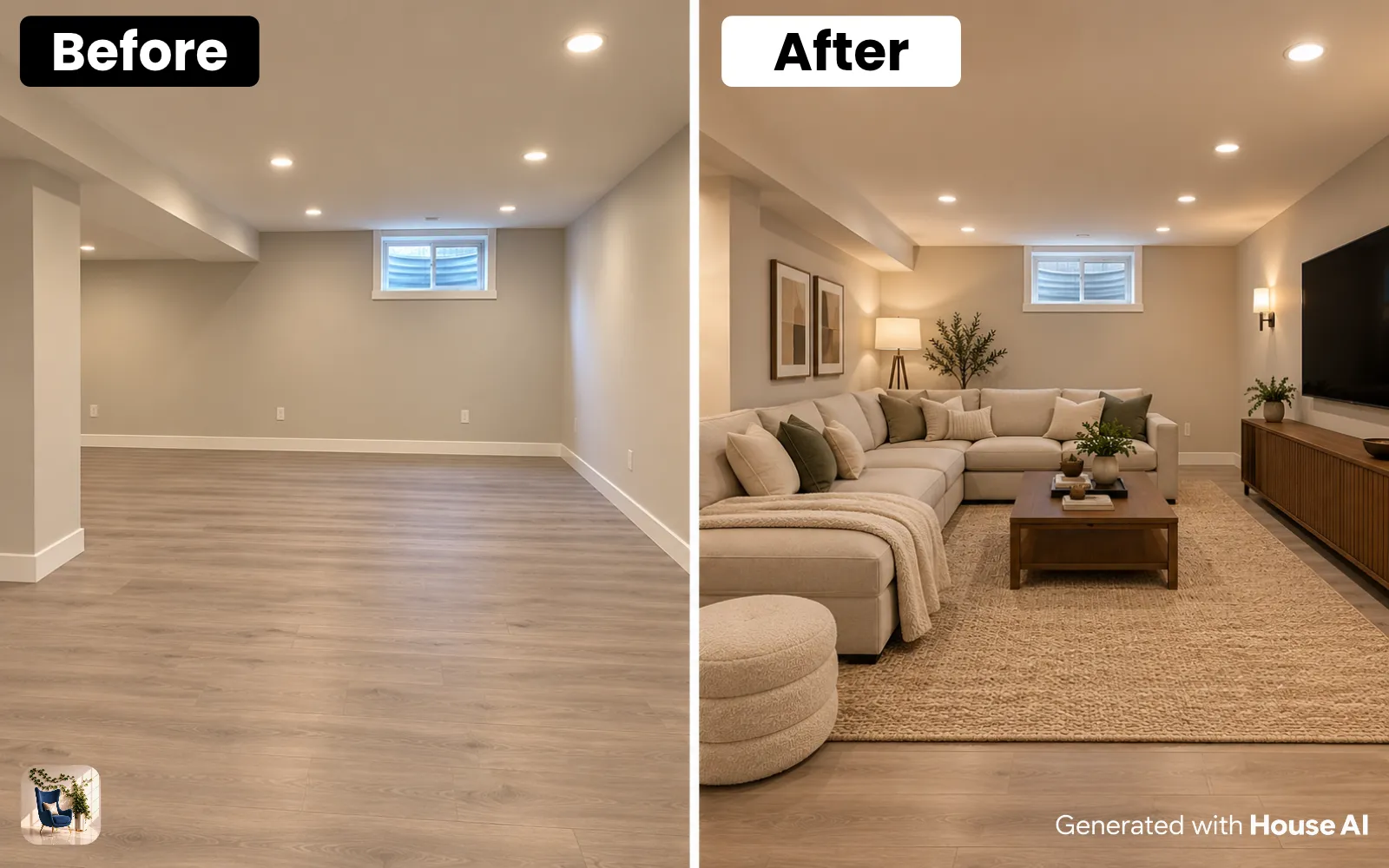
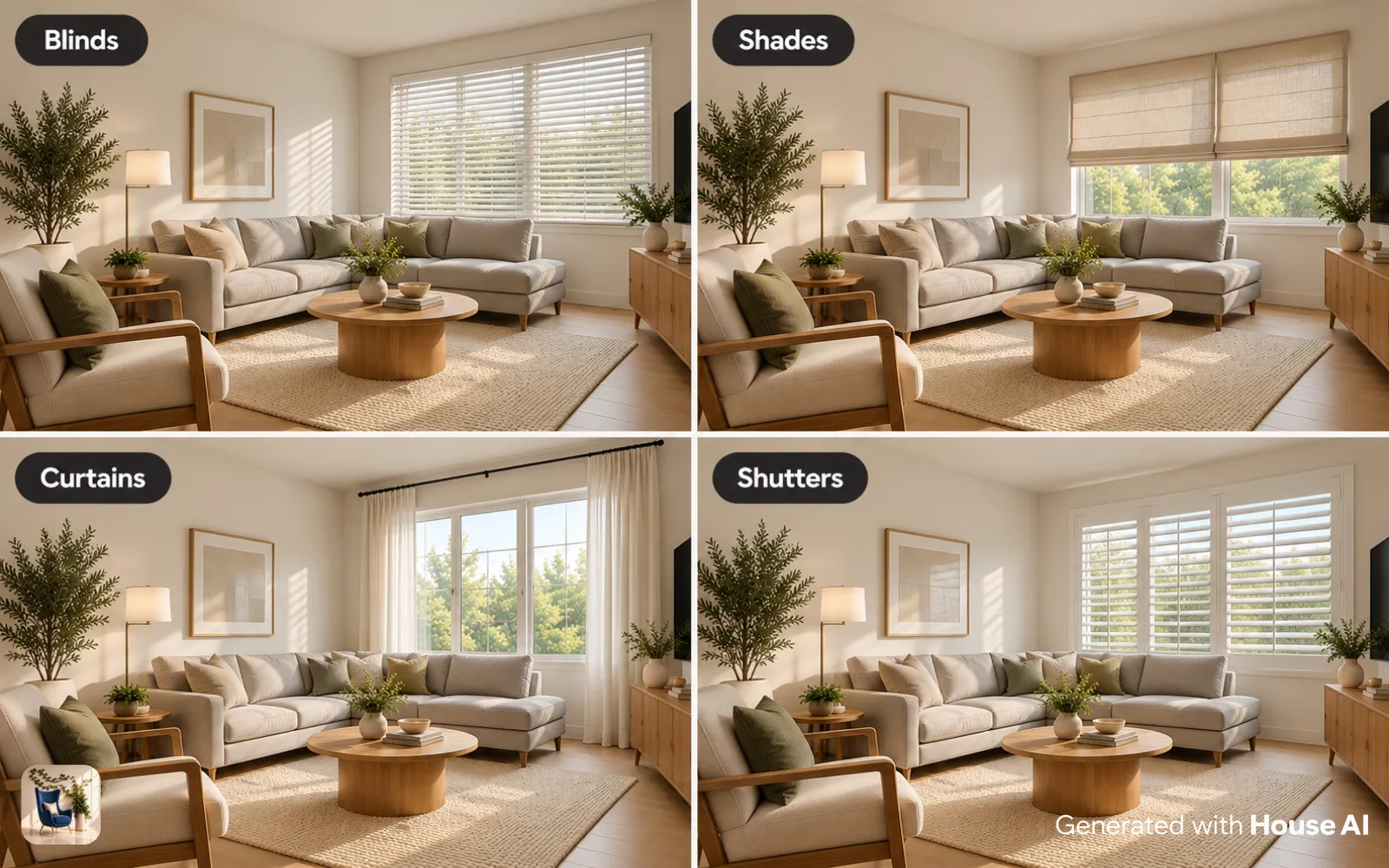
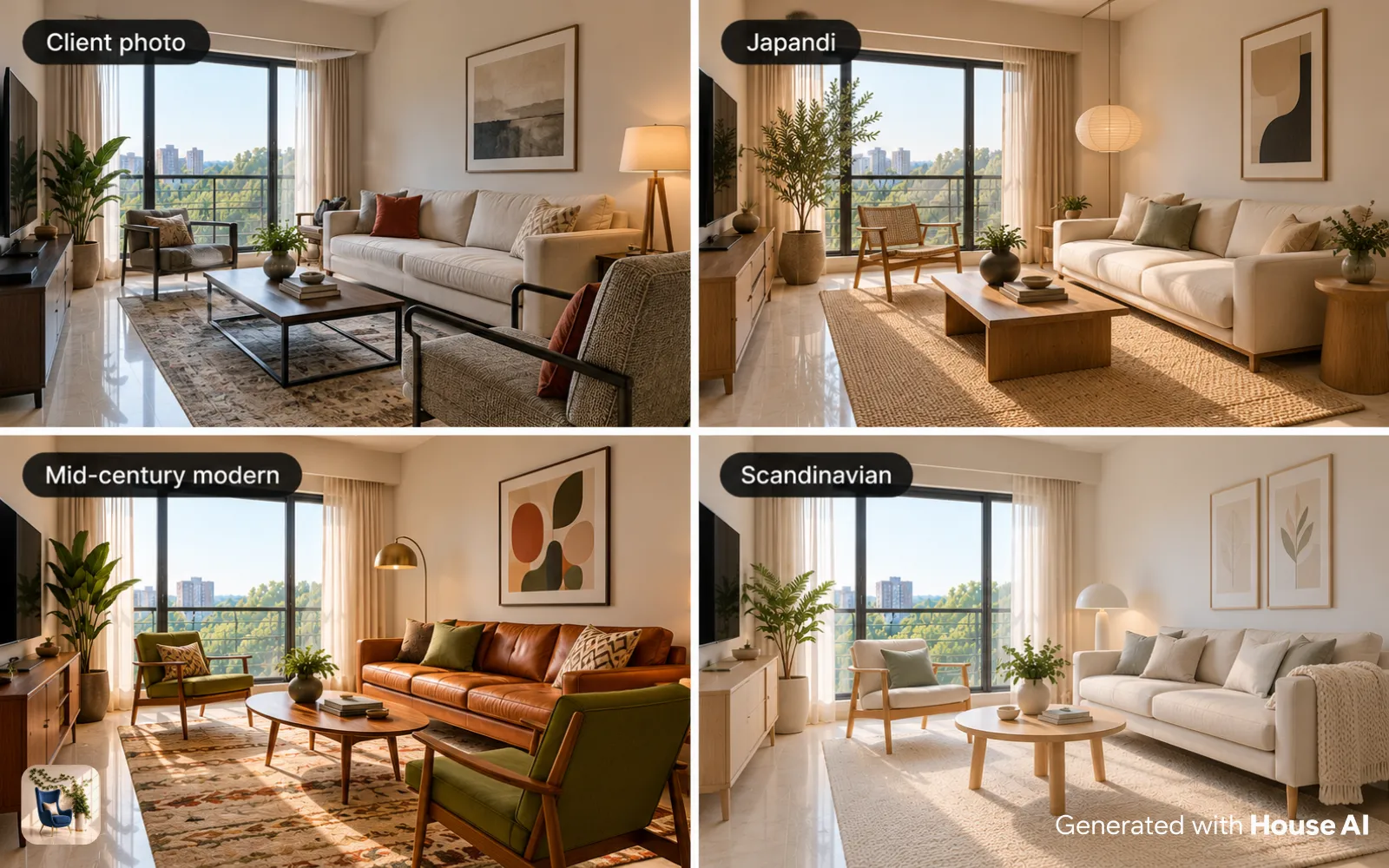
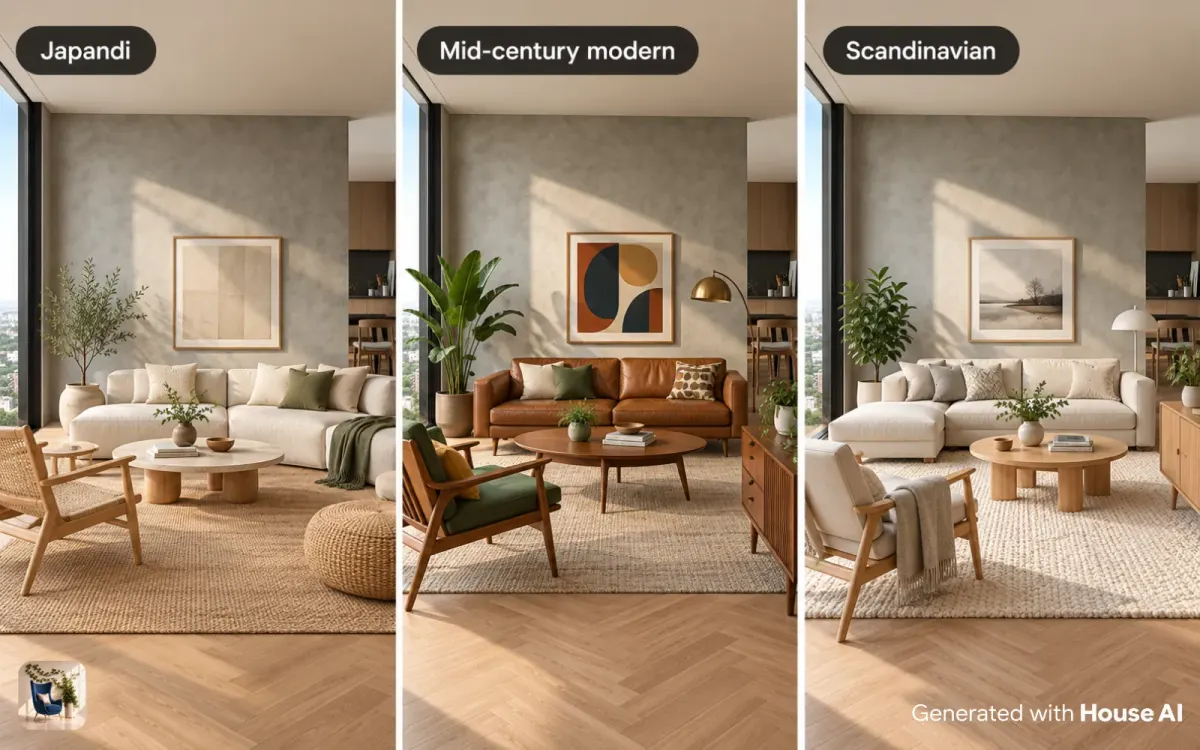
AI renders can help at the concept stage. House AI redesigns a photo of a real room in about 15 seconds on average, so you can show a client three directions before you draw anything. Label those images as AI concepts. They don't replace measured plans or construction drawings, because the app does not measure the room and small details can drift.
What interior designers earn
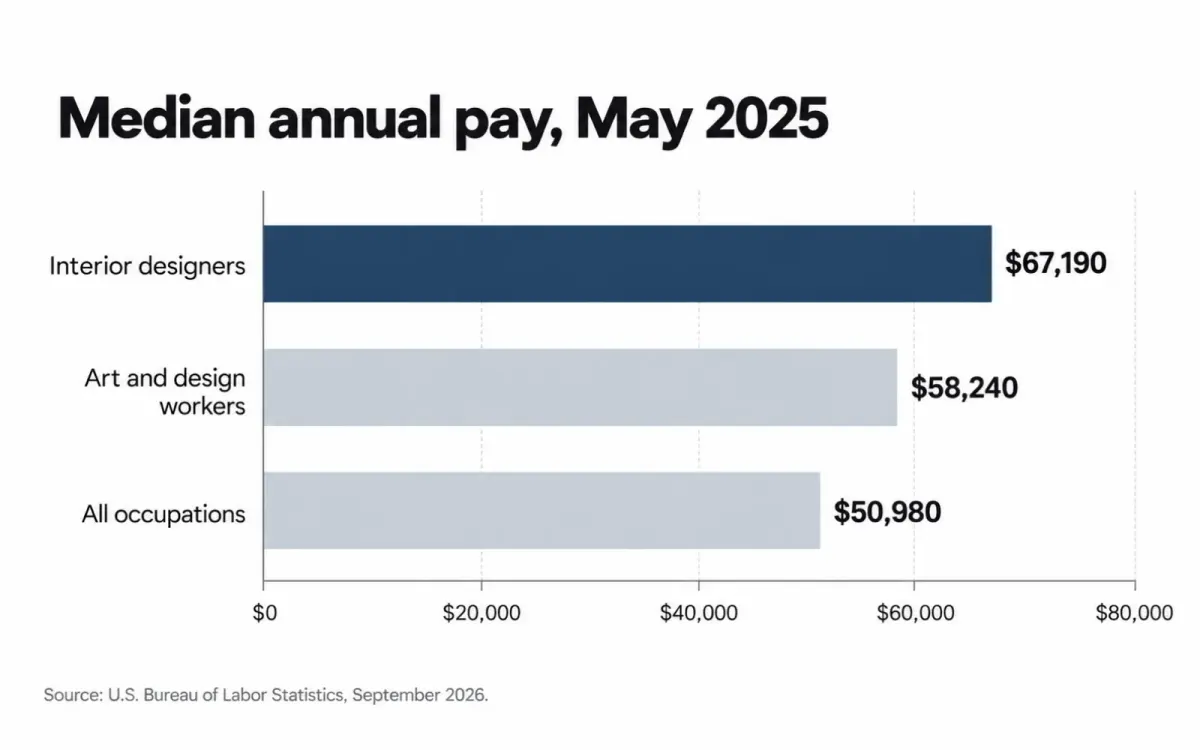
The median annual wage for interior designers was $67,190 in May 2025, according to the Bureau of Labor Statistics. The lowest 10% earned less than $41,420, and the highest 10% earned more than $114,140. BLS projects employment to grow 3% from 2025 to 2035, about as fast as the average for all occupations, with about 7,700 openings a year.
How to become an interior designer, step by step
Here is the order most people follow. BLS lists no required work experience for entry-level jobs, so you can start working in design right after school while you build your hours.
Step 1: Check your state's rules
Look up your state's interior design board, or confirm your state has none. Note whether it regulates the work, the title, or neither, and what education it accepts.
Step 2: Earn a qualifying degree
Choose a CIDA-accredited bachelor's program if you can, or any program with at least 60 semester credit hours of interior design. Take every internship you can get, since up to 1,760 of those hours can count later.
Step 3: Take IDFX in your final year
If you are in the last year of a bachelor's or master's in interior design, apply for the IDFX section. Passing it early leaves two sections for later.
Step 4: Log your supervised hours
Work under an NCIDQ-certified designer, a licensed interior designer, or a licensed architect who does interior work. Track hours by category so you meet each minimum, and meet with your supervisor or sponsor every quarter, as CIDQ recommends.
Step 5: Pass IDPX and IDIX
Once you reach 3,520 hours, apply for the last two sections. You can take them in either order, in the April or October window.
Step 6: Apply for your license and keep the portfolio current
File with your state board if your state regulates interior design, then renew your NCIDQ certificate every year. Add each finished project to your portfolio while the photos and drawings are still easy to find.
Design any room, shop or space with House AI in about 15 seconds. 1 free design a day.
Get Started TodayFrequently asked questions
Can you become an interior designer without a degree?
In states that don't regulate interior design, you can work without one. To sit for the NCIDQ exam without the usual education, CIDQ's Alternative Review Program asks for at least 8,800 hours, about five years, of interior design work experience.
How long does it take to become an interior designer?
About six years on the most common path: a four-year bachelor's degree plus 3,520 hours of supervised work. Internship hours can shorten the second part.
How long is the NCIDQ exam?
IDFX and IDPX take 3 hours each, and IDIX takes 4 hours. You can take the three sections in different exam windows and in any order once you are approved.
Is the NCIDQ exam hard?
Many candidates don't pass on the first try. In spring 2026, the pass rates were 53% for IDFX, 60% for IDPX, and 61% for IDIX.
Do interior designers need to know CAD?
Yes. BLS says most interior designers use CAD software for most of their drawings and often use BIM software to build 3D views.
Keep reading
- What Is Interior Design? Definition, Principles, Types and Careers
- What Does Interior Design Cost in 2026?
- Interior Design Software: The 2026 Buyer's Guide
- AI vs Traditional Interior Design: Which Is Right for You?
- How Do I Find My Interior Design Style?
Sources: U.S. Bureau of Labor Statistics, Occupational Outlook Handbook, "Interior Designers," last modified August 27, 2026. CIDQ, "About the Exams," updated September 22, 2026; NCIDQ Candidate Handbook, edition 1225; and "Work Experience Minimums," posted October 2025. New York State Education Department, Office of the Professions, "Interior Design: License Requirements," last updated January 10, 2020. The 2026 Florida Statutes, section 481.223. All checked September 28, 2026. House AI figures come from the House AI app.