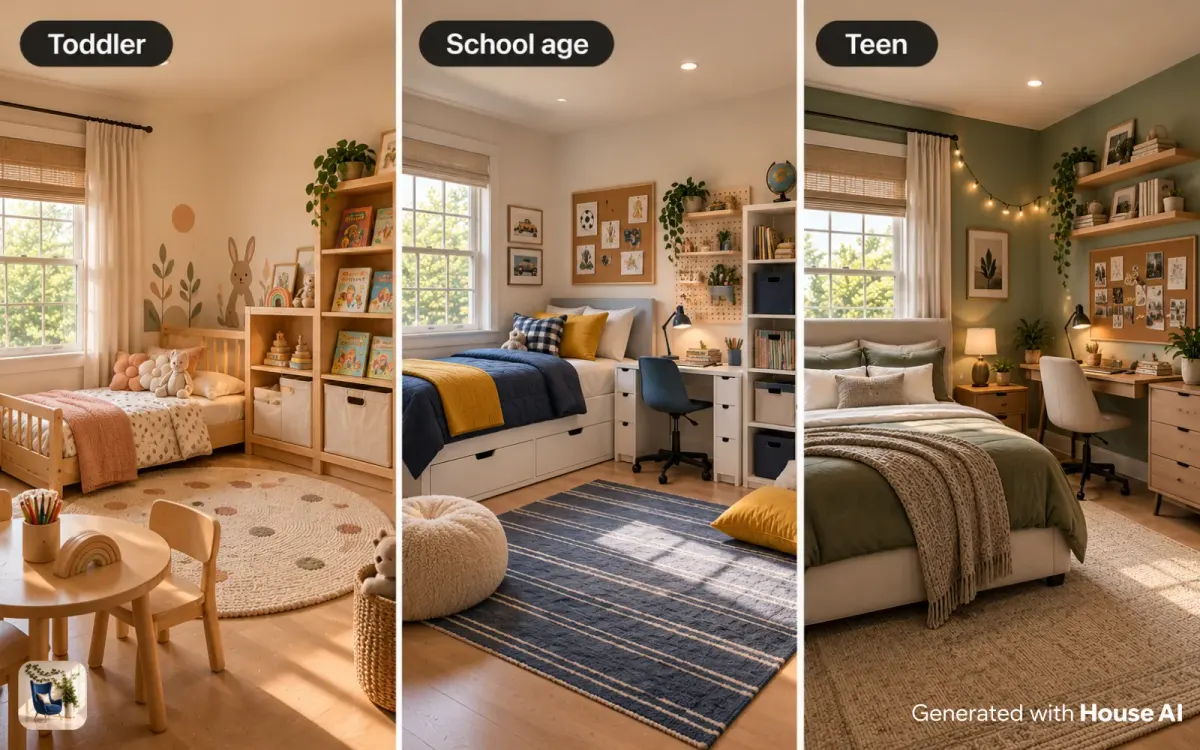
The best kids room ideas change with age. Toddlers need a low bed, soft floor, and toys they can reach. School-age kids need a desk and room to make things. Tweens and teens need privacy and closed storage. Anchor every dresser and bookcase to the wall. House AI can show each stage on a photo of the room in about 15 seconds.
A kids room has to keep up with a child who changes every year. This guide starts where the nursery ends, at about age 2, and walks through each stage. The goal is a room where the big pieces stay and the small things change.
Kids room ideas by age at a glance
Each stage asks the room to do a different job. Use this table to see what changes from one stage to the next, and what you can keep.
| Stage | Bed | Storage | Main zone | Safety focus |
|---|---|---|---|---|
| Toddler (about 2 to 5) | Low toddler bed or a twin mattress close to the floor | Open bins and low shelves a child can reach | Floor play space and a reading corner | Anchor dressers and shelves, keep toys off high shelves |
| School age (about 6 to 10) | Twin bed, often with drawers or a trundle under it | Cube shelves with labeled bins, hooks, a bookcase | A small desk and a wall for art | Anchor bookcases, check bunk or loft bed guardrails |
| Tween and teen (11 and up) | Full bed or a twin moved to a daybed | Closed drawers, a closet system, a few open shelves | A real desk, a chair, and good task light | Anchor the TV and dresser, keep cords tidy |
Toddler room ideas: low, soft, and easy to reach
A toddler room works best when everything sits at a toddler's height. Put the bed low to the floor so climbing in and out is safe. A toddler bed is the classic pick, but a twin mattress on a low frame lasts years longer and saves a purchase later.
Keep the floor open for play and cover it with a washable rug. Store toys in a few fabric bins on low, open shelves, and face picture books out so a child can choose one on their own. Rotate the toys every few weeks instead of keeping everything out at once. One small table with two chairs gives a spot for crayons and puzzles.
Choose wall color and bedding you can live with for several years, and bring in the theme through things that are cheap to swap: a wall decal, a print, a lamp, or a pillow. Dinosaurs and fairies come and go fast at this age.
School-age room ideas: a place to make things and do homework
School-age kids need a room that holds projects, collections, and the first real homework. Add a small desk with a task lamp, even if most homework happens at the kitchen table for now. Give art and school papers a wall of their own with a corkboard, a pegboard, or a picture ledge, so the work goes up and comes down without new holes in the paint.
This is the stage when a twin bed with drawers or a trundle pays off. Drawers under the bed hold out-of-season clothes, and a trundle covers sleepovers. Cube shelves with labeled bins let a child put things away alone. A reading nook in a corner, with a floor cushion and a clip-on light, turns into a favorite spot more often than any theme does.
Tween and teen room ideas: privacy and a real desk
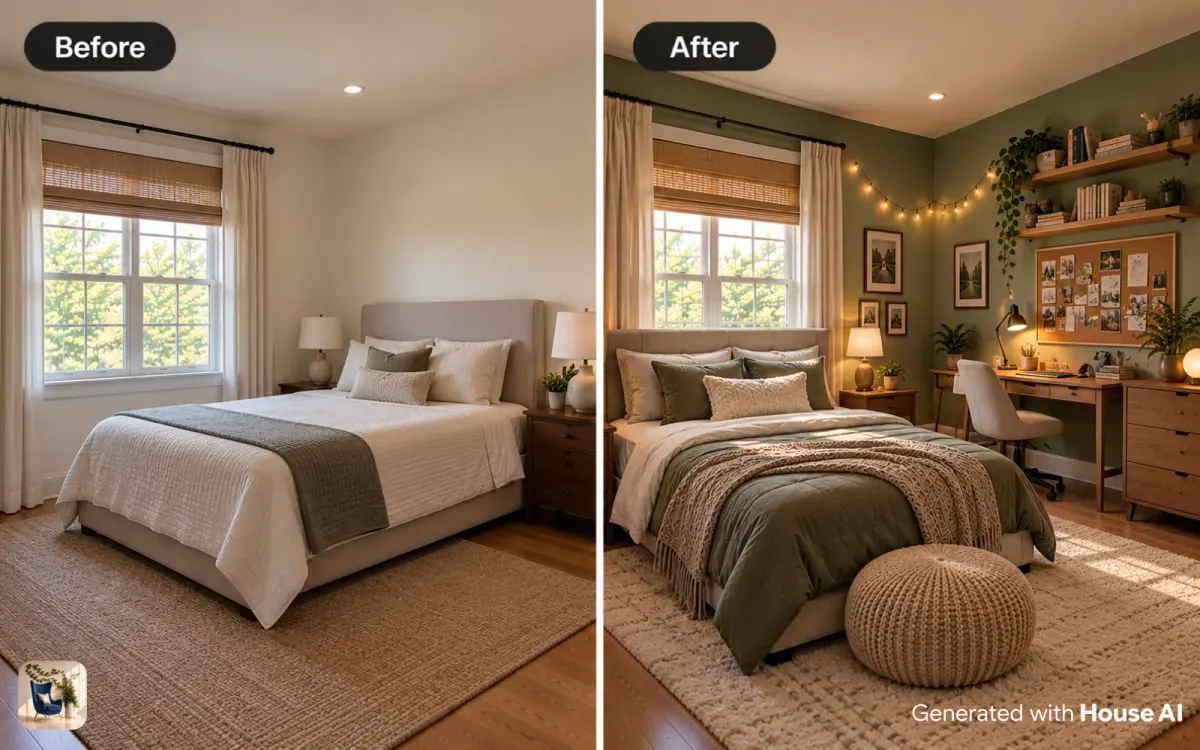
Tweens and teens want a room that looks grown up and feels like their own. Swap open bins for closed drawers and a closet system, since a teen room holds more clothes and fewer toys. Move up to a full bed if the room allows it, or turn the old twin into a daybed with a back cushion so it works as a couch too.
The desk becomes the most important piece. Give it a real chair and a task lamp, and place it near an outlet so chargers don't trail across the floor. Let your teen choose the wall color and the art. A muted base with their own posters, photos, or a gallery of frames keeps the room easy to update as tastes shift.
Storage that changes with your child
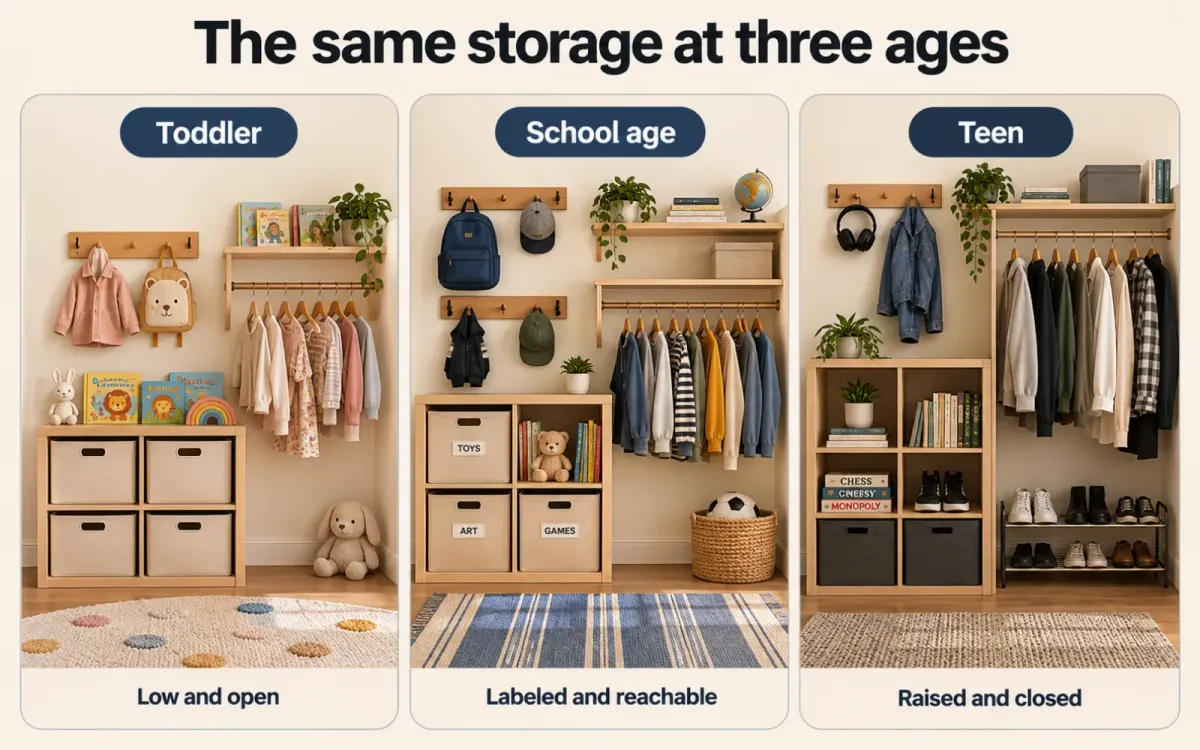
The storage that lasts is the storage you can reset. Buy a few large pieces that work at every age, then change what goes inside them. A low cube shelf holds toy bins at age 3, books and collections at age 8, and shoes or games at age 14. A dresser holds play clothes now and a teen's wardrobe later.
Height matters as much as size. Put the things a young child uses every day on the bottom two shelves and move them up as the child grows. Hooks are a good example. Set them low for a toddler's jacket and backpack, then raise them or add a second row later. Closet rods can do the same trick: hang a lower rod for a young child and remove it when long clothes need the full height.
| Storage piece | Toddler | School age | Tween and teen |
|---|---|---|---|
| Low cube shelf | Toy bins and picture books | Books, art supplies, collections | Games, shoes, keepsakes |
| Dresser | Clothes, with daily items in the bottom drawer | Clothes the child puts away alone | Full wardrobe, closed and tidy |
| Wall hooks | One low row for a coat and bag | Two rows for bags, hats, and sports gear | Raised for bags, headphones, and jackets |
| Under-bed space | Spare bedding | Drawers or a trundle for sleepovers | Out-of-season clothes |
| Closet | A lower rod and bins on the floor | Lower rod plus shelves | Full-height rod and a shoe rack |
Shared kids room ideas
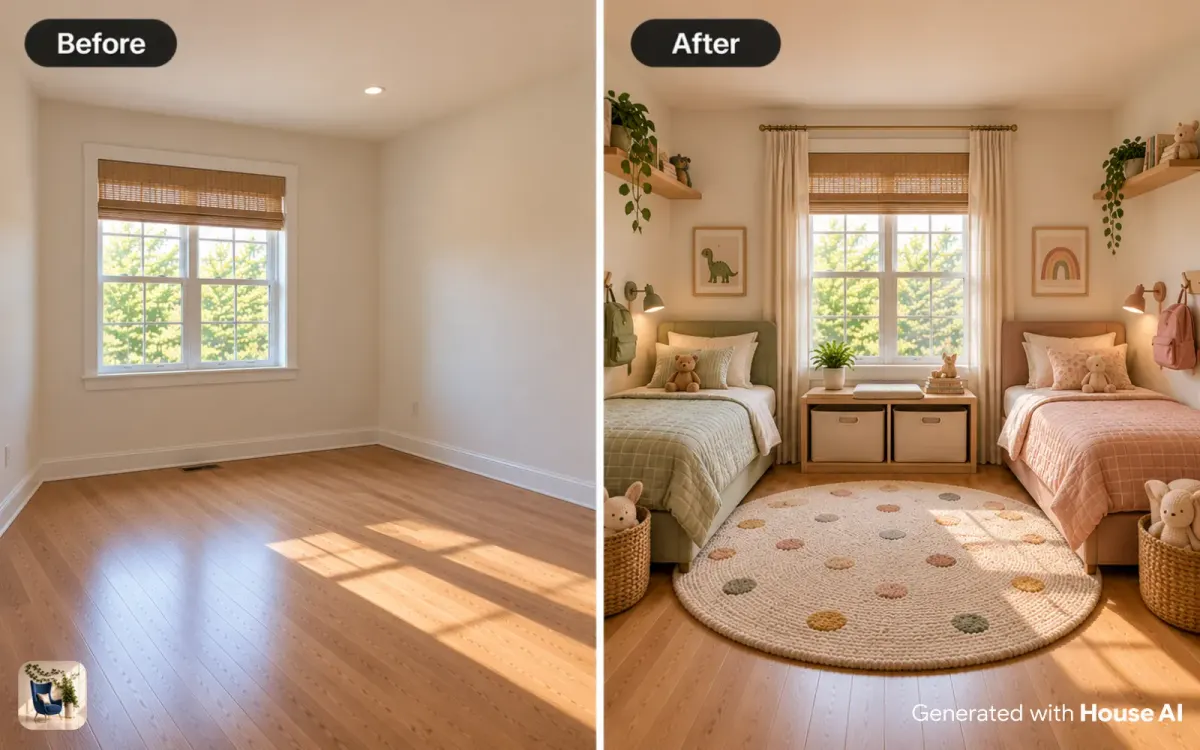
A shared room works when each child has a clear zone of their own. Place two twin beds on opposite walls or in an L in the corner, and give each bed its own reading light and a shelf or wall hook. A shared nightstand between two parallel beds saves floor space. Color can mark the zones too: matching bedding in two colors reads as one room and still tells each child which side is theirs.
Bunk beds and loft beds free up the most floor space, which matters in small shared rooms. Follow the age on the bed's warning label for the top bunk, keep guardrails on both sides of the upper bed, and set the bunk away from windows and ceiling fans. A long, low storage bench under the window gives both kids a place to sit and a bin each.
When the age gap is wide, split storage by height. The younger child gets the lower shelves and drawers, and the older child gets the higher ones, which also keeps small parts and older kids' things out of a little one's reach.
Kids room safety: anchor the furniture first
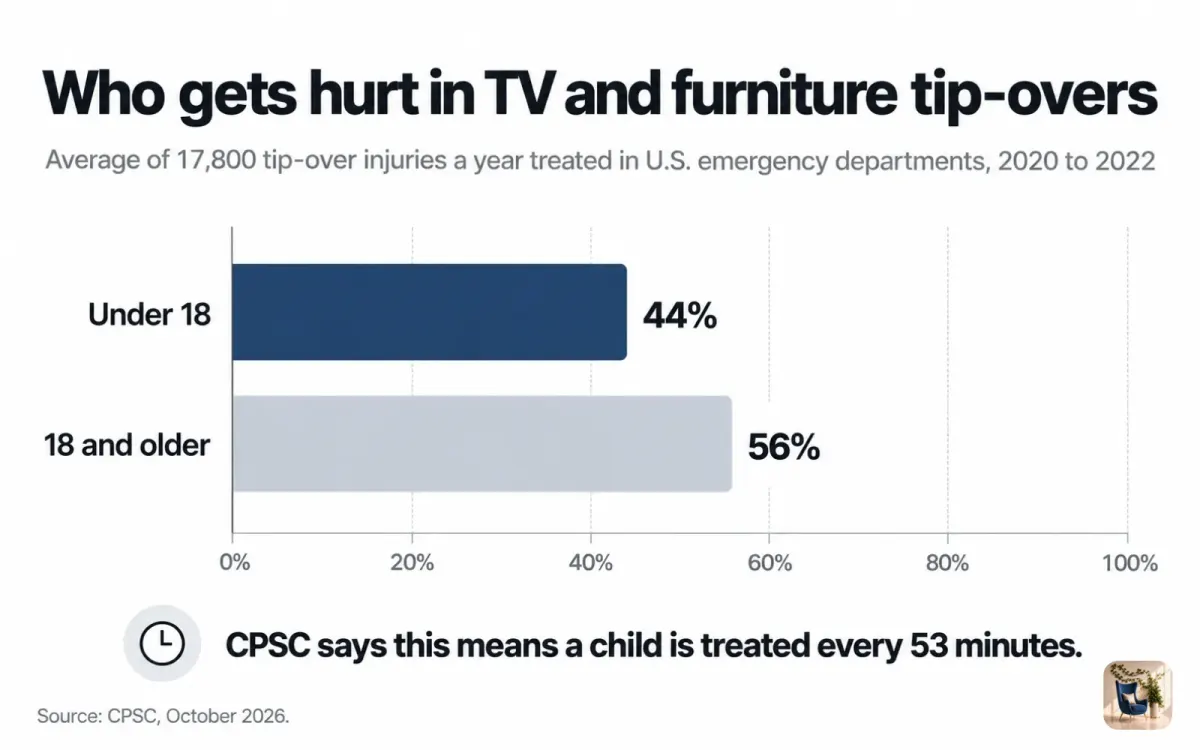
Start with the wall anchors, before the paint or the bedding. The U.S. Consumer Product Safety Commission (CPSC) estimates that emergency departments treated an average of 17,800 tip-over injuries a year from 2020 to 2022. 44% of the victims were under 18, which CPSC says means a child is treated every 53 minutes. From 2013 to mid-2023, 217 tip-over deaths were reported, and 71% of those killed were children ages one to three.
CPSC's advice is plain. Anchor TVs and furniture such as bookcases and dressers securely to the wall. If a TV can't be anchored, set it on a sturdy, low base, push it back as far as it goes, and keep cords out of reach. Don't store toys or other tempting items on high shelves, and keep heavier things on lower shelves so kids aren't tempted to climb.
When you shop for a new dresser, look for one that meets the federal stability standard required by the STURDY Act, which went into effect in September 2023 for clothing storage units such as dressers and armoires. Anchor it anyway. CPSC reported a nearly 50 percent decline in tip-over injuries and deaths in the U.S. when its Anchor It! campaign marked 10 years in July 2025.
How to plan a kids room that grows
A room that grows starts with a plan for the pieces you won't replace. These steps take you from an empty room to a layout you can test before you buy.
Step 1: Decide what stays for years
List the big pieces you want to keep through the teen years, such as a twin or full bed, a dresser, and a bookcase. Spend on those, and keep the cheap, easy-to-swap things for the current stage.
Step 2: Map the zones
Sketch where sleep, storage, play or homework, and reading will go. Keep the path from the door to the bed clear, and put the desk or play area near the window for daylight.
Step 3: Photograph the room
Stand in a corner in daylight so two walls, a window, and the floor are in the frame. An empty room works well, and so does the room as it is today.
Step 4: Try each stage in House AI
Upload the photo, set the room type to bedroom, and pick a style from the grid or describe the room you want in your own words, such as a toddler room with low shelves or a teen room with a desk. Each design takes about 15 seconds on average, and every user gets 3 free designs a day, enough to compare three stages on one photo.
Step 5: Measure, anchor, and check what the picture can't show
AI doesn't measure your room, and small details can drift between the render and real life. It also can't tell you whether a dresser is anchored or a bunk bed has guardrails. Measure the wall and the walkway before you order, and plan the wall anchors before the furniture arrives.
Design any room, shop or space with House AI in about 15 seconds. 1 free design a day.
Get Started TodayFrequently asked questions
How do I make a kids room grow with my child?
Buy a few lasting pieces, like a twin bed, a dresser, and a cube shelf, in neutral finishes. Change the bins, bedding, art, and hook height as your child grows instead of replacing the furniture.
What should be in a toddler room?
A low bed, a soft washable rug, low open shelves with a few bins, and face-out books. Anchor the dresser and shelves to the wall, and keep toys off high shelves so there's no reason to climb.
How do you set up a shared kids room?
Give each child a clear zone with their own bed, light, and storage. Twin beds on opposite walls or bunk beds both work, and two bedding colors help each child know which side is theirs.
Do I really need to anchor kids furniture?
Yes. CPSC estimates 17,800 tip-over injuries a year were treated in emergency departments from 2020 to 2022, and it tells families to anchor TVs, dressers, and bookcases to the wall.
Can AI show me ideas for my kid's room?
Yes. Upload a photo of the room to House AI, set the room type to bedroom, and describe the look you want. You get a design in about 15 seconds, but measure before you buy, since AI does not measure the room.
Keep reading
- Bedroom Design Ideas for 2026, Tested on Real Rooms
- How Do I Make a Small Room Look Bigger?
- Understanding Color Psychology in Your Bedroom
- How Much Does It Cost to Furnish a Bedroom?
Sources: U.S. Consumer Product Safety Commission, "CPSC Urges Fans: Anchor TVs and Furniture Before Super Bowl LX," February 5, 2026. U.S. Consumer Product Safety Commission, "CPSC Anchor It! Campaign Marks 10 Years: Fewer Furniture Tip-Overs Lead to Safer American Households," July 29, 2025. Both checked October 17, 2026. House AI figures come from the House AI app.