The bedroom design ideas that work best are chosen by goal: a calm palette, hidden storage, furniture lifted off the floor in small rooms, layered lighting, and a strong headboard wall. Pick one goal, try two or three ideas for it, and keep the rest of the room quiet. House AI shows any of them on a photo of your bedroom in about 15 seconds.
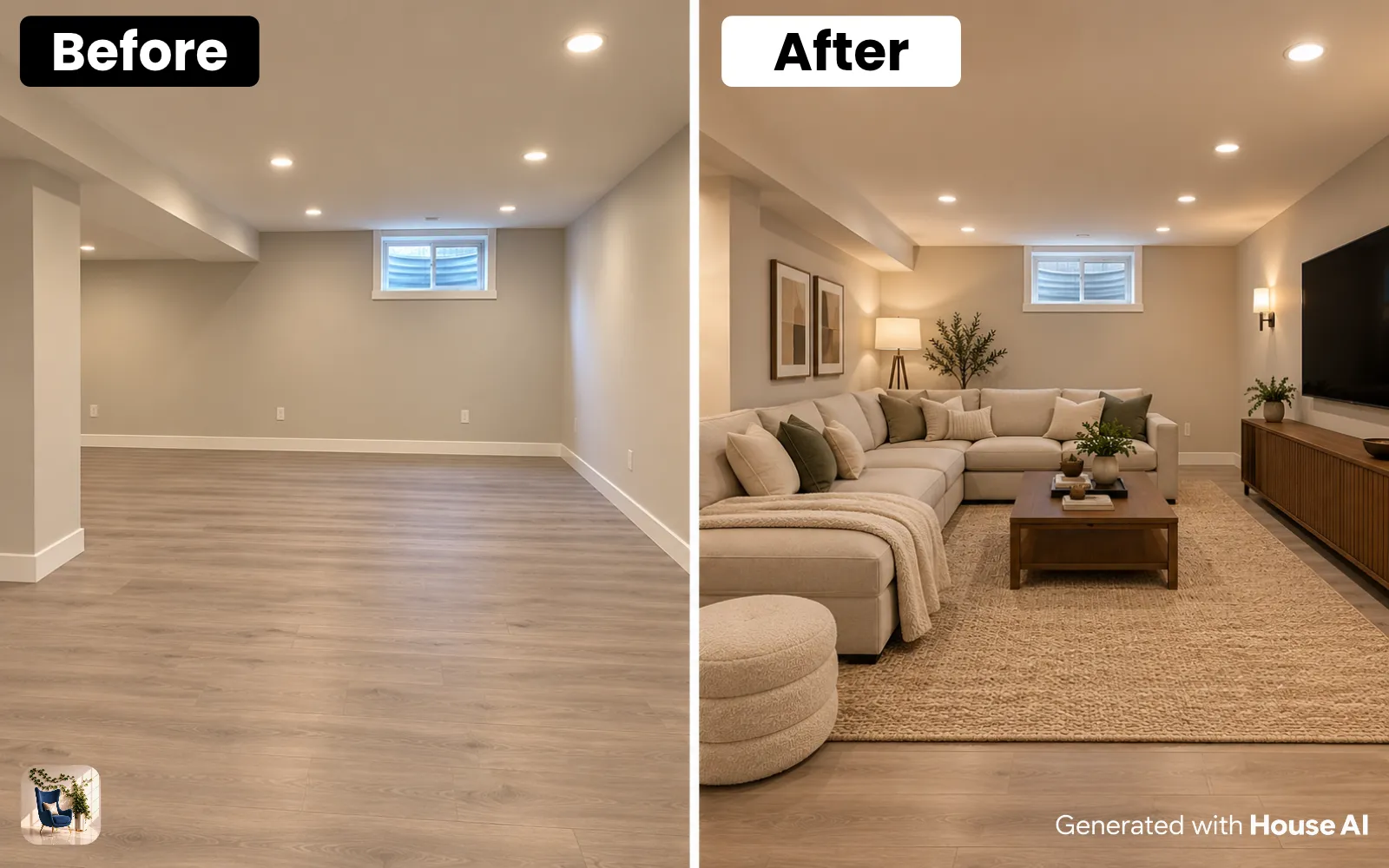
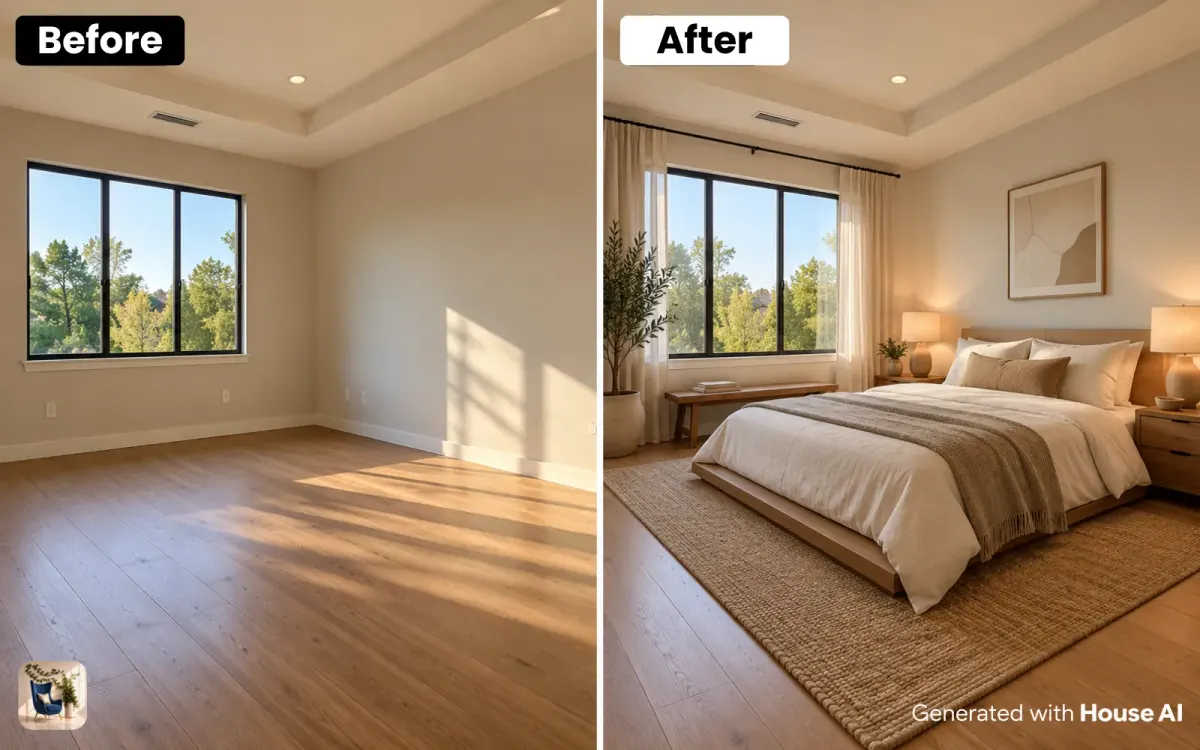
Most bedroom idea lists give you dozens of photos and no way to tell which ones suit your room. This guide groups the ideas by what you want the room to do. Every idea was run as a House AI render on one of two photos, a furnished bedroom and an empty one, so you can see how it changes a real room.
Bedroom ideas by goal at a glance
Start with the thing that bothers you most about your bedroom right now. Each row below gives the ideas that do the most for that goal and the House AI style or feature used to test them on this page.
| Goal | Ideas that work | How to test it in House AI |
|---|---|---|
| Calm | Two or three soft colors, matching bedside lamps, bare surfaces, and solid linen bedding | Interior Design with Japandi, Scandinavian, Zen, or Minimalist |
| Storage | Drawers under the bed, a headboard with shelves, and wall shelves in place of nightstands | Interior Design with a custom style that names each piece |
| Small bedroom | Furniture on legs, wall-mounted lights, a tall narrow dresser, and one large mirror | Interior Design on a photo of the actual small room |
| Lighting | An overhead light, a reading light on each side of the bed, and one warm accent light | Interior Design, then check where the lamps landed |
| Headboard wall | Wood slats, an upholstered panel, wallpaper, or a painted block behind the bed | Wall Design on the wall behind the bed |
Calm bedroom ideas
A calm bedroom has fewer colors, fewer objects, and softer light than the rest of the house. Keep the palette to two or three related shades, such as warm white, oatmeal, and pale oak. Clear the nightstands down to a lamp and one other thing. Choose bedding in a solid color or a quiet texture, like washed linen or waffle cotton, instead of a busy print.
Symmetry does a lot of the work. Matching lamps on matching bedside tables, centered on the bed, make the room look ordered even when the closet is a mess. A rug that runs past both sides of the bed gives your feet somewhere soft to land and ties the furniture together. If you want to know which wall colors suit sleep, our color psychology guide covers that in detail, so this page leaves paint colors out.
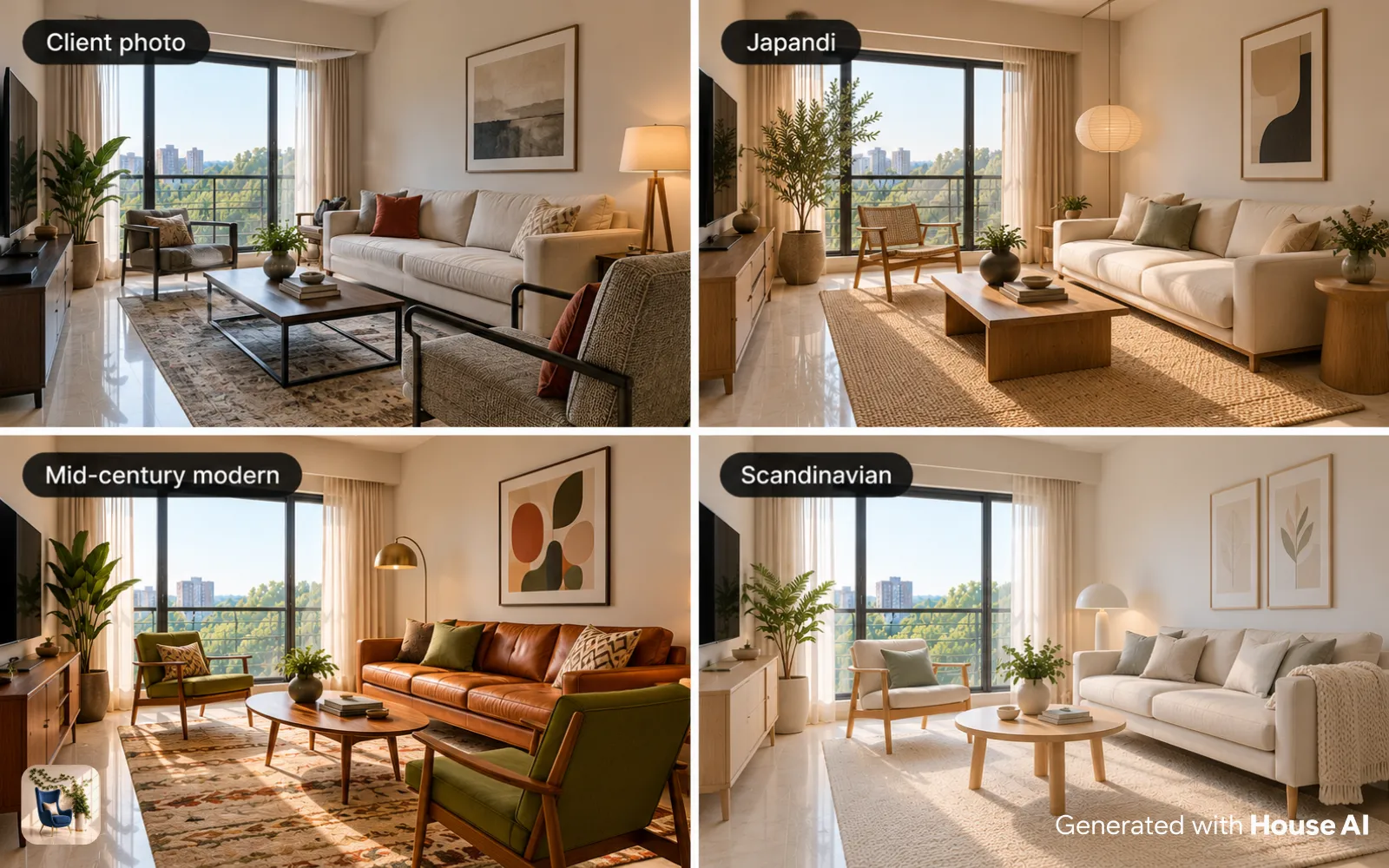
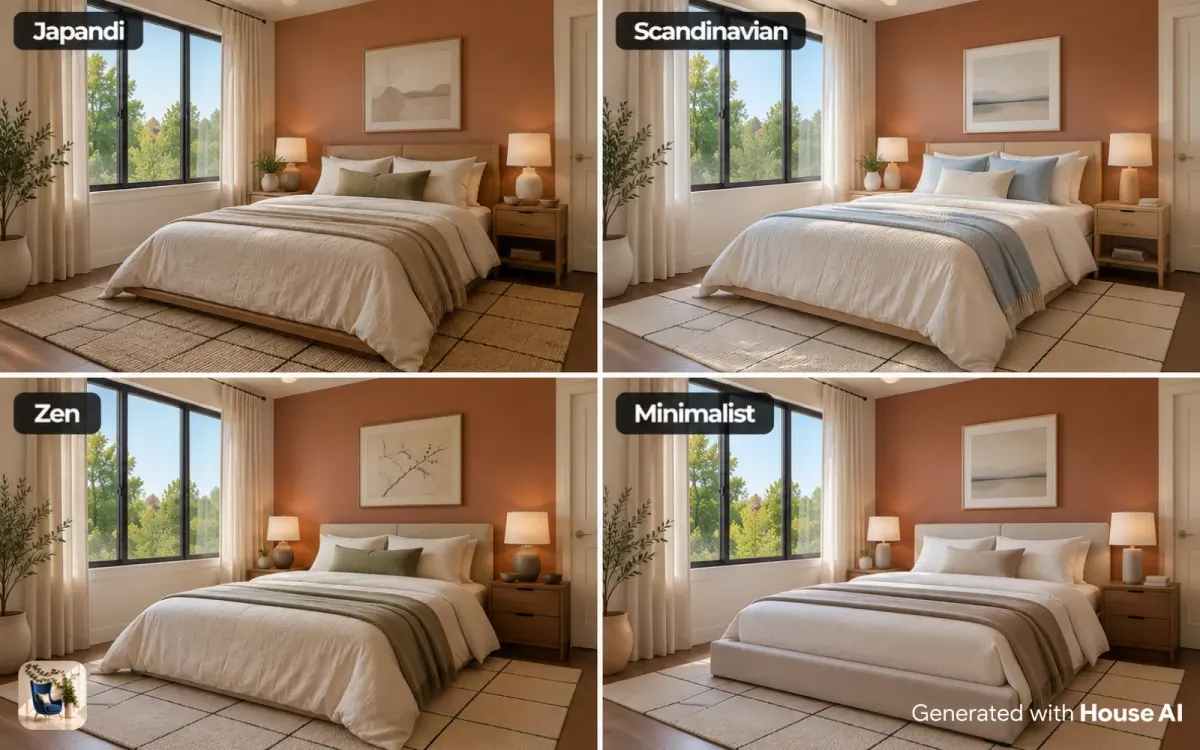
Four House AI grid styles lean calm by default: Japandi, Scandinavian, Zen, and Minimalist. They differ in warmth. Japandi and Zen sit lower and use darker wood and earthier colors, while Scandinavian and Minimalist stay pale and bright. If you can't decide between them, run all four on the same photo and see which one you keep looking at.
Bedroom storage ideas
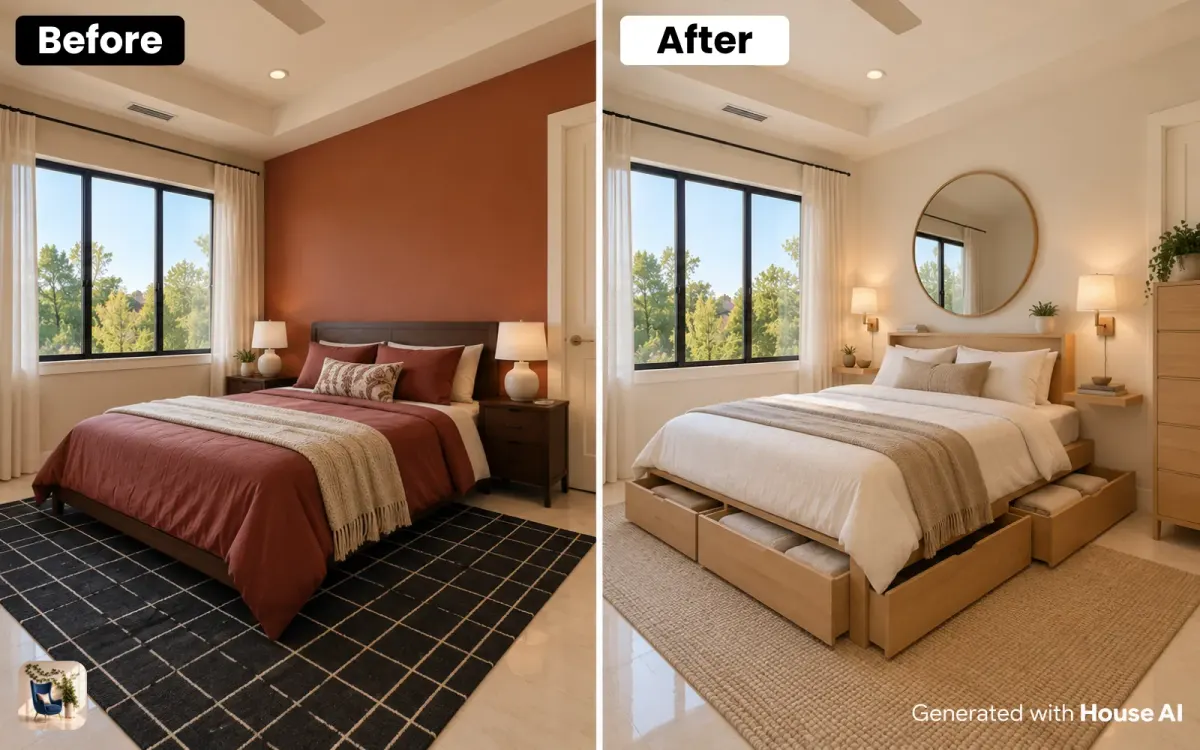
The best bedroom storage hides under the bed, behind the headboard, or on the walls, so the floor stays clear. A bed with deep drawers or a lift-up base holds spare bedding and out-of-season clothes. A headboard with shelves or cubbies can stand in for one or both nightstands.
On the walls, a floating shelf at mattress height works as a nightstand that takes up no floor space. Tall built-ins on either side of the bed add a lot of storage without eating into the middle of the room, and they frame the bed at the same time. Before you buy more furniture, look at the closet. A second hanging rod or a shelf above the existing one often solves the problem for far less effort.
One tip for testing storage ideas in House AI: grid styles choose the furniture for you, so name the pieces you want instead. Use the Custom style option and describe the room in your own words, for example "a platform bed with drawers underneath, floating shelves as nightstands, and a tall narrow dresser."
Small bedroom ideas
In a small bedroom, show as much floor as you can. Furniture on legs, wall-mounted bedside lights, and a bed without a footboard all let the eye run to the walls, which makes the room read larger. A tall, narrow dresser uses height instead of width, and a single large mirror beside or across from the window bounces daylight around.
Place the bed where it leaves the widest path to the door, even if that means pushing one side against a wall. Pick one large rug over several small ones, and keep the number of pieces low. A small bedroom with a bed, one bedside shelf, and a dresser usually feels better than the same room with five pieces squeezed in. Our small room guide has more ideas that apply to any room, not only bedrooms.
Bedroom lighting ideas
Good bedroom lighting comes in three layers: one overhead light for cleaning and getting dressed, a reading light on each side of the bed, and one low, warm light for the evening. Put the overhead light on a dimmer if you can. Bedside lights work best when the light falls on your book and not in your eyes, so aim shades and sconce arms down.
Light at night affects more than the look of the room. The Sleep Foundation notes that light of 10 lux or more later in the day can lead to more nighttime awakenings and less slow-wave sleep. Warm, dim bulbs and a lamp you can switch off without getting up make that easier to manage. Blackout curtains or a lined shade take care of streetlights and early sunrise.
If you rent, plug-in wall sconces give you bedside light without an electrician, and they free the nightstand for a book and a glass of water. Our lighting guide goes room by room if you want more detail on bulbs and fixtures.
Headboard wall ideas
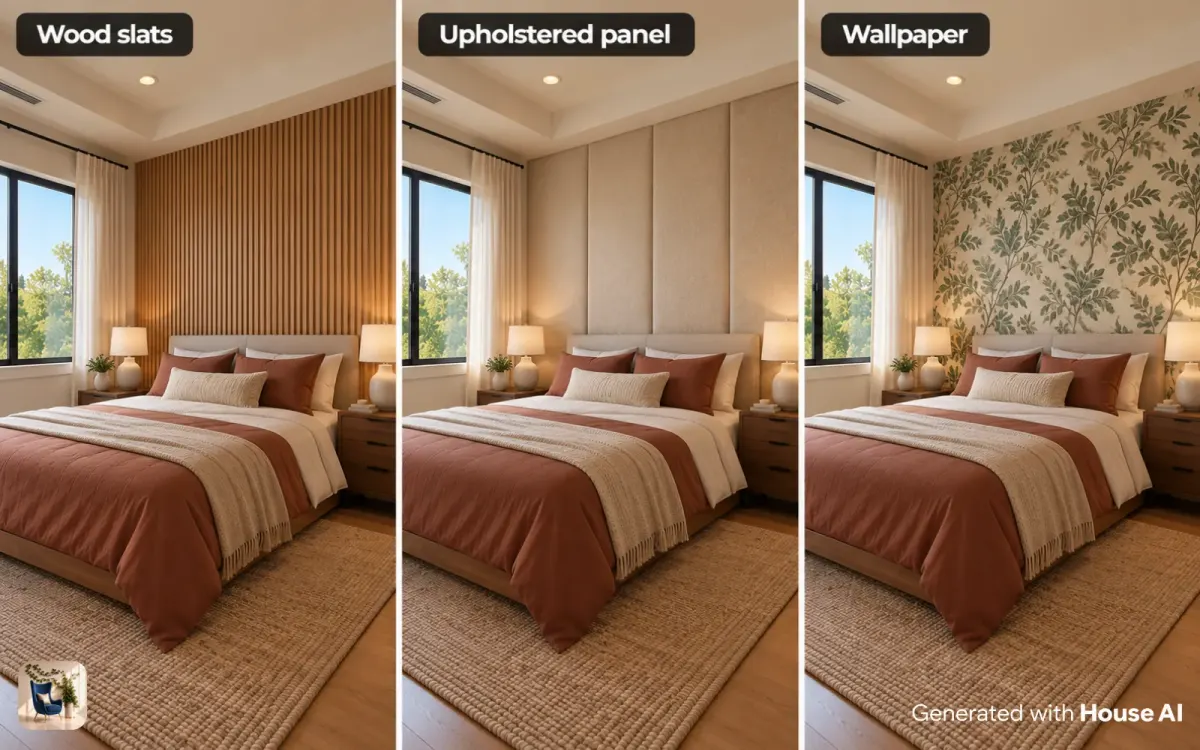
The wall behind the bed is the first thing you see from the door, so it is the best place to spend your effort. Four treatments work in most bedrooms: vertical wood slats, an upholstered panel that runs wider than the bed, wallpaper on that one wall, or a painted block or arch that frames the headboard. Each one gives the room a focal point without adding furniture.
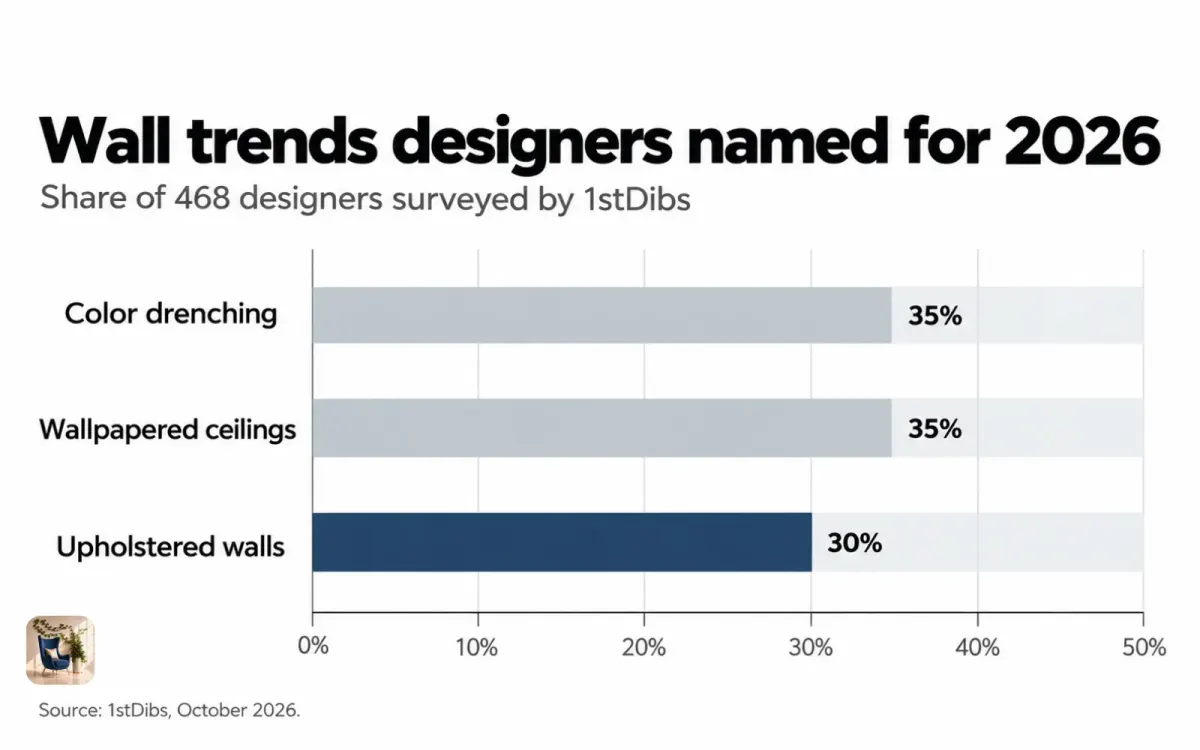
Designers expect to see more wall treatments like these. In the 1stDibs survey of 468 design professionals released November 17, 2025, 35% named color drenching as a surging trend, 35% named wallpapered ceilings, and 30% noted the rise of upholstered walls.
House AI has a Wall Design feature, which is the quickest way to compare treatments on a photo of your own bed wall. Try two or three on the same photo and put them side by side before you buy panels or wallpaper.
How to test a bedroom idea on your own room
A bedroom idea that looks right on your feed can look wrong with your ceiling height and your window. Testing it on a photo of your own room takes a few minutes.
Step 1: Pick one goal and two or three ideas
Choose the goal from the table that matters most to you, then pick the ideas you want to compare. Testing one goal at a time makes the results much easier to judge.
Step 2: Photograph the bedroom
Stand in a corner in daylight with the lights on, so the bed wall, a window, and some floor are in the frame. Make the bed and clear the nightstands first so the layout is easy to read.
Step 3: Run the ideas in House AI
Upload the photo, set the room type to bedroom, and pick a style from the grid or describe the look in your own words. Use Wall Design for headboard wall ideas. Each design takes about 15 seconds on average.
Step 4: Compare the results side by side
Every user gets 3 free designs a day, which is enough to compare three ideas on one photo. Free designs carry a watermark. Put the results next to each other and notice which one you keep coming back to.
Step 5: Check what the picture can't show
Measure the bed wall and the path to the door before you buy anything, and order fabric and paint samples. Look at the samples in daylight and again under your bedside lamps at night.
What AI can't tell you about a bedroom
A render shows how an idea looks in your room. It doesn't measure the room, so a bed that fits in the picture may not leave space to open a drawer. Small details can drift between the render and real life, and the color on a screen is not the color of paint or fabric. A render also can't tell you how a mattress feels or whether a lamp is bright enough to read by. Use it to choose a direction, then shop with a tape measure.
Design any room, shop or space with House AI in about 15 seconds. 1 free design a day.
Get Started TodayFrequently asked questions
What is the most important part of bedroom design?
The bed wall. It is the first thing you see from the door, so a good headboard, matching bedside lights, and art centered over the bed do more than any other single change.
How do I make my bedroom feel calm?
Use two or three soft colors, clear the surfaces, choose solid or lightly textured bedding, and switch to warm, dim light in the evening.
How can I add storage to a small bedroom?
Use the space under the bed with drawers or a lift-up base, swap nightstands for wall shelves, and choose a tall, narrow dresser over a wide one.
What lighting is best for a bedroom?
Three layers: an overhead light on a dimmer, a reading light on each side of the bed, and one low, warm accent light for the evening.
Can I see bedroom ideas on my own room before I change anything?
Yes. Upload a photo of your bedroom to House AI, set the room type to bedroom, and pick a style or describe the look. Each design takes about 15 seconds, and every user gets 3 free designs a day.
Keep reading
- Understanding Color Psychology in Your Bedroom
- How to Choose the Perfect Lighting for Every Room
- How Do I Make a Small Room Look Bigger?
- 50 Interior Design Ideas for Every Room (2026)
- Japandi Style
Sources: 1stDibs, "2026 Interior Design Trends: 1stDibs Survey Identifies Maximalism, Chocolate Brown, and Vintage Antiques as Top Designer Choices," November 17, 2025. Sleep Foundation, "How to Create a Bedroom Environment for Good Sleep," updated August 31, 2026. Both checked October 3, 2026. House AI figures come from the House AI app.