
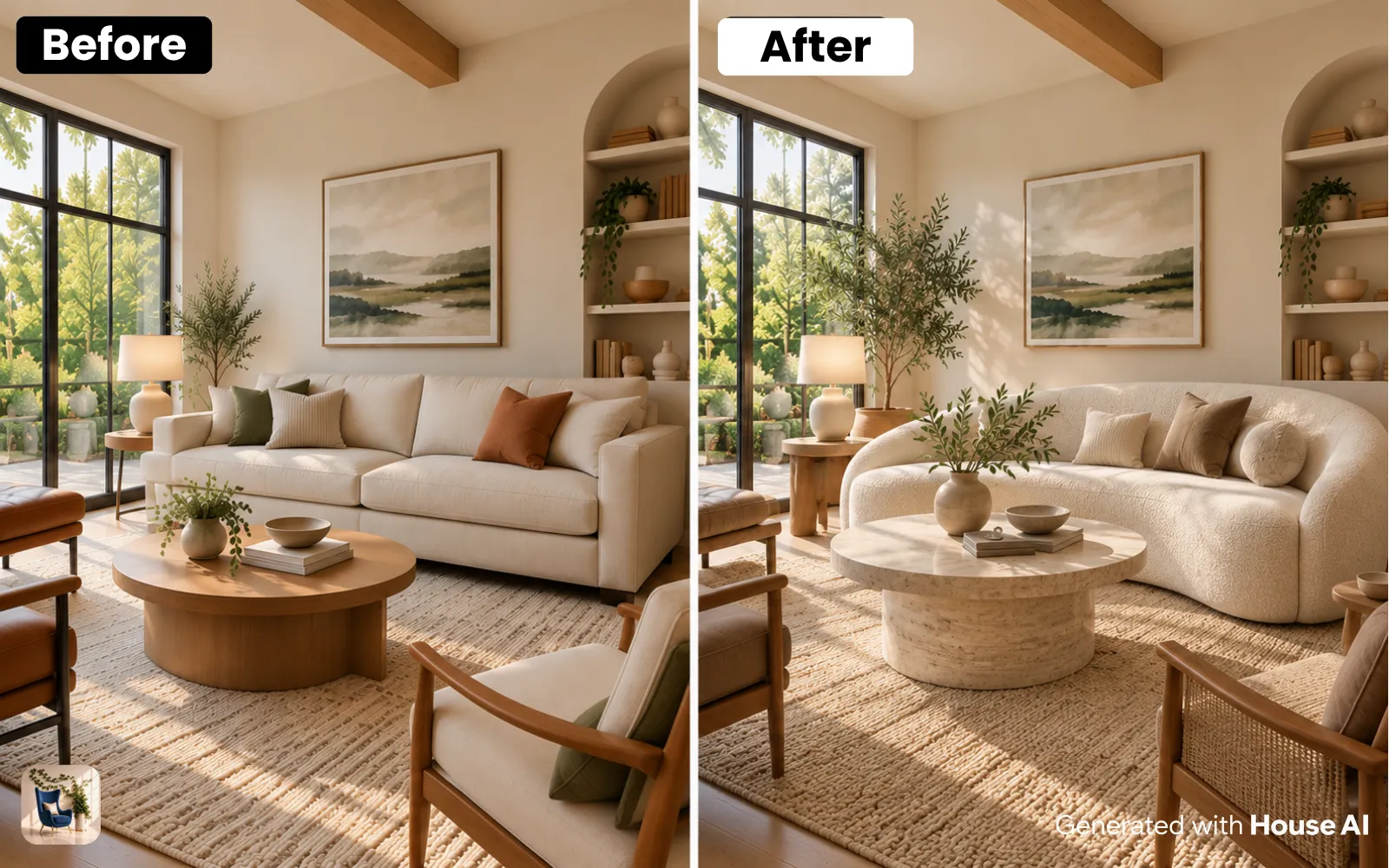
Organic modern interior design pairs the clean lines and open space of modern design with natural materials, warm neutral colors, and soft curves. Think light oak, stone, linen, and plants in a calm, uncluttered room, with rounded sofas and tables in place of sharp corners. It feels warmer than minimalism and less rustic than farmhouse.
The "organic" half has a long history. Architect Frank Lloyd Wright championed what he called organic architecture, buildings in harmony with the people in them and their setting, and organic modern rooms borrow that idea at the scale of furniture.
How to spot an organic modern room
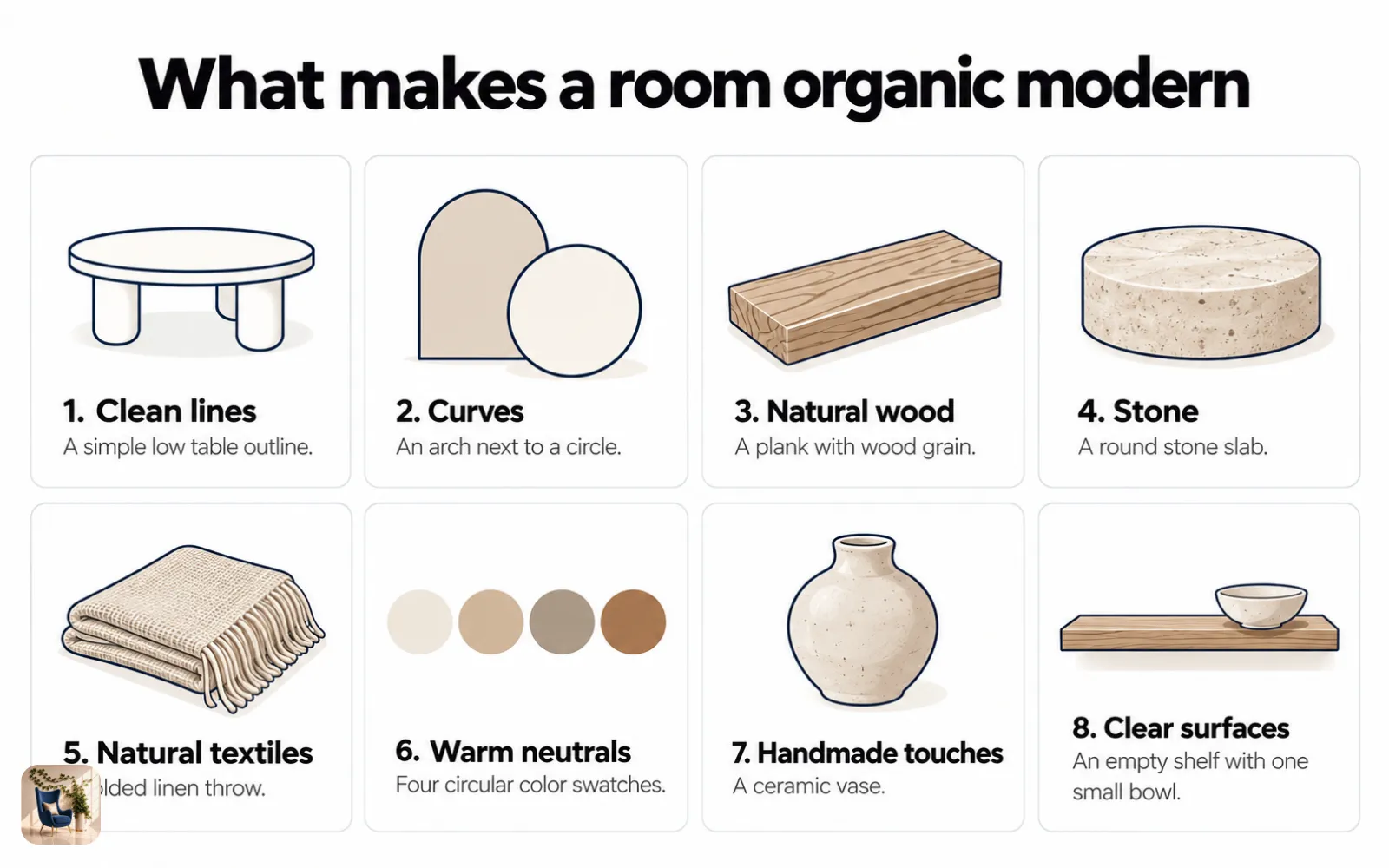
Use this checklist. A room with five or more of these details reads as organic modern.
- Clean, simple furniture shapes with little or no ornament
- At least one big curve: a rounded sofa, an arched mirror, or a round table
- Natural wood in light or mid tones, like oak, ash, or walnut, with the grain showing
- Stone or stone-look surfaces, such as travertine, marble, or limestone
- Natural textiles: linen, wool, boucle, jute, or cotton
- Warm neutral colors like cream, sand, taupe, and soft brown, with green from plants
- Handmade touches like ceramic vases, clay pots, or a paper lamp
- Clear surfaces and open floor, so each material has room to show
Organic modern vs Japandi vs minimalist
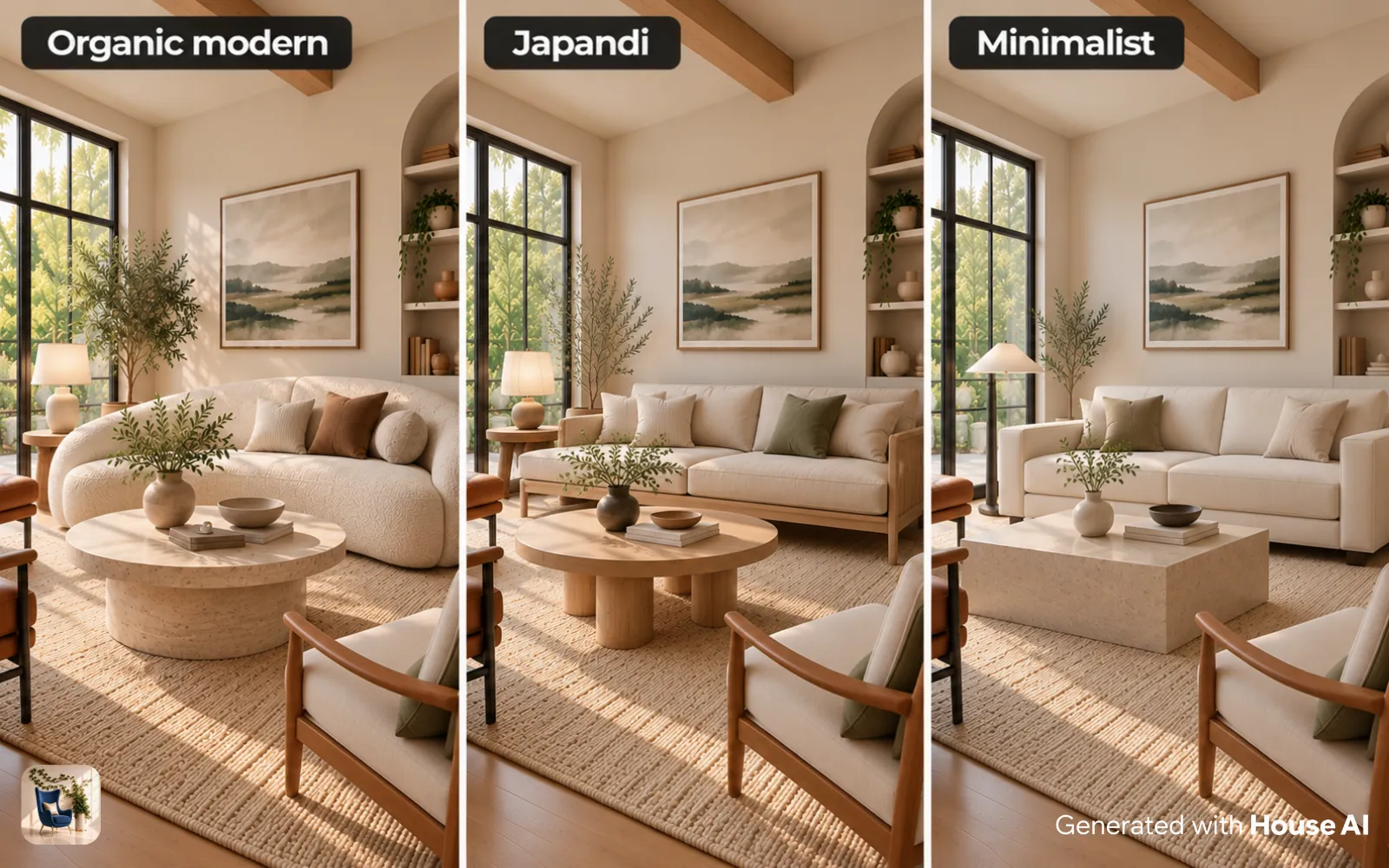
All three are calm and uncluttered, which is why they get mixed up. Minimalist is about owning very little, in any color, and it can feel cool. Japandi blends Japanese and Scandinavian design, with low furniture, pale wood, and muted earth tones. Organic modern keeps modern proportions but adds more texture, stone, and curves, and it doesn't need low furniture or a Japanese influence.
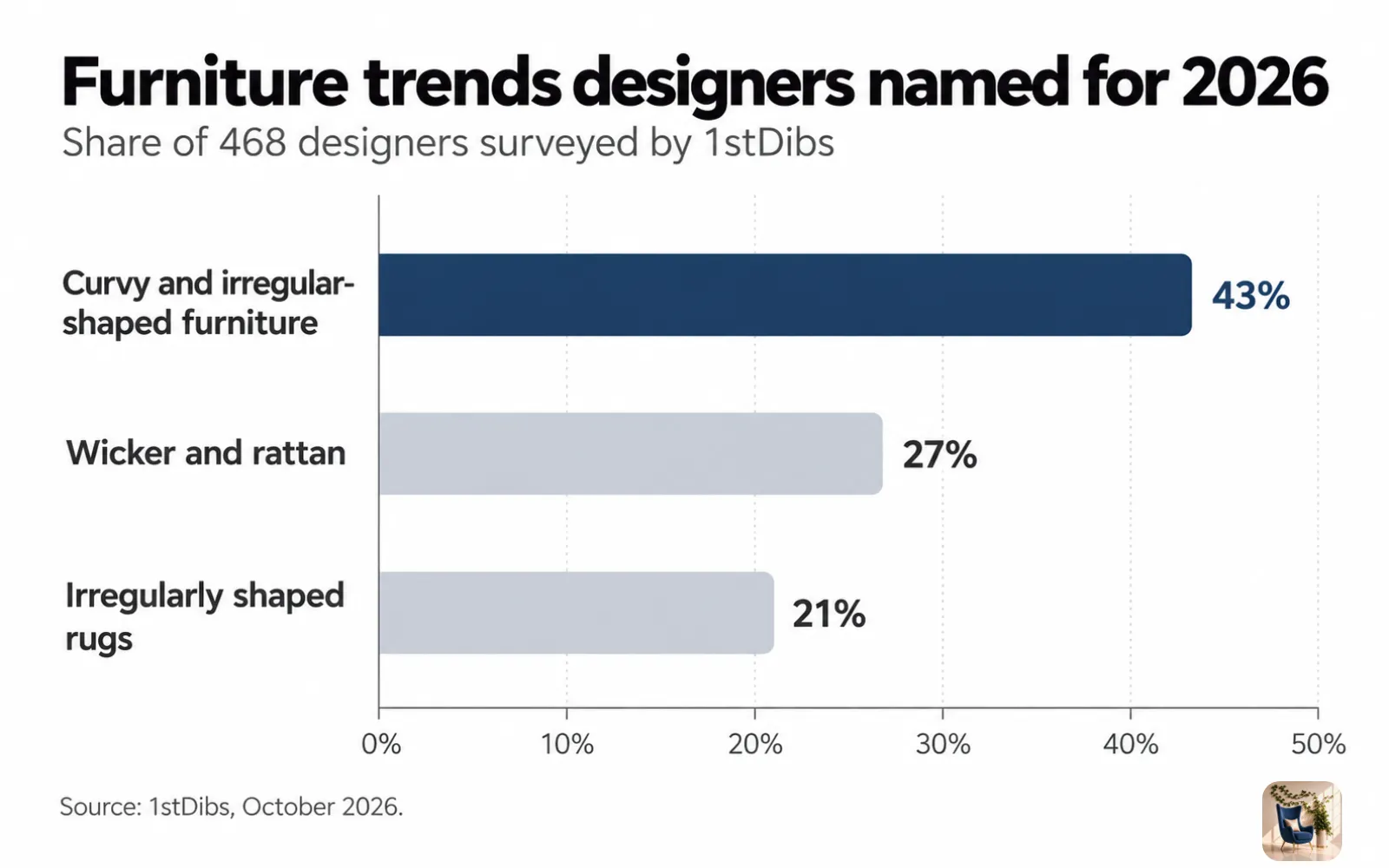
Curves are a big reason the style keeps showing up. In the 1stDibs survey of 468 design professionals released November 17, 2025, 43% named curvy and irregular-shaped furniture as a trend for 2026, and the survey reported that organic modernism held steady.
How to bring organic modern into your room
Step 1: Swap one hard-edged piece for a curve
Replace a square coffee table with a round stone or wood one, or add a rounded accent chair. One strong curve changes the room more than several small ones.
Step 2: Add natural textures
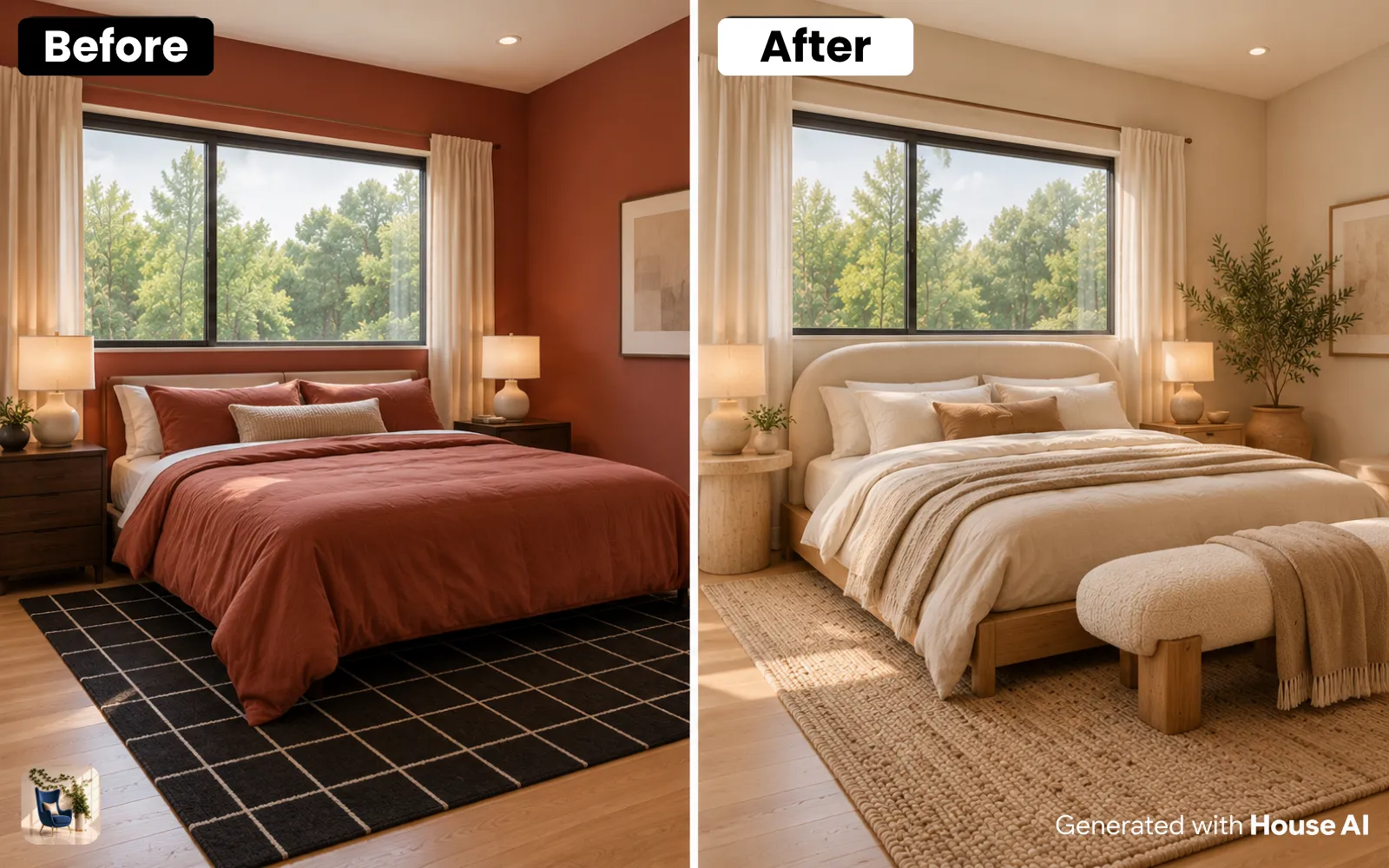
Bring in a wool or jute rug, linen curtains or bedding, and one or two ceramic pieces. Keep the colors between cream and soft brown, and add one large plant.
Step 3: Preview it on a photo first
Upload a photo of the room to House AI, set the room type, and describe the organic modern look in your own words. Each design takes about 15 seconds. AI doesn't measure the room and small details can drift, so use the picture to judge the mood and measure before you buy.
Frequently asked questions
What is the difference between organic modern and modern?
Modern design focuses on clean lines and function, often with metal, glass, and cooler colors. Organic modern keeps the clean lines and adds natural wood, stone, warm neutrals, and curves.
What colors are used in organic modern design?
Warm neutrals: cream, sand, taupe, oatmeal, and soft brown, with green from plants. Black shows up in small doses, like a lamp base or a picture frame.
Is organic modern still popular in 2026?
Yes. In the 1stDibs 2026 survey, organic modernism held steady, and 43% of designers named curvy and irregular-shaped furniture as a trend.
Can organic modern work in a small room?
Yes. Choose a few larger pieces over many small ones, keep surfaces clear, and use light wood and pale neutrals so the room stays bright.
Keep reading
- Interior Design Styles Explained: 40 Looks With Real Room Examples
- How Do I Find My Interior Design Style?
- What Is Quiet Luxury Interior Design?
- Japandi Style
- Minimalist Style
- Biophilic Style
Sources: 1stDibs, "2026 Interior Design Trends: 1stDibs Survey Identifies Maximalism, Chocolate Brown, and Vintage Antiques as Top Designer Choices," November 17, 2025. Britannica, "Organic architecture," updated July 1, 2026. Both checked October 3, 2026. House AI figures come from the House AI app.