
An interior designer plans how a room works and looks, then sees it built. The job covers space planning, building codes, specifying furniture, fixtures, and finishes, drawing plans in CAD, and coordinating contractors on site. An AI app like House AI helps with one early step: it turns a photo of your room into a visual concept in about 15 seconds.
Much of a designer's work is technical, and you never see it in the finished photos. Below is what that work involves, and the small part an AI tool can take on.
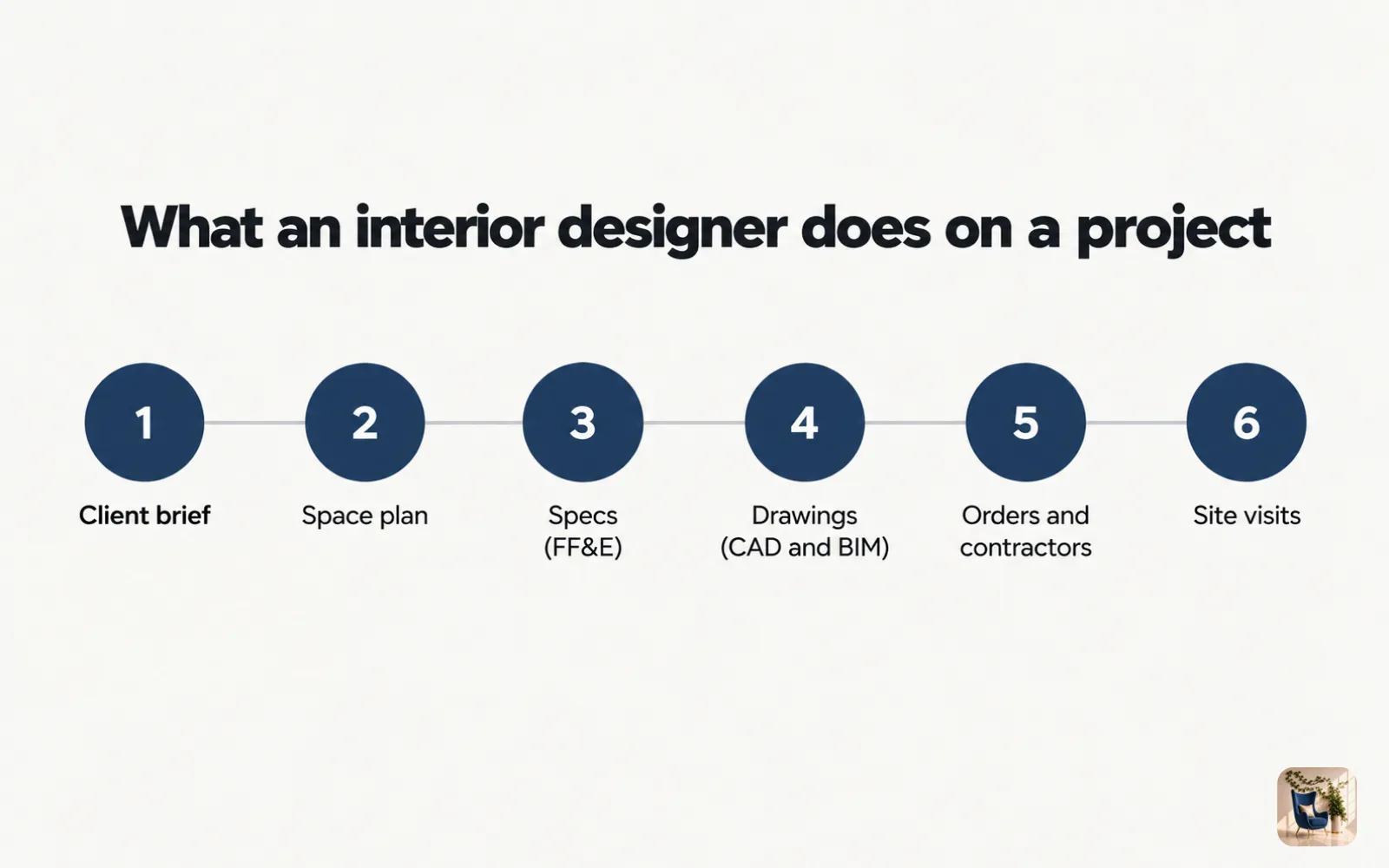
What an interior designer does day to day
An interior designer turns a client's goals into a room that can be built. The BLS lists the core duties: work out what the client needs and how people will move through the space, sketch plans that include electrical and partition layouts, and specify materials and furnishings such as lighting, flooring, wall finishes, and plumbing fixtures. Designers also set a timeline, estimate costs, place orders, and coordinate with general contractors while the work gets done.
| Task | What the designer does | Where House AI fits |
|---|---|---|
| Space planning | Decides where walls, doors, and furniture go and how people move through the room | Not a fit; it keeps your existing layout and does not measure |
| Codes | Follows building codes and inspection rules | Not a fit |
| FF&E specs | Chooses and specifies furniture, fixtures, and equipment, down to finishes | Partial; it matches furniture in a design to products from 330 retailers but does not write specs |
| Drawings | Draws plans in CAD and builds 3D views in BIM software | Not a fit |
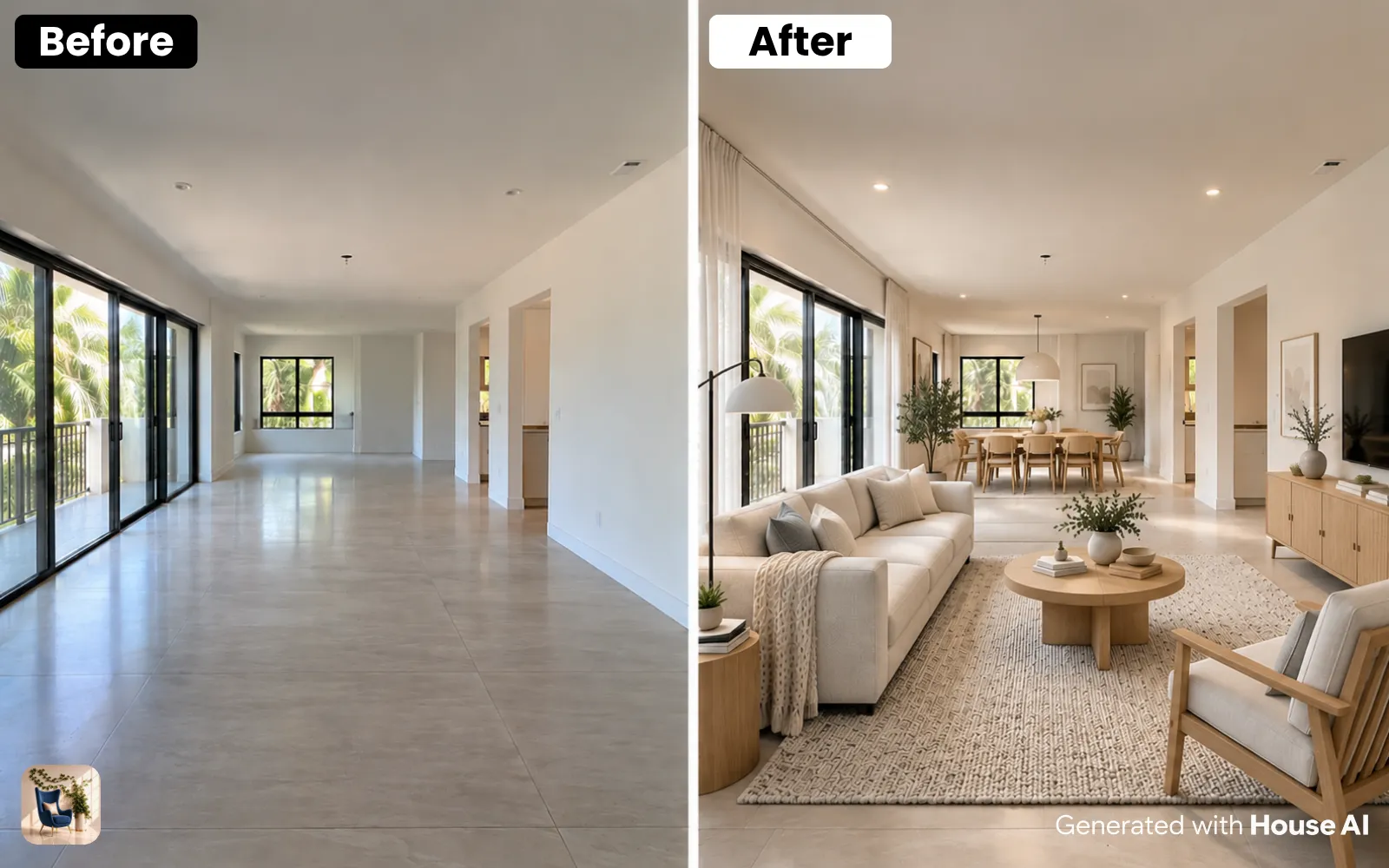
| Concept images | Shows the client a few possible directions early | Good fit; one photo becomes a redesign in about 15 seconds |
| Contractor coordination | Orders materials, oversees installation, and visits the site | Not a fit |
Where AI fits and where it doesn't
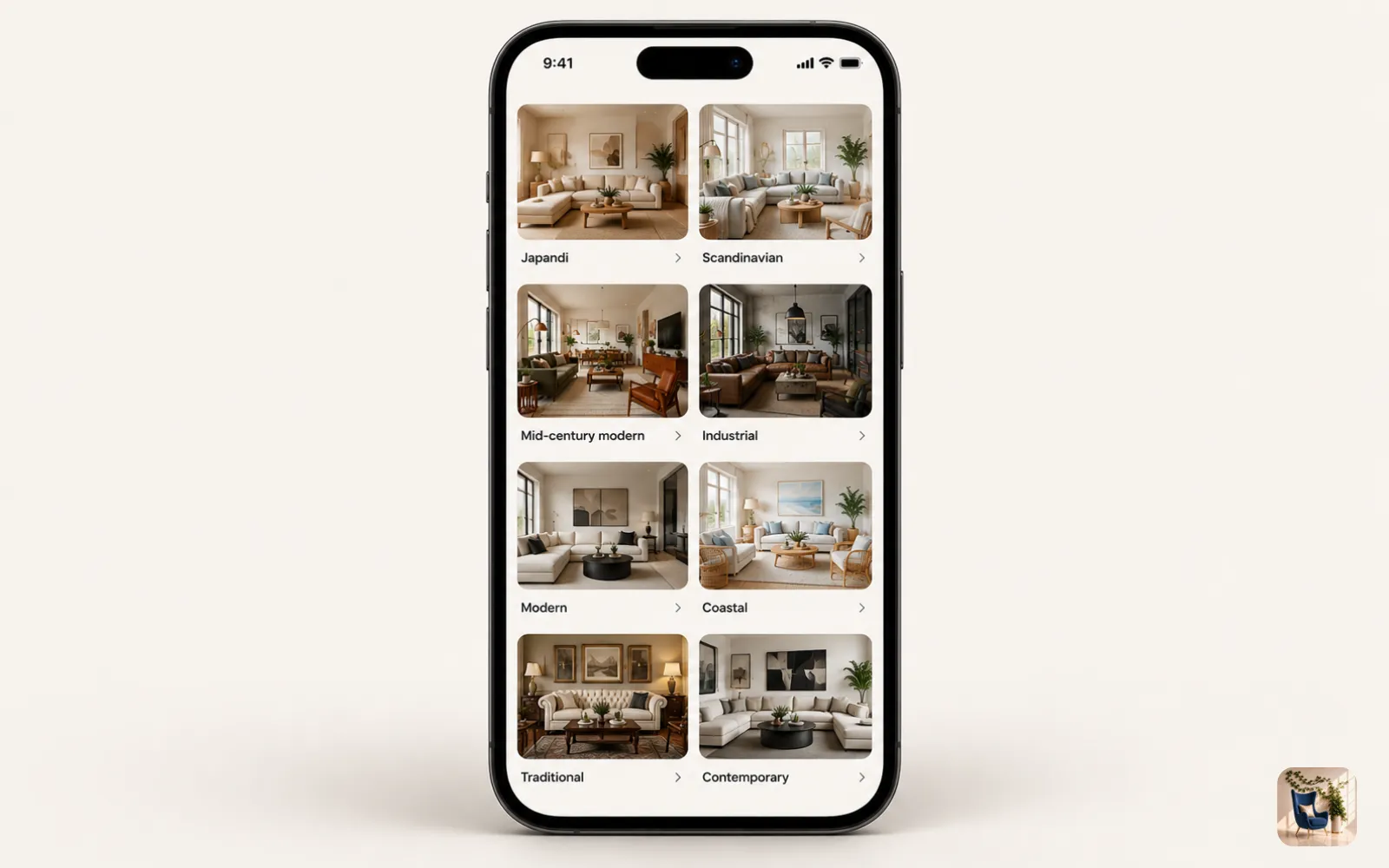
House AI is useful at the start, before anyone draws a plan. You upload a photo of a real room, pick from 300+ styles or describe the look in your own words, and get a redesign that keeps the walls, windows, and doors in place. That gives you and a designer a shared picture to react to.
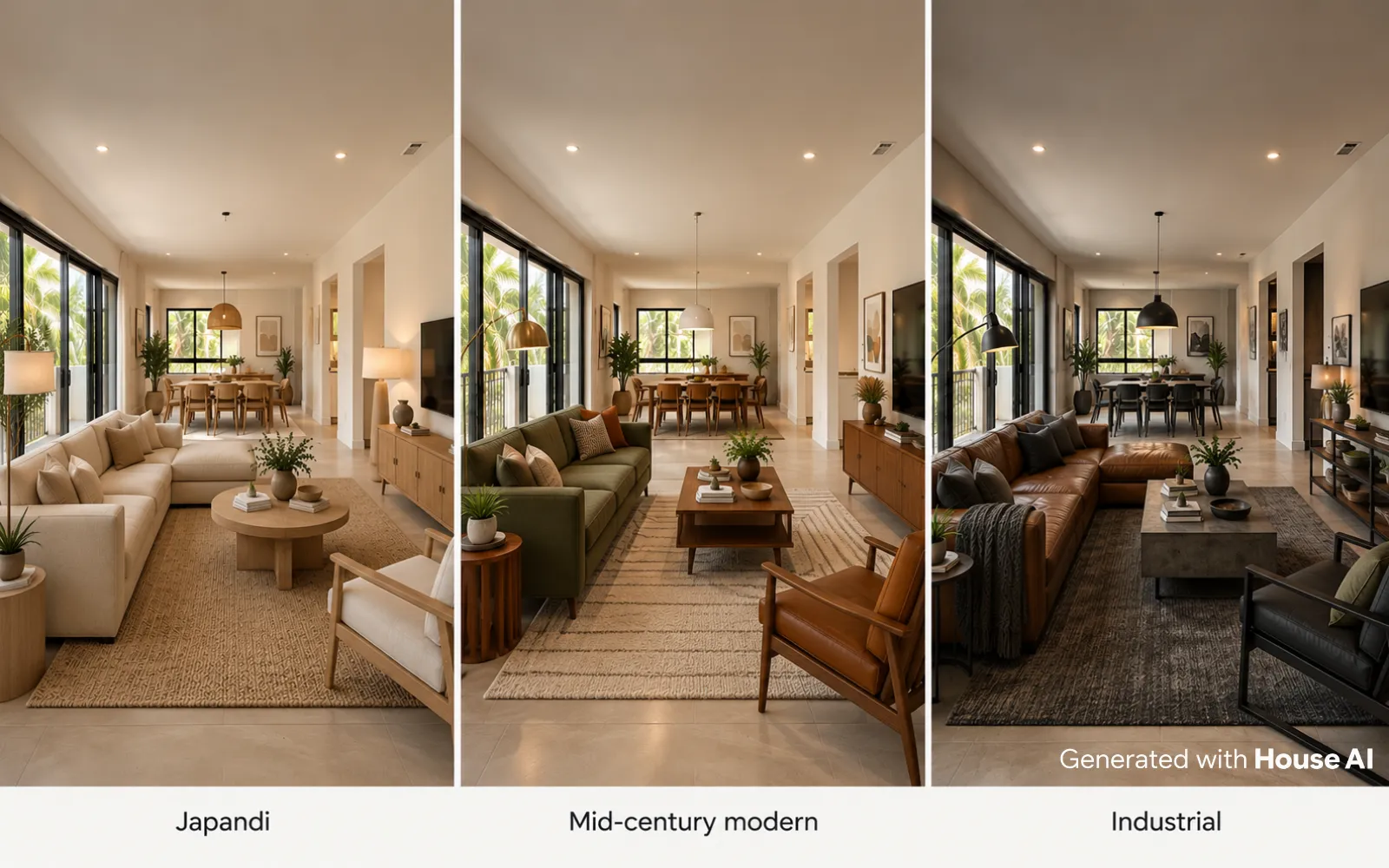
It stops there. AI doesn't measure the room, so a sofa that fits the picture may not fit the wall. It doesn't check codes, write specifications, or manage a contractor, and small details can drift between the render and real life. Screen color is not paint color either, so check samples in daylight.
The tools interior designers use
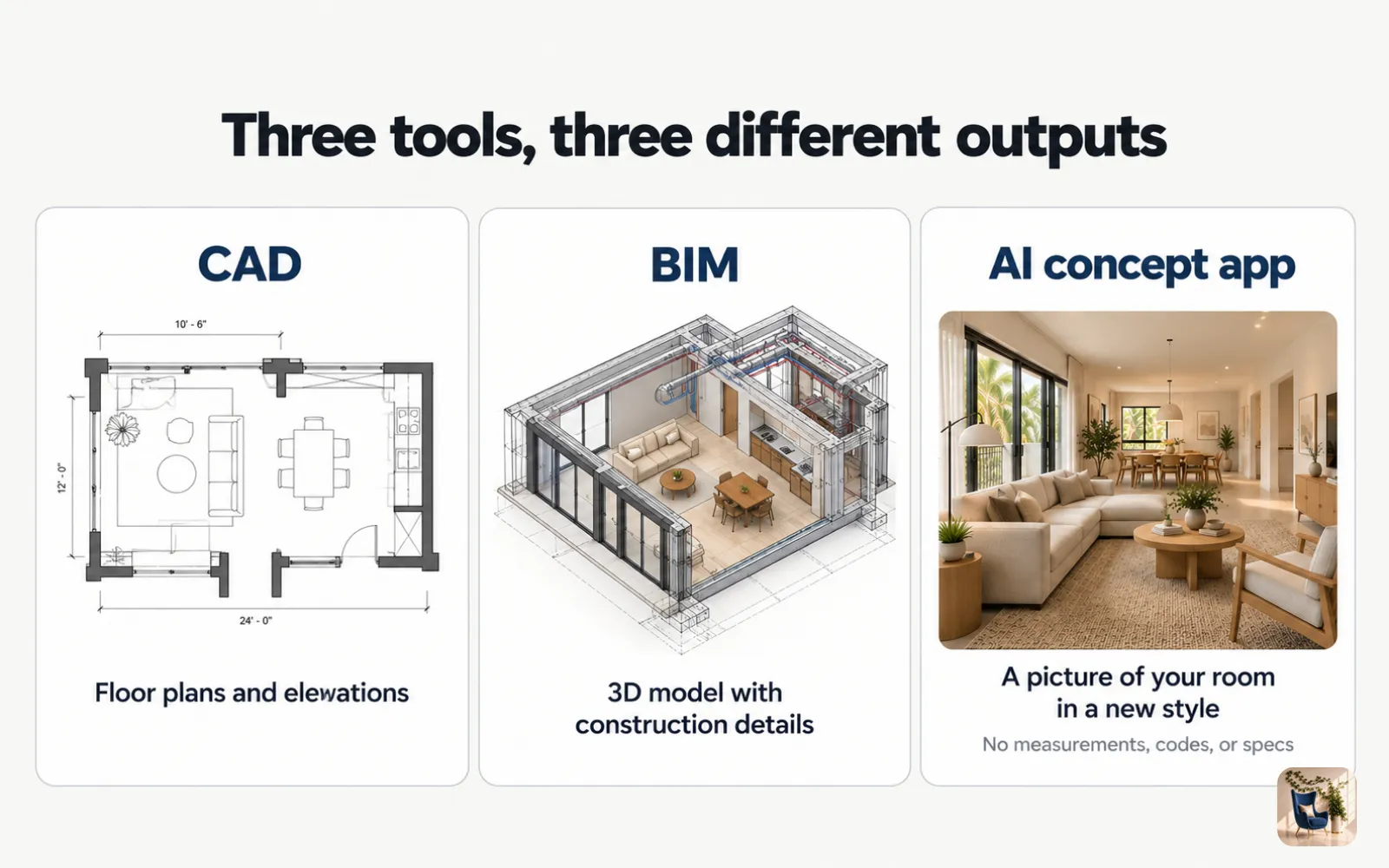
Most interior designers use CAD software for most of their drawings, according to the BLS, and many add BIM software to build 3D views with construction details. Those files are what contractors build from. An AI concept app sits earlier in the process and produces a picture, not a plan.
Frequently asked questions
Do interior designers need a license?
It depends on the state. The BLS says licensure requirements vary, and in some states only licensed designers may practice.
Where do interior designers work?
Mostly in offices, with trips to clients' sites. The BLS says 30% work in specialized design services and 26% are self-employed.
Can AI replace an interior designer?
No. AI can show what a room might look like, but it can't measure the space, follow codes, write specifications, or run a job site.
Can I see ideas for my room before I talk to a designer?
Yes. Upload a photo of your room to House AI and try a few styles. Every user gets 3 free designs a day, and the free tier needs no credit card.
Keep reading
- What Is Interior Design? Definition, Principles, Types and Careers
- How Does AI Interior Design Work?
- Is AI Interior Design Any Good?
- AI vs Traditional Interior Design: Which Is Right for You?
- What Does Interior Design Cost in 2026? Designer vs DIY vs AI
- Free AI Interior Design
Sources: U.S. Bureau of Labor Statistics, Occupational Outlook Handbook, "Interior Designers," last modified August 27, 2026, checked October 3, 2026. House AI figures come from the House AI app.