
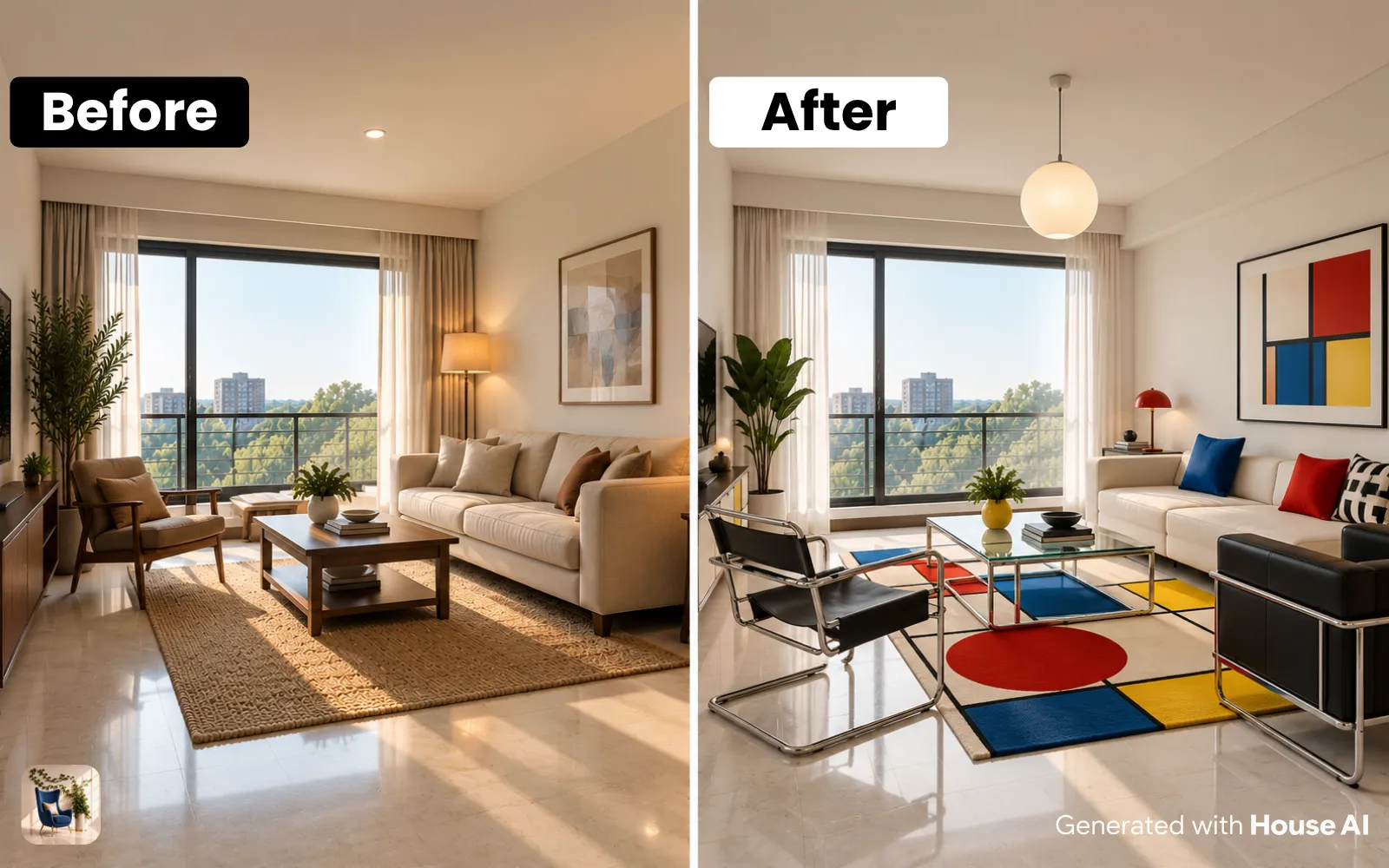
Bauhaus interior design is a plain, geometric style that comes from the Bauhaus, a German school of art and design founded by architect Walter Gropius in Weimar in 1919. Bauhaus rooms use simple shapes, industrial materials like tubular steel and glass, white walls with red, yellow, and blue accents, and furniture whose use decides its shape.
The school only lasted until 1933. Its look is still easy to spot, because almost nothing in a Bauhaus room is there just for decoration.
A short history of the Bauhaus
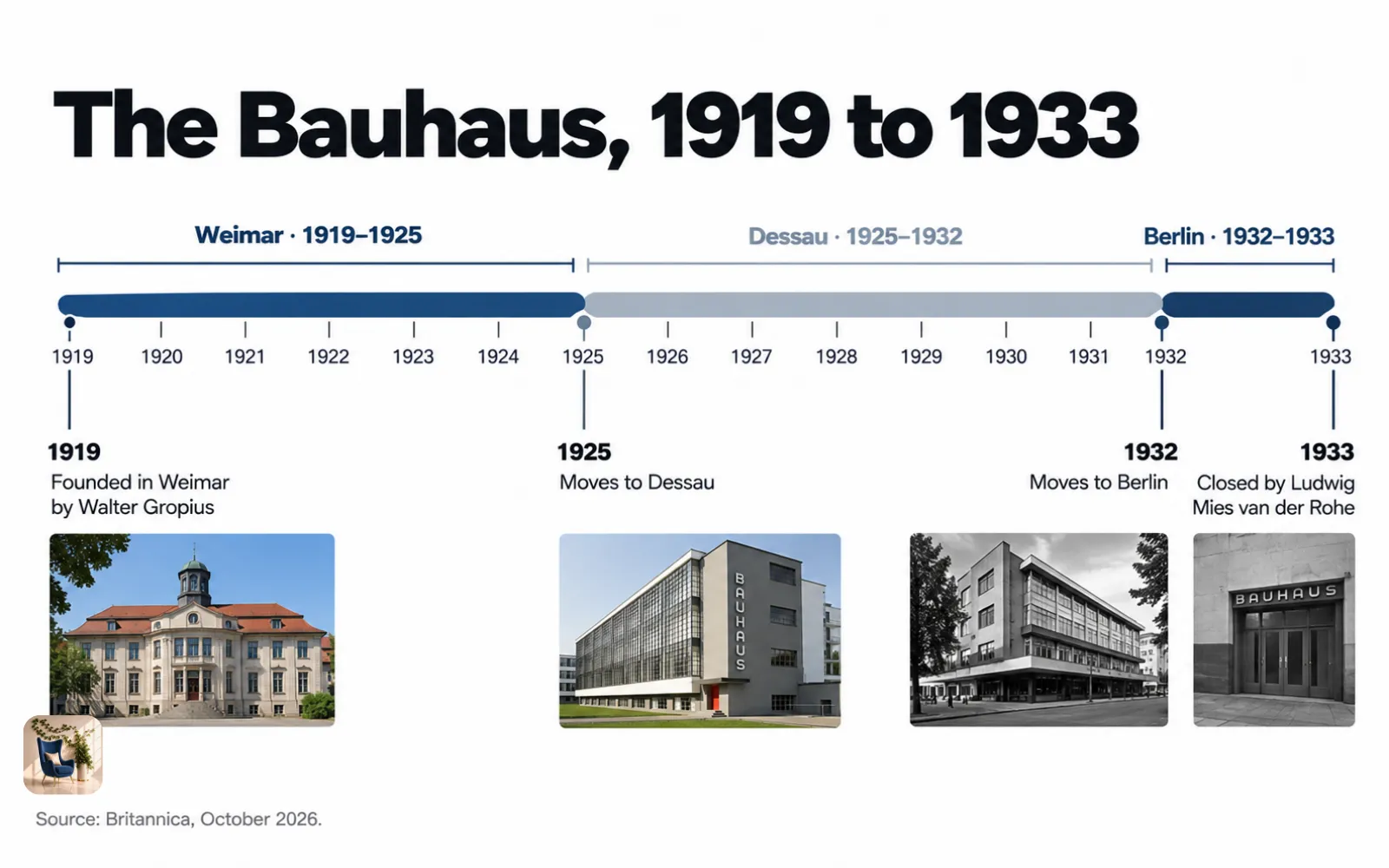
The Bauhaus opened in Weimar, Germany, in 1919, with Walter Gropius as its founder. Britannica says it stayed in Weimar until 1925, moved to Dessau, and spent its final months in Berlin. Its teachers included Paul Klee, Wassily Kandinsky, and Marcel Breuer, whose cantilevered metal chair Britannica calls the school's most iconic design. Ludwig Mies van der Rohe, its last director, closed the school in 1933 ahead of the Nazis.
The goal was to bring art, craft, and technology together. Bauhaus members believed good design in a machine age had to work with mass production, so they turned away from handmade luxury objects.
Bauhaus design principles
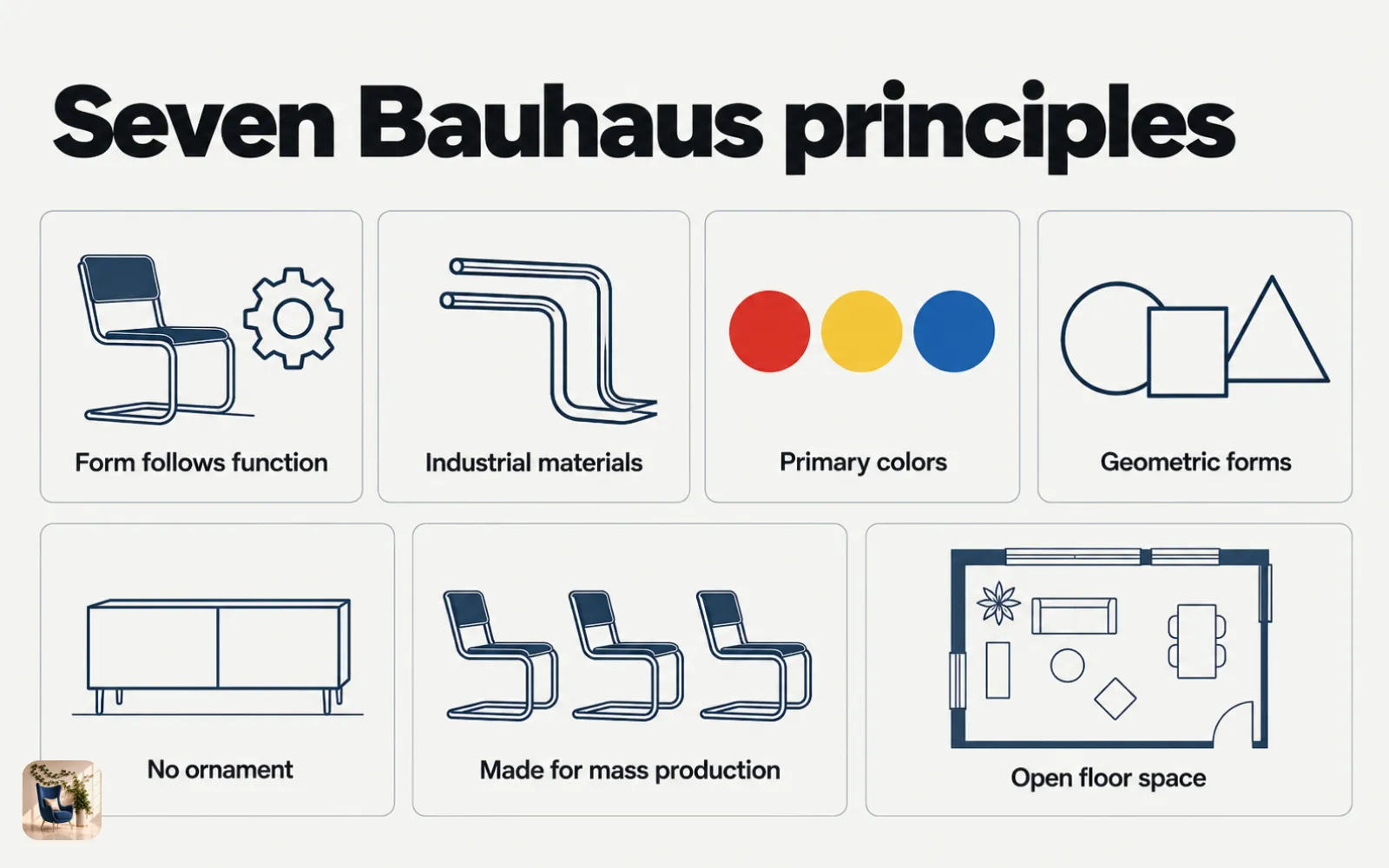
These ideas show up in almost every Bauhaus room. A space with four or five of them reads as Bauhaus.
- Form follows function: the job a piece does sets its shape, a phrase Britannica credits to American architect Louis Sullivan
- Industrial materials such as tubular steel, glass, and plain wood, left honest instead of hidden
- Primary colors, red, yellow, and blue, used as accents against white, gray, and black
- Geometric forms: circles, squares, rectangles, and triangles in furniture, rugs, and lighting
- No ornament, carving, or fussy trim
- Furniture designed so a factory could make it in quantity
- Open, uncluttered floor space with only the pieces you use
Bauhaus vs minimalist vs mid-century modern
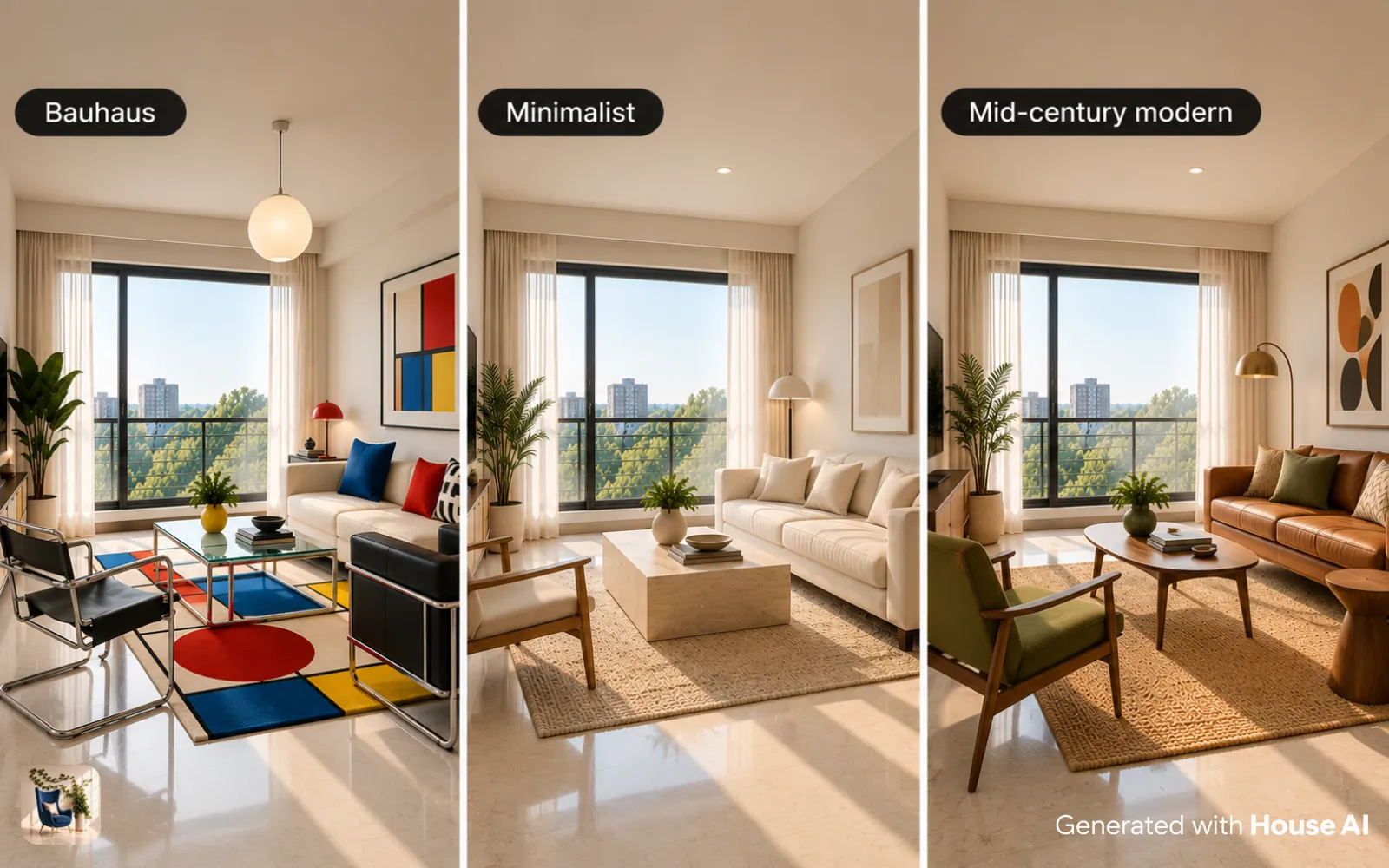
Bauhaus came first, and the other two grew out of the same modern ideas. Minimalist rooms share the bare surfaces but usually skip the primary colors and often look softer. Mid-century modern keeps the clean shapes and adds warm walnut and teak, tapered legs, and accent colors like mustard or teal. Bauhaus is the coolest of the three, with more metal and more pure geometry.
How to get the Bauhaus look at home
Step 1: Start with white walls and one steel chair
Paint the walls white or pale gray. Then add one chrome or black tubular steel chair, the kind of piece the Bauhaus made famous.
Step 2: Add primary colors in small, flat blocks
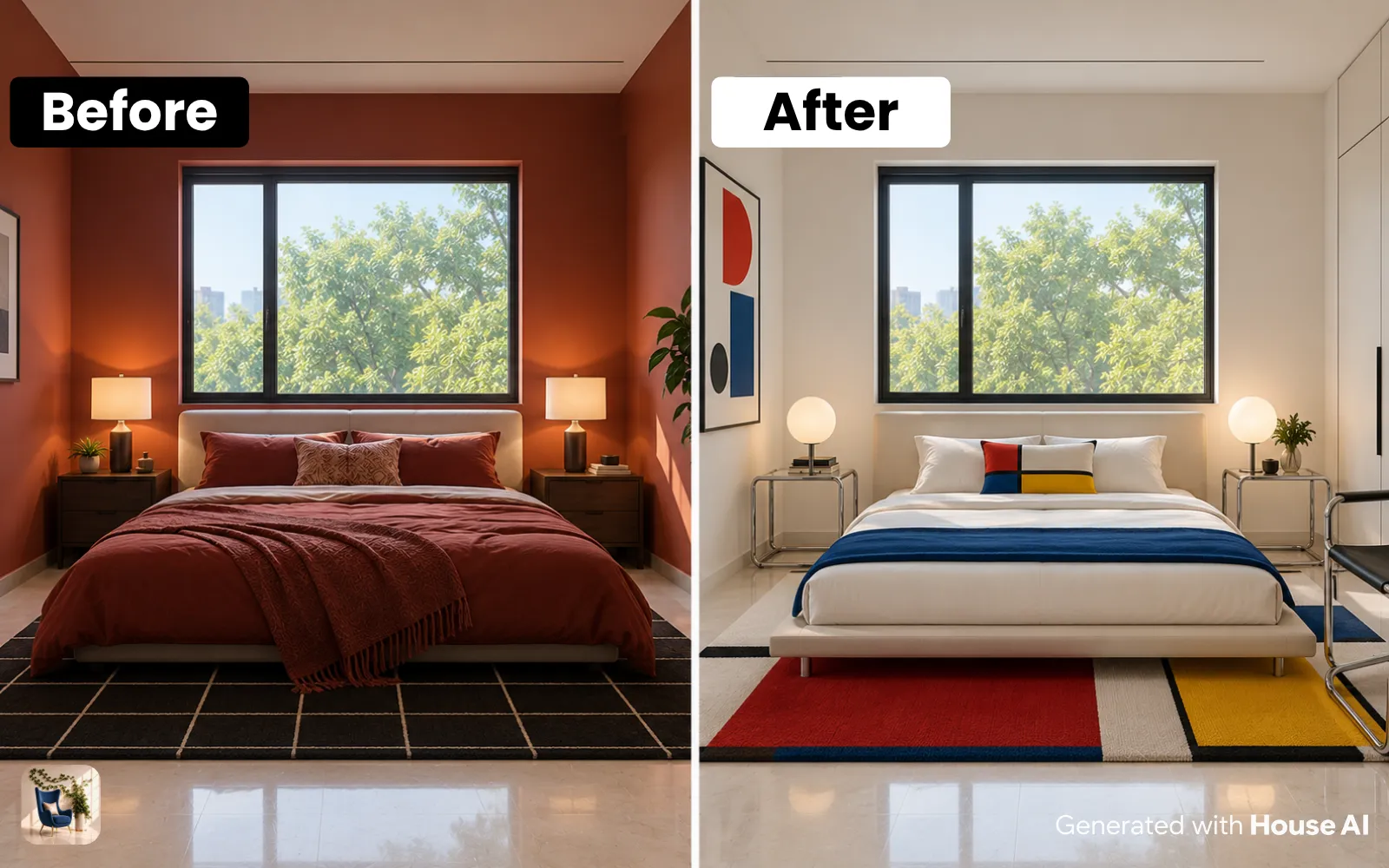
Bring in red, yellow, and blue through a geometric rug, a cushion, or a print. Keep each color flat and solid, with no patterns inside the shapes.
Step 3: Try the style on a photo of your room
Bauhaus isn't in the House AI style grid, so upload a photo, set the room type, and describe the look in your own words. Each design takes about 15 seconds, and every user gets 3 free designs a day. AI doesn't measure the room and small details can drift, so measure before you buy.
Frequently asked questions
Who founded the Bauhaus?
The German architect Walter Gropius founded the Bauhaus in Weimar in 1919.
What colors are used in Bauhaus design?
Red, yellow, and blue, set against white, gray, and black. The primary colors usually appear as accents rather than whole walls.
Is Bauhaus the same as minimalism?
No. Both avoid decoration, but Bauhaus adds primary colors, tubular steel, and strict geometric shapes, while minimalist rooms tend to be softer and more neutral.
Why did the Bauhaus close?
Its last director, Ludwig Mies van der Rohe, closed the school in Berlin in 1933, ahead of the Nazis.
Keep reading
- Minimalist Style
- Mid-Century Modern Style
- What Is the Difference Between Modern and Contemporary Design?
- What Is Art Deco Interior Design?
- Interior Design Styles Explained: 40 Looks With Real Room Examples
Sources: Britannica, "Bauhaus," updated September 6, 2026, and its Bauhaus summary. Britannica, "Louis Sullivan" summary, no date shown. Alexandra Griffith Winton, "The Bauhaus, 1919-1933," The Metropolitan Museum of Art, August 1, 2007, revised October 1, 2016. All checked October 17, 2026. House AI figures come from the House AI app.