
Transitional interior design keeps the shapes of traditional furniture, such as rolled arms, wingback chairs, and turned legs, and dresses them with modern restraint: plain fabrics, a neutral palette of cream, greige, taupe, and gray, and very little ornament. Wood sits next to metal and glass. The room feels classic and calm at the same time, without looking fussy or stark.
It sits between a formal traditional room and a spare modern one. It is one of the easiest styles to live with, because new pieces rarely clash with what you already own.
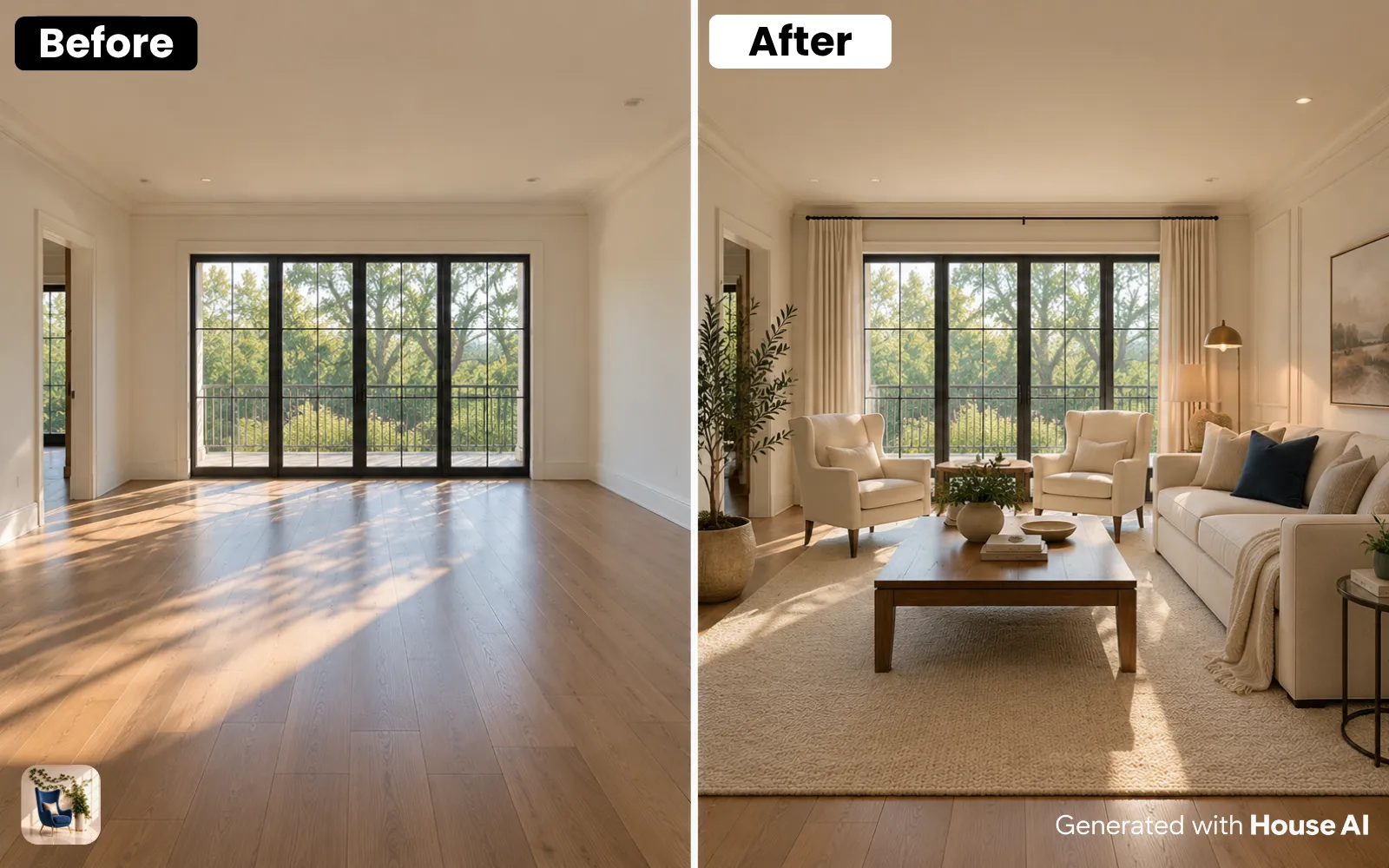
How to spot a transitional room
A room with most of these details reads as transitional.
- Classic furniture shapes, like a rolled-arm or track-arm sofa, a wingback chair, or a turned-leg table
- Solid, plain upholstery in linen, cotton, wool, or leather instead of busy prints
- A neutral base of cream, warm white, greige, taupe, or soft gray
- Texture doing the work of pattern: boucle, chenille, nubby wool, woven jute
- Wood mixed with metal and glass, such as an oak table with a brushed brass lamp
- One focal point, often a fireplace, a large mirror, or a simple chandelier
- Simple trim and moldings rather than heavy carving
- Few accessories, chosen with care and grouped in small sets
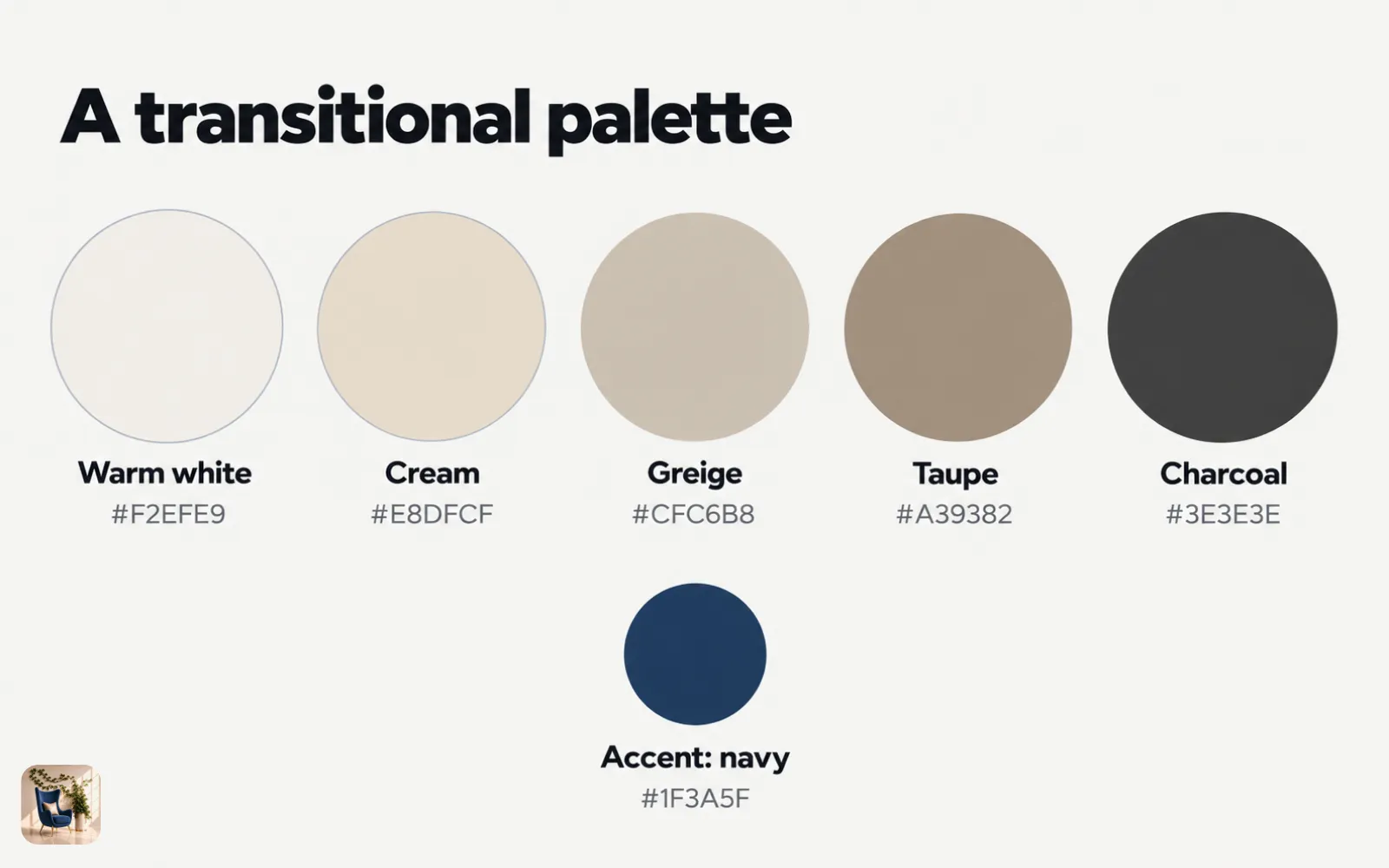
Palette, materials, and furniture
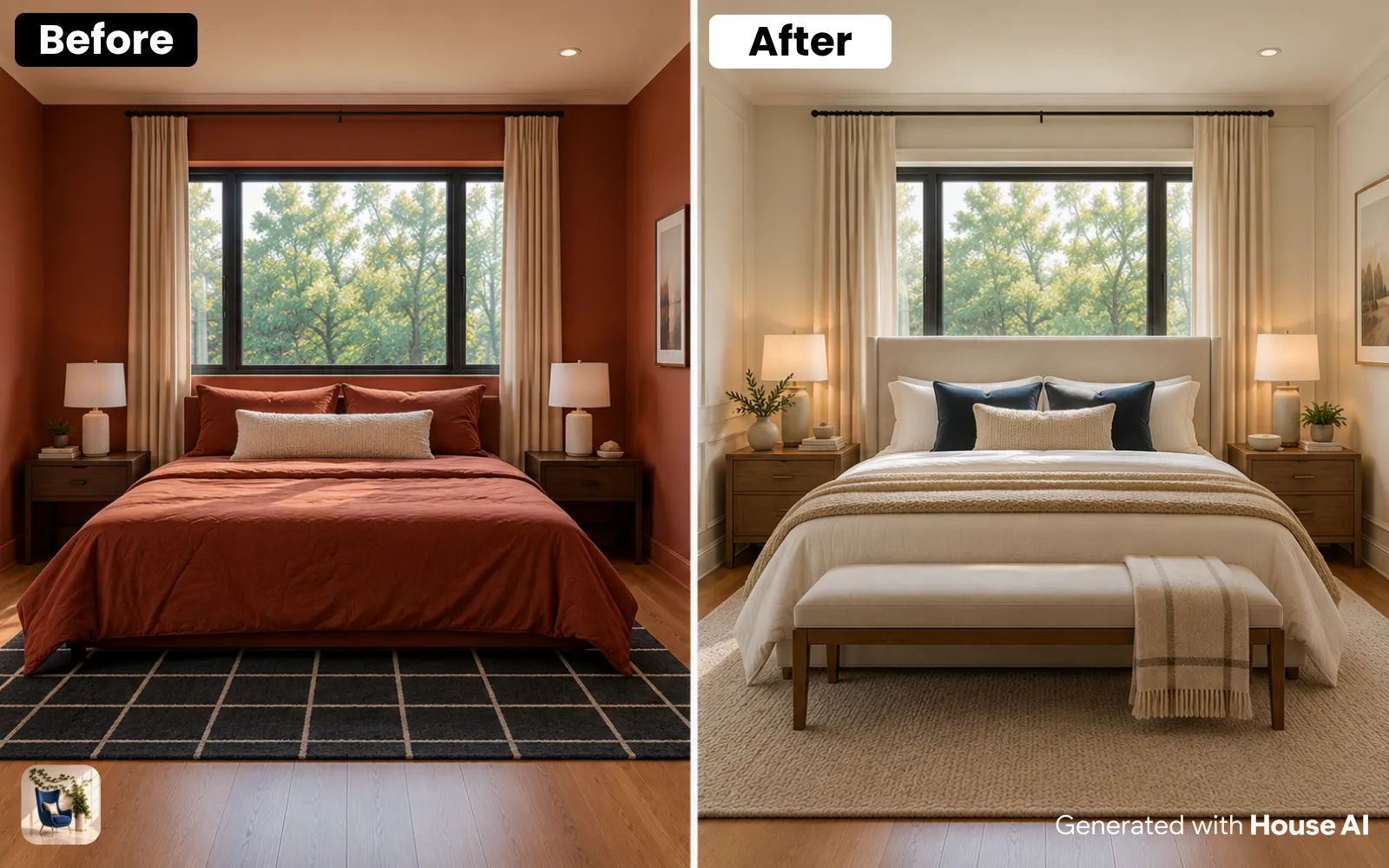
The palette starts light and warm. Walls are usually warm white, cream, or greige, with darker taupe, charcoal, or navy used in small doses for contrast. Color shows up in pillows, art, or a single rug, so it is easy to change later.
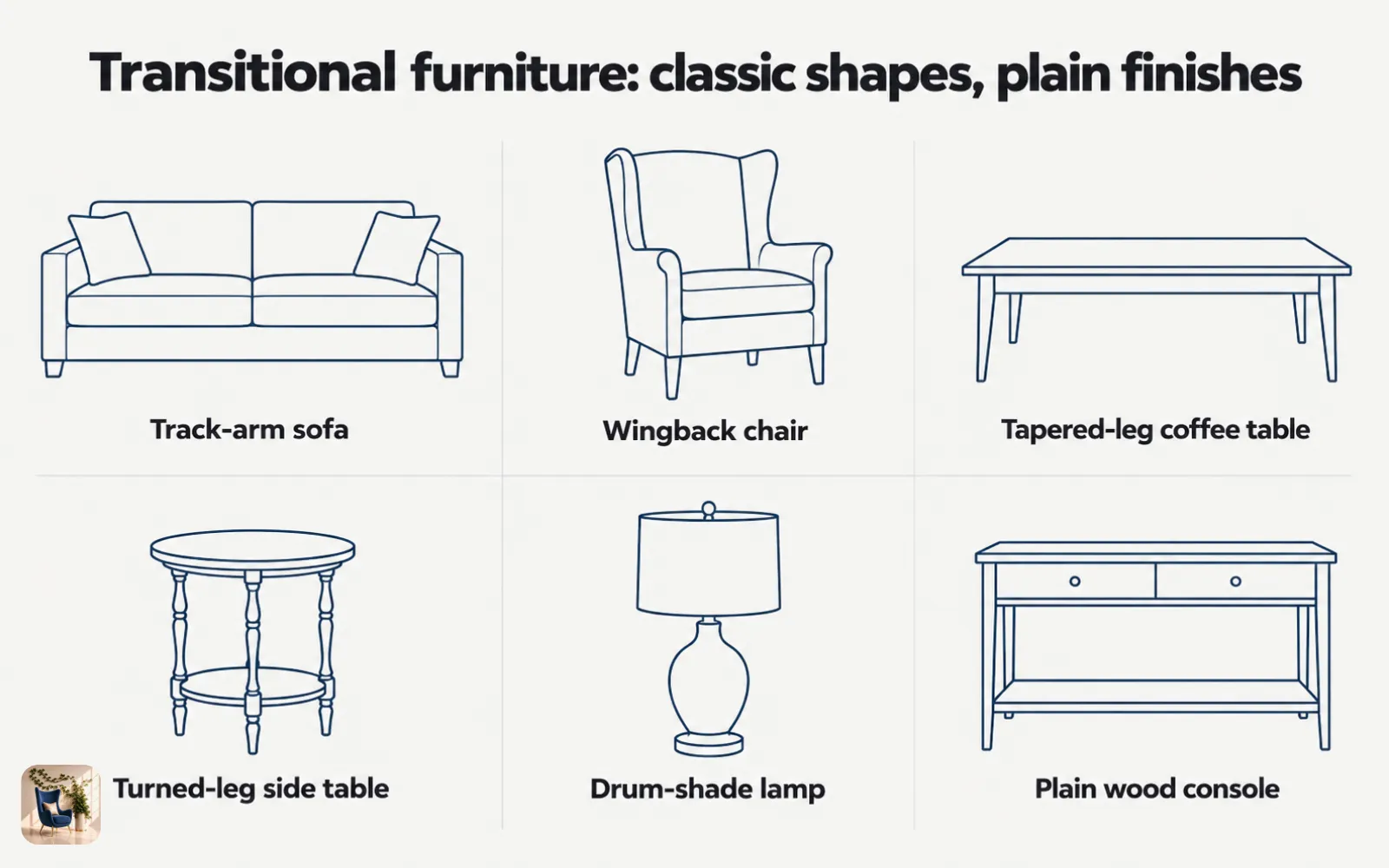
Materials balance warm and cool. Medium or dark wood brings the traditional side, and brushed brass, nickel, iron, or glass brings the modern side. Furniture keeps a recognizable classic outline but loses the fringe, tufting overload, and carved detail. A skirted sofa becomes a clean track-arm sofa on simple legs. A heavy carved console becomes a plain wood one with a stone or glass top.
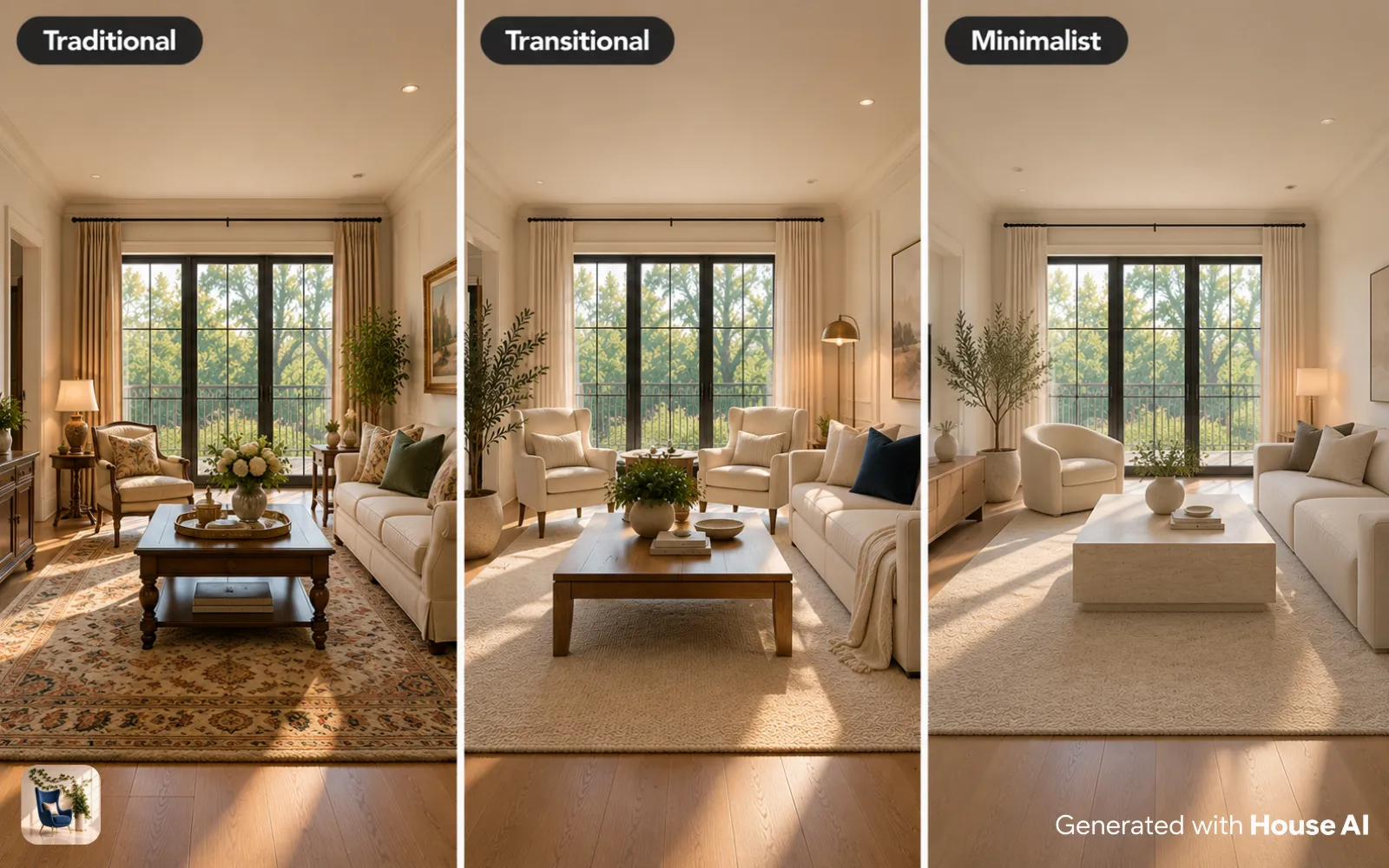
Transitional vs traditional vs minimalist
Traditional rooms use the same classic shapes but add pattern, ornament, and darker, richer color: damask, carved wood, and matched sets. Minimalist rooms strip almost everything away, with bare surfaces and very few objects. Transitional sits between them. It keeps the comfort and the familiar shapes of traditional design and borrows the calm palette and clear surfaces of a minimalist room.
How to try transitional in your own room
Step 1: Keep one classic piece
Start with a piece you already own that has a traditional shape, such as a wingback chair or a turned-leg table, and build around it.
Step 2: Calm the colors
Repaint or re-cover in warm neutrals, and move the strong colors and patterns to pillows and art you can swap.
Step 3: Preview it on a photo first
Upload a photo of the room to House AI, set the room type, and describe the transitional look in your own words. Each design takes about 15 seconds, and every user gets 3 free designs a day. AI doesn't measure your room, and screen color is not paint color, so check real samples before you buy.
Frequently asked questions
What colors are used in transitional design?
Warm whites, cream, greige, taupe, and soft gray as the base, with charcoal, navy, or a muted green as small accents.
Is transitional the same as traditional?
No. Transitional keeps traditional furniture shapes but drops most of the pattern and ornament, and it mixes in metal and glass.
Can transitional furniture work with modern pieces?
Yes. Mixing them is what makes a room transitional. A classic sofa next to a glass coffee table or a simple metal floor lamp is typical transitional.
Is transitional design still in style?
It changes slowly because it avoids strong trends. The neutral base and classic shapes make it easy to update with new pillows, art, or a rug.