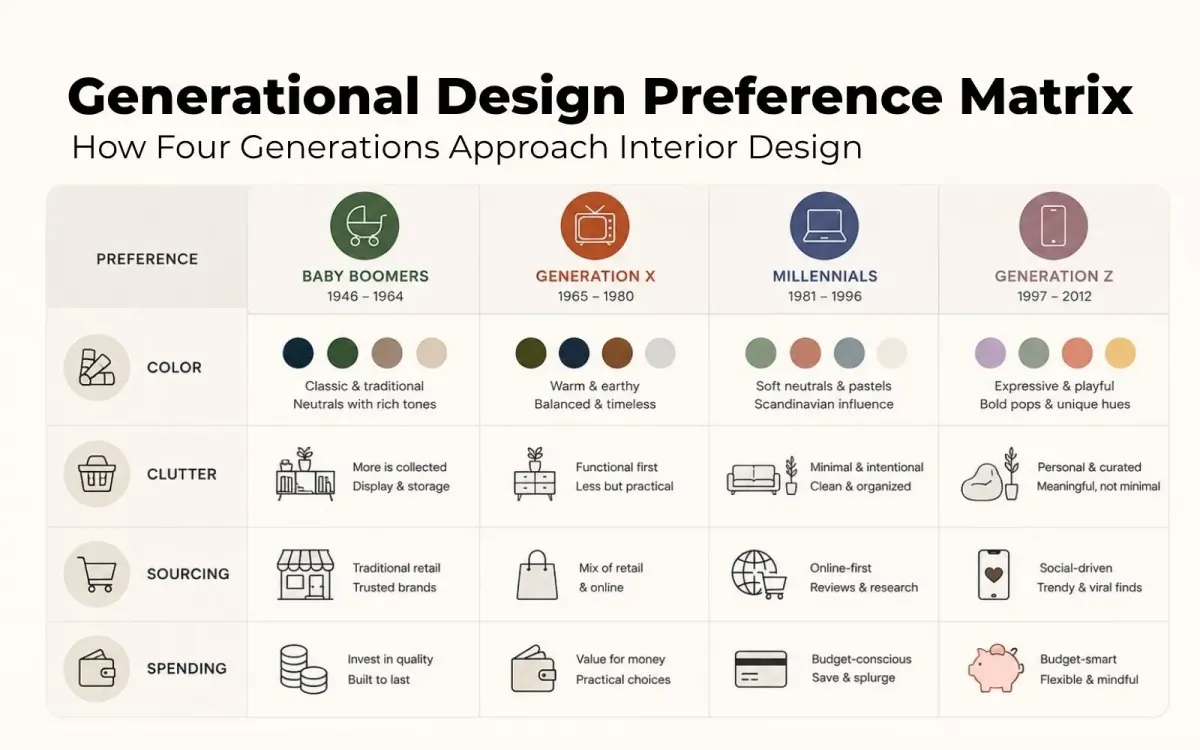
Boomers decorate for permanence, Gen X for function, millennials for calm, and Gen Z for personality. The sharpest split in 2026 is minimalism against maximalism. Millennials still reach for neutral, uncluttered rooms. Gen Z fills the wall.
That one-line version is useful, and it is also where most articles stop. The more interesting part is why the four groups diverge, and what happens in the very common situation where two of them share a house.
The short version
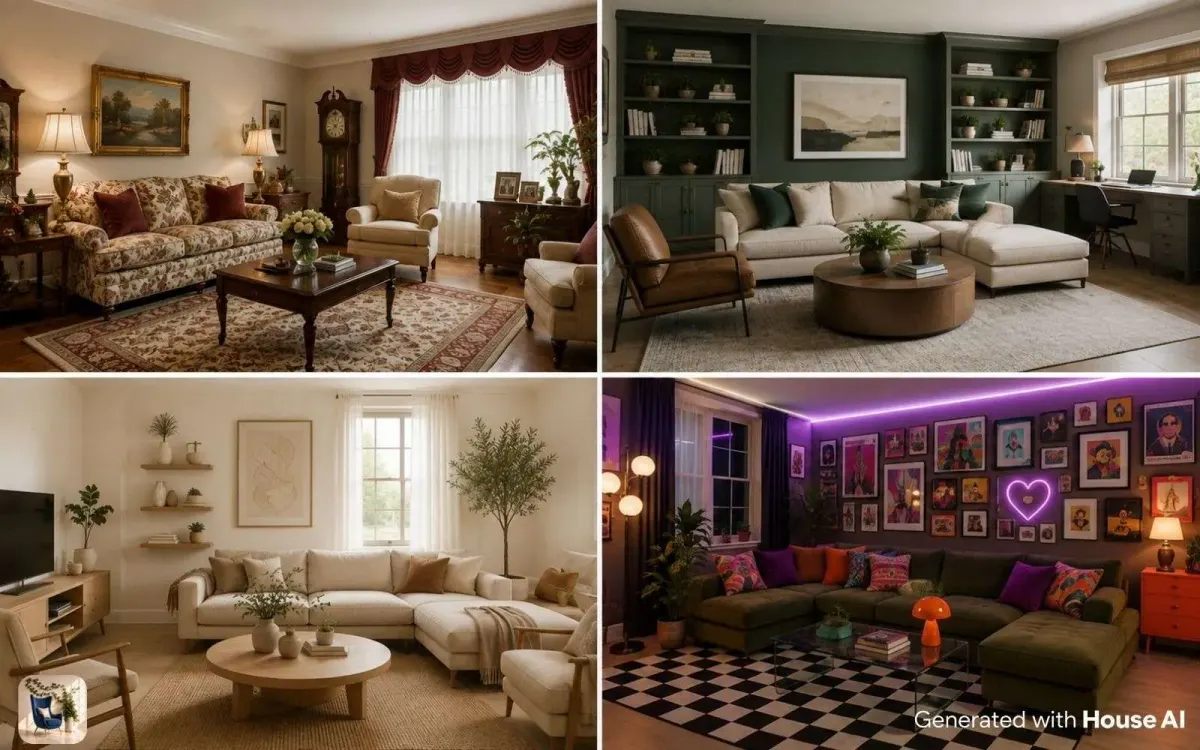
| Boomers (62–80) | Gen X (46–61) | Millennials (30–45) | Gen Z (14–29) | |
|---|---|---|---|---|
| Core instinct | Buy it once, keep it | Make it work | Keep it calm | Make it mine |
| Default palette | Warm traditional neutrals, wood tones | Transitional greys and greens | Warm white, greige, black accents | Saturated color, clashing on purpose |
| Volume of stuff | Curated and inherited | Practical, storage first | Edited down | Layered, dense, displayed |
| Signature move | A good sofa that outlives the trend | Converting a room to two uses | Open shelving, matte black, plants | Gallery wall, LED strips, thrifted chair |
| Where the ideas come from | Showrooms, magazines, designers | Word of mouth, retailers | Pinterest and Instagram | TikTok |
| Renting or owning | Owning, often downsizing | Owning, often renovating | First or second home | Renting, sharing, moving often |
| Spend behavior | Fewer purchases, higher ticket | Steady, replacement driven | Largest share of category spend | Small budgets, high influence |
Ages are as of 2026, using the standard Pew cutoffs: boomers 1946 to 1964, Gen X 1965 to 1980, millennials 1981 to 1996, Gen Z 1997 to 2012.
Follow the money before you follow the taste
Taste is loud. Spending is quieter and matters more if you sell, design, or stage anything.
Springboard Futures data presented at the 2026 International Home + Housewares Show puts it plainly: millennials and Gen X together account for 60 to 70 percent of home and housewares spending, boomers make higher-margin purchases, and Gen Z sits at roughly 15 to 20 percent of category spend with significant room to grow. The same research describes Gen Z as value-driven, living in smaller spaces, drawn to decorative space-saving storage, and wanting to personalize each room.
Read that carefully, because it inverts the usual narrative. Gen Z drives the conversation and a fraction of the receipts. Boomers barely appear on TikTok and quietly buy the expensive sofa. Anyone designing for "young people" and pricing for boomers has the equation backwards.
The 2026 Value Equation Index behind that research also found that quality, trust, pricing incentives, and social proof such as ratings and reviews all shape how people evaluate home purchases. That holds across every age band. Nobody is immune to a five-star review.
Baby boomers, ages 62 to 80
Boomers are the only group in this list who mostly finished acquiring. They are downsizing, consolidating two households into one, or renovating a house they have owned for twenty years and intend to die in. That timeline changes every decision.
What it looks like in practice:
- Furniture chosen to last a decade or more, and repaired rather than replaced
- Traditional and transitional silhouettes, wood that reads as wood
- Real rugs, real lamps, framed art that is actually framed
- Accessibility built in quietly: better lighting, fewer thresholds, a walk-in shower that does not announce itself as a grab-bar situation
- Inherited and collected objects kept in the open, because the story matters more than the styling
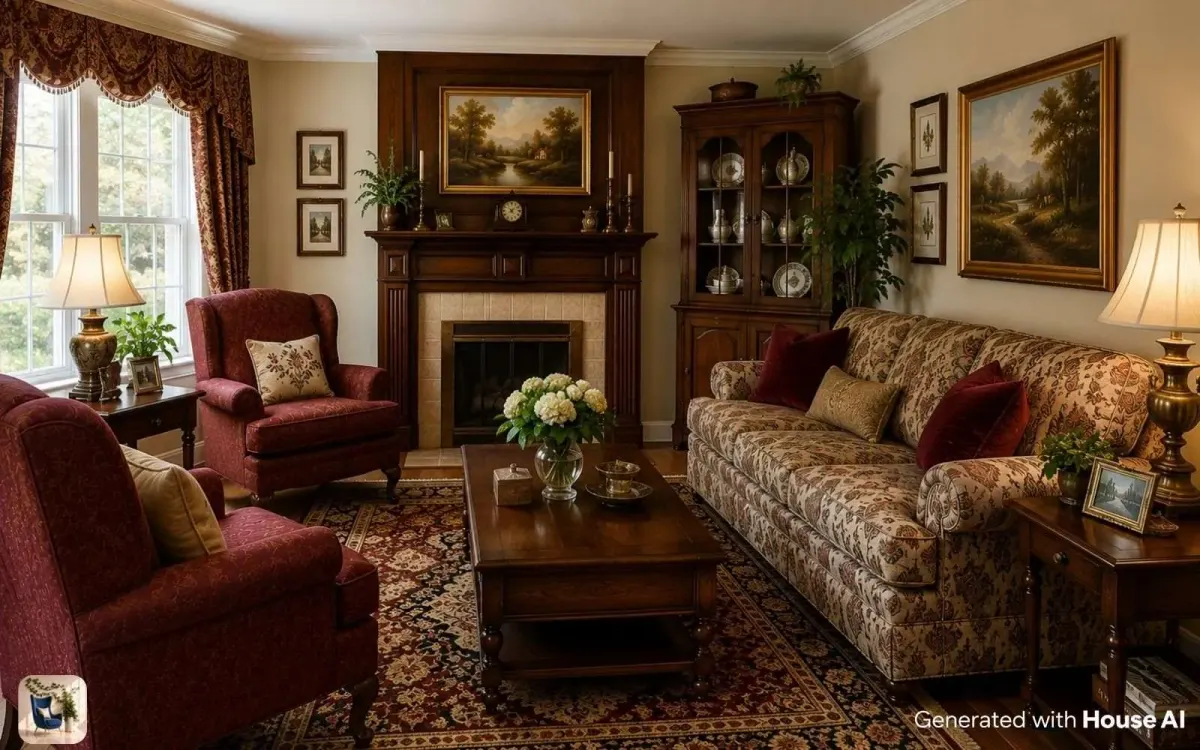
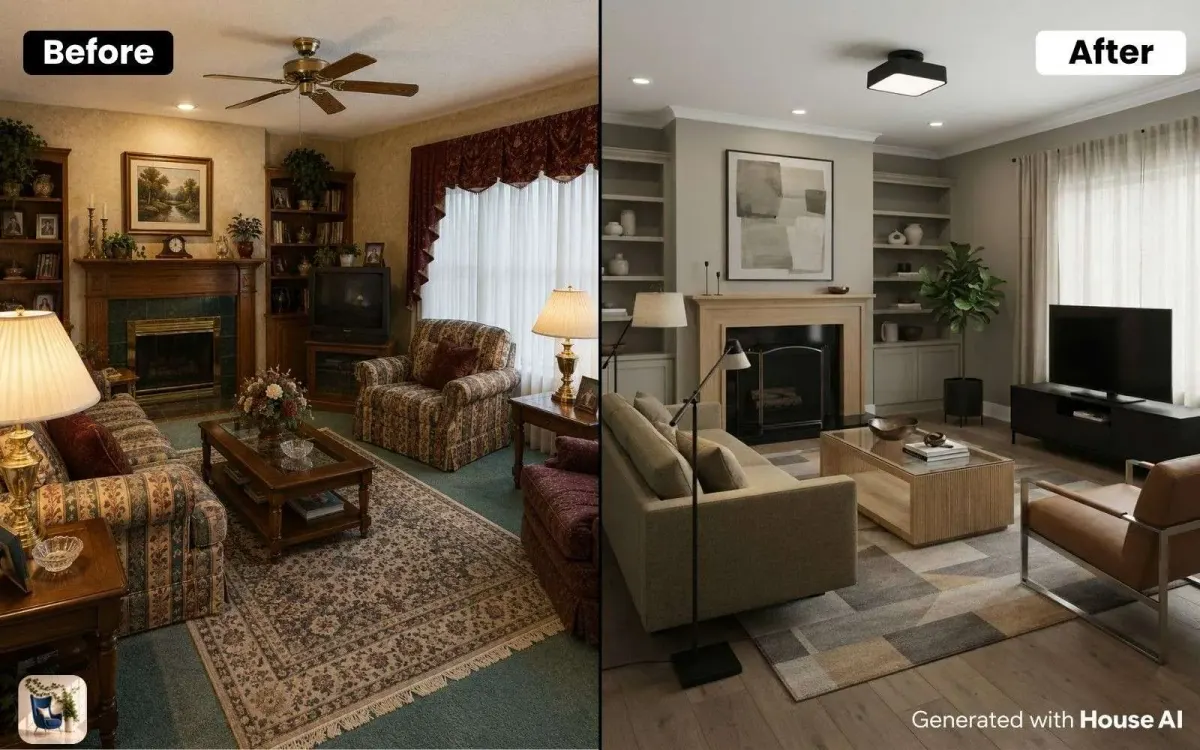
The mistake people make with boomer interiors is calling them dated. A lot of what reads as dated is simply the last full renovation cycle showing its age, not a taste preference. When boomers do update, they tend to skip the trend layer entirely and go straight to material quality. They also have the least patience for anything that looks temporary. Peel-and-stick anything is a hard no.
Gen X, ages 46 to 61
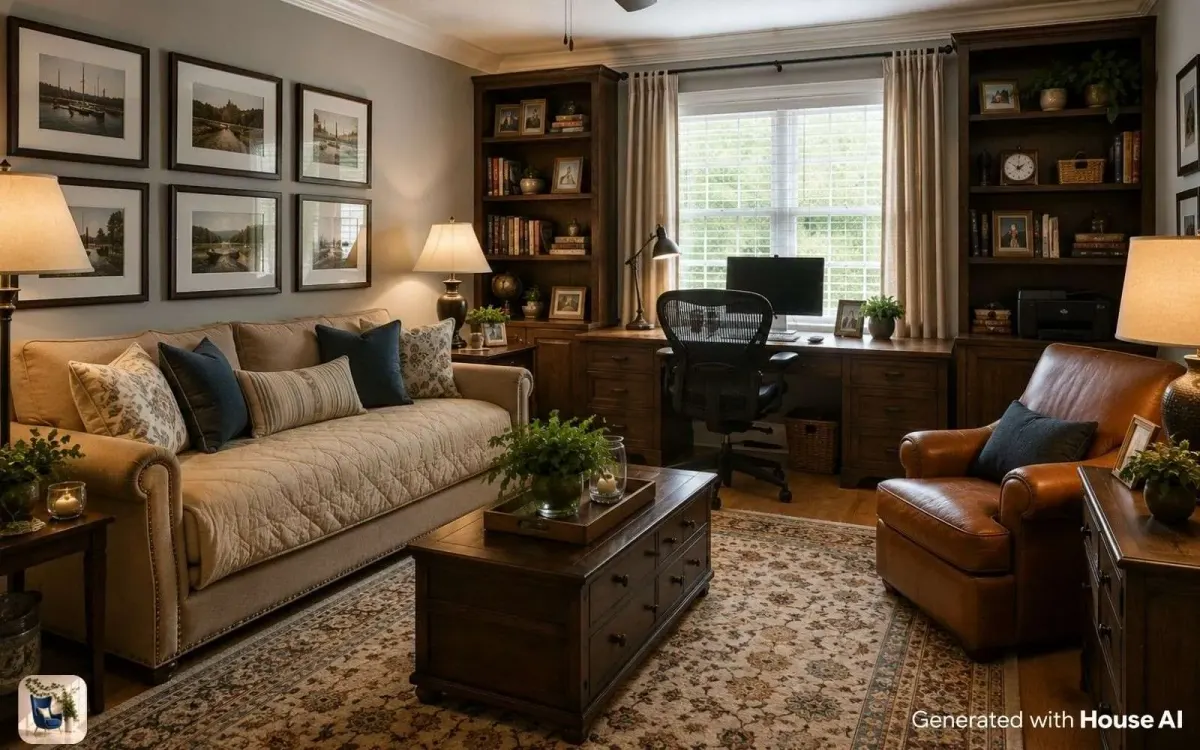
Gen X gets ignored in trend coverage, which is funny given they are in peak earning years and peak renovation years at the same time. They are the sandwich generation. Many are housing a teenager and checking on a parent in the same week, and the house has to absorb both.
Their design instinct is negotiation. Not the most beautiful option, the option that survives contact with a family.
- Transitional style, which is to say traditional bones with contemporary finishes
- Rooms that do two jobs: office plus guest room, garage plus gym, dining room plus homework table
- Durable performance fabrics, because a white sofa with a golden retriever is a fantasy
- Storage designed in rather than added later
- Greens, deep blues, and warm greys over both beige and bright color
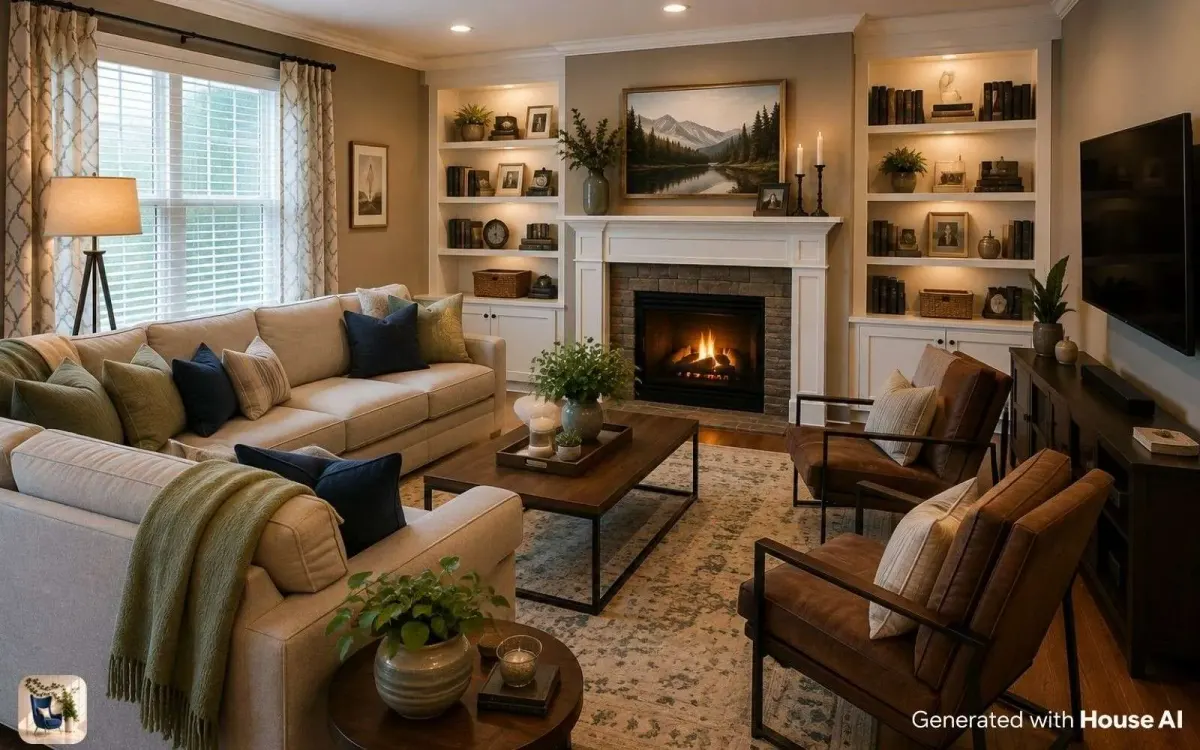
Designers have been reporting this shift toward flexible rooms for a while now. Audrey Scheck of Audrey Scheck Design describes clients wanting rooms that work for real life, using thoughtful layouts, built-ins, and flexible furniture, with offices doubling as guest rooms and playrooms converting into second living areas. That is Gen X's entire brief in one sentence, even when the client is not Gen X.
Millennials, ages 30 to 45
Millennials spent a decade being blamed for grey. Fair enough. They also normalized the idea that a rental could be designed at all, which is not nothing.
The generation is now split by housing status in a way that matters more than birth year. A 43-year-old on a second home and a 31-year-old in a one-bedroom rental are both millennials, and they buy nothing alike. The through line is restraint:
- Neutral base, warm rather than cool, with beige and cream replacing the cold greys of the 2010s
- Clean lines, low clutter, visible surfaces
- Matte black hardware, brass as the accent metal, open shelving
- Plants doing a lot of the emotional work
- Function over ornament, and a strong preference for buying once
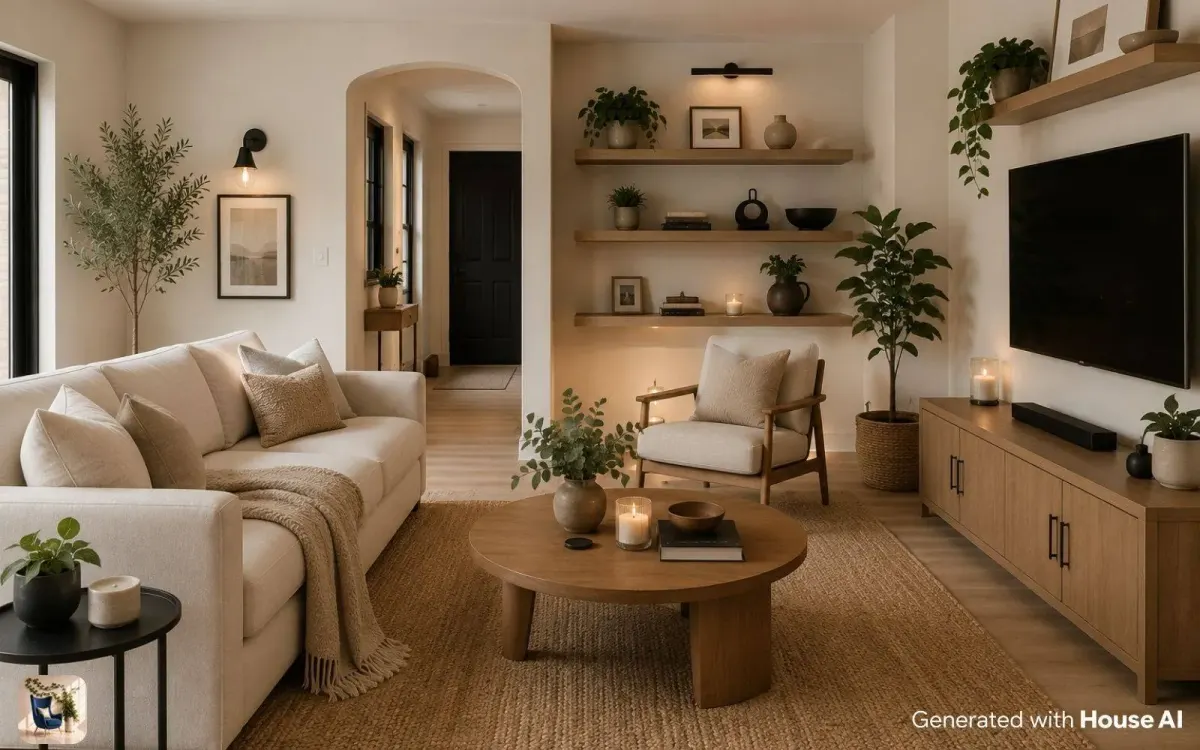
Millennials are also the group most likely to have smart home devices integrated as a design decision rather than a gadget pile. Lighting, thermostats, and speakers get chosen partly on how they look.
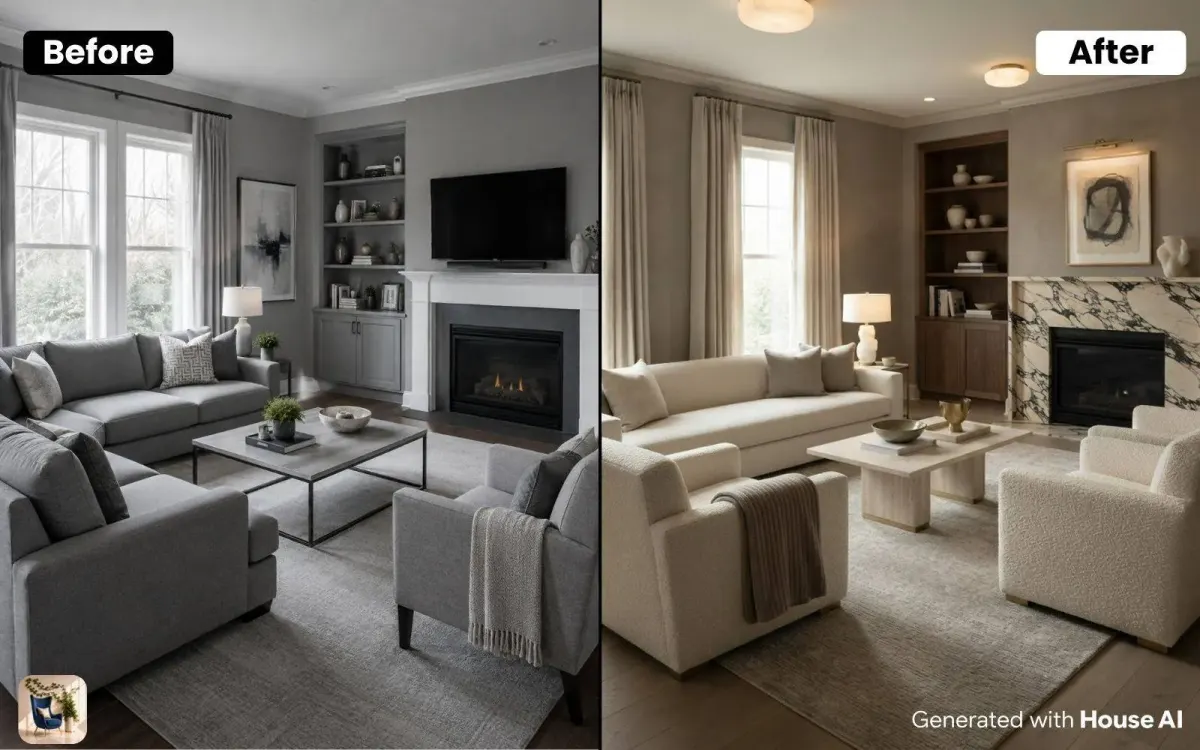
Here is where 2026 complicates the story. The minimalism millennials are known for is losing ground across the whole market, including with them. Designers report a move away from cool-toned neutrals and stark minimalism toward warmth, pattern, and rooms that look collected rather than purchased in one weekend. Homes & Gardens describes homes in 2026 becoming warmer and more layered, with tactile materials, natural finishes, and meaningful objects taking priority over fast-moving trends.
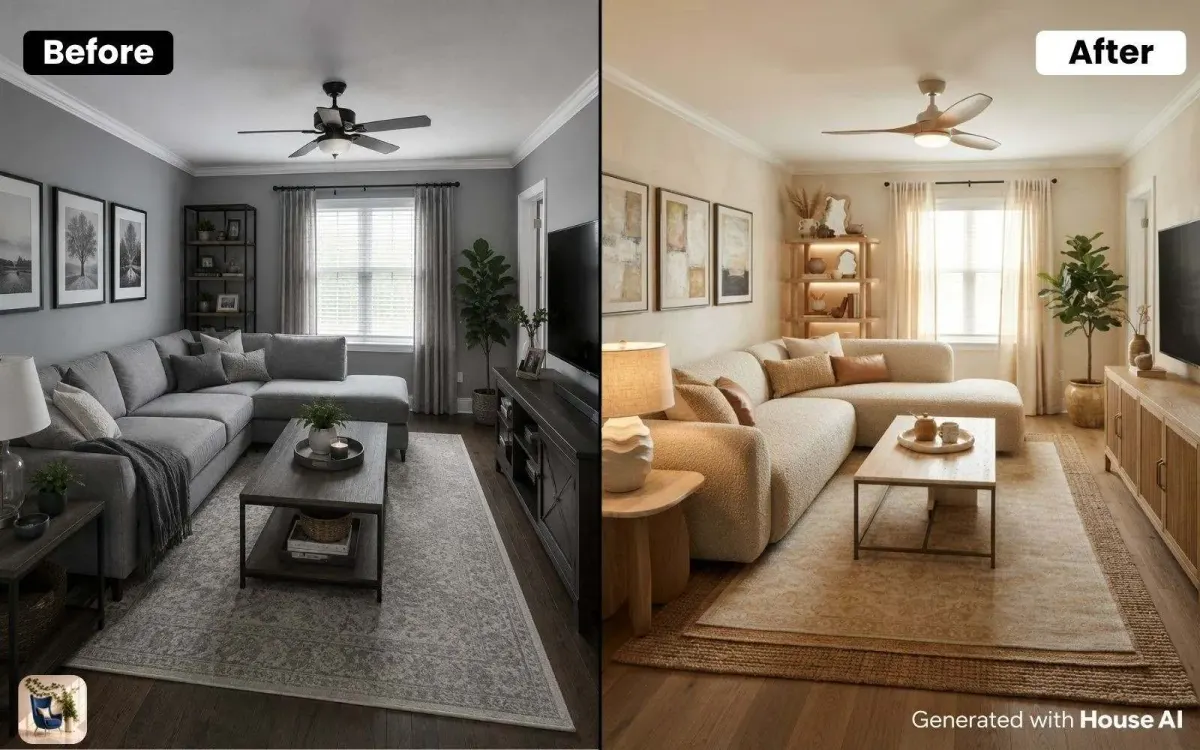
So the millennial minimalist is not disappearing. They are adding texture, color, and a few old things, and keeping the discipline.
Gen Z, ages 14 to 29
Gen Z is maximalist, and it is a reaction, not an accident. They grew up watching millennials curate everything into oblivion, and they are doing the opposite on purpose.
- Saturated color, sometimes several fighting each other in the same room
- Gallery walls, posters, printed photos, ticket stubs, anything with a story
- Thrifted and secondhand furniture, mismatched deliberately
- DIY and upcycling as a default, partly on budget and partly on principle
- LED strips, and yes, they are a real design element to this group, not a dorm cliche
- Nostalgia for decades they did not live through
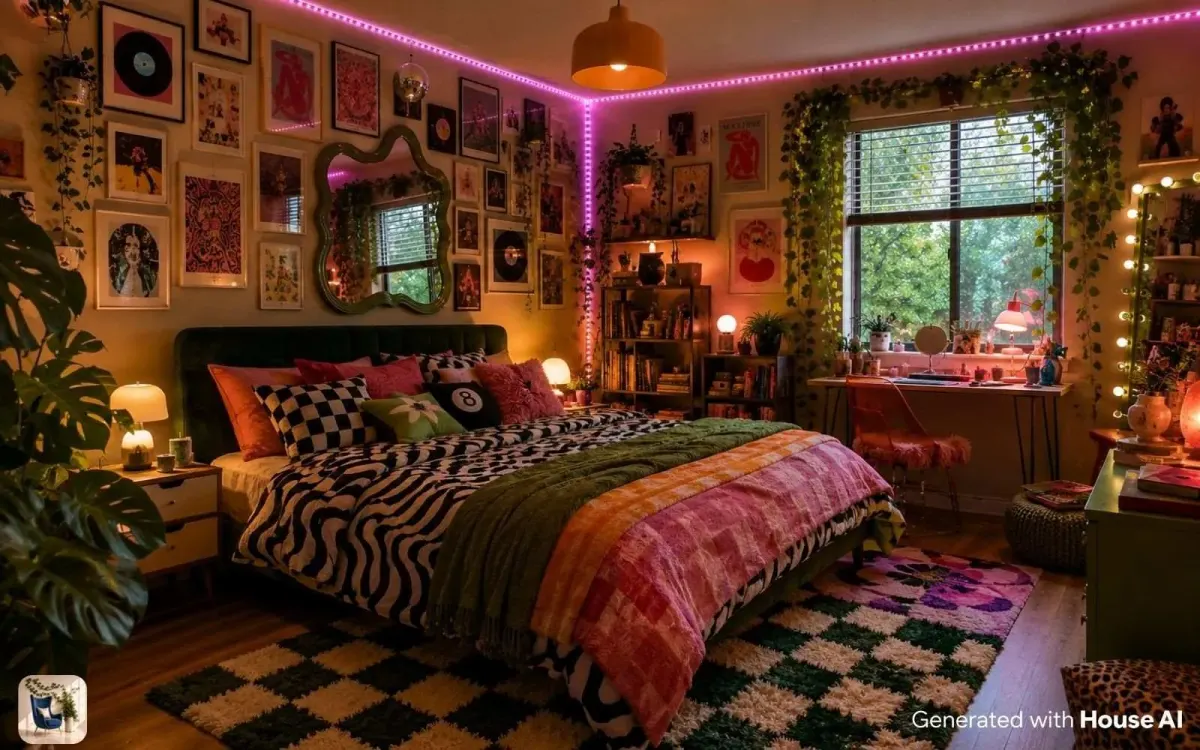
Two constraints shape all of it. They mostly rent, and they mostly have small budgets. That combination produces a specific kind of creativity: everything must be reversible, cheap, and highly visible in a photo.
Their sourcing is also different in kind, not just in degree. The Springboard research notes that Gen Z both heavily influences and is heavily influenced by social media in home decor. A style can go from unknown to saturated in about six weeks, which is faster than any furniture supply chain can respond.
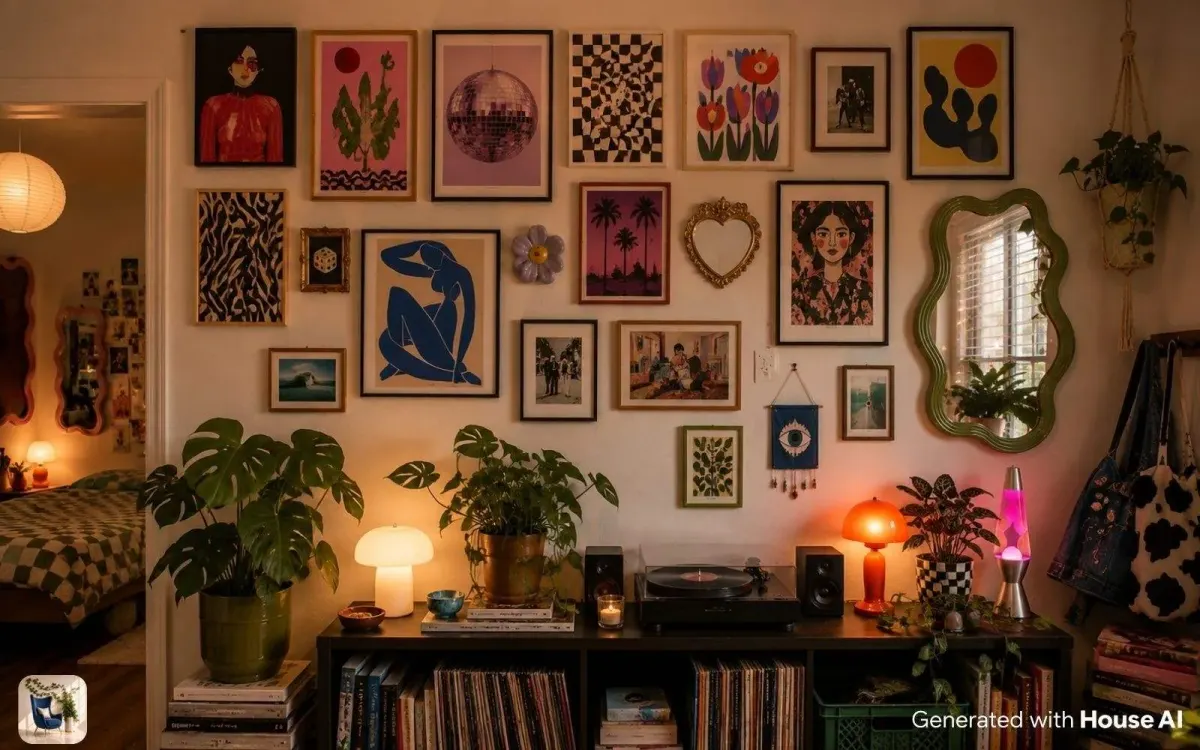
The published commentary on the millennial and Gen Z split is fairly consistent. One read of it frames millennials as favoring minimalism and simplicity while Gen Z wants maximalism and authenticity, with the difference tracking to their life stages: Gen Z establishing individuality, millennials dealing with homeownership and family. Life stage explains more of this than birth year does.
Gen Alpha is already in the room
The oldest members of Gen Alpha, born from 2013, are turning 13 this year. They do not have budgets and they absolutely have opinions, and they are the first cohort whose taste is being formed almost entirely inside short-form video.
Two things are already visible in how families report decorating for them. Bedrooms are being treated as content sets, with lighting and a background wall chosen partly for how they appear on camera. And the cycle time is shorter than anything before it. A room theme that would have lasted a Gen Z teenager three years lasts a Gen Alpha one closer to one.
That has a practical consequence for parents: put the money in the furniture and the flooring, and let the cheap layer carry the theme. Paint, decals, bedding, and lighting are the things that will change.
Why the generations are drifting apart faster
Taste used to move through a small number of gates. Magazines, showrooms, television, and a designer's own catalog of references. Everyone in a given decade saw roughly the same images, so styles changed slowly and generations overlapped heavily.
That is gone. Each cohort now sources from a different platform with a different algorithm, and the algorithms do not show each other's content. A boomer browsing a showroom, a Gen X parent scrolling a retailer's site, a millennial on Pinterest, and a Gen Z teenager on TikTok are looking at four separate versions of what a room should be.
The speed difference matters as much as the source difference. A style can go from unknown to saturated on TikTok inside about six weeks. Furniture supply chains take months to respond, which is why the micro-trends Gen Z adopts are so heavily weighted toward things you can buy cheap, thrift, or make: a print, a lamp, a color of paint.
The result is that older cohorts increasingly encounter a trend only after it has peaked with the youngest one. If you have ever had a parent describe something as new that your teenager considers finished, that is the mechanism.
Regional variation cuts across all of it
Generation is not the strongest predictor of taste. Climate and housing stock usually are.
A Gen Z renter in Miami and a Gen Z renter in Minneapolis want different things because the light is different, the humidity is different, and one of them has a radiator. Warm minimalism reads as calm in a bright climate and cold in a grey one. Deep saturated color does the opposite.
Housing age matters just as much. A 1920s building with plaster and picture rails pulls every occupant toward a more traditional layer, regardless of when they were born. New construction with drywall and recessed lighting pulls toward the contemporary. People adapt to the box they are in far more than trend coverage admits. So treat every generational rule in this article as a tendency with two large local modifiers.
What the industry data says about 2026 specifically
The clearest annual read on professional taste is the 1stDibs Interior Designer Trends Survey. The ninth edition, taken by 468 design professionals worldwide, put chocolate brown at the top of the color rankings and identified maximalism and eclecticism as strengthening design aesthetics for 2026.
Two color movements from that survey are worth noting because they cut across generations: burgundy rebounded sharply, cited by 7 percent of designers for 2025 and 21 percent for 2026. Butter yellow more than doubled, from 14 percent in 2024 to 30 percent in 2025, with cornflower blue, powder pink, and pistachio also rising.
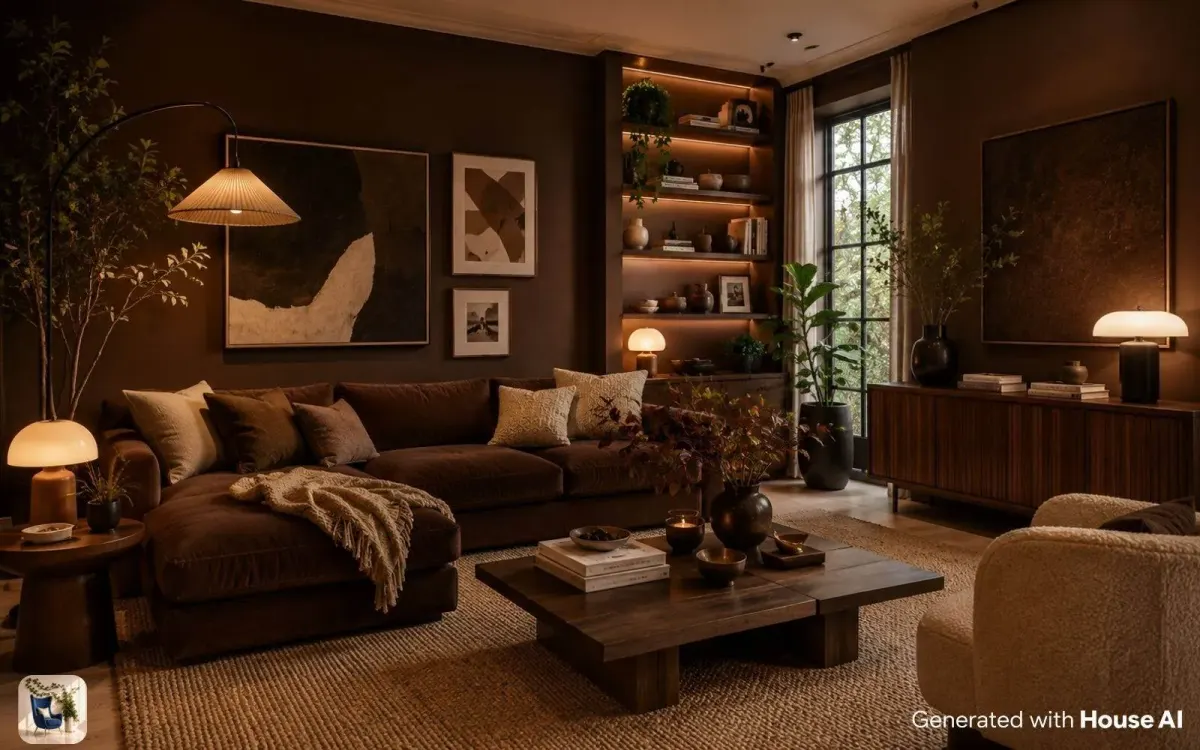
Deep browns, greens, and reds leading a palette is a boomer-friendly direction and a Gen Z-friendly direction at the same time, for completely different reasons. One group reads it as heritage. The other reads it as moody.
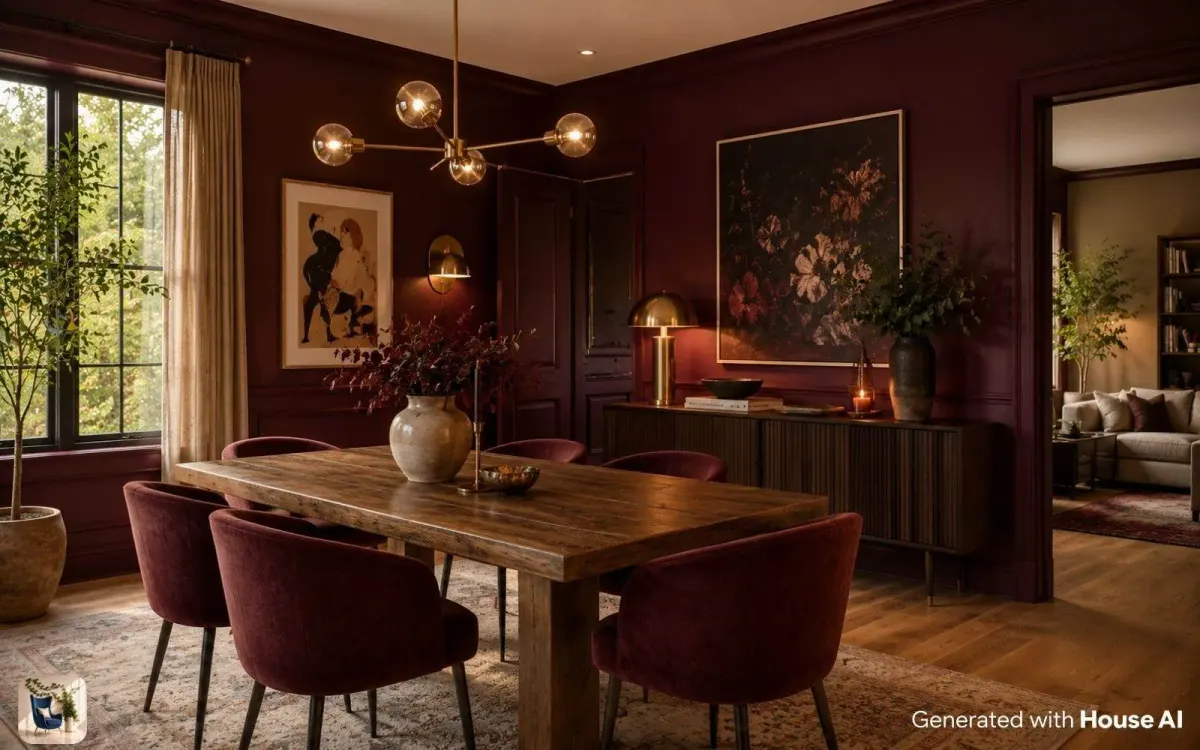
Designers surveyed by Luxe also point to grounded, nature-derived palettes for 2026: layered neutrals, earthy greens, warm browns, and mineral tones like clay, oxblood, and deep blue. Warm neutrals with taupe undertones replacing the cool greys of the last decade shows up in almost every 2026 forecast, which is a rare level of agreement in a field that mostly disagrees.
Where all four generations actually agree
Trend pieces overstate the conflict. Four things show up in every cohort:
- Natural light. Nobody has ever asked for less of it.
- Storage that is not visible. Different amounts of stuff, identical desire to hide it.
- Real materials. Solid wood, stone, wool, and linen beat their imitations at every age.
- Rooms that do more than one job. Boomers want a guest room that is also an office. So does Gen Z, in a smaller square footage.
Designing one house for two generations
This is the real problem most people bring to a designer, and it rarely gets written about. A millennial couple hosting a boomer parent. A Gen X household with a Gen Z teenager who has strong opinions and a phone full of references. What works:
- Split by zone, not by object. Give each generation a room or a corner that is fully theirs. Fighting over the shared living room produces a compromise nobody likes.
- Agree on the shell, negotiate the layer. Wall color, flooring, and large upholstery are the expensive permanent decisions and should be neutral enough to survive disagreement. Art, textiles, and lighting are cheap and swappable, so that is where personality goes.
- Match the undertone, not the color. A warm room can hold both a traditional wood piece and a saturated Gen Z accent chair. A cool room fights both.
- Let the maximalist have a full wall. Contained density reads as intentional. Scattered density reads as mess, which is the actual objection older family members are making.
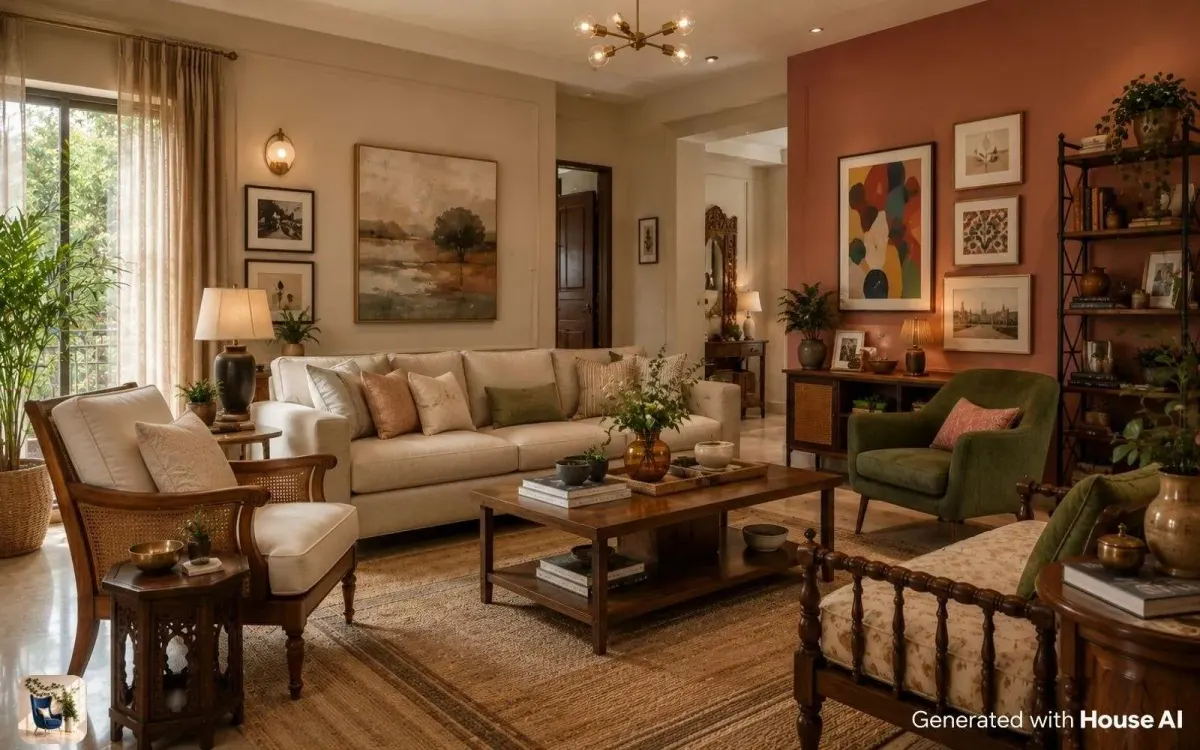
See it before you commit to it
The gap between generations is usually a failure of imagination, not taste. A boomer parent cannot picture the deep green their daughter keeps describing. A Gen Z renter cannot picture their thrifted furniture in an actual finished room.
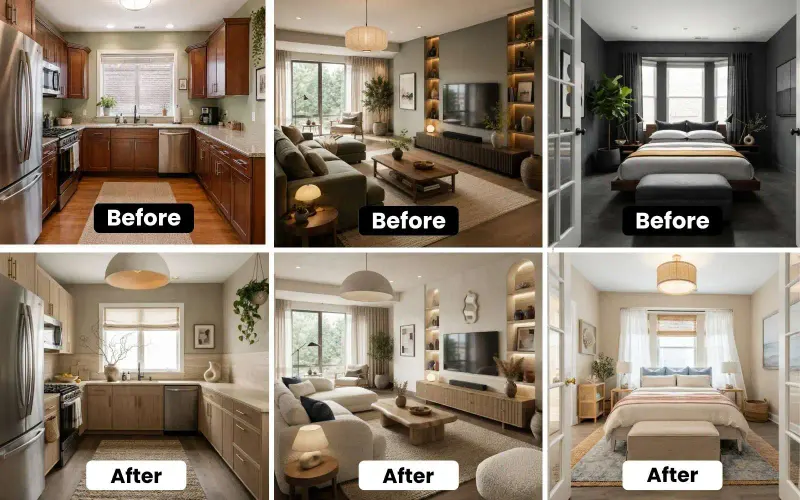
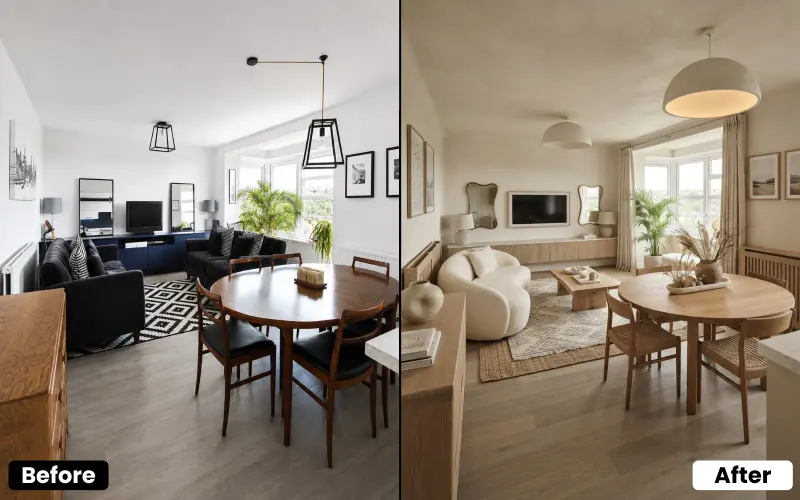
This is where visualization earns its keep. In House AI you upload a photo of the real room and apply a style to it, so the argument moves from adjectives to an image. Our style picker has 300+ styles, which covers the traditional and transitional directions boomers and Gen X ask for as well as the maximalist and eclectic ones Gen Z wants. Each generation averages about 15 seconds, so you can put two versions of the same room side by side before anyone loses interest, and the conversation gets much shorter.
The app is free to start. Paid plans run $9.99 per week, $39.99 per year, or $19.99 per month on web. It works on a photo of a furnished room, so you are not modeling anything from scratch.
Disclosure: this article is published on the House AI blog and House AI is our product. The survey and industry data cited here comes from independent sources, all linked below, and we would rather you check them than take our word for it.
Frequently asked questions
What are generational interior design trends?
They are the patterns in how different age cohorts decorate, driven mostly by life stage, budget, and housing status rather than by birth year alone. In 2026 the main axis runs from boomer permanence to Gen Z self-expression.
What interior design style do boomers prefer?
Traditional and transitional styles, warm wood tones, and durable furniture bought to last. Boomers prioritize material quality over trend and tend to renovate in long cycles rather than refresh often.
What is Gen X's design style?
Transitional and function-first. Gen X favors flexible rooms that serve two purposes, performance fabrics, built-in storage, and deep greens and blues over both beige and bright color.
Do millennials still like minimalism?
Yes, but a warmer version. The cool greys of the 2010s have shifted to warm whites, creams, and greiges, with more texture and pattern layered on top. Designers broadly report minimalism losing ground in 2026.
Why does Gen Z like maximalism?
Because it is the opposite of what they grew up seeing, and because it fits their constraints. Renting, small budgets, and social media favor decor that is reversible, cheap, personal, and photographs well.
Which generation spends the most on home decor?
Millennials and Gen X together, at roughly 60 to 70 percent of home and housewares spending according to Springboard Futures research. Boomers make fewer but higher-margin purchases, and Gen Z is about 15 to 20 percent of category spend.
What colors are trending in 2026?
Chocolate brown leads the 1stDibs designer survey, with burgundy rising from 7 to 21 percent year over year and deep greens gaining. Warm earthy neutrals have largely replaced cool greys.
How do I decorate a home shared by two generations?
Keep the permanent layer neutral and let each person own a defined zone. Put personality into art, textiles, and lighting, which are cheap to change, and match undertones so pieces from different eras sit together.
Is maximalism replacing minimalism in 2026?
Partly. The 1stDibs survey shows maximalism and eclecticism strengthening, but the version designers describe is curated rather than chaotic, mixing color and texture in a way that reads personal.
Can I preview a design style in my own room before buying anything?
Yes. Upload a photo of the room to an AI interior design app such as House AI and apply a style to that exact space. It is the fastest way to settle a disagreement about color or style without buying anything first.
Sources
- Springboard Futures generational buying trends, Home Accents Today
- 1stDibs 2026 Interior Designer Trends Survey
- Homes & Gardens, interior design trends 2026
- Luxe Interiors + Design, 2026 color trends
- Camille Styles, designer 2026 trend predictions
- Forbes, spring 2026 design trends
- Design, Demolition, and the Discrepant Tastes of Gen Z and Millennials
Design any room, shop or space with House AI in about 15 seconds. 1 free design a day.
Get Started Today