

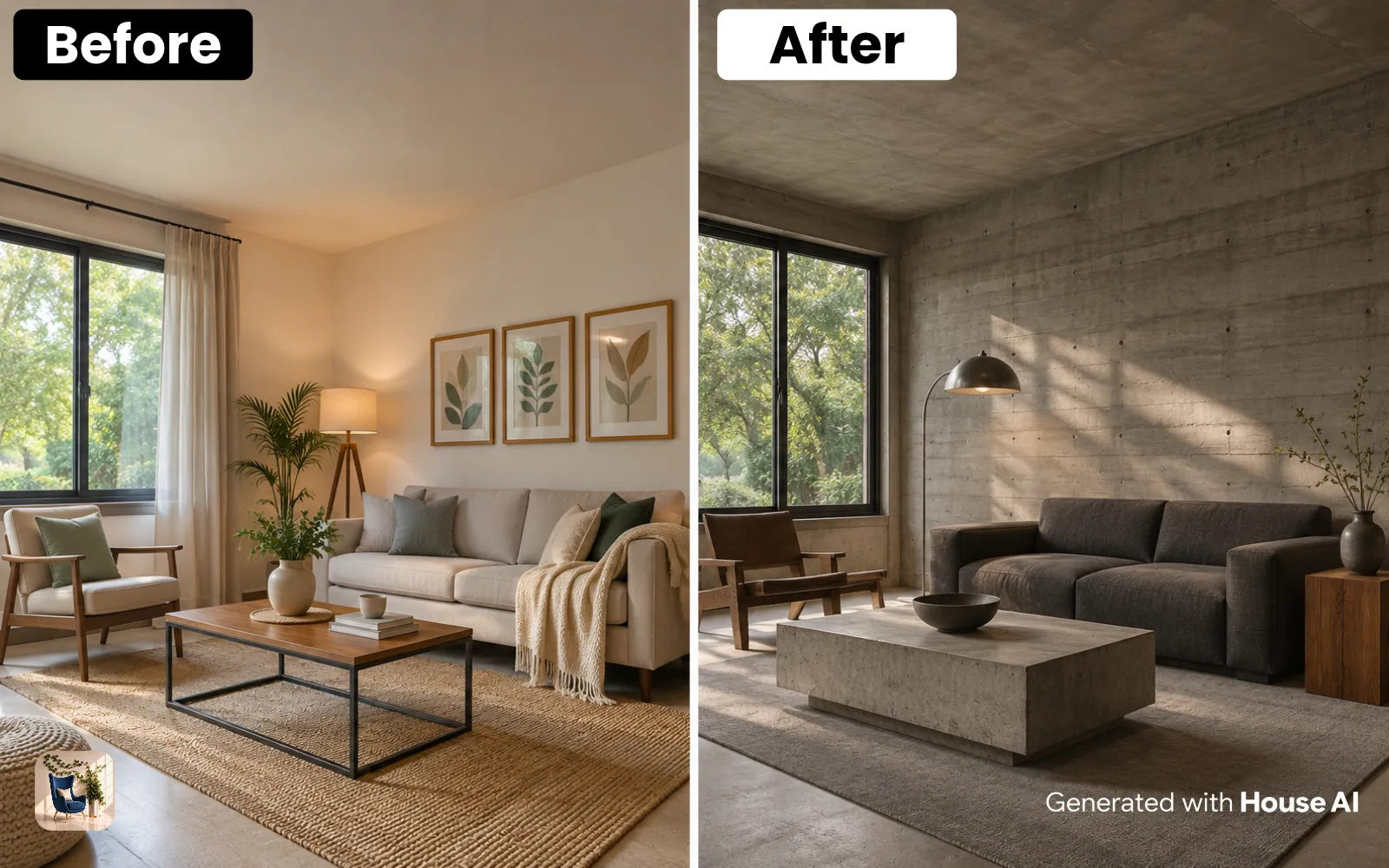
Brutalist interior design brings the look of Brutalist architecture indoors: raw or board-formed concrete, heavy blocky furniture, monolithic shapes, and almost no decoration. Britannica traces the style to the mid-20th century and the term New Brutalism to Alison and Peter Smithson in 1954. At home it usually shows up as a concrete wall or a stone table, softened with wood, wool, and warm light.
A Brutalist room lets material, mass, and texture do the decorating. Done well, it feels calm and solid rather than cold.
Where Brutalism came from
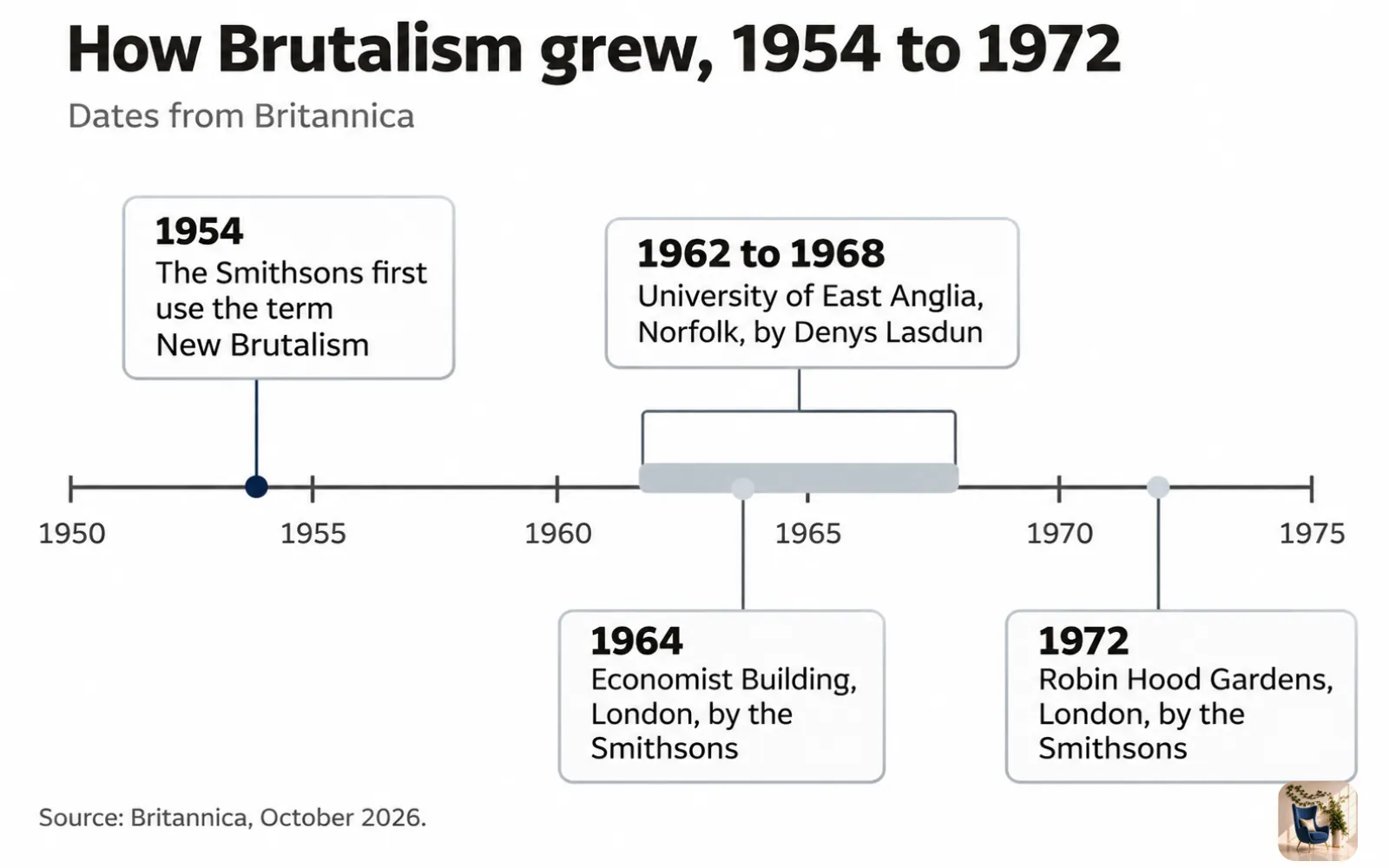
Brutalism began as an architecture style. Britannica describes it as a style that emerged in the mid-20th century, marked by raw concrete, bold geometric forms, and a utilitarian look, and widely used for government buildings, universities, and social housing. English architects Alison and Peter Smithson first used the term New Brutalism in 1954 for the later work of Le Corbusier, with its sculptural shapes and raw, unfinished concrete. Britannica's examples include Denys Lasdun's University of East Anglia (1962 to 1968) and the Smithsons' Robin Hood Gardens housing in London (1972).
How to spot a Brutalist room
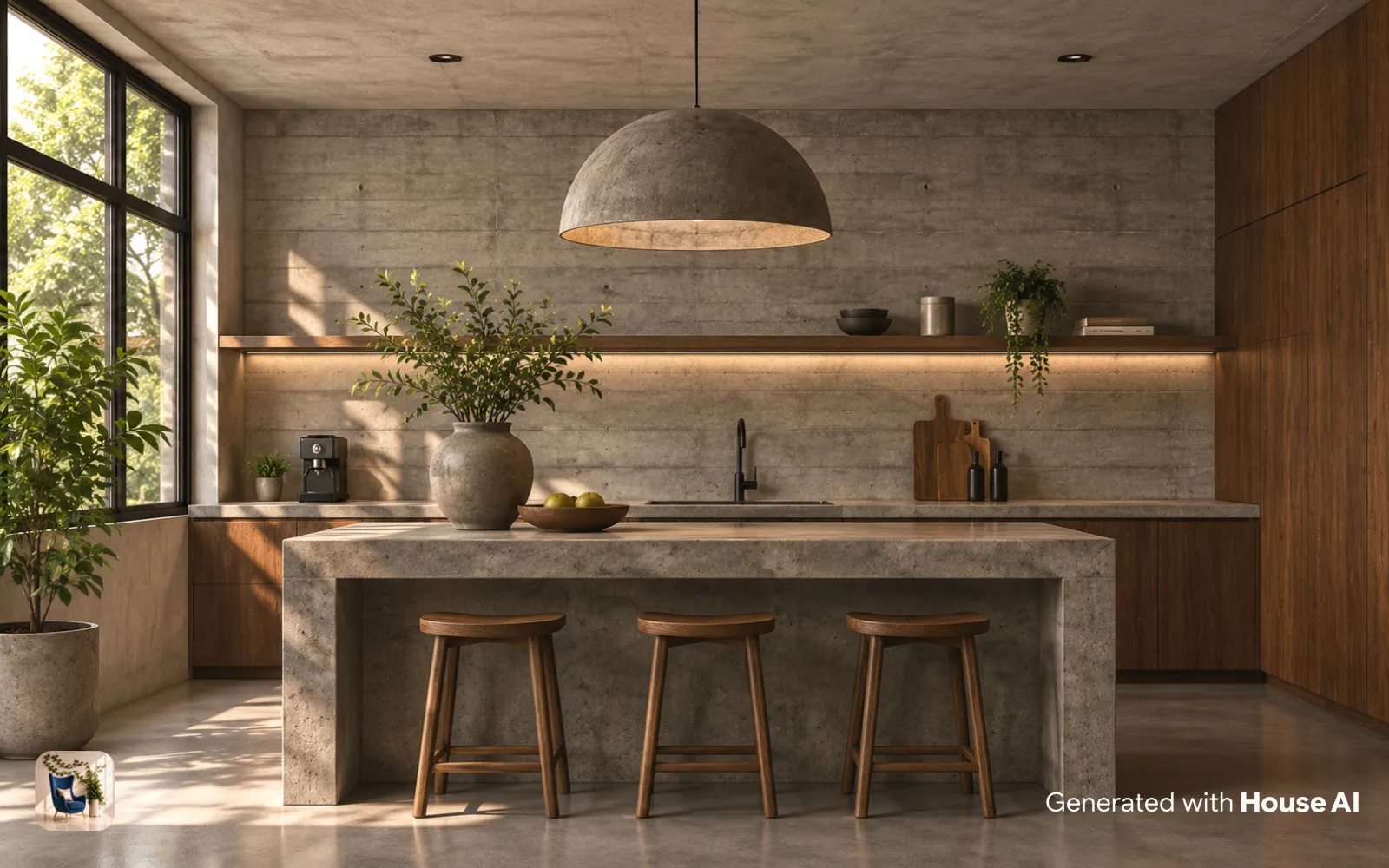
Most Brutalist rooms share five traits. Walls or ceilings are exposed concrete, often board-formed so the grain of the wooden molds shows. Furniture is heavy and blocky, like a solid stone coffee table or a low sofa on a plinth. There is little ornament, pattern, or color, with a palette of grays, charcoal, and earth tones. The geometry is strong, with deep recesses and thick edges. Daylight rakes across the surfaces to show their texture.
Brutalist vs minimalist vs industrial
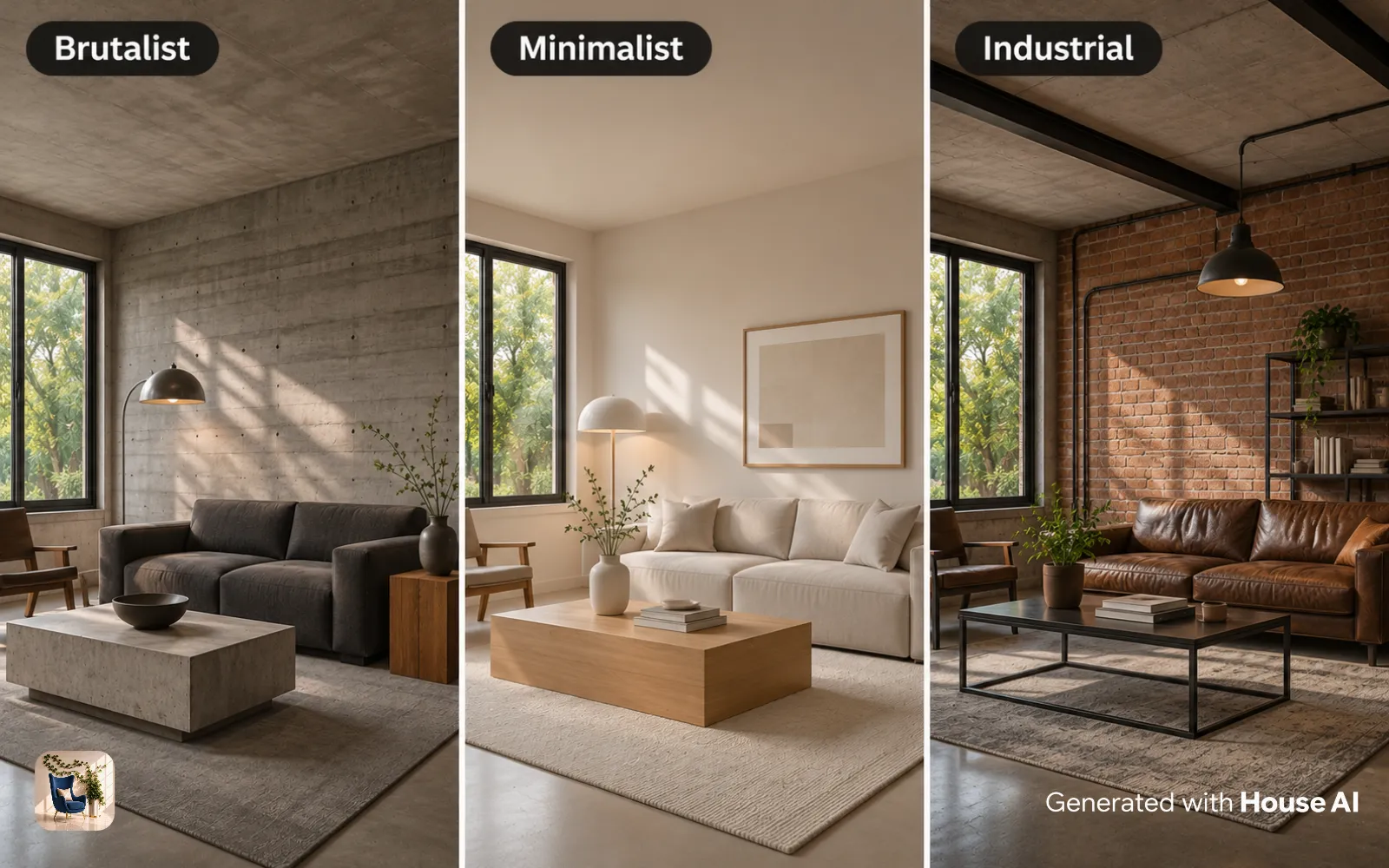
All three are spare, but they get there differently. Minimalism removes things until the room feels light and quiet. Industrial shows off a converted building's bones, like brick, ductwork, and black metal. Brutalism keeps the room spare but makes everything heavy, as if each piece were carved from one block.
| Feature | Brutalist | Minimalist | Industrial |
|---|---|---|---|
| Main materials | Raw concrete and stone | Smooth, plain surfaces | Brick, metal, and reclaimed wood |
| Furniture shape | Heavy, blocky, monolithic | Slim and simple | Practical, often on metal frames |
| Color | Grays, charcoal, and earth tones | White and soft neutrals | Black, rust, and brick red |
| Mood | Solid and sculptural | Light and quiet | Raw and lived-in |
How to soften a Brutalist room
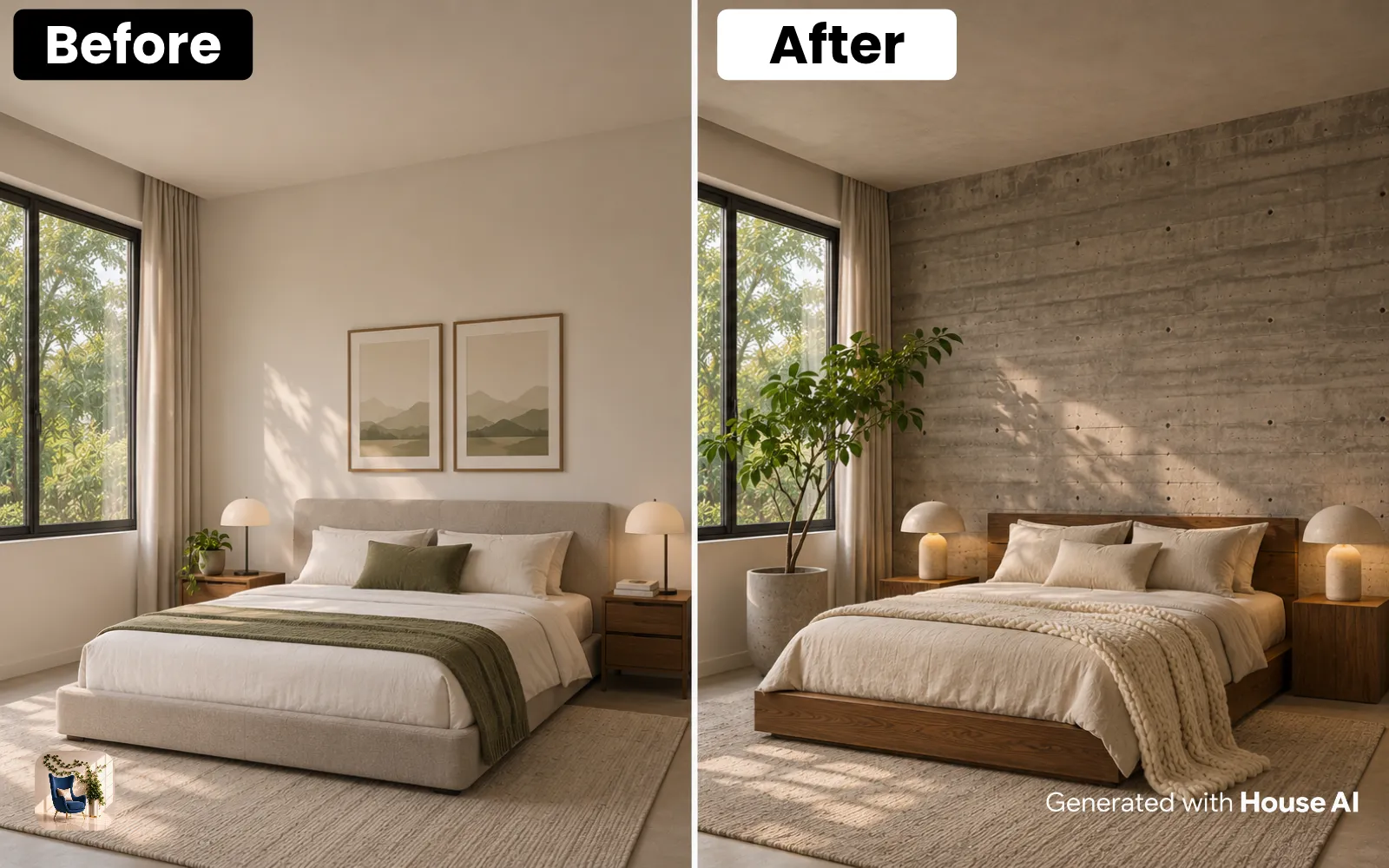
Pure Brutalism can feel stark in a home, so most people use it in small doses. Start with one concrete or stone piece, such as a coffee table, a microcement wall, or a plaster fireplace, rather than a whole room. Balance the hard surfaces with warm wood, wool, linen, and leather. Use low, warm lamps instead of bright overhead light, and add one or two large plants to break up the straight lines.
You can test a softened version on a photo of your own room. Upload it to House AI, set the room type, and describe the look in your own words, such as a board-formed concrete wall with a walnut sideboard and a wool rug. Each design takes about 15 seconds, and every user gets 3 free designs a day. AI doesn't measure the room, and screen color is not concrete or paint color, so check real samples before you commit.
Frequently asked questions
What is the difference between Brutalist and minimalist interiors?
Both are spare. Minimalist rooms are light, with slim furniture, while Brutalist rooms are heavy, with raw concrete, stone, and blocky furniture.
When did Brutalism start?
In the mid-20th century. Britannica says Alison and Peter Smithson first used the term New Brutalism in 1954.
Can you do Brutalist style without concrete?
Yes. Microcement, limewash, plaster, and solid stone give a similar raw, heavy look, and blocky wood furniture can carry the shapes.
Is Brutalist interior design cold?
It can be. Warm wood, wool, linen, soft lamps, and plants keep the look solid without making it feel bare.
Keep reading
- Minimalist Style
- Industrial Style
- What Is Bauhaus Interior Design?
- What Is Wabi-Sabi Interior Design?
- Interior Design Styles Explained: 40 Looks With Real Room Examples
Sources: Britannica, "Brutalism," last updated September 17, 2026, checked October 31, 2026. House AI figures come from the House AI app.