
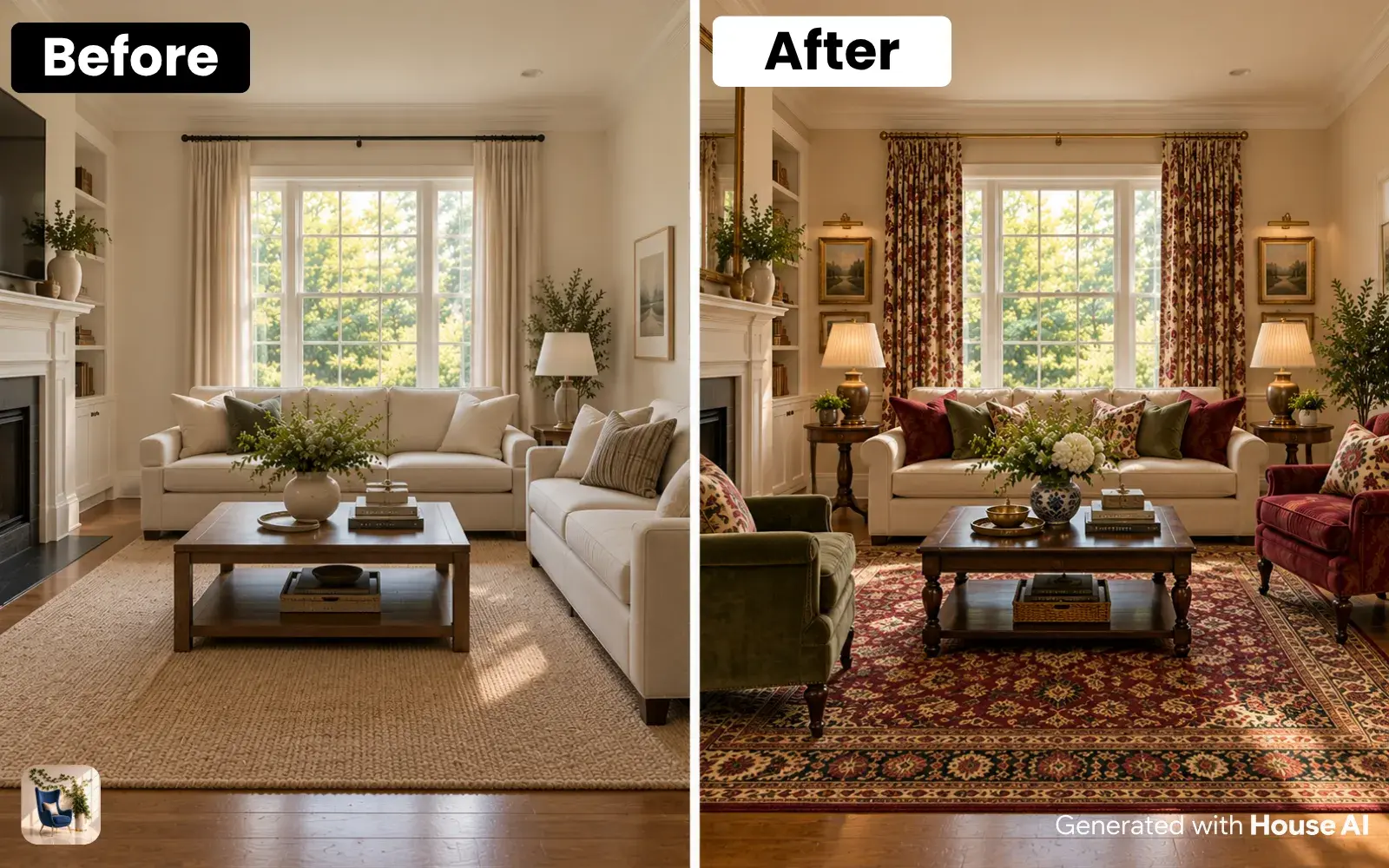
Traditional interior design is a classic style that draws on 18th and 19th century English and French homes. It is built on symmetry, dark polished wood, classic patterns like damask, florals, and plaid, and layered textiles such as heavy drapes and upholstered seating. Rooms look orderly and collected, with furniture meant to last for decades.
A traditional room feels calm because almost everything comes in pairs and lines up around a center point. It is formal by nature, but the best versions still invite you to sit down.
How to spot a traditional room
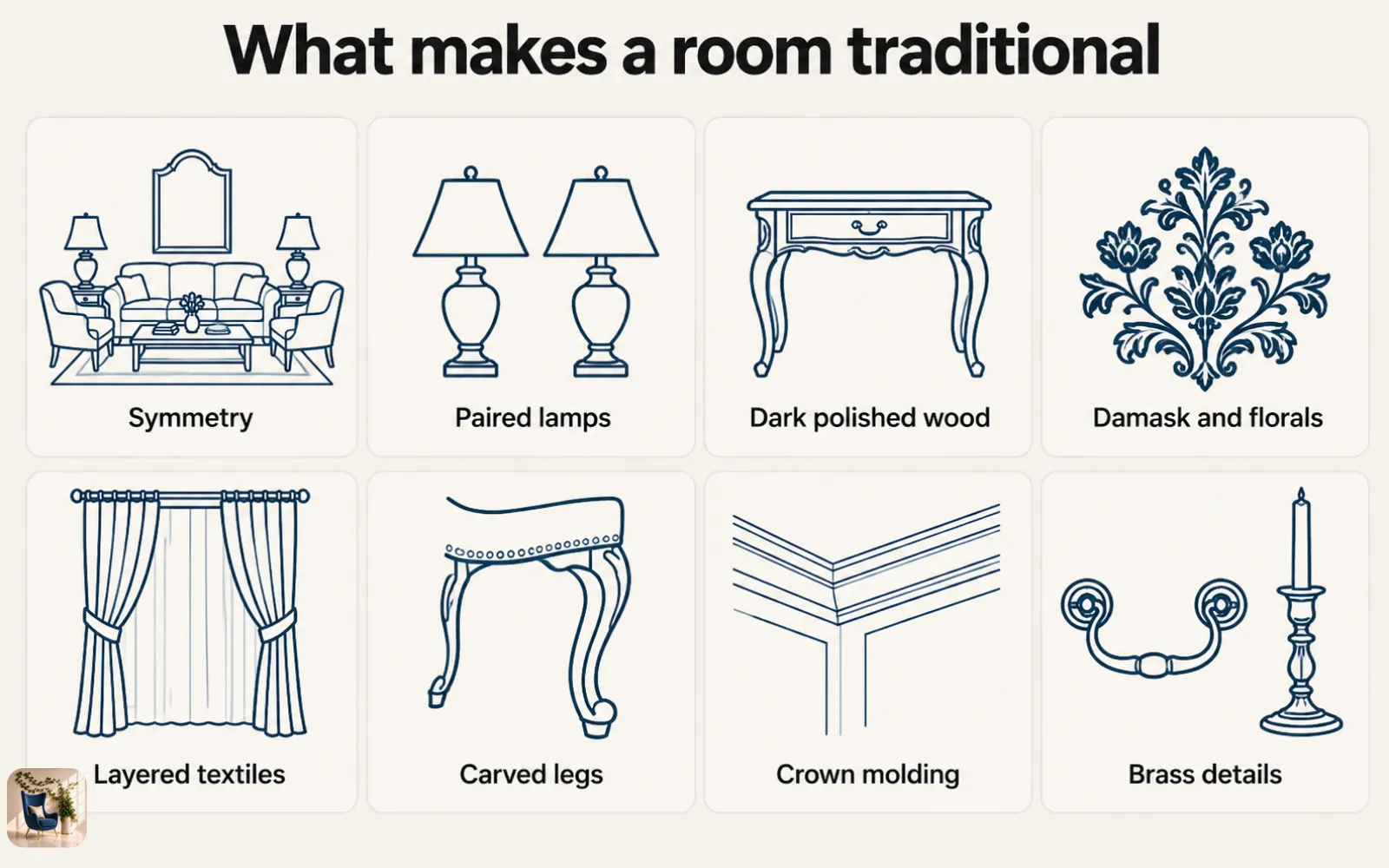
Most traditional rooms share these details. A room with five or more of them reads as traditional.
- A symmetrical layout, with the sofa centered on a fireplace or window
- Furniture and lamps in matching pairs
- Dark polished wood like mahogany, cherry, or walnut
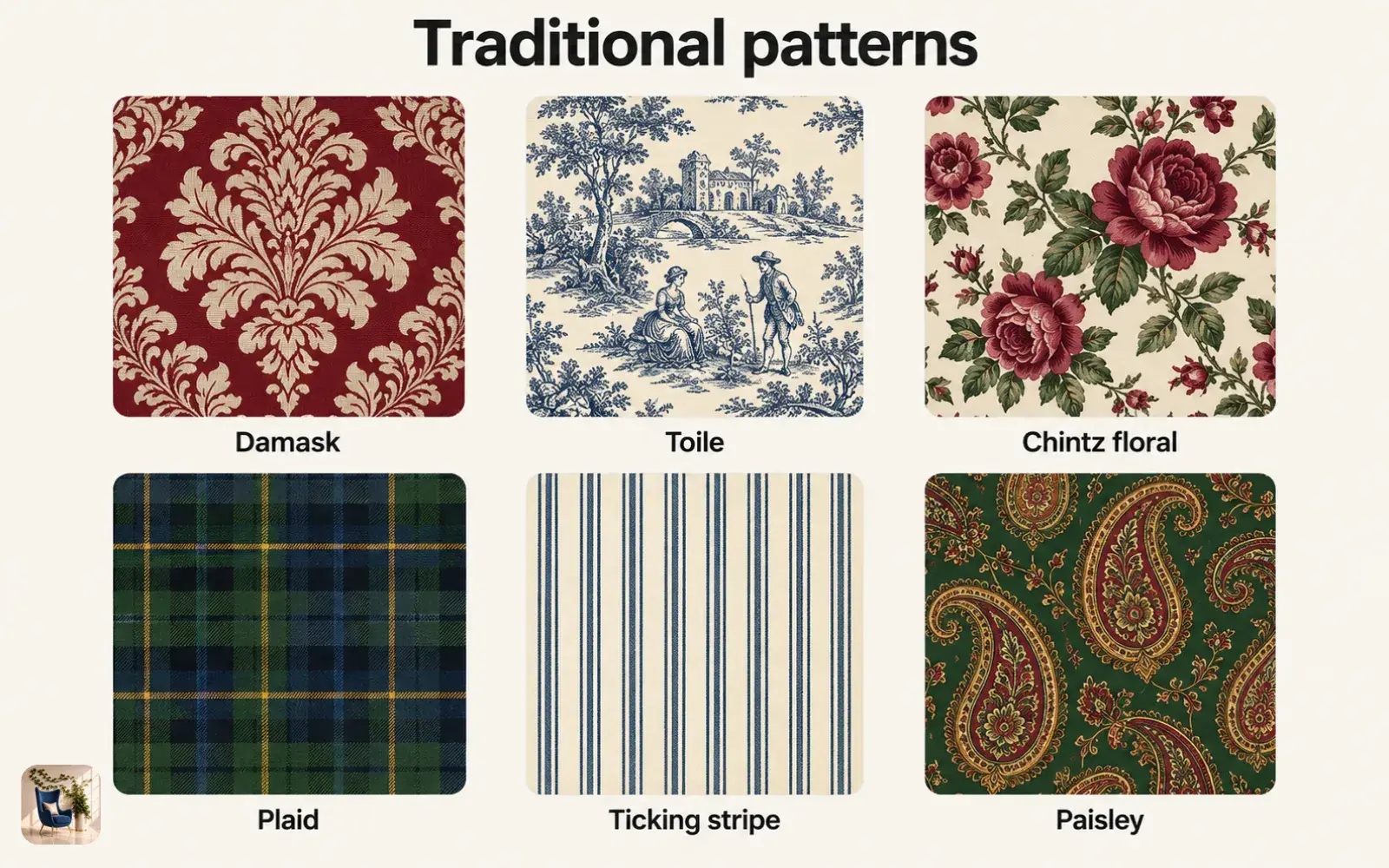
- Classic patterns: damask, florals, toile, plaid, and stripes
- Layered textiles, from full-length drapes to upholstered and skirted seating
- Curved, carved, or turned furniture legs and rolled sofa arms
- Architectural trim like crown molding and wall paneling
- Brass or bronze lamps and hardware
Patterns, colors, and furniture
Traditional color runs deep: burgundy, forest green, navy, and gold, set against cream or warm white walls. Patterns are classic and repeat at different scales, so a large damask on the sofa can sit next to a small stripe on a chair. The furniture is substantial, with rolled-arm and camelback sofas, wingback chairs, and four-poster beds. Many pieces borrow their shapes from named furniture periods like Queen Anne and Chippendale, and the most ornate end of the style overlaps with Victorian rooms.
Traditional vs transitional
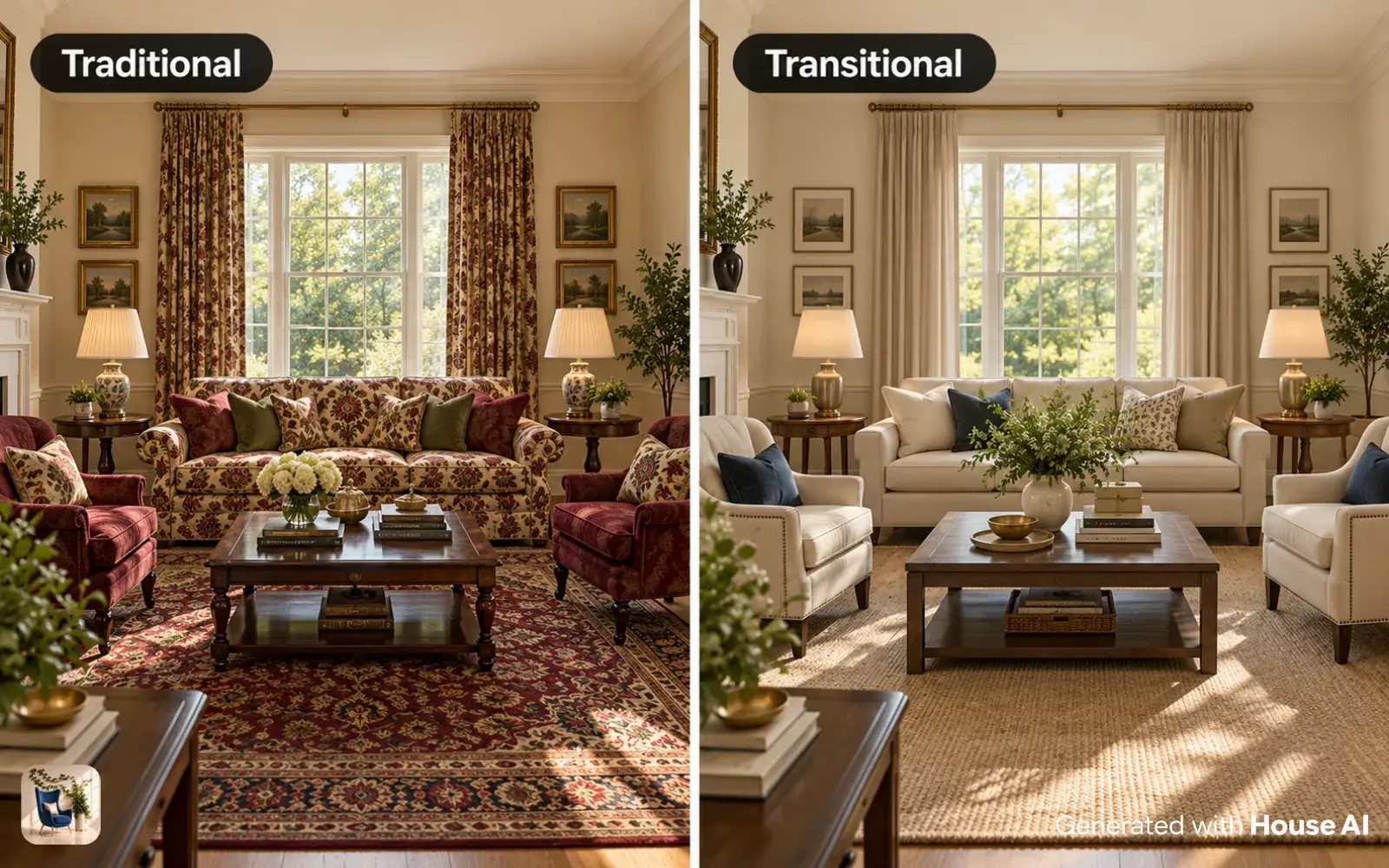
Transitional design keeps the classic furniture shapes of a traditional room and strips out most of the pattern, carving, and deep color. A traditional sofa might be rolled-arm in red damask. The transitional version keeps a similar shape in plain oatmeal linen, next to a glass side table and a calmer palette of cream, greige, and gray. If you like traditional shapes but find the patterns heavy, transitional is the easy middle ground.
How to try traditional in your own room
Step 1: Center the room on one focal point
Pick the fireplace, a window, or the bed wall, and arrange furniture in pairs on either side of it. Matching lamps and chairs do most of the work.
Step 2: Add wood and one classic pattern
Bring in one dark wood piece, like a carved side table, and one pattern, like a damask pillow or a floral drape. Add a second pattern in a smaller scale once the first one feels right.
Step 3: Preview it on a photo first
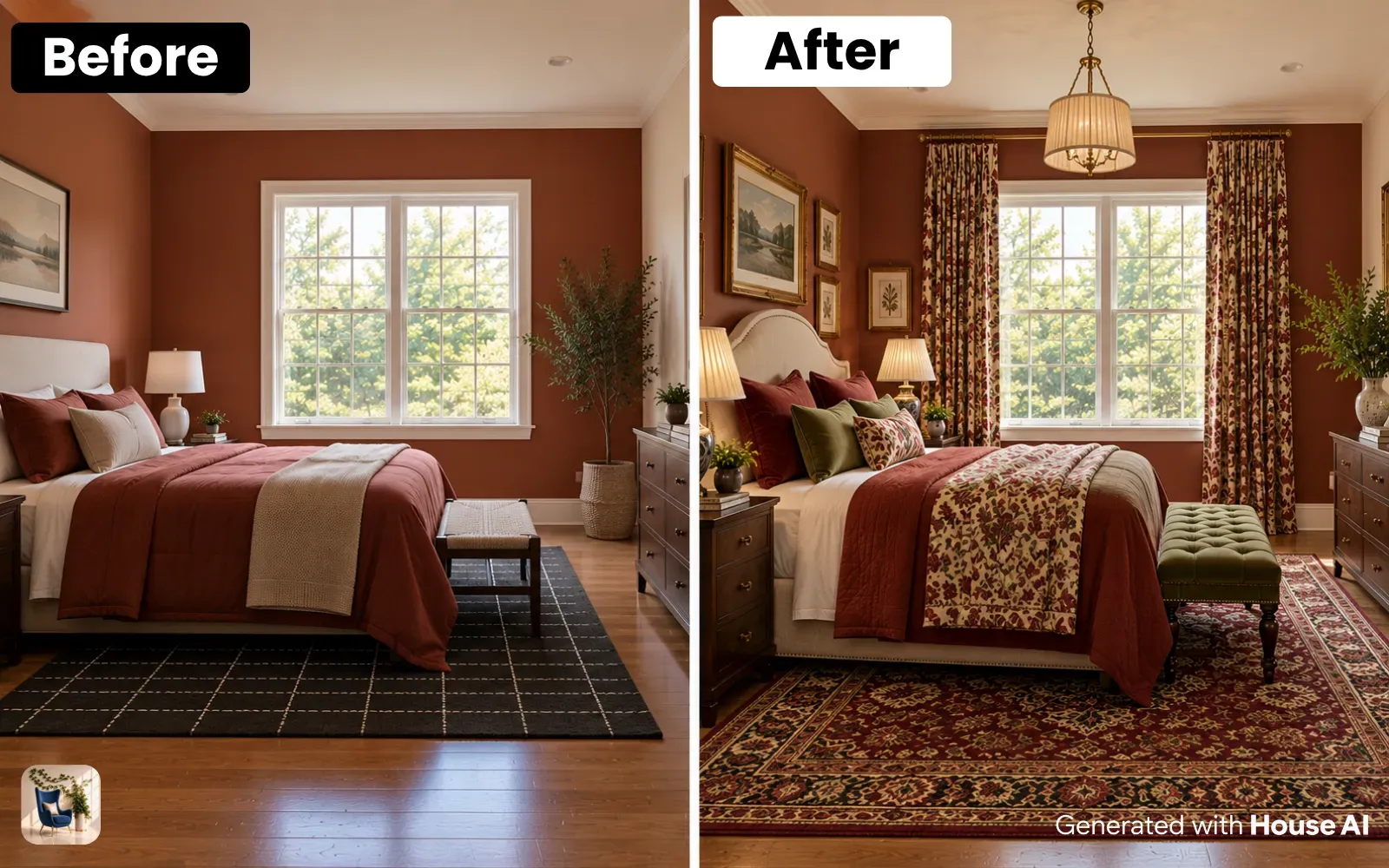
Upload a photo of the room to House AI, set the room type, and describe the traditional look in your own words. Each design takes about 15 seconds, and every user gets 3 free designs a day. AI doesn't measure the room, and small details like carving can drift, so treat the render as a guide to the mood.
Frequently asked questions
Is traditional interior design outdated?
No. It draws on centuries-old designs on purpose, so it doesn't date the way trend-driven styles do. Fresher versions mix in a few clean-lined pieces and lighter walls.
What colors are used in traditional design?
Deep, rich colors like burgundy, forest green, navy, and gold, usually balanced by cream or warm white walls and dark wood.
What is the difference between traditional and Victorian?
Victorian is one specific, very ornate period. Traditional is broader and calmer, borrowing from several 18th and 19th century styles at once.
Can traditional design work in a small room?
Yes. Keep the symmetry, use one pattern in a large scale instead of several, and pick lighter wood or cream upholstery so the room doesn't feel heavy.
Keep reading
- What Is Transitional Interior Design?
- Interior Design Styles Explained: 40 Looks With Real Room Examples
- How Do I Find My Interior Design Style?
- How Do I Mix Wood Tones in a Room?
- Vintage Style
Sources: Chairish, "Traditional Interior Design Guide: Expert Tips & Timeless Ideas," January 9, 2025, updated August 14, 2025. Apartment Therapy, "How We Define 'Traditional' Design," May 15, 2025. Both checked October 17, 2026. House AI figures come from the House AI app.