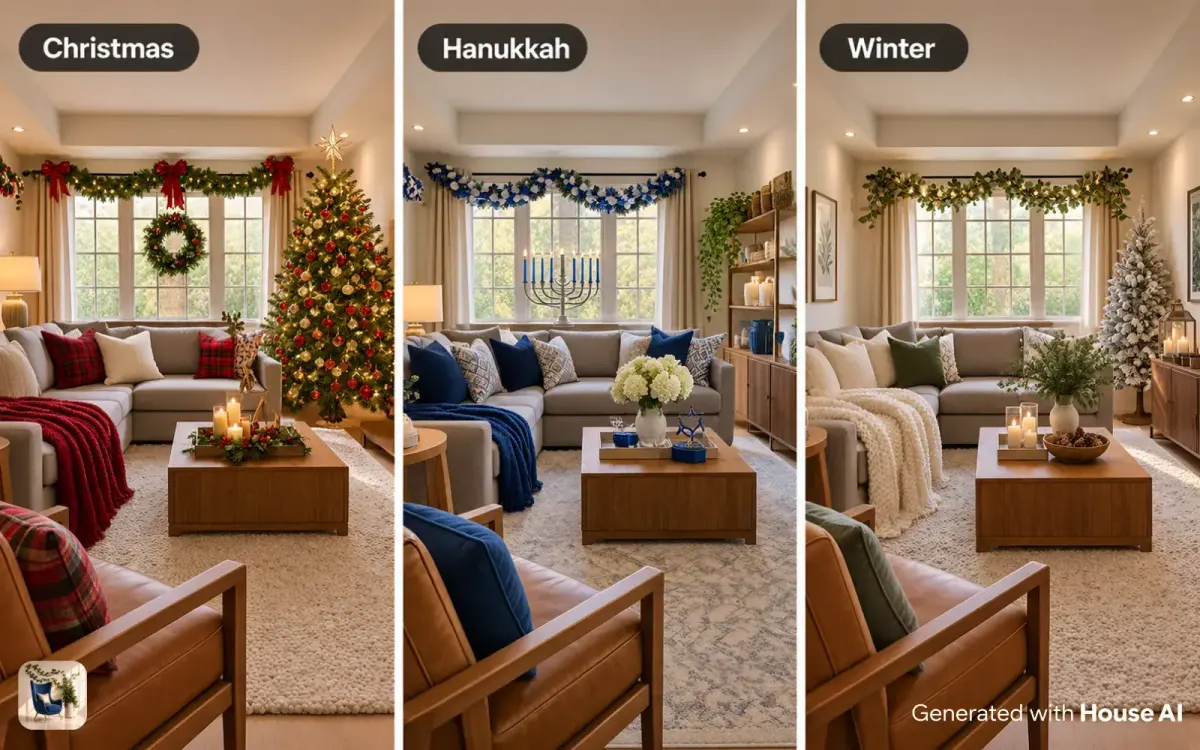
The best holiday decorating ideas for 2026 start with one color palette that you repeat in every room: a tree, greenery, and warm white lights in the living room, a garland in the kitchen, and soft layers in the bedroom. The same method works for Christmas, Hanukkah, or a general winter look. House AI can preview a look on a photo of your room in about 15 seconds.
Holiday decor goes wrong when every room gets a different theme and every shelf gets a little of everything. This guide works room by room and keeps each idea to things you can see in a photo. Every render on this page started as a photo of a real room, with the look described in House AI's Custom style option.
Start with one holiday palette
Choose one palette of three colors and use it in every room you decorate. That single choice does more than any one purchase. Ornaments, ribbon, pillows, candles, and table linens all start to look like they belong together, even when they came from different stores over many years.
Holiday spending adds up fast, so a palette also keeps you from buying things you won't use. The National Retail Federation expected shoppers to spend $890.49 per person on the 2025 holidays, with $262.56 of that going to seasonal items like food or candy, decorations, and greeting cards. Sorting what you already own by color, before you shop, shows you which palette you are halfway to.
| Palette | Colors | Fits | Start with |
|---|---|---|---|
| Classic Christmas | Red, deep green, and gold | Christmas | A green tree, red ribbon, and plaid pillows |
| Blue and silver | Blue, white, and silver | Hanukkah | A silver menorah, blue pillows, and white candles |
| Winter white | Cream, white, and natural wood | Any winter holiday | A eucalyptus garland, knit throws, and pinecones |
| Brown and burgundy | Chocolate brown, burgundy, and brass | Christmas or general winter | Velvet ribbon, brass candlesticks, and dark wood |
| Gold and cream | Gold, cream, and warm white | Christmas, Hanukkah, or New Year's Eve | Gold ornaments, cream linens, and candlelight |
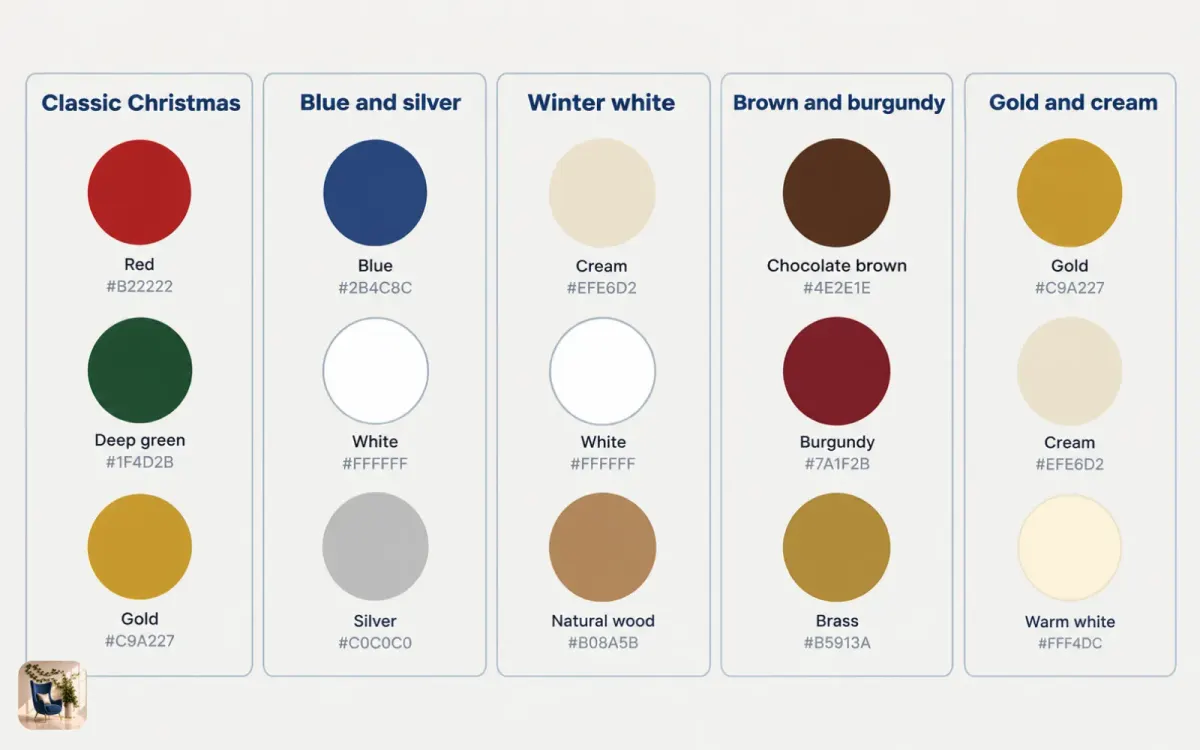
The brown and burgundy palette is the newest of the five. In a 1stDibs survey of 468 design professionals released November 17, 2025, 33% picked chocolate brown as the color they expect to use most in 2026, and burgundy rose from 7% for 2025 to 21% for 2026. Both colors work well with pine green and brass, which makes them an easy update to a classic Christmas box.
Living room: build around the tree and the lights
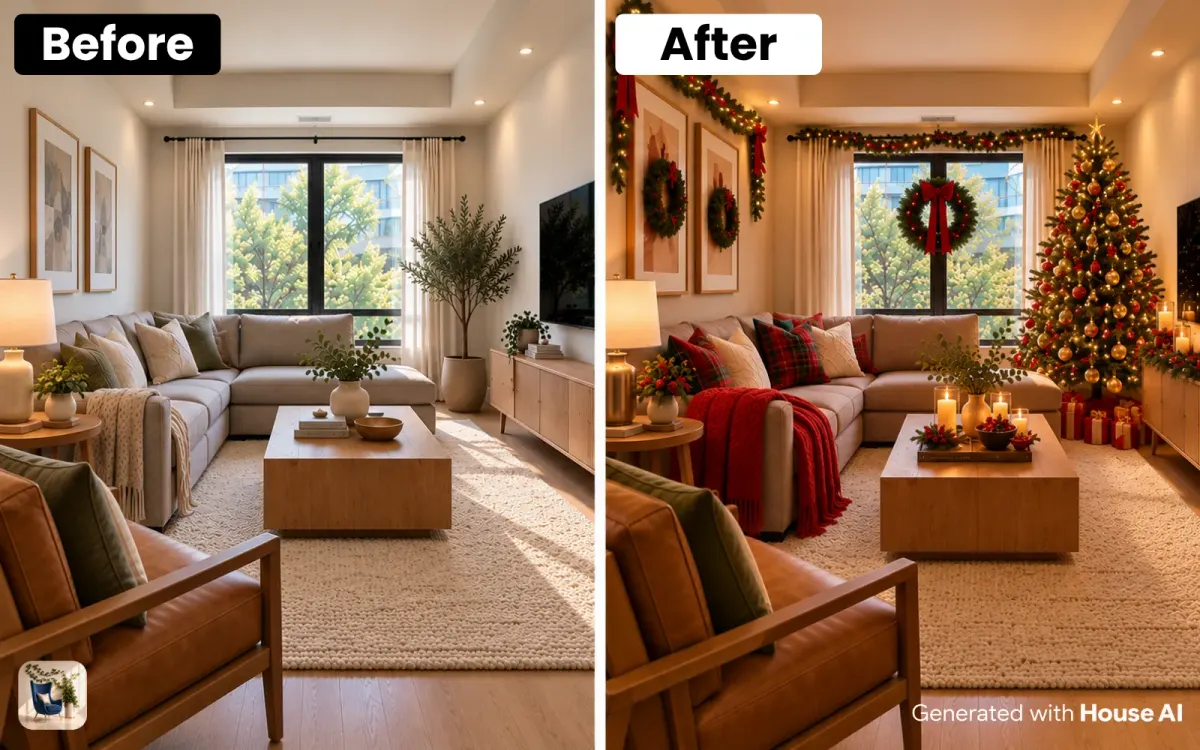
The living room carries most of the holiday look, so start there and put the tree where you already look. A corner near the window works in most rooms because the tree shows from inside and from the street. Keep it clear of heat vents, radiators, and walkways.
Most people who put up a tree now choose an artificial one. The American Christmas Tree Association reported in October 2025 that 83% of households planning to display a Christmas tree would choose an artificial one, based on an Ipsos survey of 1,033 adults. An artificial tree lets you choose the size before the season starts, so measure the ceiling and the floor space first.
Lights come next. Pick one color of light, warm white or multicolor, and use it on the tree, the garland, and any window strands so the room glows evenly. Then work in three heights: the tree tall, a garland at shelf or window height, and candles or a small arrangement on the coffee table. Finish with a pillow and throw swap in your palette colors. It costs little and changes the sofa more than anything else you can add.
Hanukkah: give the menorah the best spot
Hanukkah decor works best when it is built around the menorah. In 2026, Hanukkah begins at sundown on Friday, December 4 and ends Saturday, December 12. The menorah holds a candle for each of the eight nights plus a ninth helper candle, the shamash, so it needs a stable, clear surface.
Tradition places the menorah in a front window so it can be seen from outside. A wide sill or a console table pushed under the window both work. Keep curtains tied back, keep anything paper or fabric well away from the flames, and never leave lit candles alone. Around it, use the blue and silver palette or the gold and cream one: a blue table runner, white candles, and a glass bowl of dreidels. A blue and silver garland on a bookshelf ties the rest of the room in.
If your home celebrates both Christmas and Hanukkah, use a shared winter base of white, silver, and greenery, and give each holiday its own spot. The tree can take one corner and the menorah the window, so neither competes for the same surface.
Kitchen and dining room: greenery and something to eat
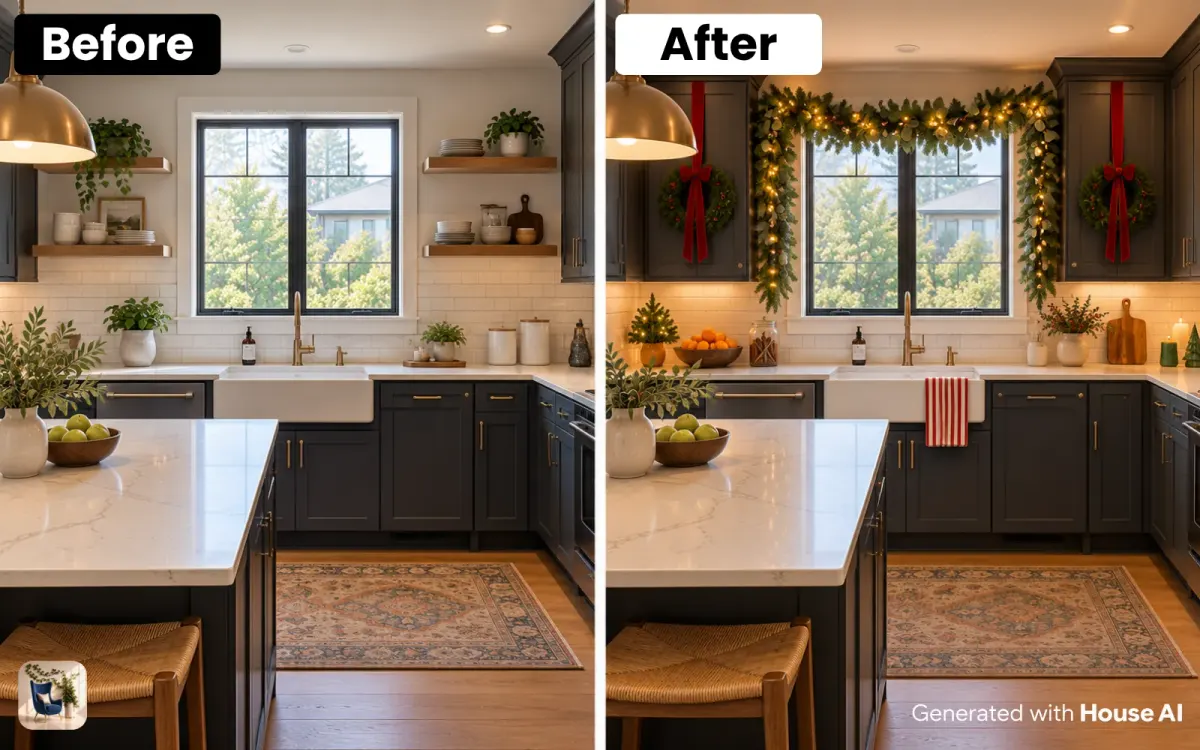
The kitchen needs less than you think, because people spend time there and clutter on the counters gets in the way. Hang one garland over the window or along the top of the upper cabinets. Add small wreaths on two or three cabinet doors with over-the-door hooks or removable adhesive hooks. A wood bowl of clementines or a glass jar of cinnamon sticks adds color you can actually use.
On the dining table, run a line of greenery down the center and set candles in it at different heights. Keep everything low enough that people can see each other across the table. For Hanukkah, the table is a good place for a second, smaller display of dreidels and gelt.
Bedroom and guest room: soft, quiet, and warm
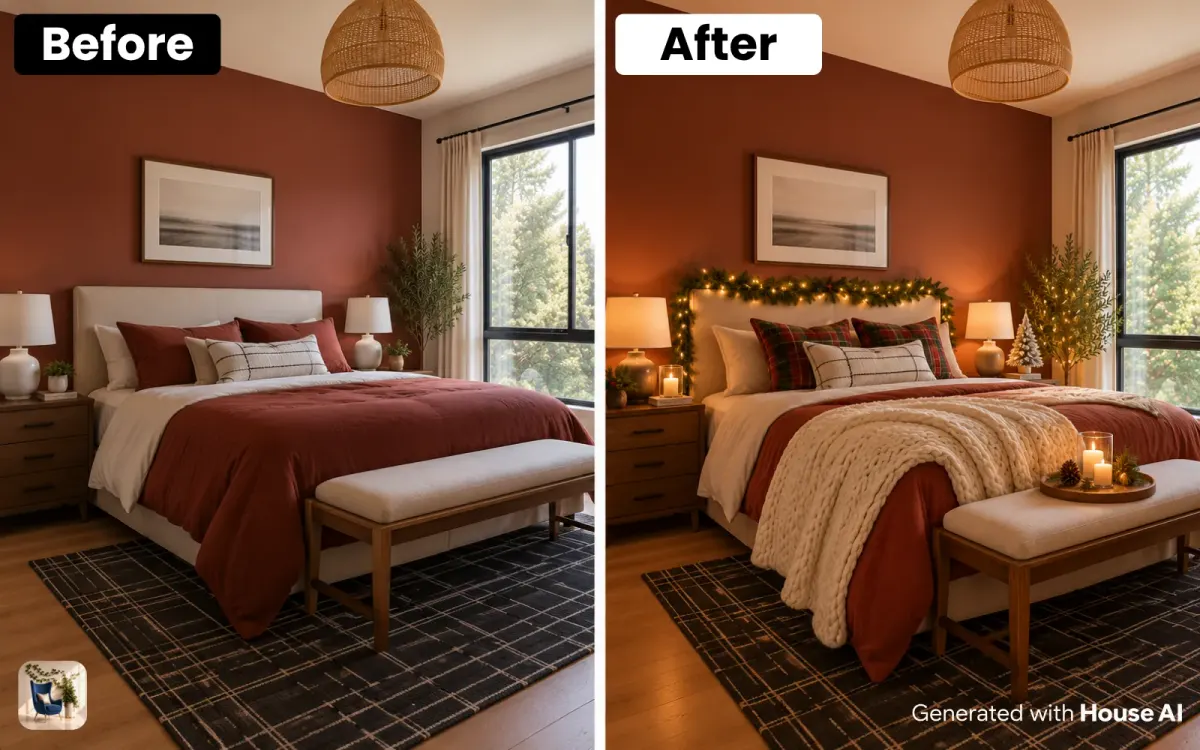
Bedrooms take a lighter touch than living rooms. Swap in a knit or flannel throw and two pillows in your palette, and add one small lit element: a tabletop tree on the dresser, or a short garland on the headboard with battery-powered fairy lights. Battery lights skip the outlet problem and let you switch them off from bed.
Keep the bedside tables clear. A bedroom full of ornaments stops feeling restful, and a guest who is staying over needs somewhere to put a phone and a glass of water.
Holiday decorating ideas for every room
Every room needs only one main idea, and each one can go up without holes in the wall, which matters if you rent.
| Room | Start with | Rental-friendly way to hang it |
|---|---|---|
| Living room | Tree, garland, and a pillow swap | Tension rod or removable hooks for the garland |
| Entryway | Wreath and a small runner | Over-the-door wreath hanger |
| Kitchen | Garland over the window and a citrus bowl | Removable adhesive hooks |
| Dining room | Greenery and candles down the table | Nothing to hang |
| Bedroom | Knit throw and battery fairy lights | Lights wrapped on the headboard |
| Bathroom | Green or red towels and a small wreath | Over-the-door hook on the back of the door |
How to test a holiday look on your own room
A look that works in a store display can feel crowded under your ceiling and in your light. Try it on a photo first, then buy only what you need.
Step 1: Pick one room and one palette
Start with the room guests see first, usually the living room, and choose one palette from the table above. Write down the three colors so you can stick to them.
Step 2: Take one photo in daylight
Stand in a corner with the lights on so two walls, a window, and the floor are in the frame. Clear loose clutter first so the layout is easy to read.
Step 3: Describe the look in House AI
Upload the photo, set the room type, and describe the holiday look in your own words, such as a tree by the window with warm white lights and red and gold ornaments. Each design takes about 15 seconds on average, and every user gets 3 free designs a day.
Step 4: Compare and make a short list
Put the versions side by side and pick the one you keep looking at. List what it uses, then cross off what you already own before you shop.
Step 5: Measure before you buy
Measure the ceiling height, the floor space for the tree, and the length of any window or mantel you plan to drape. Check where the nearest outlets are for the lights.
What a render can't tell you about holiday decor
An AI render shows the mood of a holiday room, and that is its limit. It doesn't measure your space, so a tree that fits the picture may hit the ceiling or block a doorway. Small details like ornaments and ribbon can drift between the render and real life, and string lights glow differently at night than they look on a screen. Colors on screen also differ from fabric and paint in person. Use the render to choose a direction, then shop with a tape measure.
Design any room, shop or space with House AI in about 15 seconds. 1 free design a day.
Get Started TodayFrequently asked questions
When does Hanukkah start in 2026?
Hanukkah 2026 begins at sundown on Friday, December 4 and ends Saturday, December 12. Set up the menorah before the first night.
What are the holiday decor colors for 2026?
Red, green, and gold are still the classic Christmas palette. For something newer, chocolate brown and burgundy are rising: 33% of designers in the 1stDibs 2026 survey picked chocolate brown, and 21% picked burgundy.
How do you decorate for Christmas and Hanukkah in the same home?
Use a shared winter base of white, silver, and greenery, then give each holiday its own spot. The tree can take a corner while the menorah takes the front window.
How can I decorate for the holidays in a rental?
Use removable adhesive hooks, tension rods, and over-the-door hangers instead of nails. Battery fairy lights avoid extension cords across the floor.
Are artificial Christmas trees more common than real ones?
Yes. The American Christmas Tree Association reported in October 2025 that 83% of households planning to display a tree would choose an artificial one.
Keep reading
- Halloween Style
- Decorating Rental Apartments Without Permanent Changes
- Dining Room Design Ideas for Entertaining Guests
- 50 Interior Design Ideas for Every Room (2026)
Sources: National Retail Federation, "Consumers to Spend Second-Highest Amount on Record, According to NRF Holiday Survey," October 16, 2025. American Christmas Tree Association, "Survey Finds Artificial Christmas Trees Continue to Dominate U.S. Holiday Décor," October 21, 2025. 1stDibs, "2026 Interior Design Trends: 1stDibs Survey Identifies Maximalism, Chocolate Brown, and Vintage Antiques as Top Designer Choices," November 17, 2025. Farmers' Almanac, "When Is Hanukkah 2026? Dates, History, Recipes, and Traditions," updated August 19, 2026. All checked October 3, 2026. House AI figures come from the House AI app.