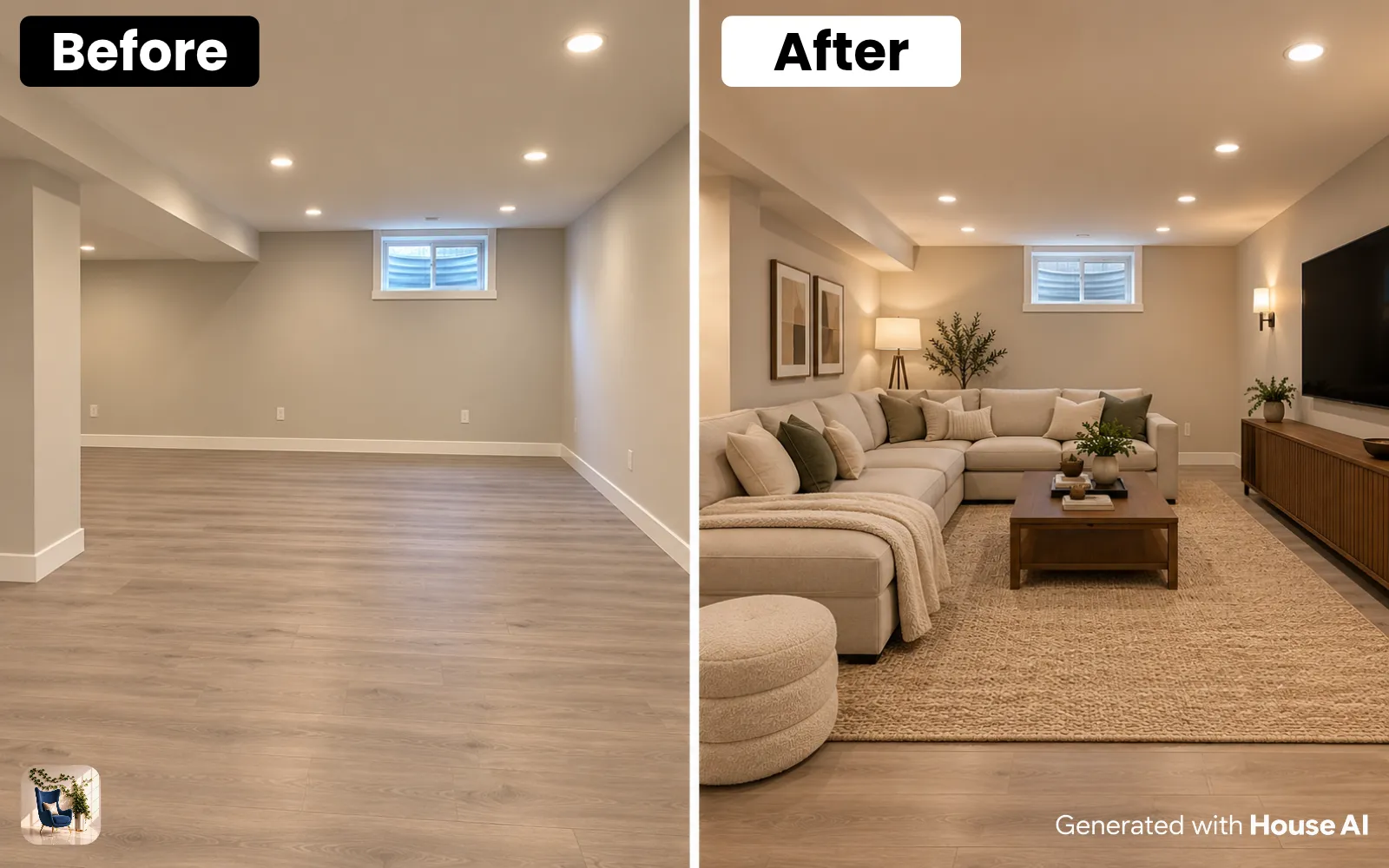
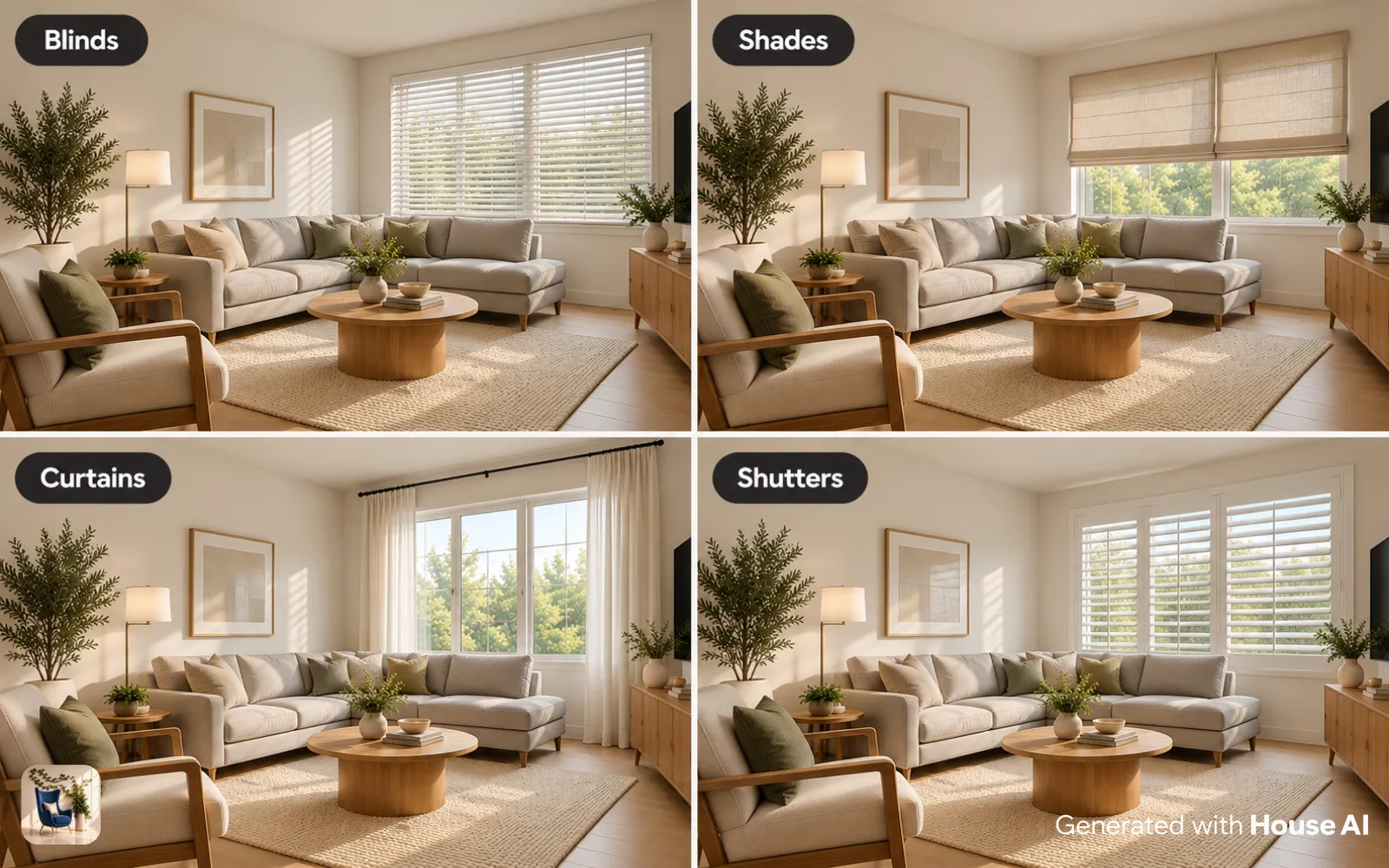
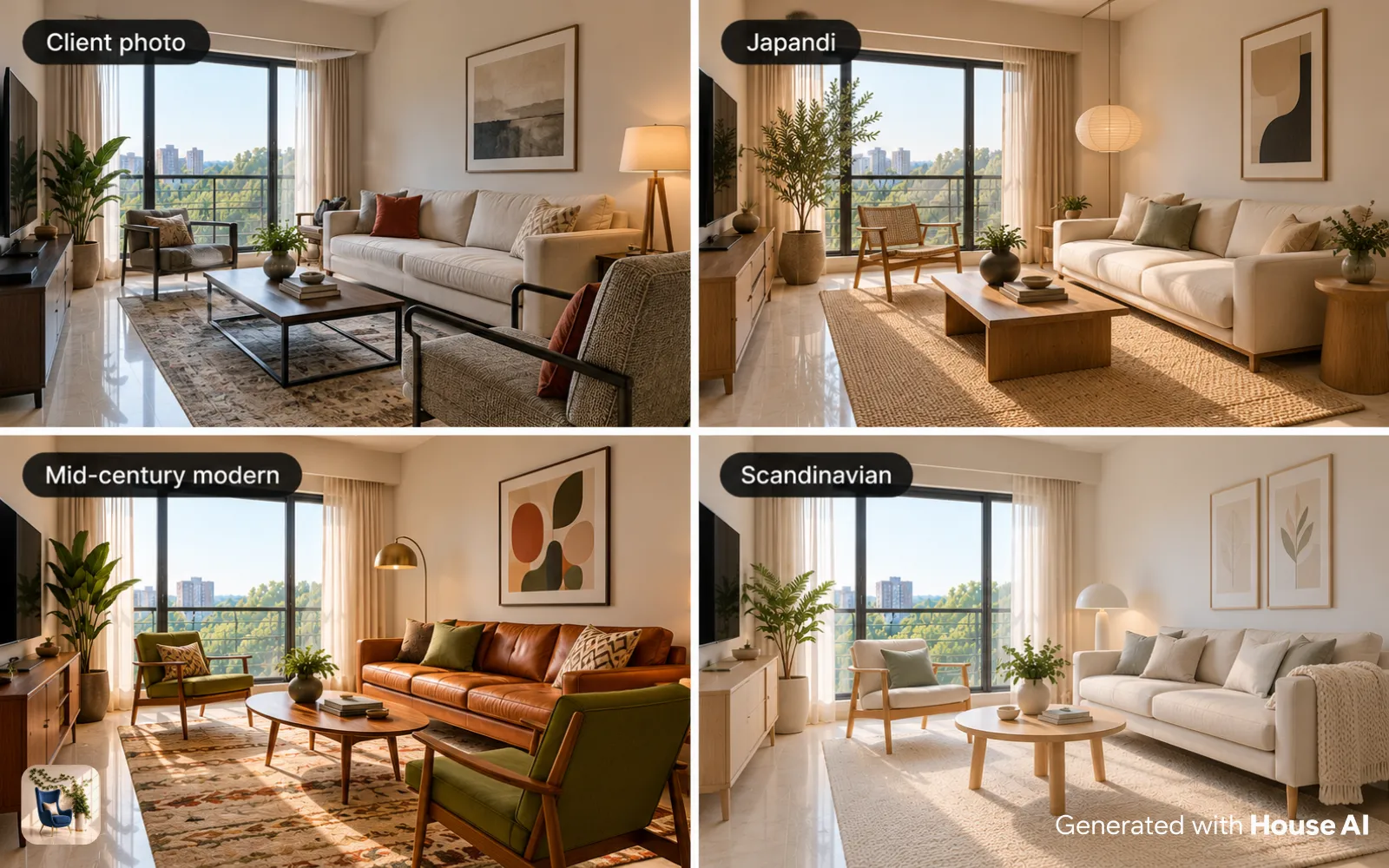
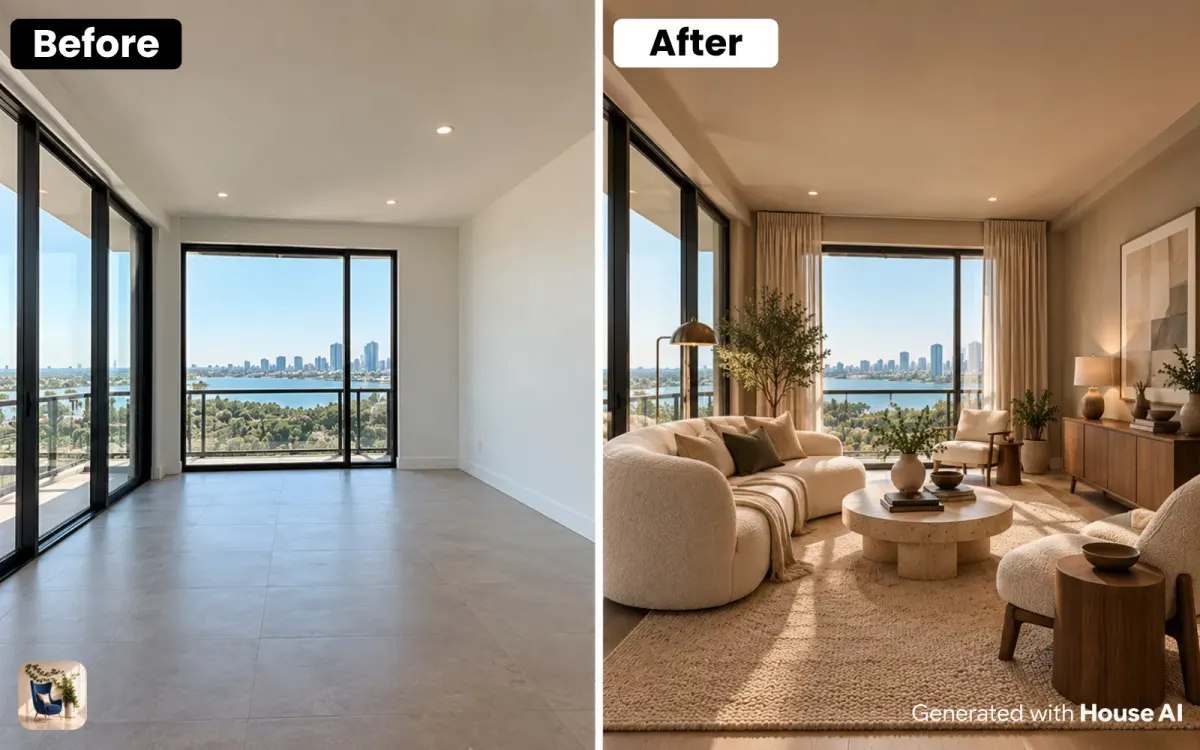
Luxury interior design in 2026 shows up in materials, age, and commitment more than in shine. Solid wood, stone, and wool, a vintage or antique piece in every room, curved furniture, and one color across walls and trim all read as expensive. In a 1stDibs survey, 85% of designers sourced vintage pieces. House AI can show these ideas on a photo of your own room in about 15 seconds.
For years, luxury meant gloss: mirrored furniture, crystal, and a lot of gold. Designers now spend their clients' money differently. This guide covers the signals that read as luxury today, what the designer data says about each one, and how to try them at home before you buy anything.
What luxury interior design means in 2026
Luxury interior design is a room where the materials, the craft, and the editing all look deliberate. Price still matters, but price alone doesn't make a room read as expensive. An expensive sofa in a cluttered room with harsh overhead light looks worse than a well-made vintage chair in a calm room with good lamps.
The shift is toward things that can't be bought in one trip. Antiques, custom upholstery, plaster walls, and stone take time to find or make. That scarcity is the signal. Shiny finishes and logos are easy to copy, so they stopped meaning much. When people say a room "feels expensive," they usually mean it looks collected, touchable, and finished to the edges, with nothing that looks like a placeholder.
Seven signals that read as luxury now
Most luxury rooms share a handful of details. Use this table to spot them, and to see what tends to cheapen a room instead.
| Signal | What it looks like | What reads as less expensive |
|---|---|---|
| Real materials | Solid wood, stone, wool, linen, and unlacquered brass | Printed laminate, shiny polyester, and plastic made to look like metal |
| Age and history | At least one vintage or antique piece in each room | Every piece bought new from one store in one weekend |
| Custom-looking shapes | Curved sofas, skirted chairs, and irregular rugs | Boxy matching sets from one collection |
| Committed color | One color carried across walls, trim, and sometimes the ceiling | Four accent colors fighting on beige walls |
| Finished walls and ceilings | Upholstered or paneled walls and papered ceilings | Flat paint everywhere with a single feature wall |
| Layered light | Lamps at several heights, on dimmers, with warm bulbs | One bright ceiling fixture doing all the work |
| Room to breathe | Fewer objects, each one chosen | Shelves packed with small decor |
Old pieces are the new status symbol
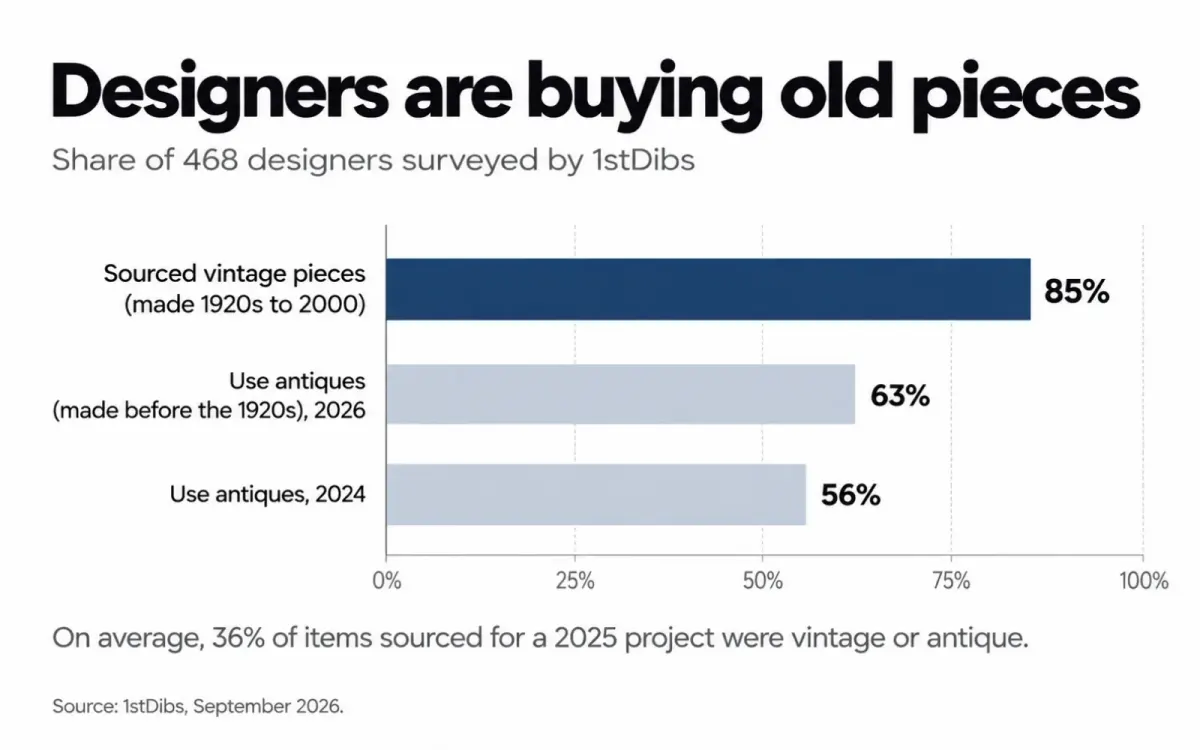
Vintage and antique furniture is the clearest luxury signal in the designer data. In the 1stDibs survey of 468 design professionals, released November 17, 2025, 85% of designers said they sourced vintage pieces, meaning items made between the 1920s and 2000. The share using antiques, made before the 1920s, rose from 56% in 2024 to 63% for 2026.
Old pieces also make up a real part of each project. The same survey found that on average 36% of all items sourced for a project in 2025 were vintage or antique. Age reads as luxury for a simple reason. A 1960s walnut credenza or a 19th-century mirror can't be ordered in bulk, so it tells visitors the room was put together with care. Age also adds wear and patina that new furniture can't fake. You don't need a room full of antiques. One old piece per room, placed where you see it first, does most of the work.
Shapes and surfaces that look custom
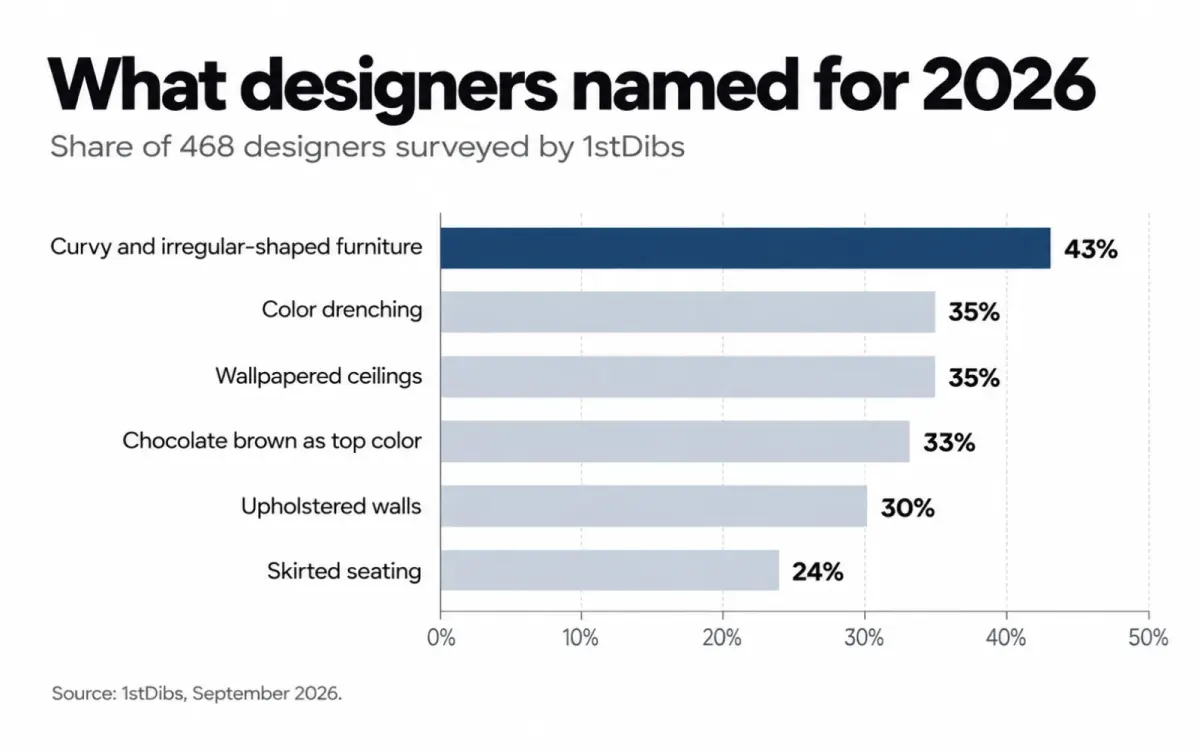
Curves, soft walls, and saturated color are the next signals, because they look made for one room. In the same 1stDibs survey, 43% of designers named curvy and irregular-shaped furniture as a trend for 2026, and 24% named skirted seating. A curved sofa can't be pushed flat against a wall, so it tells you someone planned the room around it.
Walls and ceilings are getting the same attention. 35% of designers cited color drenching, which means painting the walls, trim, and often the ceiling in one color. 30% noted upholstered walls, and 35% expect wallpapered ceilings to grow. Color itself has warmed up too: 33% of the designers named chocolate brown as the top trending color. These choices take commitment, and that is why they read as expensive. A room with one deep color on every surface looks finished in a way that a single accent wall never does.
Where quiet luxury fits
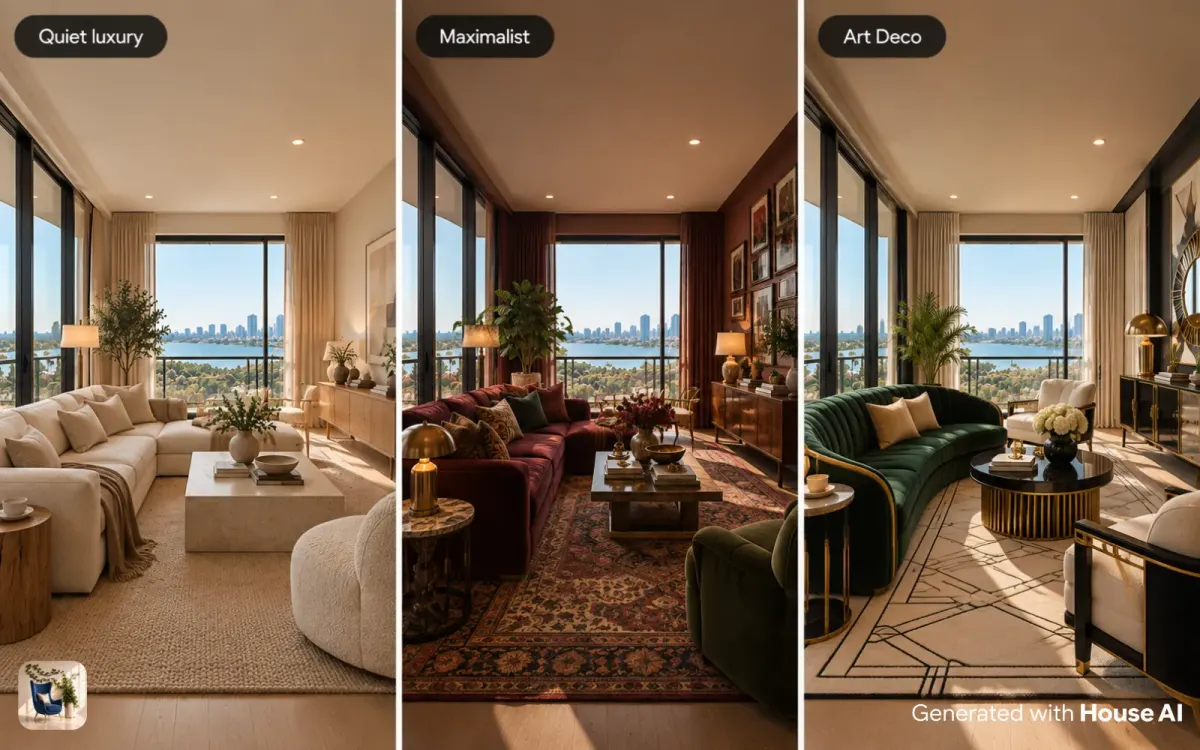
Quiet luxury is one version of luxury interior design, the calm and neutral one. It uses cream, camel, and stone colors, very good fabrics, and almost no visible branding. Everything in this guide works inside it, but luxury in 2026 is broader. A chocolate brown drenched library with an antique desk and a burgundy velvet sofa is luxurious and not quiet at all. If the calm neutral version is the look you want, our quiet luxury answer page covers its colors and materials in detail.
What luxury interior design costs
Designer fees for luxury work often scale with the size of the budget. Angi's 2026 cost guide, updated August 31, 2026, puts the national average cost to hire an interior designer at $8,550, based on 2,938 projects, with most homeowners paying between $2,055 and $15,256. Angi lists project percentage pricing, 10% to 30% of the total, as the model for high-end, large, or luxury renovations.
| Pricing model | Typical cost in 2026 | Best for |
|---|---|---|
| Hourly | $100 to $500 per hour | Consultations and small projects |
| Flat fee | $2,000 to $12,000 | Full-service work with a clear scope |
| Per square foot | $5 to $17 per sq. ft. | Larger rooms or new construction |
| Project percentage | 10% to 30% of the total | High-end, large, or luxury renovations |
If you are doing it yourself, spend where your hands go. The sofa, the rug, the curtains, and the bed linen get touched every day, and cheap versions show it fast. Save on side tables, decor, and anything that sits on a shelf.
How to make a room look more expensive
You can get most of the luxury signals without a full renovation. Work through these steps in order, because each one makes the next cheaper.
Step 1: Take things away first
Clear every surface, then put back only what you use or truly like. Empty space costs nothing and is the fastest way to make a room look calmer and more considered.
Step 2: Pick one color and commit
Choose one color for the walls and paint the trim to match, or go a shade darker. Deep browns, greens, and warm taupes work well in living rooms and bedrooms. Test a large sample on two walls and look at it in daylight and at night.
Step 3: Upgrade what you touch
Put the budget into the sofa fabric, a wool rug, and full-length linen curtains hung close to the ceiling. These pieces cover the most area and get the most contact.
Step 4: Add one old piece and fix the light
Find one vintage or antique piece for the room, like a wood cabinet, a mirror, or a chair. Then add two or three lamps at different heights with warm bulbs and turn the ceiling light off in the evening.
Step 5: Test the plan on a photo in House AI
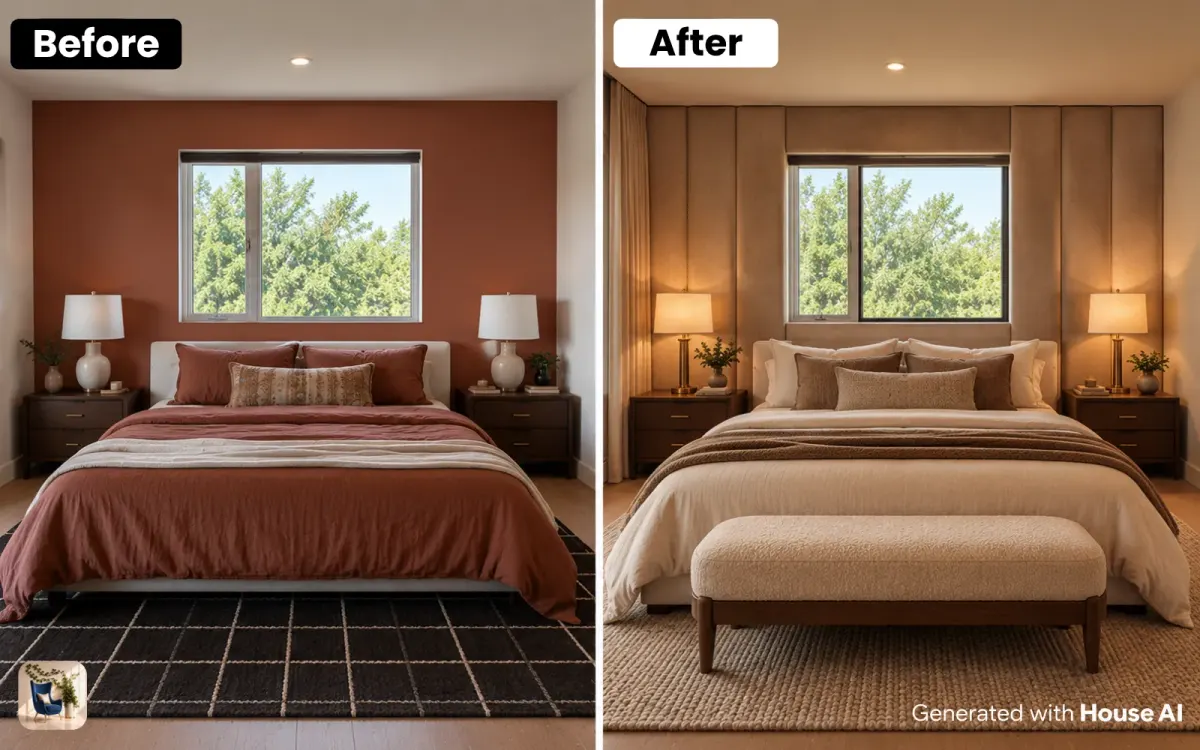
Upload a photo of the room to House AI, set the room type, and pick a style from the grid or describe the luxury look you want in your own words. Each design takes about 15 seconds on average, and every user gets 3 free designs a day. Try the same room in a light version and a dark version before you pick a paint color.
What AI can't tell you about luxury
An AI render shows the mood of a luxury room, but it can't show quality. It won't tell you whether a sofa is hardwood or particleboard, or whether a brass lamp is solid or plated. It doesn't measure your room, so a curved sofa that looks right in the picture may not clear the doorway, and small details can drift between the render and real life. Use the render to choose a direction. Then check materials in person, order samples, and bring a tape measure.
Design any room, shop or space with House AI in about 15 seconds. 1 free design a day.
Get Started TodayFrequently asked questions
What is luxury interior design?
Luxury interior design is a room built from well-made materials, carefully chosen pieces, and deliberate finishes. In 2026 that usually means solid wood, stone, vintage or antique furniture, curved shapes, and layered lighting rather than gloss and logos.
What makes a room look expensive?
Real materials, fewer objects, one color carried across walls and trim, and good lamps instead of a single ceiling light. One vintage or antique piece per room also helps, and 85% of designers in the 1stDibs survey sourced vintage pieces.
Is quiet luxury still in style in 2026?
Yes, as one option. The calm, neutral look still works, but designers are also choosing warmer and bolder versions of luxury, with chocolate brown walls, curved furniture, and antiques.
What colors look the most luxurious?
Deep, warm colors read as expensive when they cover the whole room. 33% of the designers in the 1stDibs 2026 survey named chocolate brown as the top trending color.
Can AI design a luxury room?
AI can show how a luxury style looks on a photo of your room. House AI redesigns the photo in about 15 seconds, but it can't judge material quality or measure your space.
Keep reading
- What Is Quiet Luxury Interior Design?
- Interior Design Trends 2026
- What Does Interior Design Cost in 2026?
- How to Choose the Perfect Lighting for Every Room
- Mid-Century Modern Style
Sources: 1stDibs, "2026 Interior Design Trends: 1stDibs Survey Identifies Maximalism, Chocolate Brown, and Vintage Antiques as Top Designer Choices," November 17, 2025. Angi, "How Much Does an Interior Designer Cost?", updated August 31, 2026. Both checked September 28, 2026. House AI figures come from the House AI app.