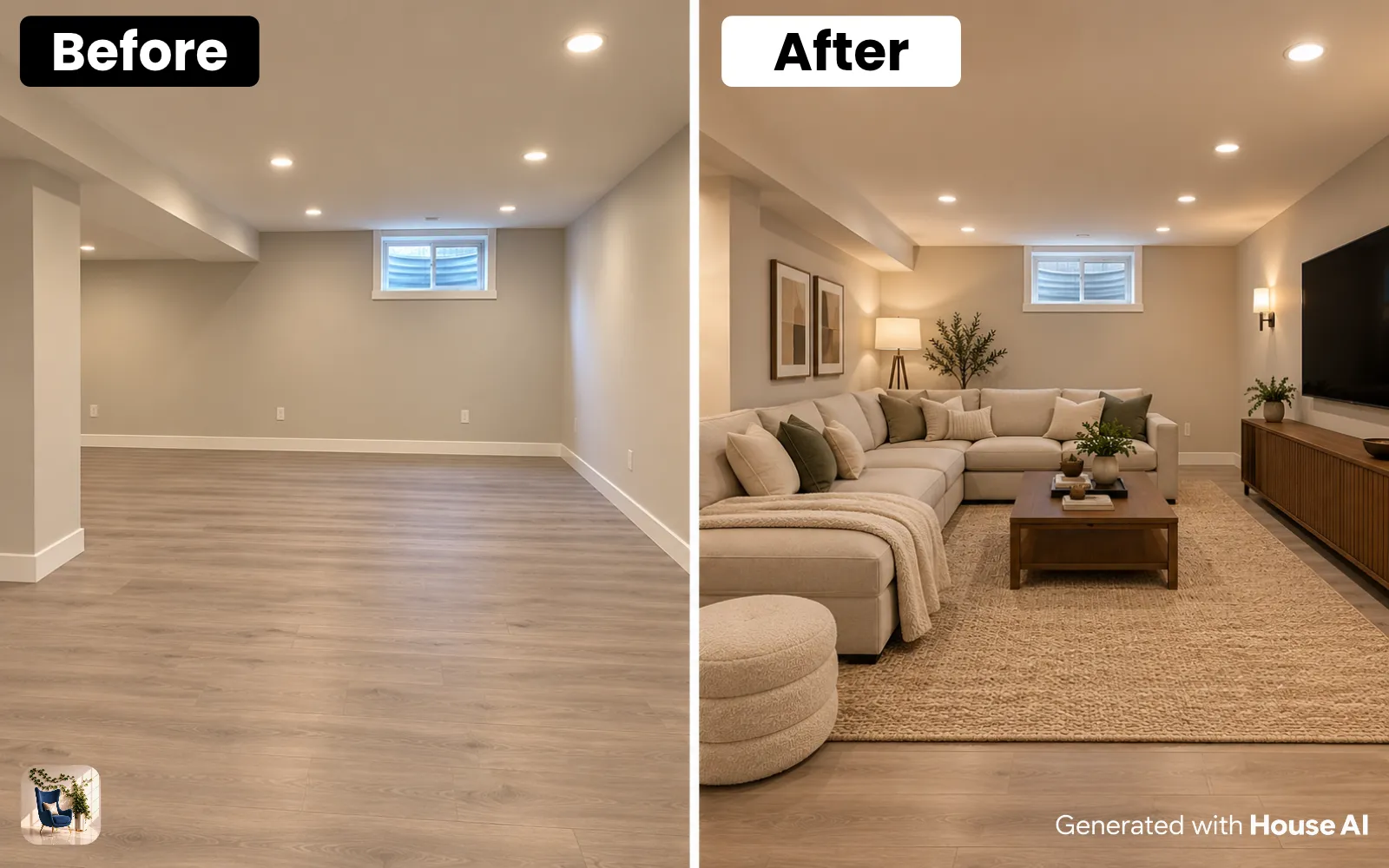
The home staging tips that matter most are to declutter, deep clean, depersonalize, and stage the living room, primary bedroom, and kitchen first. In NAR's 2025 Profile of Home Staging, 91% of sellers' agents recommended decluttering. Then add bright light, neutral paint, and a tidy entry. House AI can preview a staging plan on a photo of your real room in about 15 seconds.
Staging helps a buyer picture their own life in your house. Most of it costs time, not money. This guide covers the physical work you can do yourself, in the order that pays off, with figures from the National Association of Realtors.
Which rooms to stage first
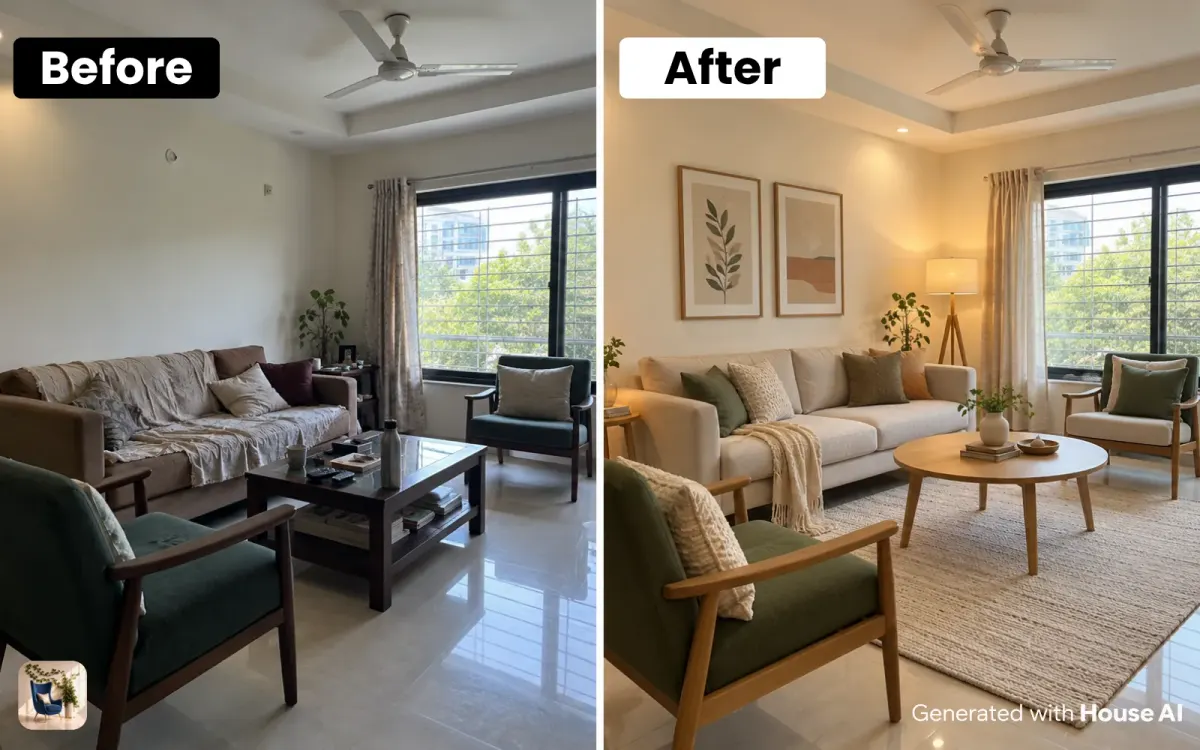
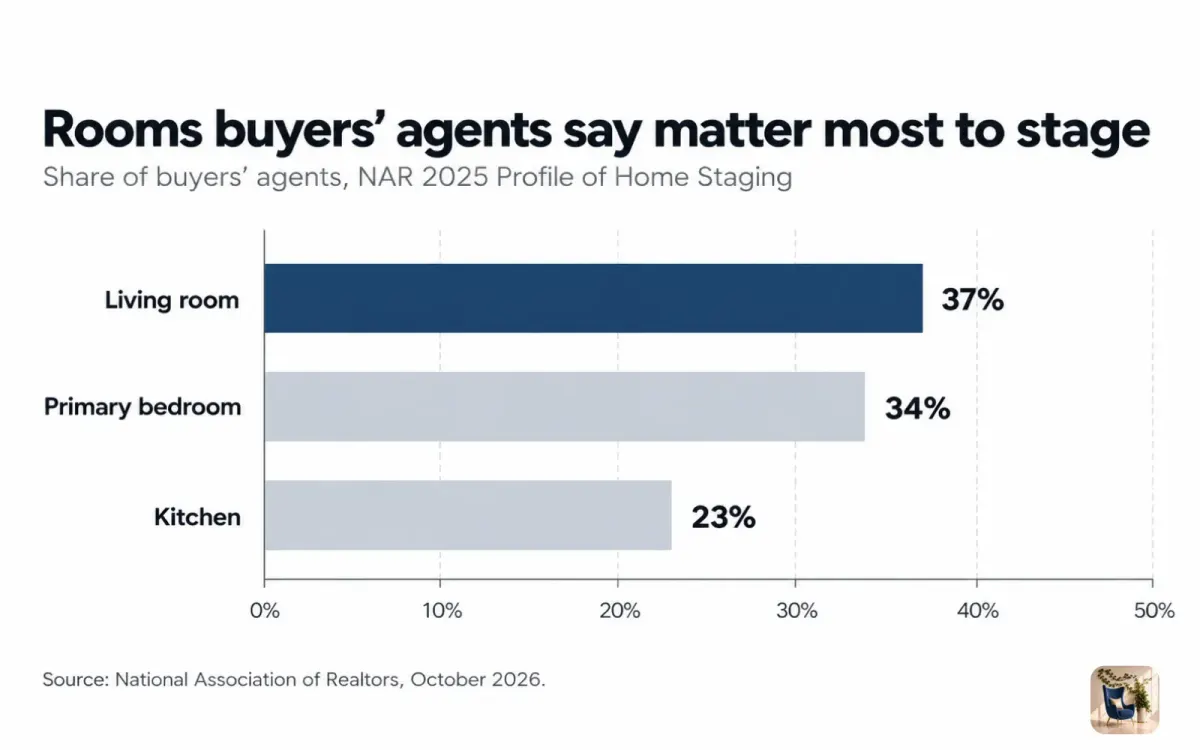
Stage the living room first, then the primary bedroom, then the kitchen. Those are the three rooms buyers' agents called most important to stage in NAR's 2025 Profile of Home Staging: the living room at 37%, the primary bedroom at 34%, and the kitchen at 23%.
Sellers' agents work the same way in practice. Of the rooms they staged, the living room came first at 91%, then the primary bedroom at 83%, the dining room at 69%, and the kitchen at 68%. If your time is short, do those rooms well and keep the rest clean and clear. A spare room can stay simple as long as it has one clear purpose. A bed and a lamp say guest room. A desk and a chair say office.
Declutter and clean before you buy anything
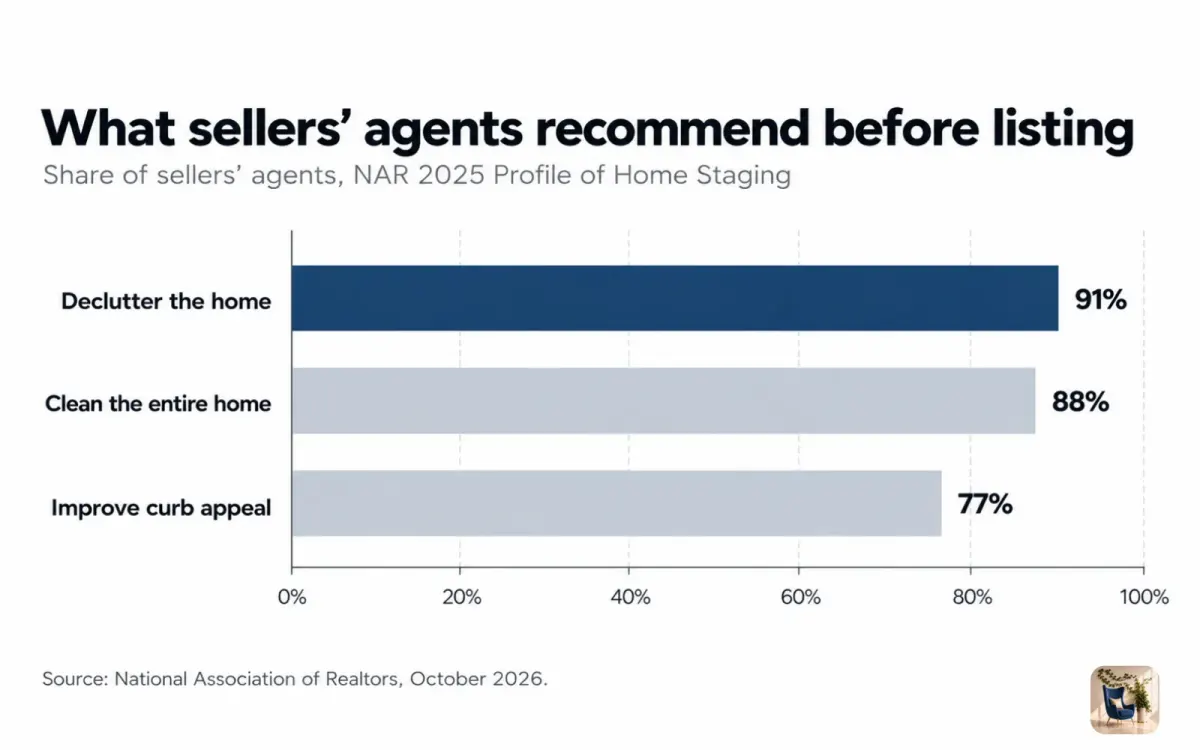
Decluttering is the first job and the one agents push hardest. In the same NAR survey, 91% of sellers' agents recommended decluttering, 88% recommended cleaning the entire home, and 77% recommended improving curb appeal. None of the three needs new furniture.
Work one room at a time. Clear every flat surface down to a few objects, then open the closets and cabinets, because buyers will. Pack away extra chairs, side tables, and anything that narrows a walkway. Stack the boxes neatly in the garage or a storage unit. Then clean the things a camera picks up: windows, light fixtures, grout, baseboards, and the inside of the oven.
Depersonalize without making the house feel empty
Depersonalizing means removing the things that say who lives there now, so a buyer can picture themselves instead. Family photos, kids' art on the fridge, collections, and sports memorabilia go into boxes. Keep a few neutral pieces that make the room feel cared for, such as a plant, a bowl, a short stack of books, or a throw on the sofa.
Stop before the room looks vacant. A room stripped bare reads as empty in photos, which makes its size harder to judge. NAR found that 83% of buyers' agents said staging made it easier for a buyer to visualize the property as a future home, and that only works when there is something to see.
Bring in as much light as the room allows
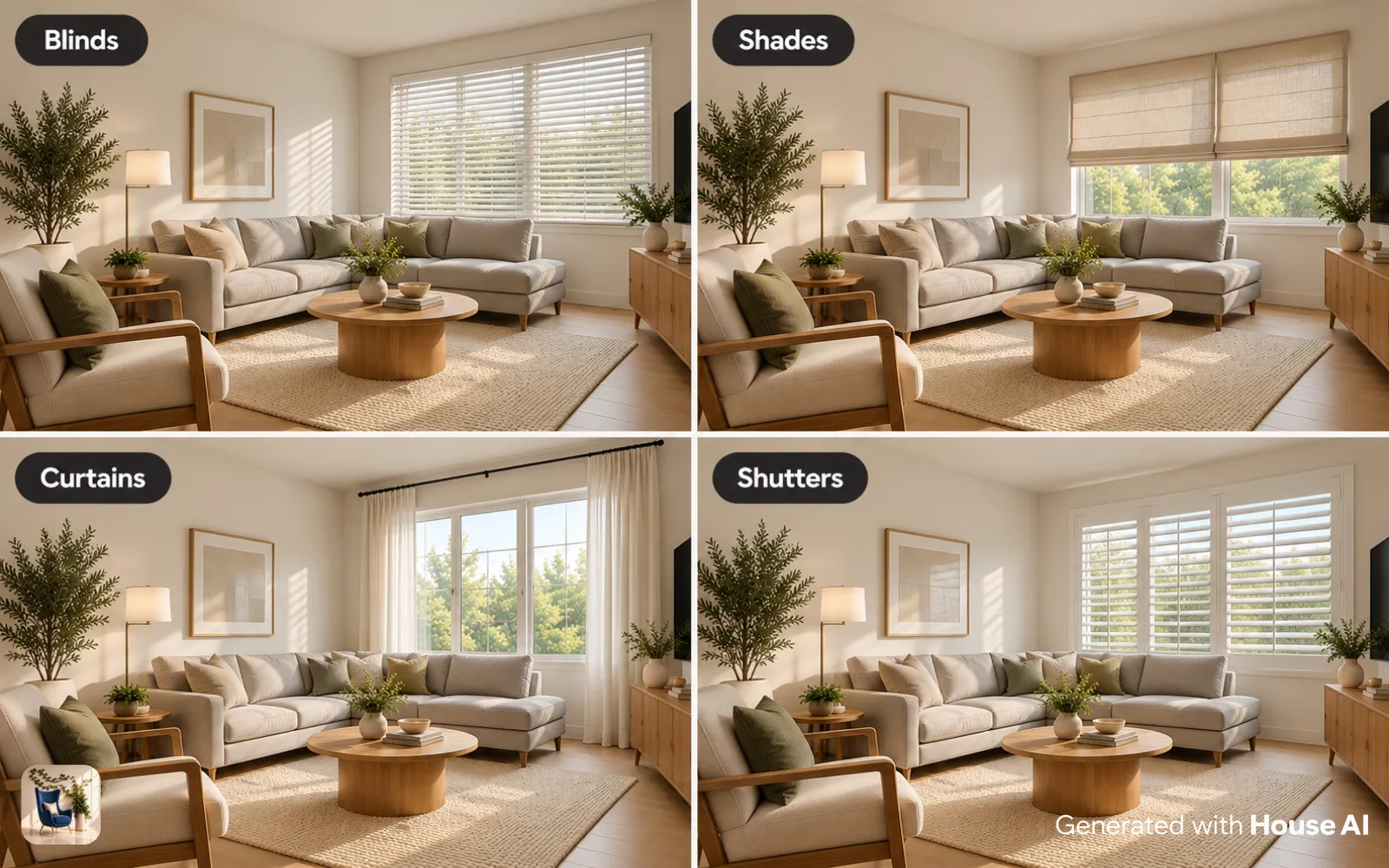
Bright rooms look bigger and cleaner, so open every curtain and blind before a showing and before the photographer arrives. Replace burned-out and mismatched bulbs so every lamp in a room gives the same color of light. Turn on every lamp and overhead light for showings, even in the daytime.
Take down heavy drapes that cover the top of a window, and pull furniture away from windows so light reaches the floor. A dark corner usually needs a floor lamp, not a new paint color. A mirror across from a window bounces daylight deeper into the room.
Use neutral paint where the walls are loud
Repaint only the walls that will distract a buyer. A bright accent wall, a mural in a kid's room, or a dark color in a small room are the usual targets. Warm whites, soft grays, and light greige suit most furniture, and they look consistent from room to room in listing photos.
Touch up scuffs and nail holes everywhere else. Paint looks different on a screen than on a wall, so brush a sample onto the wall and check it in morning and evening light before you buy gallons.
Fix curb appeal, since it is the first photo
Curb appeal decides whether a buyer wants to come inside, and the front of the house is usually the first listing photo. Start with what costs little. Mow, edge, and weed, trim shrubs back from the windows, sweep the walk, and wash the front door. Then replace a worn doormat, straighten or replace the house numbers, and set two potted plants by the door.
Repair anything that looks broken, like a sagging gutter or a cracked porch light. Buyers read small repairs as signs of bigger ones.
Staging priorities by room
Use this table to plan each room. It runs in the order above, starting with the rooms buyers' agents ranked highest.
| Room | Do this | Skip this |
|---|---|---|
| Living room | Clear the surfaces, add one rug and a floor lamp, and leave walkways open | Extra chairs, stacks of media, and oversized furniture |
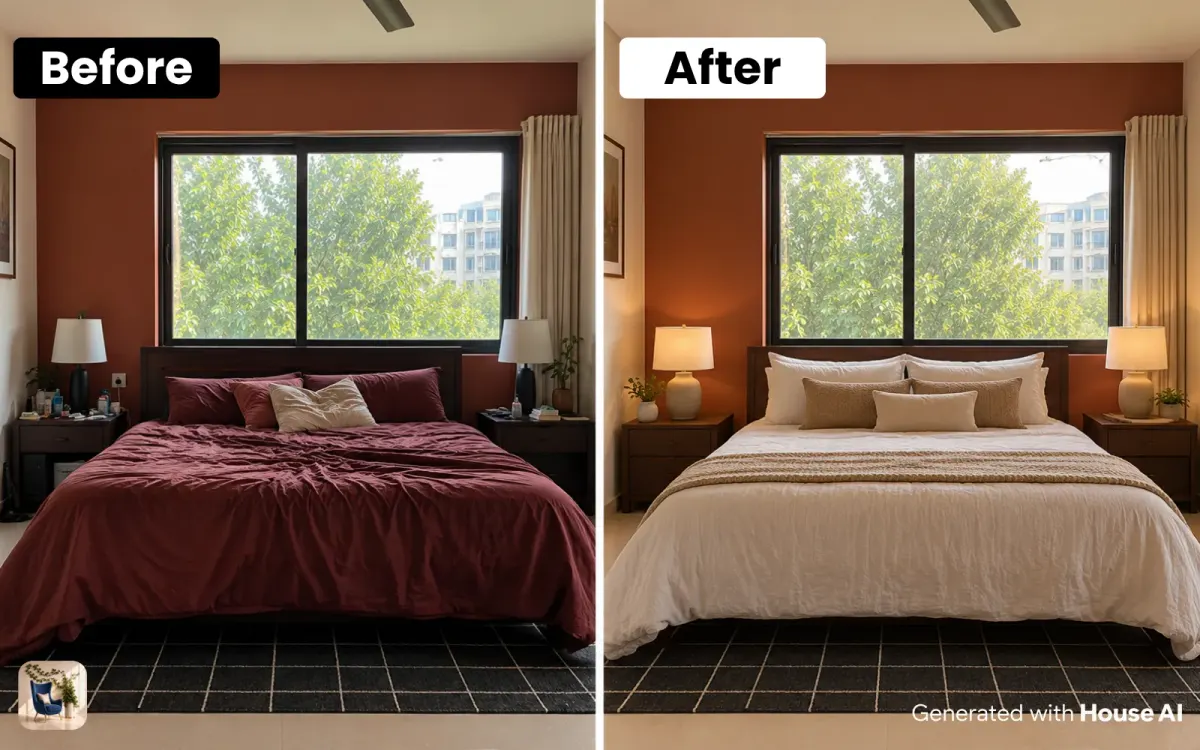
| Primary bedroom | Plain light bedding, matching lamps, and clear nightstands | Clothes on chairs, exercise gear, and a desk that crowds the bed |
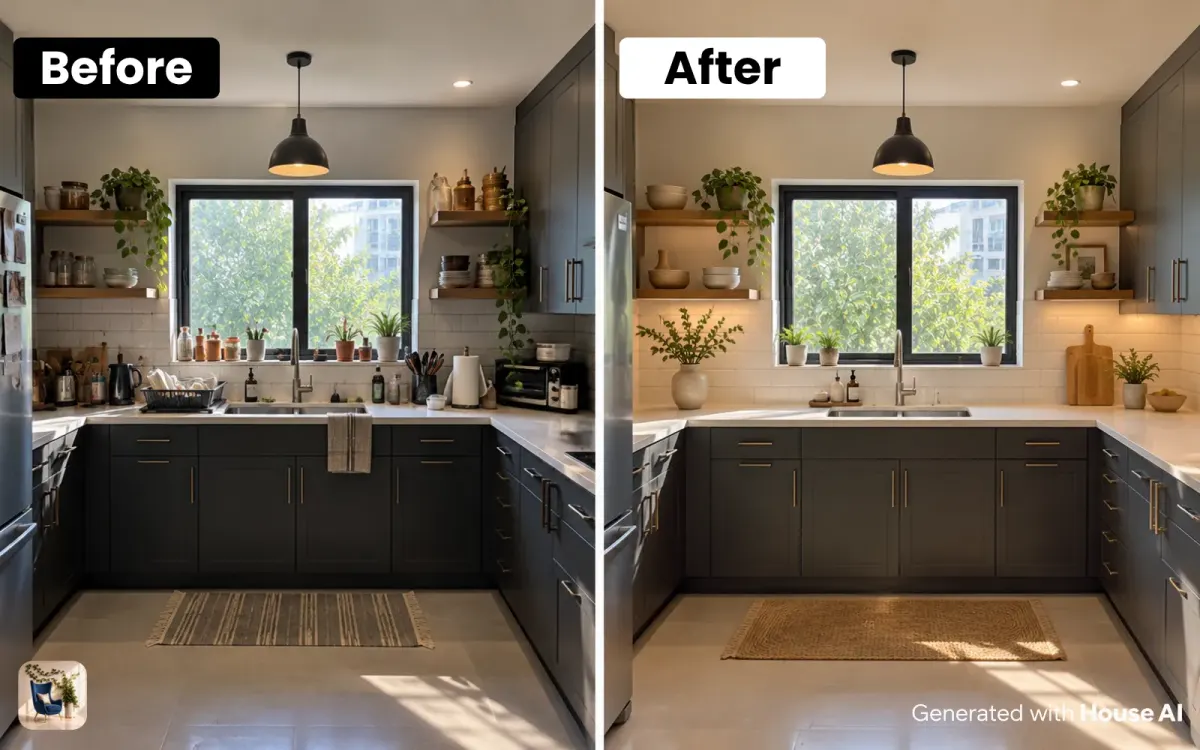
| Kitchen | Nearly empty counters, clean appliances, and one bowl of fruit | Small appliances, fridge magnets, and dish racks |
| Dining room | A bare or simply set table with the chairs pushed in | Piles of mail and a crowded sideboard |
| Bathrooms | Fresh white towels, a new shower curtain, and empty counters | Toiletries and worn bath mats |
| Entry and front door | A clean door, a new mat, and a working light | Shoes, coats, and bags by the door |
| Spare room | One clear purpose, such as a guest room or an office | Storage boxes and overflow furniture |
How to plan your staging in a weekend
You can do most of this yourself over two days. This order keeps you from buying things you don't need.
Step 1: Walk the house like a buyer
Start at the curb and walk in through the front door with a notepad. In each room, write down every object that catches your eye, then circle the ones that belong to your life rather than to the house.
Step 2: Declutter and pack
Box up everything you circled, plus extra furniture and anything on the floor that isn't a rug. Label the boxes by room so moving day is easier.
Step 3: Clean from top to bottom
Clean each room from the ceiling down so dust falls onto surfaces you haven't done yet. Finish with the windows, inside and out.
Step 4: Preview the staged rooms in House AI
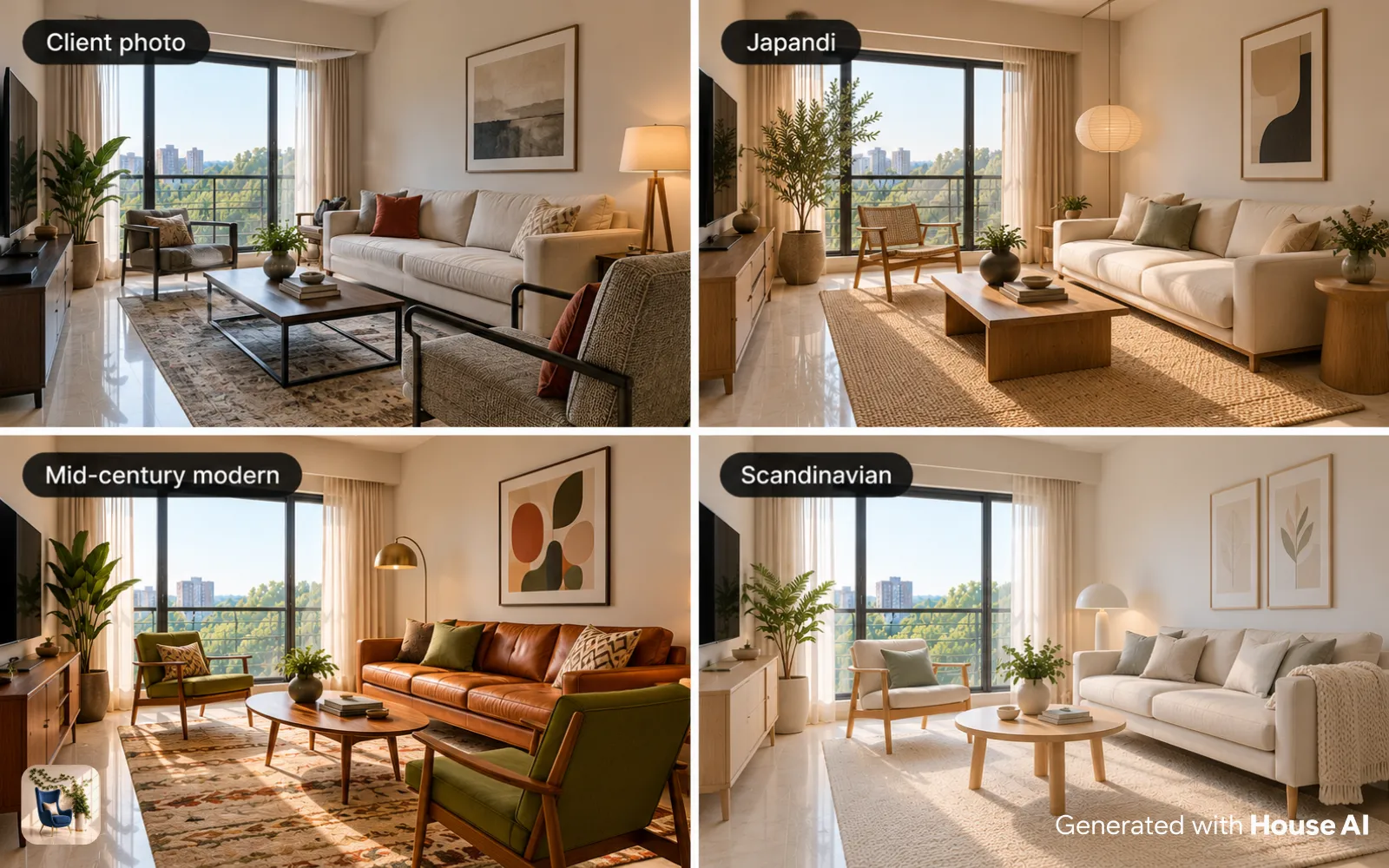
Photograph each main room from a corner in daylight. Upload the photo to House AI, set the room type to living room, bedroom, or kitchen, and pick a calm style like Scandinavian or Minimalist from the 300+ styles, or describe the look in your own words. Each design takes about 15 seconds, and every user gets 3 free designs a day. Use the result as a plan for what stays, what goes, and where the rug and lamp belong.
Step 5: Paint, light, and repair
Repaint the loud walls, swap the bulbs, and work through the small repairs on your list. Do this before you place the final decor so you aren't painting around it.
Step 6: Style each room and photograph it again
Put back only what your plan calls for. Then shoot every room from the same corner as your first photo and compare the two. If a room still looks busy, take one more thing out.
What AI can't do for your staging
An AI preview shows a direction, not the finished room. It doesn't measure your space, so a sofa that fits the picture may not fit the wall, and small details like outlets, trim, and window hardware can drift. It can't clean a grout line, clear a smell, or fix a gutter. If you plan to put AI images in the listing itself, that is virtual staging, and it comes with disclosure rules covered in our virtual staging guide.
Design any room, shop or space with House AI in about 15 seconds. 1 free design a day.
Get Started TodayFrequently asked questions
What is the most important room to stage?
The living room. In NAR's 2025 Profile of Home Staging, buyers' agents named it the most important room to stage at 37%, ahead of the primary bedroom at 34% and the kitchen at 23%.
Does home staging help a house sell for more?
Many agents say it can. In the same NAR report, 29% of sellers' agents reported a 1% to 10% increase in the dollar value offered on staged homes, and 49% said staging reduced the time homes spent on the market.
Can I stage a house while I'm still living in it?
Yes. Focus on decluttering, cleaning, and depersonalizing the living room, primary bedroom, and kitchen, and keep everyday items in bins you can hide before each showing.
Should I paint before selling?
Only where the walls are loud or damaged. Repaint bright accent walls and dark colors in small rooms in a warm white or soft neutral, and touch up scuffs everywhere else.
Can an AI photo replace physical staging?
No. An AI image can help you plan a room or fill a listing photo, but buyers who visit still walk through the real house, so declutter and clean either way.
Keep reading
- AI Virtual Staging in 2026: How to Stage a Home for Sale in Minutes (Costs, Rules & Free Tools)
- How Much Does Home Staging Cost?
- Curb Appeal Makeover: AI Exterior Design Tips
- How Do I Make a Small Room Look Bigger?
- How Can I Try Paint Colors Before Painting?
Sources: National Association of Realtors, "2025 Profile of Home Staging," released May 6, 2025. National Association of Realtors, "NAR Report Reveals Home Staging Boosts Sale Prices and Reduces Time on Market," May 6, 2025. Both checked October 17, 2026. House AI figures come from the House AI app.