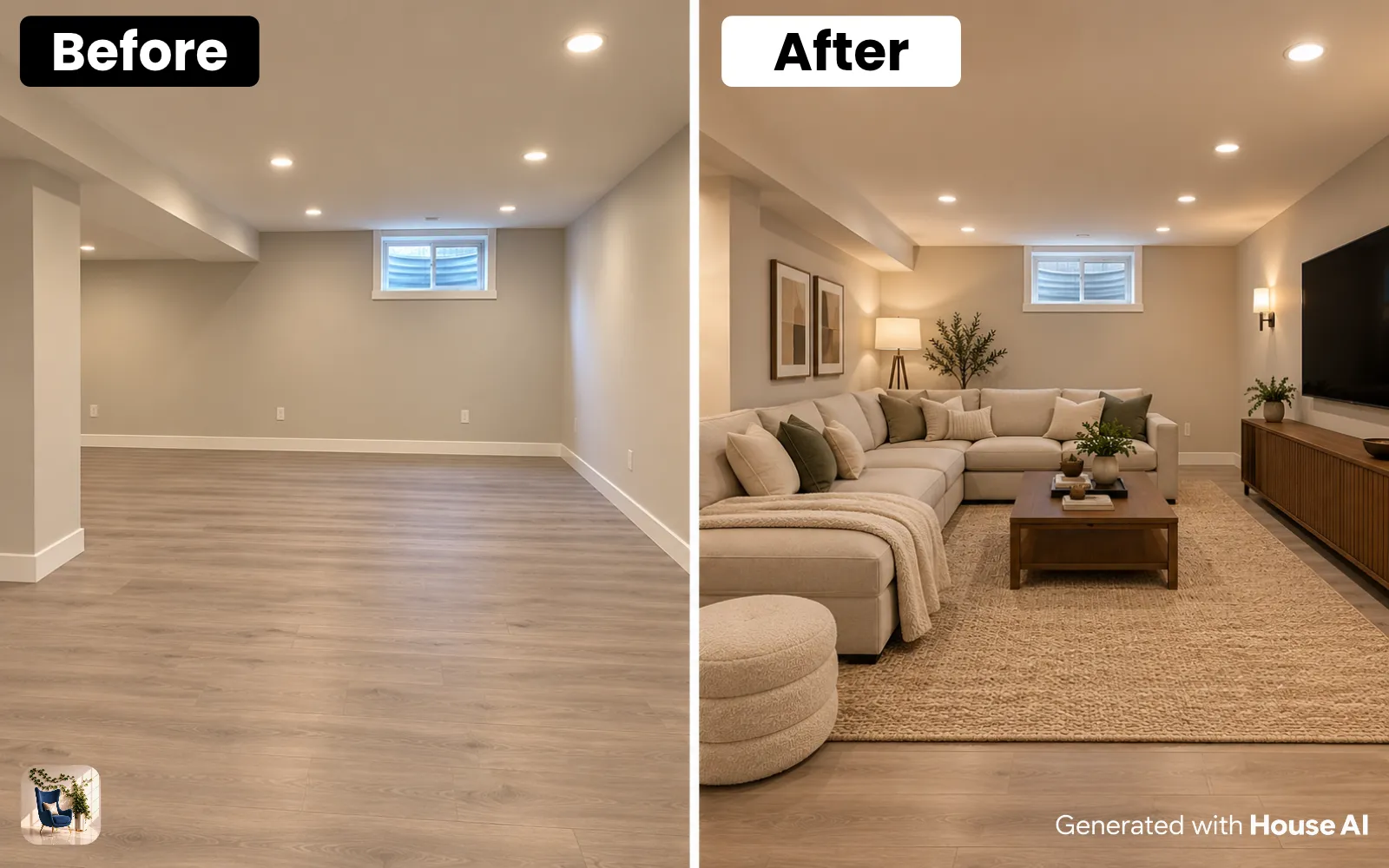
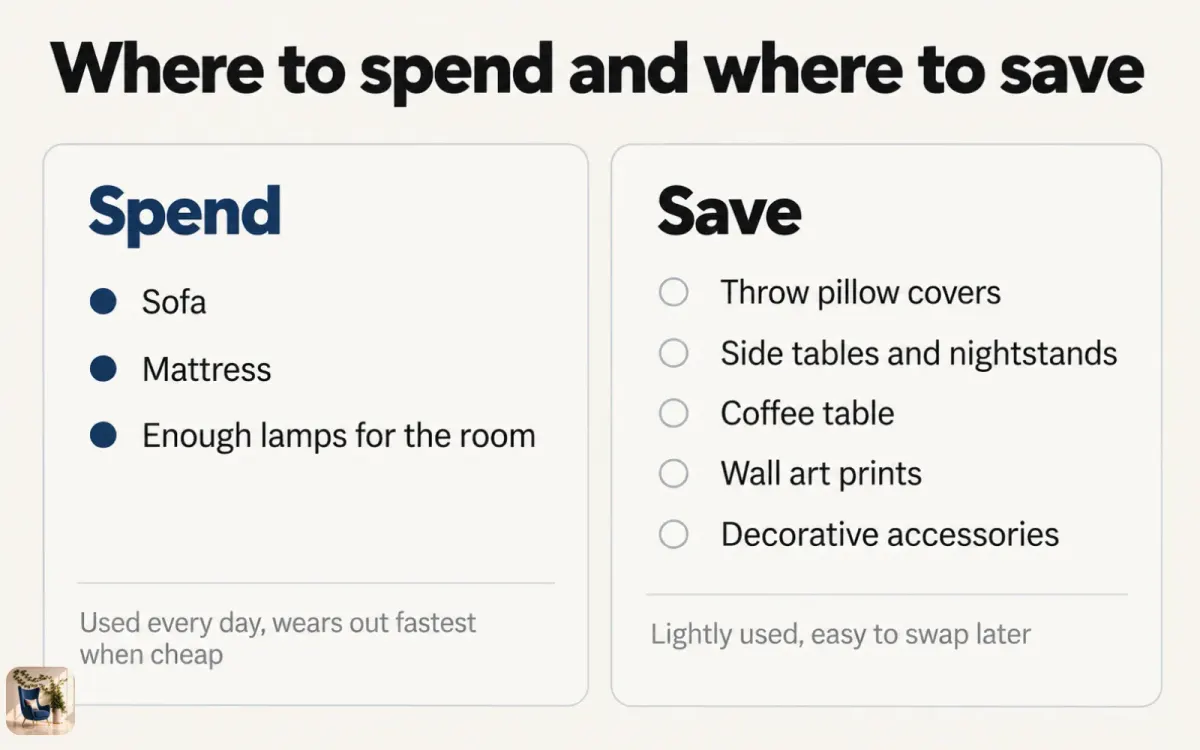
To design a room on a budget, spend on what you use every day: the sofa, the mattress, and enough lighting. Save on what you can swap later, like decor, side tables, throw pillows, and art. Paint walls yourself and buy secondhand where wear doesn't show. Preview the room in House AI first, with 3 free designs a day.
A tight budget forces a choice about every piece, and most people get the choice backward. They buy a cheap sofa and an expensive vase. This guide sorts common purchases into spend and save, with real price ranges, so the money goes where you will feel it.
The rule that decides spend or save
Spend on things you use hard every day, and save on things you mostly look at. A sofa gets sat on every day. A vase gets dusted. Cheap seating sags, pills, and wobbles within a few years, and then you pay for it twice. Cheap decor still does its job, because its only job is to look nice.
Two more tests help with the pieces in between. Ask how hard the piece is to replace, and ask how long you plan to keep it. A rug in a busy hallway takes a beating, so a low-cost washable one makes sense there. A dining table you expect to keep through three moves deserves more of the budget than a side table you might outgrow next year.
Where to spend: the pieces you touch every day
Put most of your budget into seating, sleep, and light. These are the pieces that wear out fastest when they're cheap and that you notice every single day when they're good.
The sofa comes first. Look for a solid hardwood frame, cushions that spring back when you press them, and a fabric that can handle your household. A cheap sofa is often the most expensive one you'll own, because you'll replace it sooner. The mattress comes next for the same reason: you use it every night, and it is hard to judge one secondhand.
Lighting comes third. A room with one harsh ceiling light looks flat no matter what furniture is in it. Two or three lamps at different heights, with warm bulbs, make a modest room look finished. You don't need designer lamps, but you do need enough of them.
Where to save: the things you can swap
Save on anything decorative, lightly used, or likely to change with your taste. These pieces carry the trend of the moment, so they date fastest, and they are the easiest to upgrade one at a time later.
Throw pillows are the classic example. Buy good inserts once, then change the covers whenever you want a new color. Side tables, accent chairs that rarely get used, picture frames, baskets, and candles all fall in the same group. So do bold accent colors. If you love a trendy color, put it on a pillow or a print, not on the sofa.
Secondhand is where saving gets easy. Solid wood dressers, side tables, mirrors, and lamps hold up well and often cost far less used. Wood can be sanded and refinished, and a lamp can take a new shade. Be pickier with upholstered pieces and mattresses, where you can't see what's inside.
Spend or save, item by item
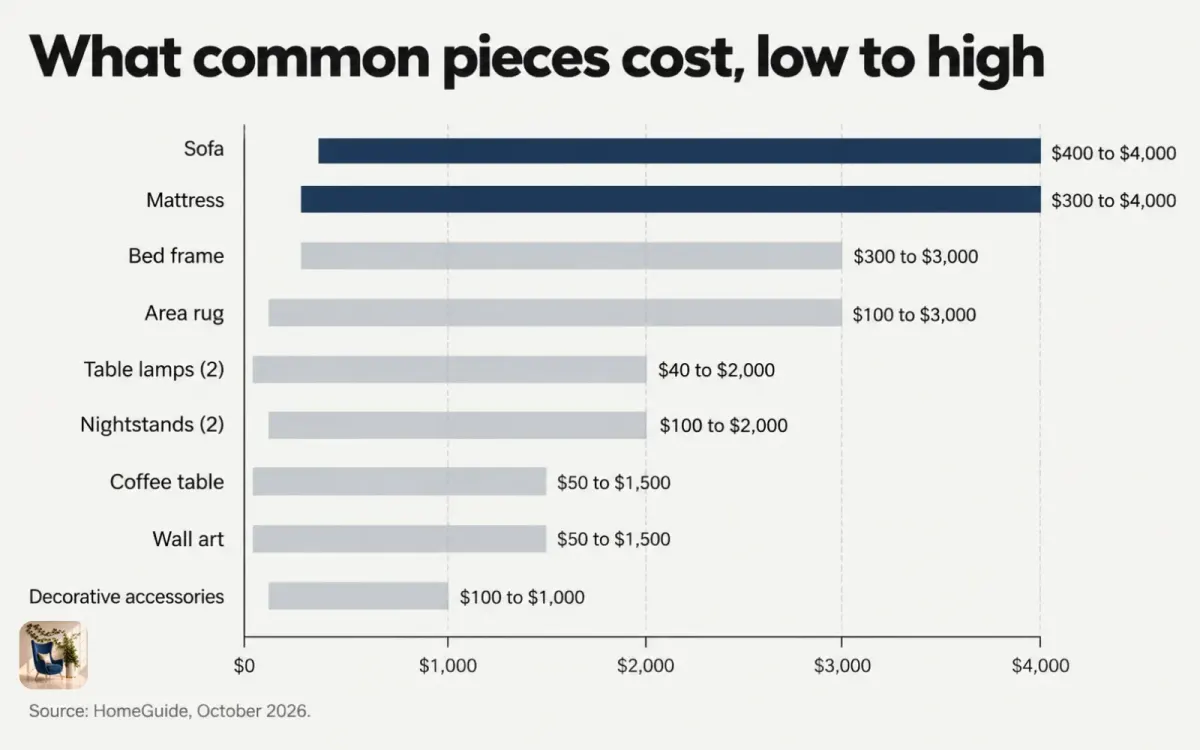
Use this table as a shopping filter. The price ranges come from HomeGuide's furnishing cost guide, and the wide gap between the low and high end on each line is where your choices matter most.
| Item | Spend or save | Price range | Why |
|---|---|---|---|
| Sofa | Spend | $400 to $4,000 | You use it every day, and a weak frame or thin cushions wear out first |
| Mattress | Spend | $300 to $4,000 | Used every night, and hard to judge secondhand |
| Bed frame | Middle | $300 to $3,000 | Needs to be sturdy, but a simple frame does the job as well as a costly one |
| Area rug | Middle | $100 to $3,000 | Spend in a calm room, and buy washable and cheap in a busy one |
| Table lamps (2) | Save on the lamp, spend on the count | $40 to $2,000 | Several inexpensive lamps beat one expensive one |
| Coffee table | Save | $50 to $1,500 | Light wear, and secondhand wood tables are easy to find |
| Nightstands (2) | Save | $100 to $2,000 | Lightly used, so simple or secondhand ones are fine |
| Wall art | Save, or spend on one piece you love | $50 to $1,500 | Prints and frames are cheap, and one original piece can anchor a room |
| Decorative accessories | Save | $100 to $1,000 | Trend-driven and the first thing you will change |
Cheap moves that change a room the most
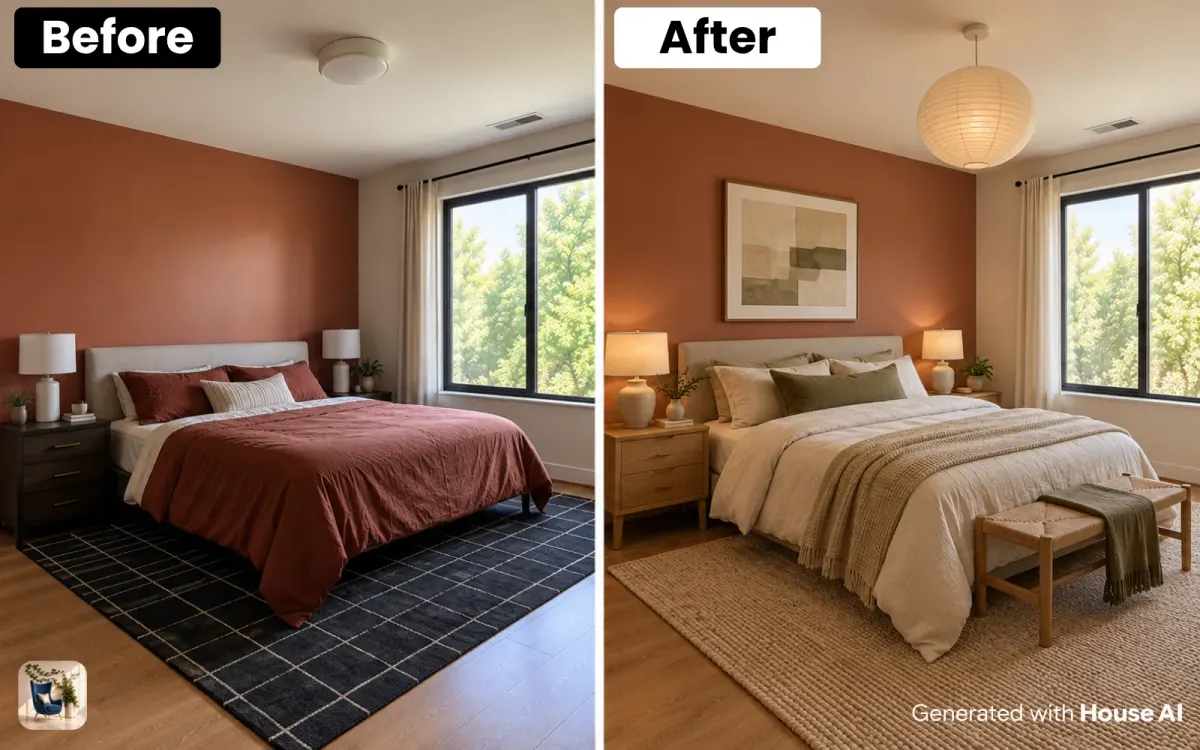
The biggest visual changes for the least money are paint, layout, and editing. None of them needs new furniture.
Paint is the clearest case. HomeGuide puts the cost of painting a room yourself at $150 to $300, against $300 to $1,000 for a pro to paint the walls of an average room. That gap pays for a good lamp or a rug. Take your time with prep and tape, and two coats of a mid-priced paint will look professional.
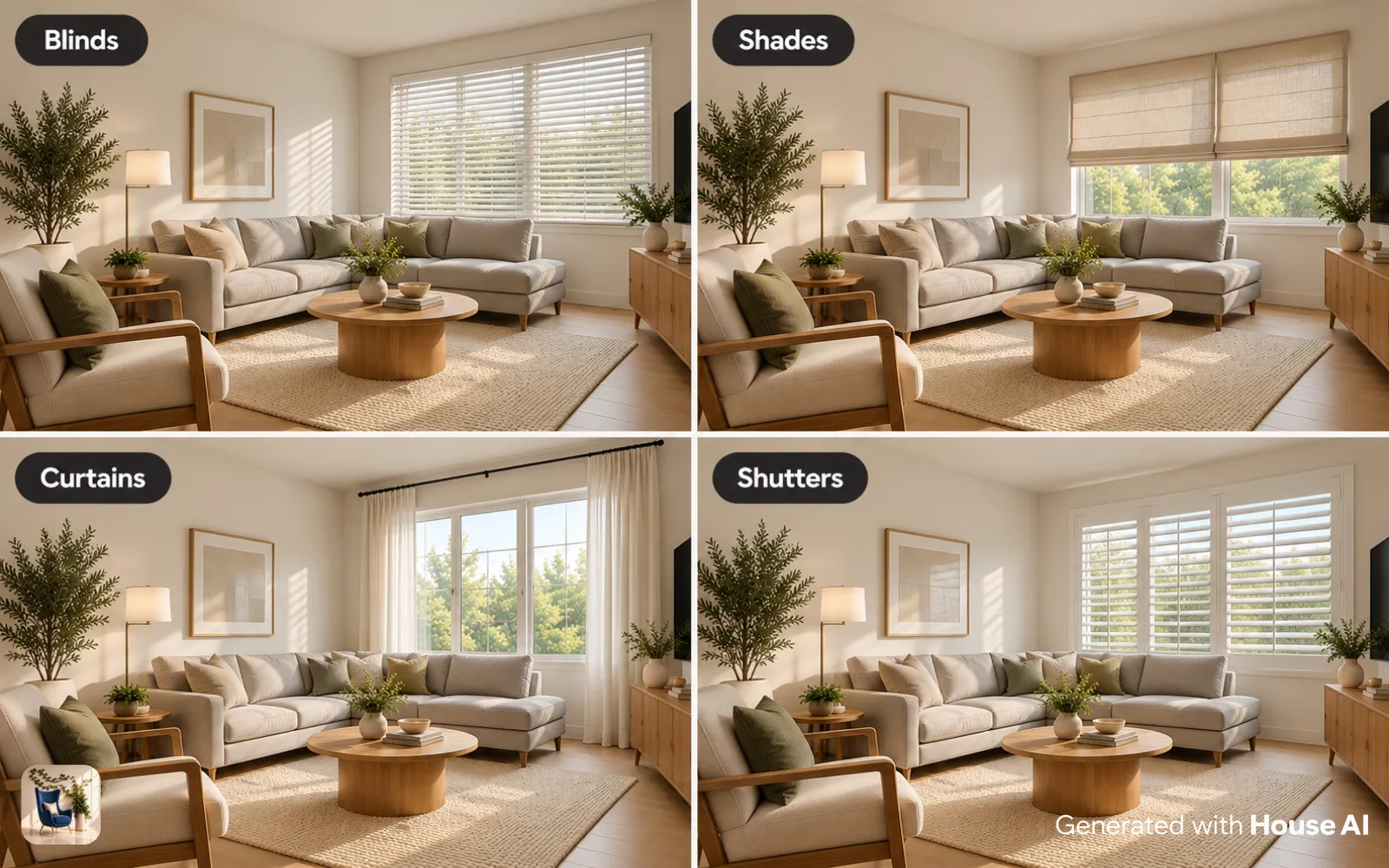
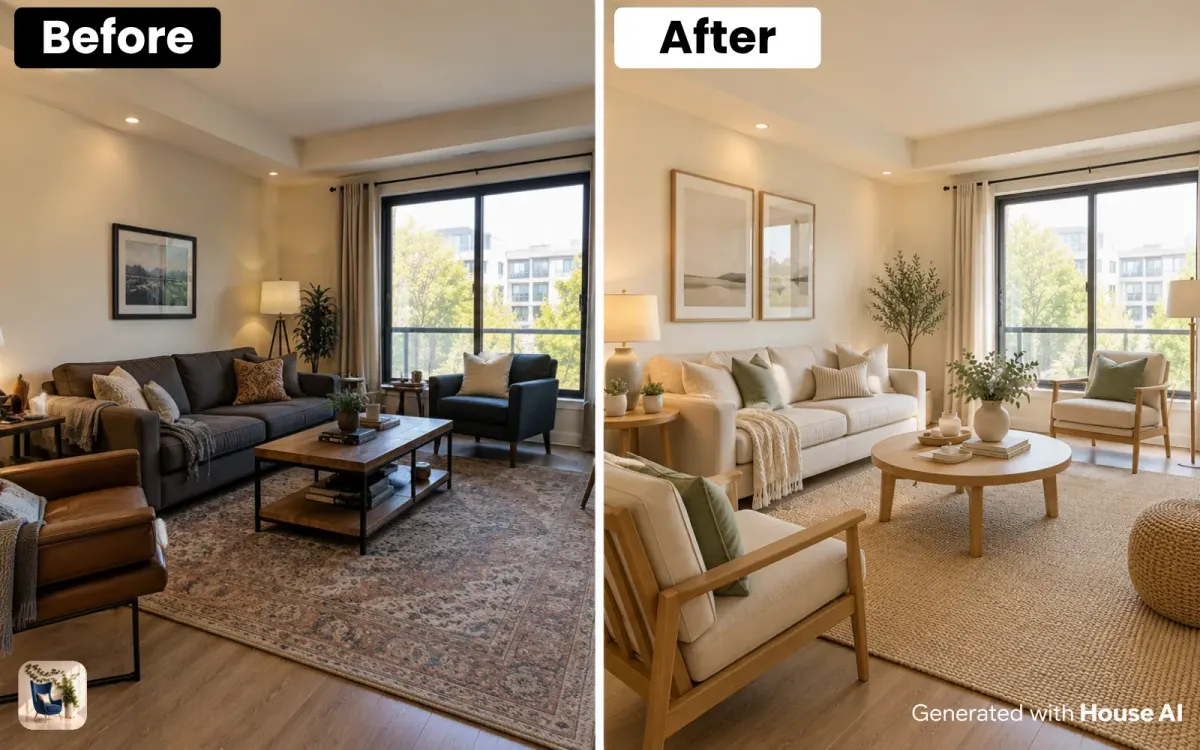
Moving what you already own is free. Pull the sofa off the wall, float it on a rug, and angle a chair toward it. Then take a third of the objects off your shelves and surfaces. A room with fewer, better-placed things looks more expensive than a room with more stuff in it. Swapping cabinet knobs, curtain rods, and lampshades is also cheap and changes the feel of a room fast.
When to buy and where to look
Timing can save as much as choosing a cheaper piece. HomeGuide notes that indoor furniture sales cluster in January and July, and that January is a good month for mattresses. If the sofa can wait a few months, it probably should.
Buying over time also helps. Start with the pieces you need to live in the room, like seating, a bed, and light, then add the rest as the budget allows. Living in a room for a few weeks before you finish it shows you what is missing. It also keeps you from filling every corner on day one and regretting half of it.
How to plan a budget room before you buy anything
Planning first is the cheapest step in the whole process. A clear plan stops you from buying pieces that don't fit or don't go together.
Step 1: List what you already own and will keep
Walk the room and write down every piece that stays. Anything you keep is money you don't spend, and it sets the colors and wood tones for the rest.
Step 2: Set a total and split it
Pick a total, then put most of it toward the spend items from the table: seating, sleep, and lighting. Whatever is left covers the save items, and you can stretch that part by shopping secondhand.
Step 3: Photograph the room
Stand in a corner in daylight with the lights on, so two walls, a window, and the floor are in the frame. Clear loose clutter first.
Step 4: Preview two or three looks in House AI
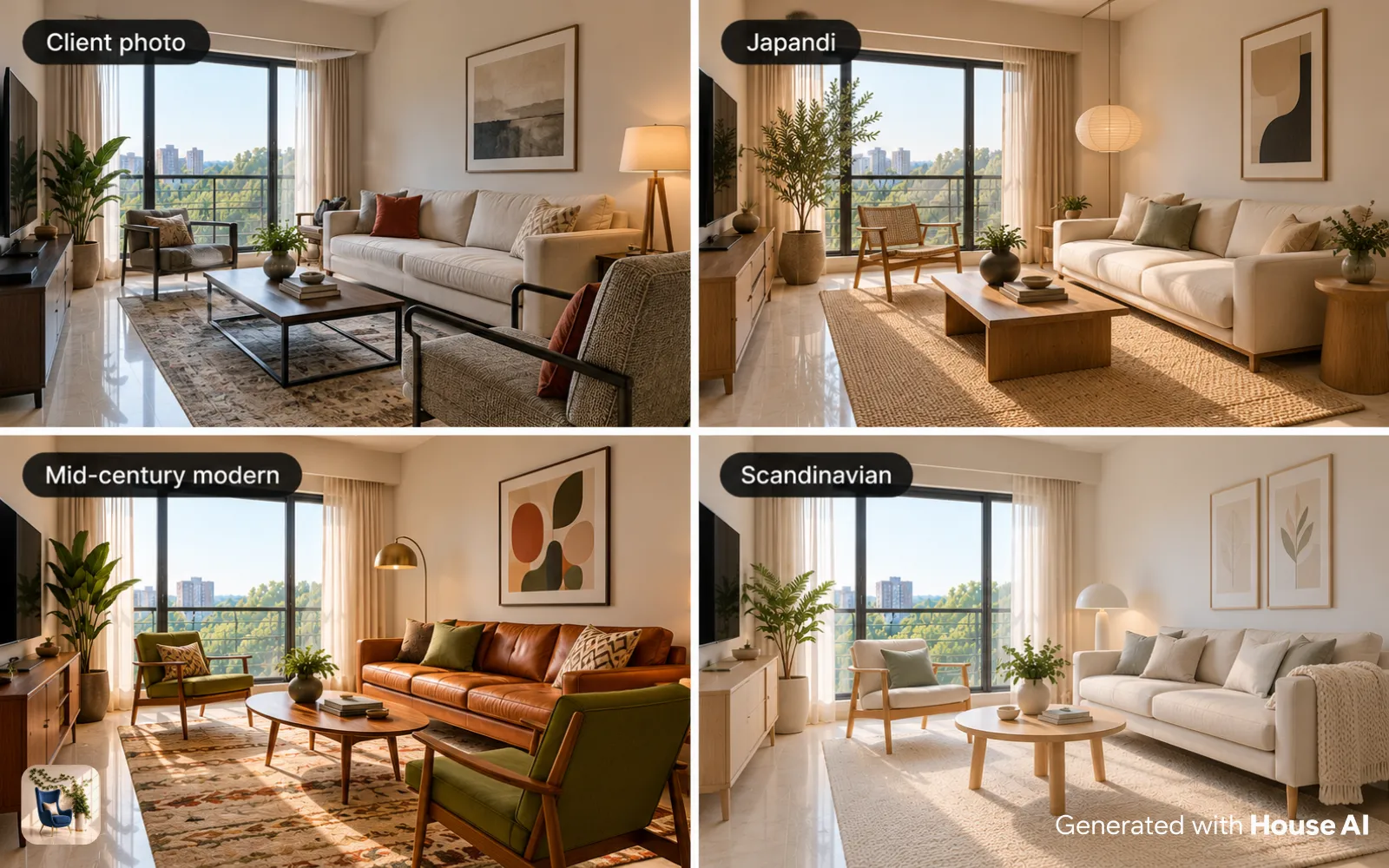
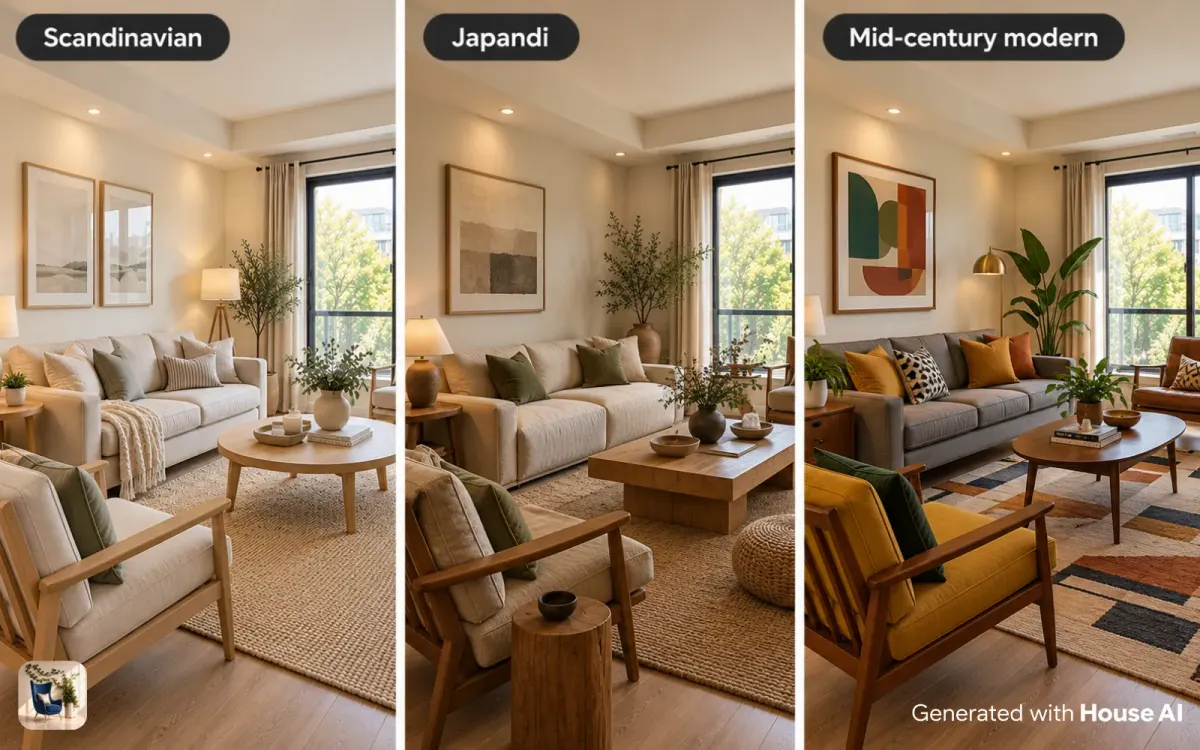
Upload the photo, set the room type, and pick a style from the grid or describe the look in your own words. Each design takes about 15 seconds on average, and every user gets 3 free designs a day with no credit card. Free designs carry a watermark.
Step 5: Price the version you like
House AI matches the furniture in a design to real products from 330 retailers, including IKEA, Walmart, Amazon, and Wayfair. Use those matches as a starting point, then compare prices and check secondhand listings for the save items.
Step 6: Measure before you order
Check the wall length, the sofa depth, and every doorway and stair the piece has to pass through. Returning a sofa that won't fit through the door eats up whatever you saved.
What a preview can't tell you about your budget
An AI render shows how a room could look. It doesn't measure your space, so a sofa that fits the picture may not fit the wall, and small details can drift between the render and real life. It can't tell you how a fabric feels, how well a frame is built, or whether a color on screen matches the paint chip. Use the render to settle on a direction and a shopping list, then check sizes, samples, and reviews before you spend.
Design any room, shop or space with House AI in about 15 seconds. 1 free design a day.
Get Started TodayFrequently asked questions
What should you splurge on when decorating?
Splurge on the sofa, the mattress, and enough lighting. You use them every day, and cheap versions wear out or look flat fastest.
What is the cheapest way to make a room look better?
Rearrange what you have, clear a third of the objects off your surfaces, and add a second or third lamp. If you can spend a little, painting the room yourself costs $150 to $300, according to HomeGuide.
Is it worth buying furniture secondhand?
Yes, for solid wood case goods like dressers, side tables, and coffee tables, plus mirrors and lamps. Be more careful with upholstered pieces and mattresses, where you can't see the inside.
How much does it cost to furnish a living room on a budget?
HomeGuide puts a budget living room at $1,500 to $4,000, compared with $4,000 to $6,000 for an average room.
Can I see my room redesigned before I spend money?
Yes. Upload a photo to House AI, pick a style, and see a redesign in about 15 seconds. Every user gets 3 free designs a day, and the free tier needs no credit card.
Keep reading
- What Does Interior Design Cost in 2026? Designer vs DIY vs AI
- How Much Does It Cost to Furnish a Living Room?
- Decorating Rental Apartments Without Permanent Changes
- How Do I Mix Wood Tones in a Room?
- Is House AI Free?
Sources: HomeGuide, "How Much Does It Cost to Furnish a House?", updated November 14, 2023. HomeGuide, "How Much Does It Cost to Paint a Room?", updated February 6, 2026. Both checked October 3, 2026. House AI figures come from the House AI app.