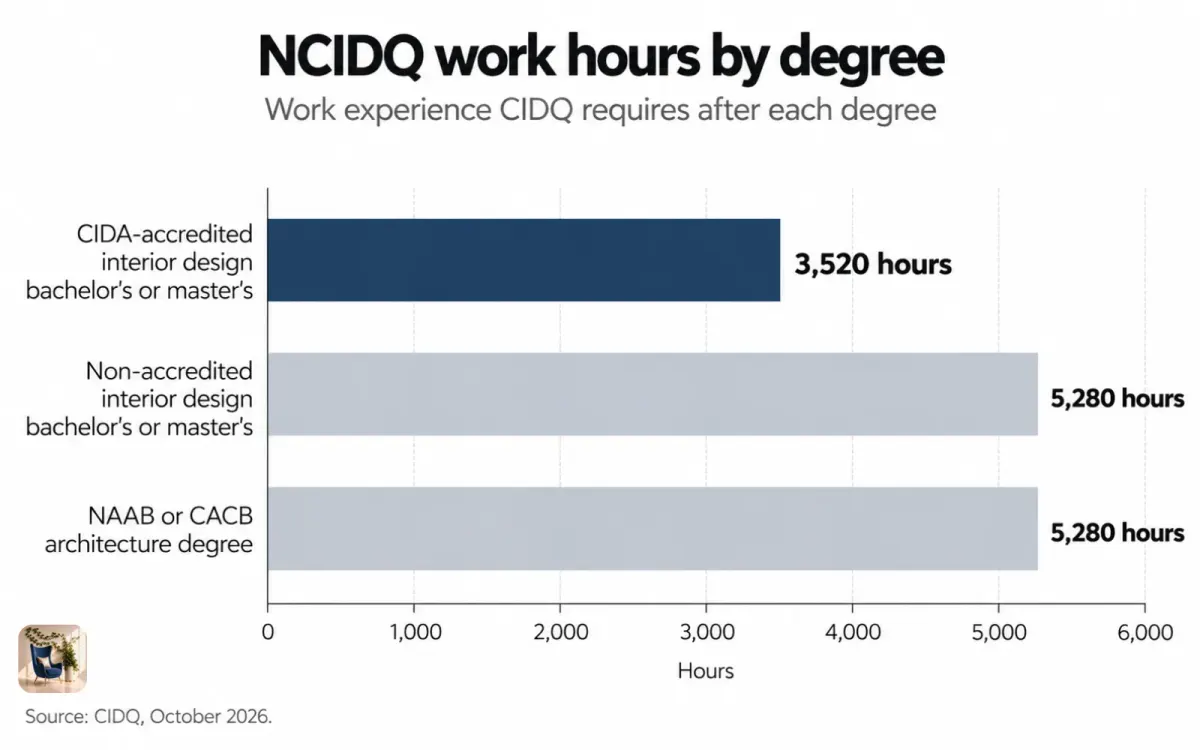
Start with CIDA accreditation. A CIDA-accredited bachelor's or master's degree gives you a faster route to NCIDQ certification: CIDQ asks those graduates for 3,520 hours of work experience, compared with 5,280 hours after a non-accredited interior design degree. Then compare degree type, online or campus format, and total cost, and confirm each program on CIDA's own list.
Most "best schools" lists rank programs by reputation and stop there. This guide gives you the checks that decide what a degree is worth later: who accredits it, what it qualifies you for, how it is taught, and what it costs. Every outside number below comes from CIDA, CIDQ, or the College Board.
Why CIDA accreditation matters most
CIDA accreditation is the single best filter for an interior design program. The Council for Interior Design Accreditation reviews programs against standards set by the profession for entry-level education, and it lists more than 170 accredited interior design programs worldwide. A school's own website can say "accredited" and mean something else, such as regional accreditation for the whole college, which says nothing about the design curriculum.
Check the program, not the school. CIDA's list covers specific degrees, so a university can have an accredited bachelor's program and an unaccredited certificate under the same name. CIDA updates the list twice a year, after its Accreditation Commission meets, and says that list replaces every earlier one. Look the program up yourself before you apply, and look again before you enroll.
Accreditation matters because of what comes after school. CIDQ, the group that runs the NCIDQ exams, asks graduates of CIDA-accredited bachelor's and master's programs for fewer work hours than graduates of non-accredited interior design degrees. In the jurisdictions that regulate interior design, CIDQ's guide says all of them require NCIDQ certification except California.
Which degree type to choose
Choose a bachelor's or master's in interior design if NCIDQ certification is your goal. Shorter programs can teach real skills, but they sit on a different CIDQ route, so check the exact requirements before you treat one as a path to certification.
| Program | Accredited by | NCIDQ work hours after it (CIDQ) | Often a fit for |
|---|---|---|---|
| Bachelor's or master's in interior design, CIDA-accredited | CIDA | 3,520 hours, about 2 years full time | Students who want the fastest degree route to NCIDQ certification |
| Bachelor's or master's in interior design, not CIDA-accredited | None for the design program | 5,280 hours, about 3 years full time, with 60 semester or 90 quarter interior design credit hours | Students tied to one school or region with no accredited option |
| Bachelor's or master's in architecture from a NAAB or CACB program | NAAB or CACB | 5,280 hours, about 3 years full time | Architecture students who want to move into interiors |
| Associate degree, certificate, or diploma | Varies by school | A separate CIDQ route; check the handbook for the hours | Decorating, styling, or a first step before a bachelor's |
A master's degree can also start you on the accredited route. CIDA's directory lists master's programs alongside bachelor's programs, which helps if you already hold a degree in another subject. Ask each master's program whether it is a first professional degree in interior design or an advanced degree for people who already practice, because those are built for different students.
Online vs campus programs
Online programs can be accredited too. CIDA's directory has a separate section for programs taught online, so format alone doesn't rule a program in or out. What changes is how you learn the hands-on parts of the job.
| What to compare | Campus program | Online program |
|---|---|---|
| Studio critique | In the room with faculty and classmates | On video calls |
| Materials and samples | A materials library you can touch | Samples mailed to you or bought on your own |
| Software and computers | Campus labs with the software installed | Your own computer and your own licenses |
| Schedule | Fixed class times | Often more flexible |
| Internships and local contacts | Built around the city the school is in | Up to you to find where you live |
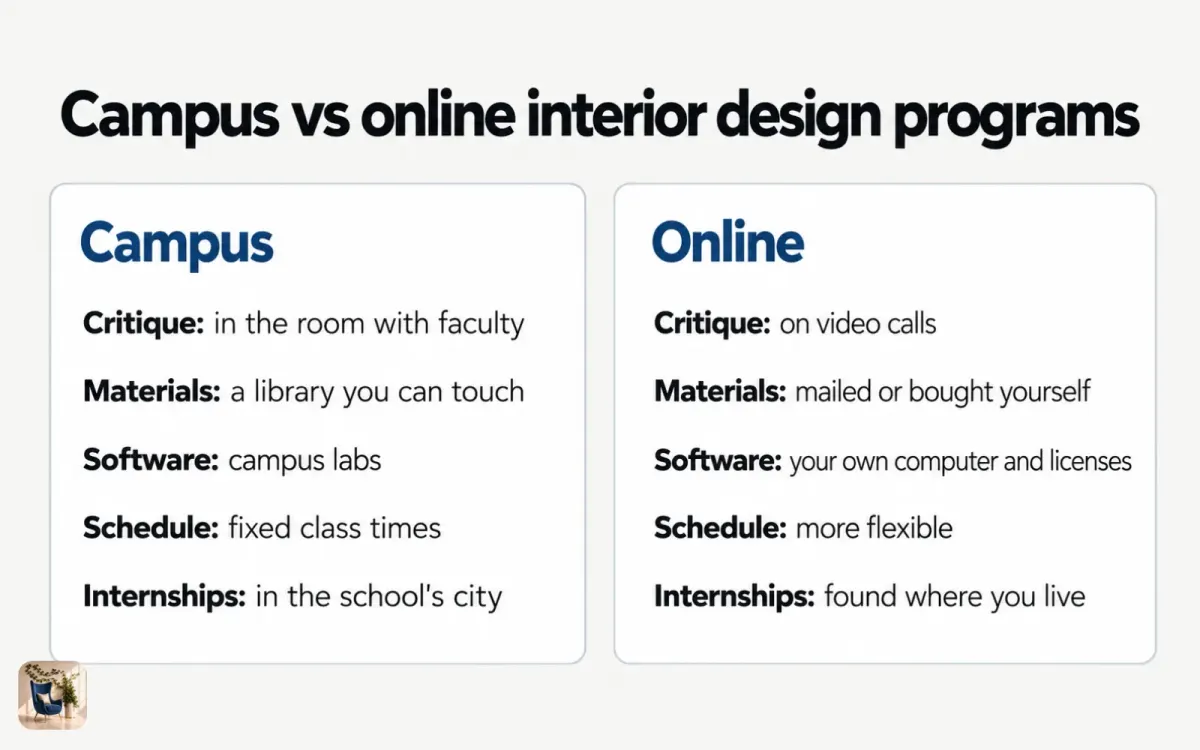
If you pick an online program, ask three questions. Is this exact online degree on CIDA's list? How do students get studio feedback? Who helps you find the work experience that CIDQ counts later?
What an interior design degree costs
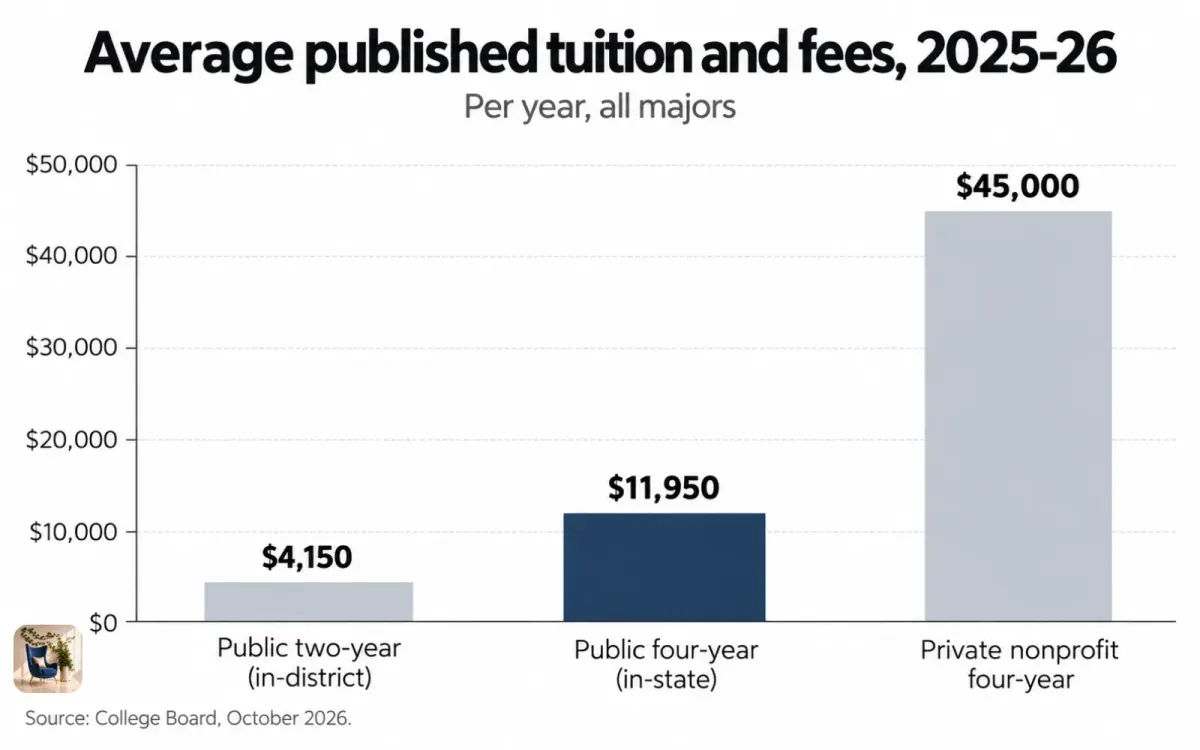
Tuition depends mostly on the type of school. The College Board's 2025 report puts average published tuition and fees for 2025-26 at $4,150 a year at public two-year colleges, $11,950 a year for in-state students at public four-year schools, and $45,000 a year at private nonprofit four-year schools. Those are averages across all majors, so a design program's price can sit above or below them.
Design programs add costs that a tuition table leaves out. Budget for a laptop that can run design software, the software itself, drawing and model supplies, printing for presentations, and any studio or lab fees. Ask each program for its full list before you compare prices.
How a program feeds NCIDQ eligibility
Your degree decides which CIDQ route you take and how many work hours you need before the last two exams. The NCIDQ is three exams: the IDFX on fundamentals, the IDIX on implementation (formerly the Practicum), and the IDPX on professional practice.
School can get you started early. CIDQ lets students in the final year of a bachelor's or master's degree in interior design apply to sit for the IDFX before they graduate. After graduation, you earn work hours, then take the IDIX and IDPX. A CIDA-accredited degree needs 3,520 hours. A non-accredited interior design degree or an accredited architecture degree needs 5,280 hours.
How to compare interior design schools
Use the same five checks on every program, in this order, and drop any school that fails the first one if certification is your goal.
Step 1: Decide whether you want NCIDQ certification
If you might ever want to call yourself a certified or registered interior designer, plan for the NCIDQ now. That goal points you to a bachelor's or master's program, ideally a CIDA-accredited one.
Step 2: Look up each program on CIDA's list
Search CIDA's accredited programs list by school and confirm that the exact degree you would enroll in is there. Write down the degree name as CIDA lists it.
Step 3: Pick the format that fits your life
Choose campus if you learn best in a studio with people around you. Choose online if you work or can't move, and ask how the program handles critique, samples, and software.
Step 4: Add up the full cost
Start with published tuition and fees, then add software, a laptop, supplies, printing, and studio fees. Compare the total for the whole degree, not the price of one year.
Step 5: Ask how the program prepares you for the IDFX
Ask whether students take the IDFX in their final year, and how the program helps graduates find work experience that CIDQ will count. A clear answer tells you the program takes certification seriously.
Where AI design tools fit while you study
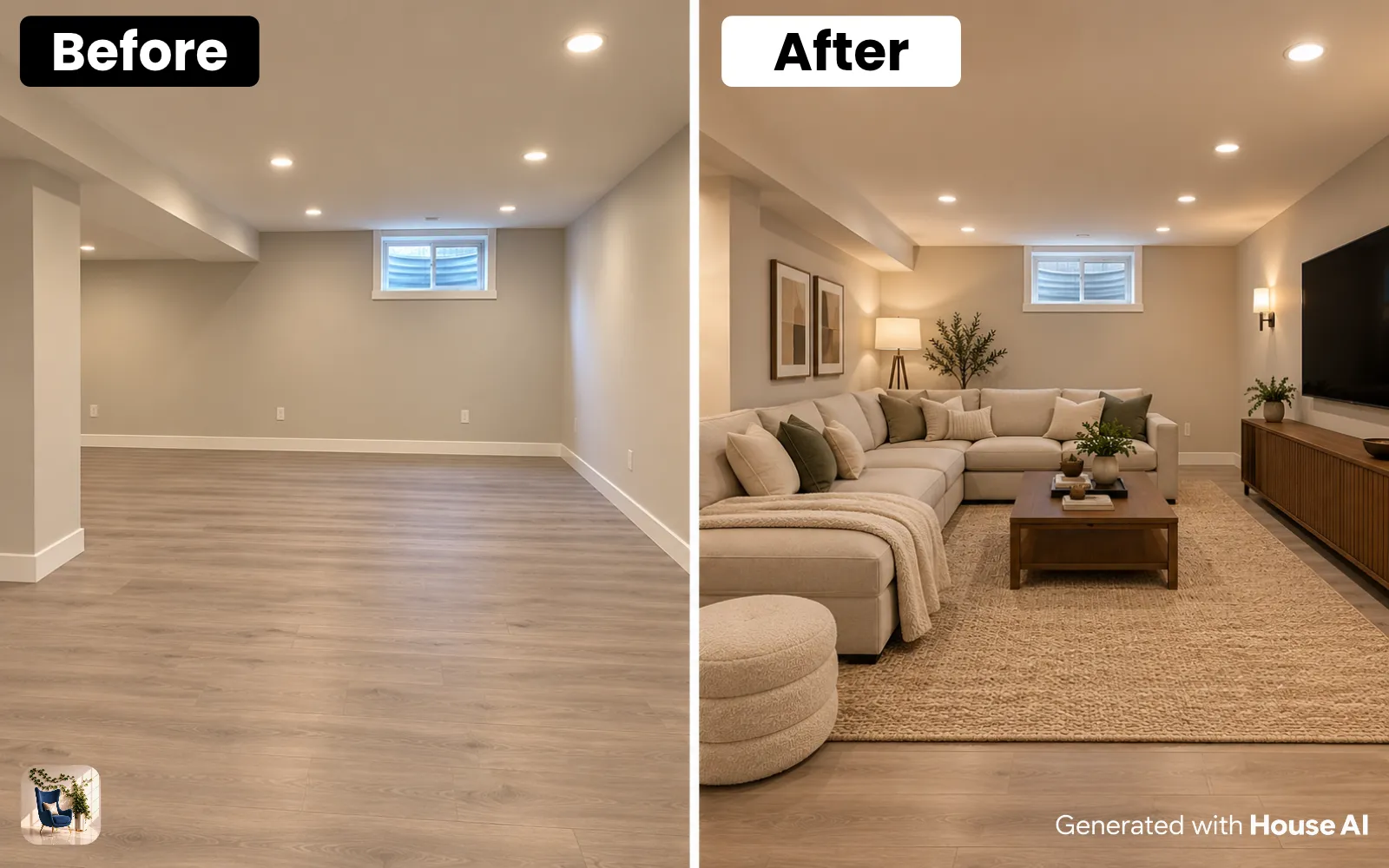
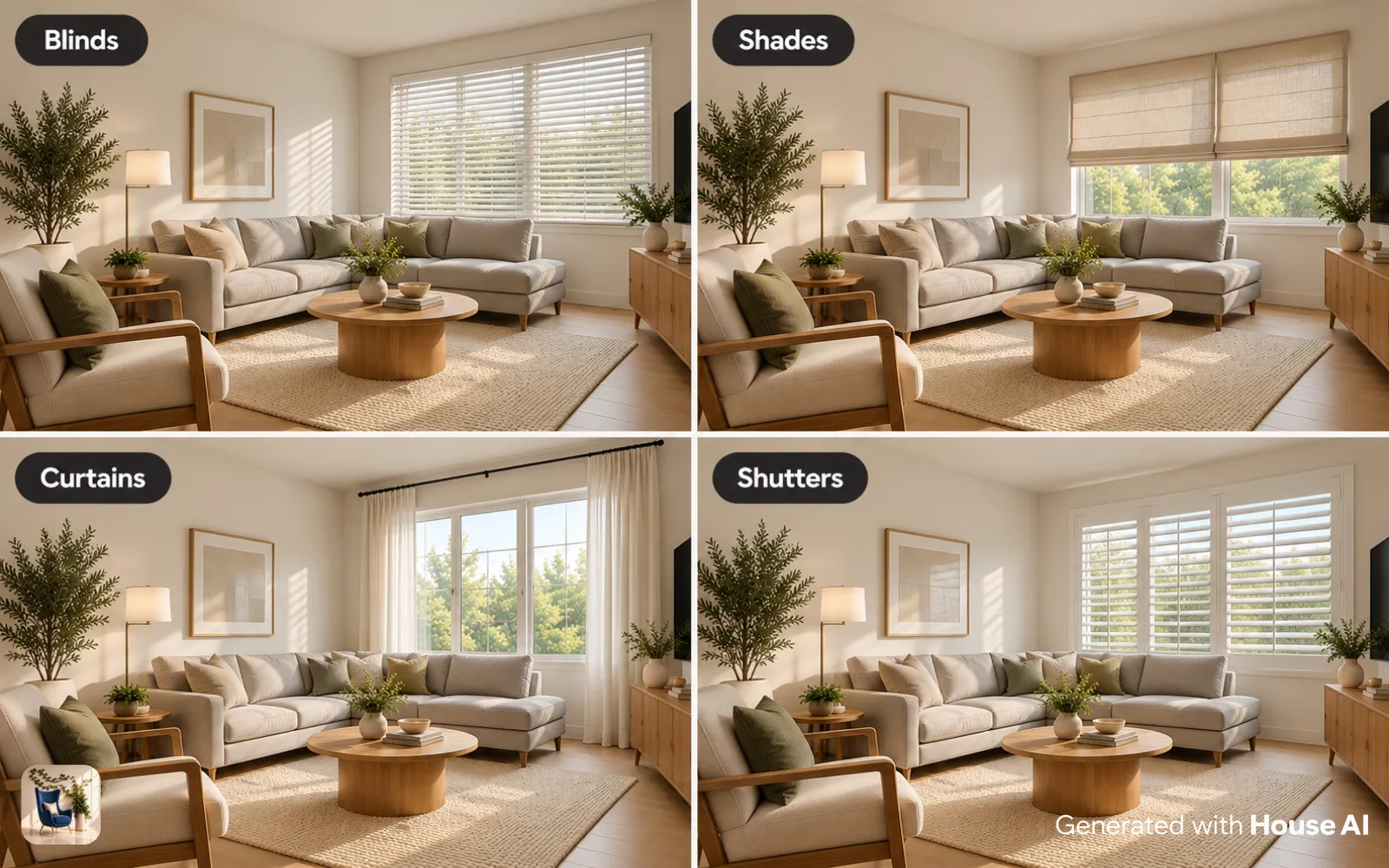
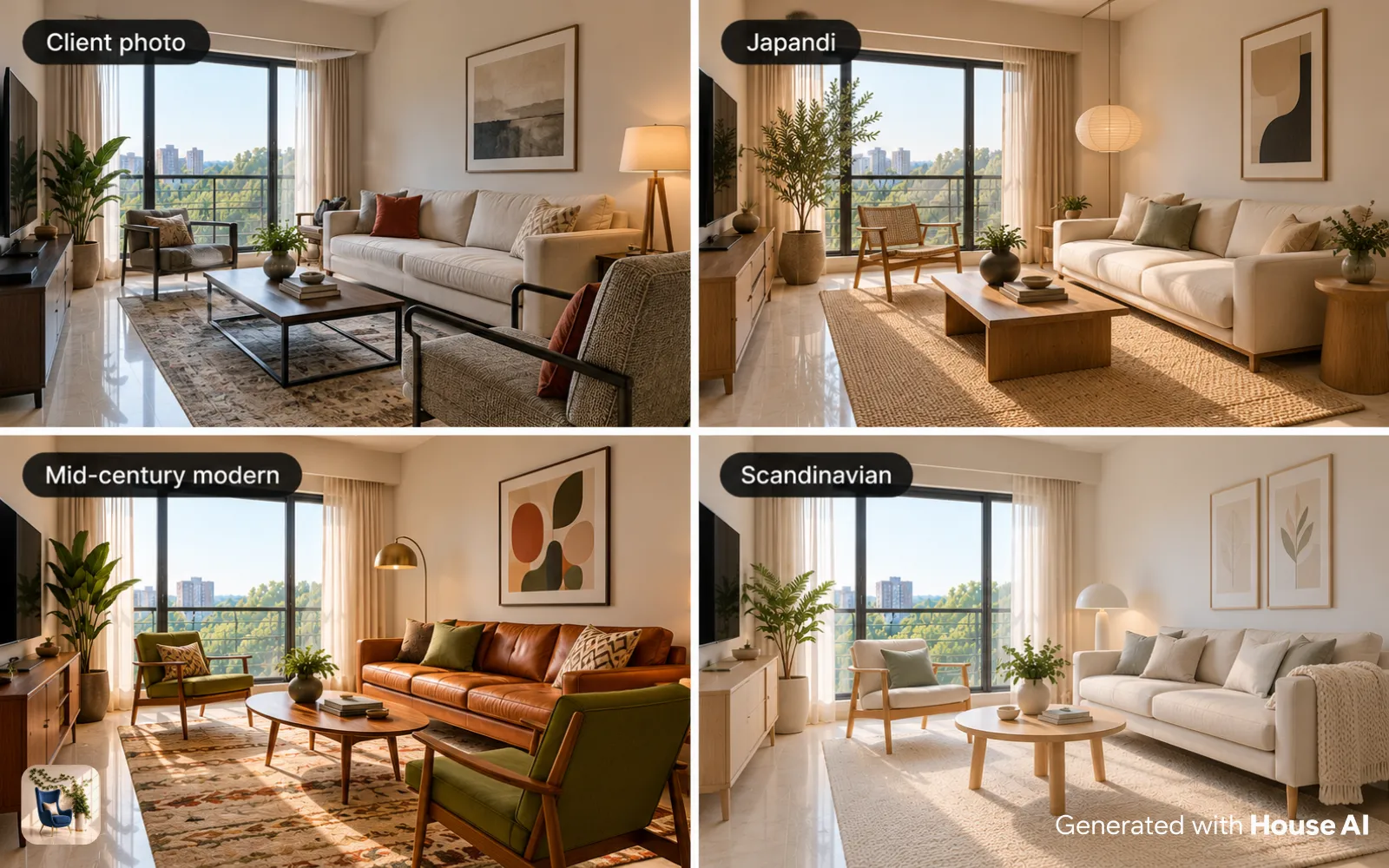
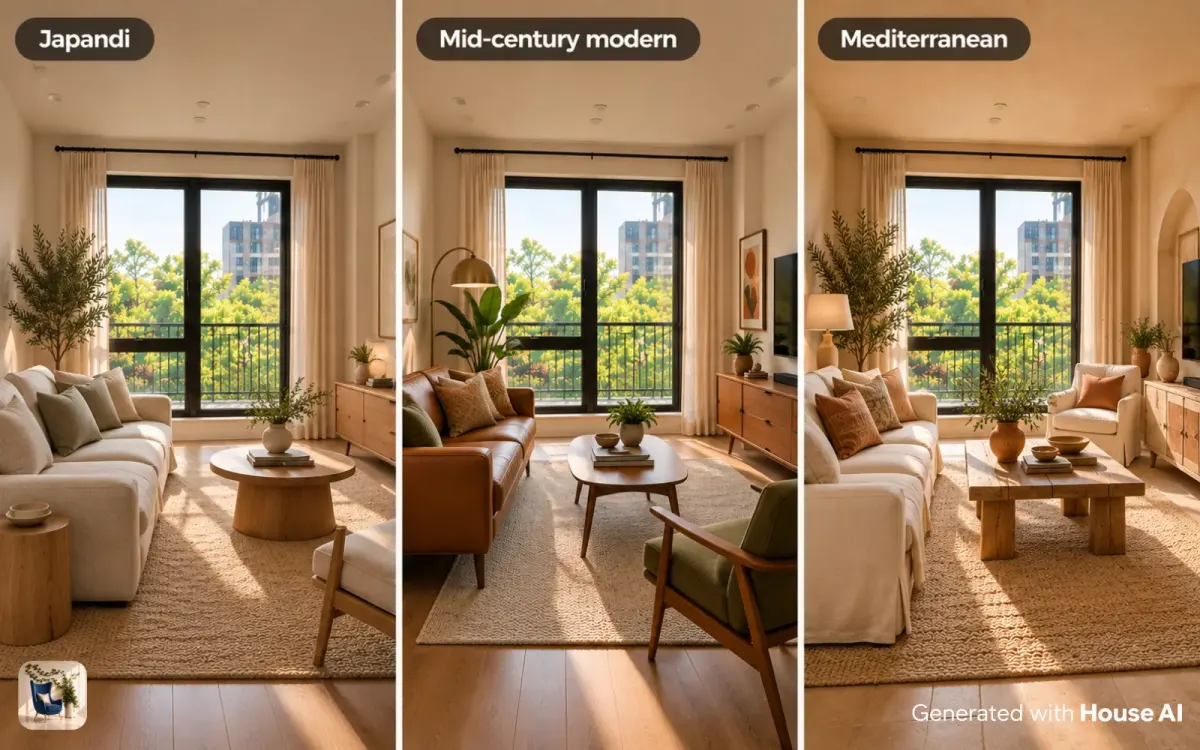
AI redesign apps are a sketching aid, not a substitute for studio training. House AI redesigns a photo of a real room in about 15 seconds on average, and every user gets 3 free designs a day, which makes it a quick way to test a style idea before you develop it properly. You can pick from 300+ styles or describe a look in your own words.
It won't teach you the parts of the job a degree is for. House AI doesn't measure the room, small details can drift between the render and real life, and it can't check a layout against building codes or draw a lighting plan. Use it to explore a direction, then do the real work in your coursework.
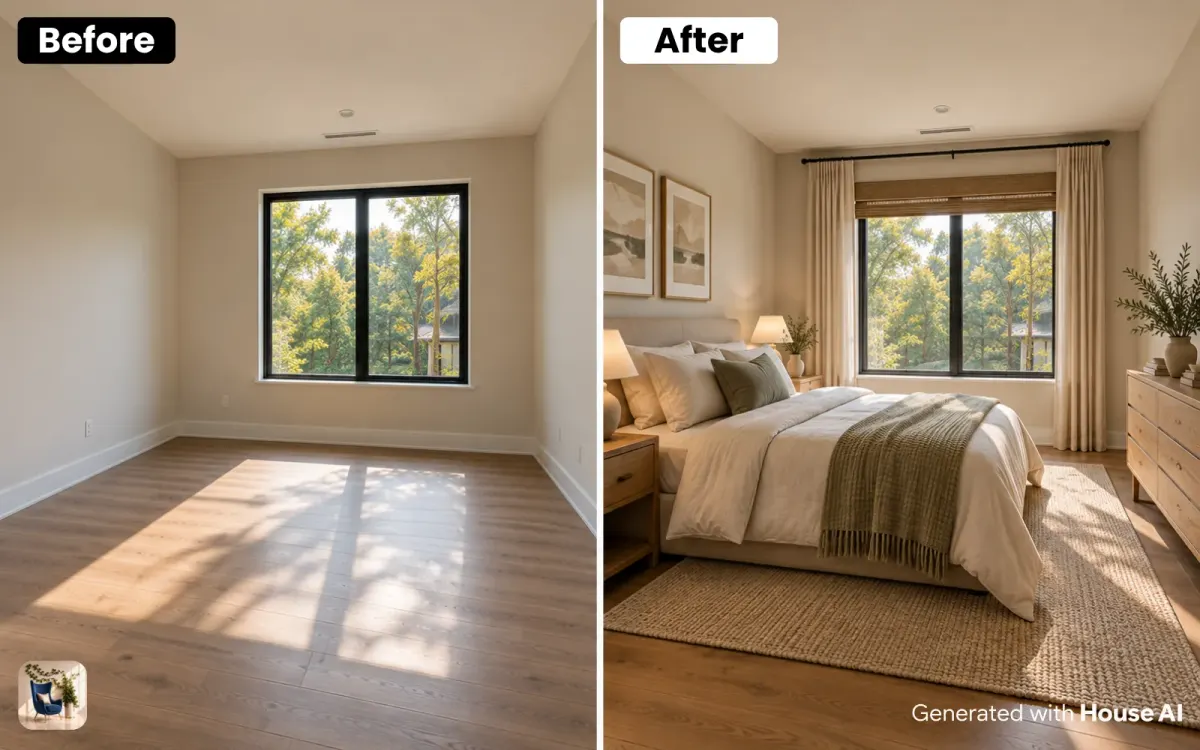
Design any room, shop or space with House AI in about 15 seconds. 1 free design a day.
Get Started TodayFrequently asked questions
Does an interior design school have to be CIDA-accredited?
No, but it makes certification faster. CIDQ asks CIDA-accredited bachelor's and master's graduates for 3,520 work hours before the last NCIDQ exams, compared with 5,280 hours after a non-accredited interior design degree.
Can I study interior design online?
Yes. CIDA's accredited programs list has a separate section for programs taught online, so you can earn an accredited degree without moving to a campus.
How much does interior design school cost?
It depends on the type of school. The College Board puts average 2025-26 tuition and fees at $4,150 at public two-year colleges, $11,950 in state at public four-year schools, and $45,000 at private nonprofit four-year schools.
Can I take the NCIDQ exam while I am still in school?
You can take the first part. CIDQ lets students in the final year of a bachelor's or master's degree in interior design apply for the IDFX before graduating.
Is an associate degree enough to become a certified interior designer?
An associate degree, certificate, or diploma sits on its own CIDQ route. Check the current NCIDQ Candidate Handbook for the credit hours and work hours that route requires before you enroll.
Keep reading
- What Is Interior Design? Definition, Principles, Types and Careers
- Interior Design Software: The 2026 Buyer's Guide
- Interior Design Styles Explained: 40 Looks With Real Room Examples
- How to Redesign a Room With AI in 2026 (8 Easy Steps)
Sources: CIDA, homepage, "For Students," and "Accredited Programs" pages, undated. CIDQ, "NCIDQ Candidate Handbook," version 1225 (December 2025). CIDQ, "Jurisdictions and Requirements," current as of August 2025. College Board, "Trends in College Pricing and Student Aid 2025" release, November 6, 2025. All checked October 3, 2026. House AI figures come from the House AI app.